
Blister Prevention and Treatment for Hikers and Campers
Blisters are the most common foot injury on the trail, and they can sideline you fast if not handled correctly. The short answer: catch a hot spot at the first second of tenderness, protect it before it blisters, and if a blister does form, drain it only under clean conditions with sterile tools. The most common failure mode is ignoring a hot spot—a localized warm, tender area—for even half a mile. That delay turns a manageable irritation into a fluid-filled blister that forces you to change your gait, invites infection, and can end a trip early. Here’s how to spot trouble early, stop it before it blows, and treat it safely when you have to.
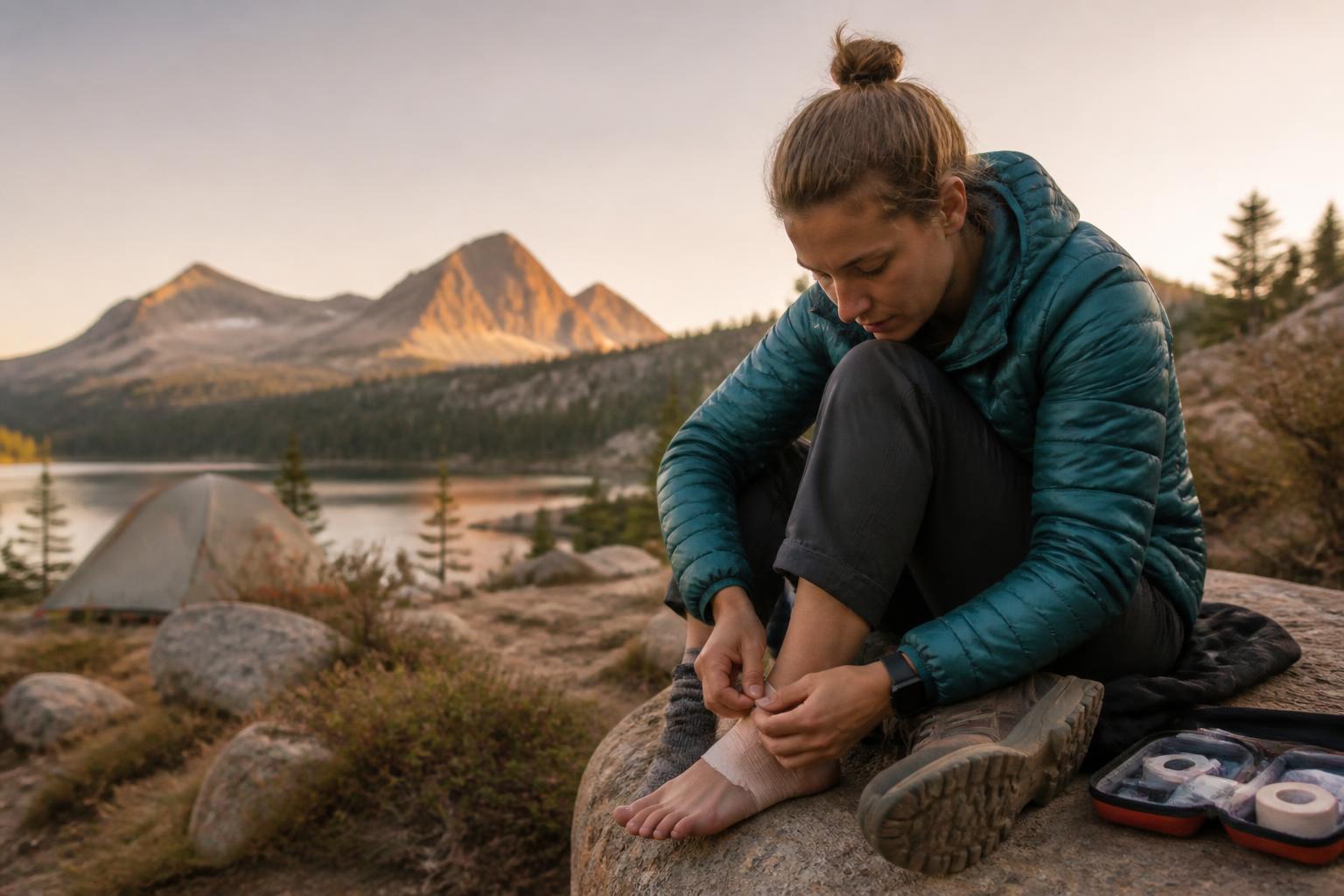
Catch a Hot Spot Before It Blisters
A hot spot is the skin’s early warning signal. It means friction is already damaging the layers between your skin and the boot. Act within the first minute or two, and you can almost always stop a blister from forming.
What causes it:
– Poorly fitting boot (too loose or too tight)
– A sock wrinkle or seam pressing into one spot
– Moisture from sweat or rain that softens the skin and increases friction
– Dirt or sand inside the sock that acts like fine grit
What to do immediately when you feel a hot spot:
- Stop and take off the shoe and sock. Do not wait for a rest break—do it right then.
- Dry the foot completely. Use a bandana, spare shirt, or towel. Wet skin blisters three times faster than dry skin.
- Apply a friction-reducing patch directly over the hot spot. Use leukotape, moleskin, or a hydrocolloid bandage (like Compeed or Band-Aid Hydro Seal). Do not use a plain adhesive bandage—it will roll off inside your sock and make the problem worse.
- Put on a clean, dry sock. If your only pair is wet, wring it out and turn it inside out to dry on your pack while you hike. Apply anti-chafe balm (Body Glide, Trail Toes, or plain petroleum jelly) around—not directly on—the hot spot area.
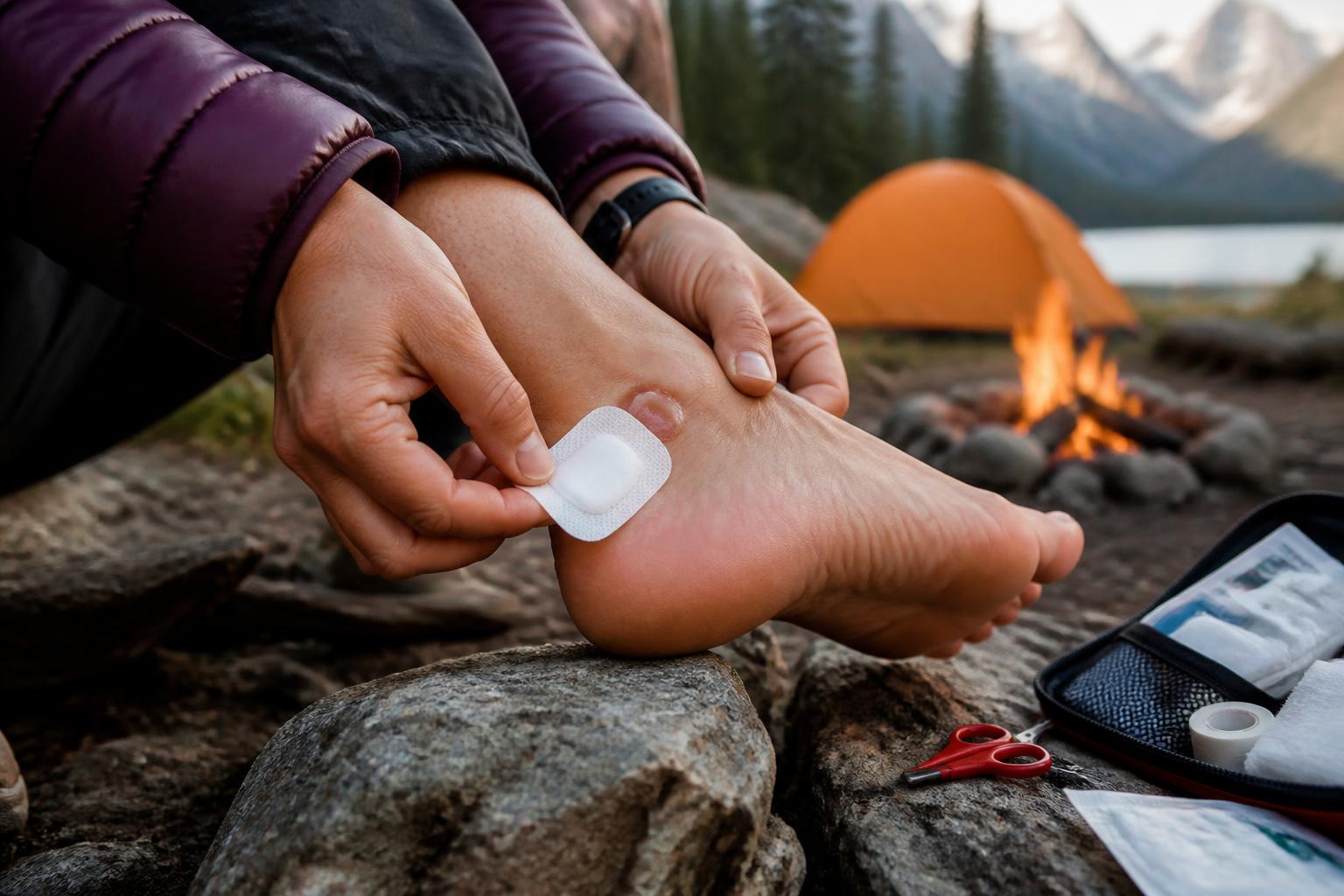
If you act within the first minute, the hot spot will almost always resolve without forming a blister. If you feel a burning or stinging sensation, you have waited too long and a blister has already started to form—move to the draining decision below.
Decision Aid: Hot Spot or Blister — What to Do Next
Use this 5-item checklist to decide your next move. Each item is a pass/fail check. Answer honestly.
| Check item | If YES → do this | If NO → do this |
|---|---|---|
| 1. Is the spot still just warm and tender with no fluid pocket? | Apply a protective patch over the hot spot and keep walking. | Move to item 2. |
| 2. Is there an intact small blister (≤ ½ inch) not in a high-friction spot (heel, toe side, ball of foot)? | Protect with a donut-shaped moleskin pad or hydrocolloid bandage. Do not drain. | Move to item 3. |
| 3. Is the blister larger than ½ inch, in a high-friction zone, or painful enough to change how you step? |
| Drain it only if you have sterile supplies (see procedure below). | Protect and leave intact. |
| 4. Is the skin around the blister red, hot, or weeping yellow/green fluid? | Do not drain. Clean with antiseptic, cover with sterile gauze, and seek medical care if redness spreads or red streaks appear. | Move to item 5. |
| 5. Are you in a remote area with no clean water or sterile supplies? | Leave the blister intact. Cover with a clean dry cloth and tape. Delay draining until you can do it hygienically. | Good to go — continue hiking with protection. |
When Draining Makes Sense (and When It Doesn’t)
Applicability boundary: The draining advice below applies to healthy hikers with intact immune systems who are on a trail and have access to sterile supplies. If you have diabetes, peripheral arterial disease, a weakened immune system, or if the blister is already infected (red edges, pus, warmth), do not drain it yourself. Protect it with sterile gauze, do not pop it, and seek medical care within 24 hours. The same rule applies if the blister roof has already torn off—you now have an open wound that needs clean dressing, not further puncturing.
When to drain: Only drain a blister if it is larger than ½ inch, located in a high-friction spot (heel, side of foot, toe joint), or causing enough pain that it changes your gait. Changing your gait leads to knee, hip, or ankle injuries much faster than the blister itself does.
A realistic trade-off: Draining a blister correctly speeds healing and reduces pain. But draining it in dirty conditions, or with a dirty needle, risks a serious infection that can take weeks to clear and may require oral antibiotics. If you have any doubt about your ability to keep the area clean after draining, leave the blister intact. The fluid inside is sterile and will be reabsorbed naturally over a few days. An intact blister protects the raw skin underneath far better than any bandage can.
How to drain a blister safely:
What you’ll need:
– Antiseptic wipes or 70%+ rubbing alcohol
– A sterile needle, scalpel, or lancet (from a first-aid kit)
– Antibiotic ointment (optional but recommended)
– Sterile gauze and medical tape, or a large hydrocolloid bandage
– Fine-tipped tweezers (to handle the skin flap if needed)
Steps:
- Clean the area. Wash the foot with soap and water if available, then wipe the blister and the skin around it with an antiseptic wipe. Let it air-dry for 30 seconds.
- Sterilize the needle. Hold the tip in a flame until it glows red, then let it cool for 10 seconds. Wipe it with alcohol again once cool.
- Make a single small puncture at the edge of the blister. Angle the needle horizontally just under the skin, parallel to the foot surface. Do not pierce the center or push deep—just enough to break the roof.
- Drain the fluid. Gently press with a sterile gauze pad. Let the fluid flow out naturally; do not squeeze hard or the roof may tear off.
- Leave the roof intact. Do not peel away the dead skin. The roof protects the raw layer underneath and speeds healing.
- Apply a thin layer of antibiotic ointment and cover with a sterile gauze pad taped down on all four edges. Alternatively, use a large hydrocolloid bandage that can stay on for several days.
- Change the dressing daily and inspect for redness, warmth, or pus. If those appear, stop self-care and see a doctor.
How to confirm your dressing will stay put: Before you start hiking again, put your sock and boot on and walk 50 steps. Stop and check that the dressing has not shifted or rolled. If it has moved, reapply with fresh tape or a larger hydrocolloid bandage. A bandage that shifts inside your boot will create a new friction point and cause a second blister next to the first one.
Prevention Gear and Habits That Really Work
Practical implication for your next gear purchase: If you are buying boots or socks specifically to reduce blisters, prioritize fit verification over brand or style. The most expensive boots on the market will still cause blisters if they are too big or too small. Focus your money on a two-sock system and a reliable anti-chafe balm before upgrading your boots.
Footwear fit: Your hiking boots should leave about a thumb’s width (roughly ½ inch) of space between your longest toe and the boot front when standing. Heels should not lift more than ¼ inch when you walk uphill. To verify fit at home, wear your hiking socks and walk on a sloped driveway or a pile of pillows for 5 minutes—if your toes slide forward and hit the front, the boots are too big, and the resulting friction will cause blisters on the downhill.
Socks matter more than boots:
– Use a two-sock system: a thin liner sock (synthetic or silk) next to the skin, plus a medium-weight wool or synthetic outer sock. The liner wicks moisture and shifts friction to the outer sock, where it does less damage.
– Change socks at lunch and before bed. Damp socks are the number one blister accelerator. Tuck wet socks under your hip belt or outside your pack in dry weather to speed drying.
Daily foot care routine at camp:
– Wash feet with water and let them air-dry fully before putting on camp shoes. Even 30 seconds of air drying reduces blister risk for the next day.
– Apply foot powder (talc-free, like Gold Bond) to reduce moisture before bed.
– Check feet every time you stop for a water break—look for red spots, pressure marks, and dirt inside socks. If you see dirt, rinse and dry before continuing.
– If you have known problem spots, pre-tape them with leukotape or moleskin before you start hiking each day. Do not wait for a hot spot to develop.
Warning Signs That Need a Doctor
Most blisters heal on their own within a few days with simple care. But a few situations require medical attention:
- Signs of infection: Increasing redness around the blister, red streaks moving up the foot or leg, warmth, pus, or you feel feverish. Stop hiking and seek medical care the same day.
- The blister roof tears off completely, leaving a large open wound. Clean it, cover with a non-stick dressing, and monitor closely. If it does not start closing within 48 hours, see a doctor.
- You have diabetes, peripheral arterial disease, or a weakened immune system. Blister infections can escalate fast in these populations and should be treated by a professional—do not self-treat.
- The blister refills repeatedly after draining. This is uncommon and may indicate deeper tissue damage or a foreign body (like a splinter) inside the blister. Stop draining and see a podiatrist.
If any of these apply, cut your trip short if needed and see a primary care provider, urgent care, or a podiatrist within 24 hours.
Frequently Asked Questions
Should I pop a blister with a needle on the trail?
Only if it is larger than ½ inch, painful enough to change your step, and you have sterile supplies (alcohol wipes and a clean needle or lancet). Otherwise, protect it intact and drain later at camp or at home.
How do I prevent blisters on long hikes when it is raining?
Stop every couple of hours to dry your feet, change socks, and apply anti-chafe balm. Waterproof boots keep water out but also trap sweat—vent them by loosening the laces at rest stops.
Can I hike on a blister after draining it?
Yes, if you cover it properly with a hydrocolloid bandage or sterile gauze and tape. Walk gently and keep the dressing dry. Change it immediately if it gets wet or dirty.
What is the best tape for blister prevention?
Leukotape P is the gold standard—it sticks well even on sweaty skin and lasts through multiple days. Moleskin works for hot spots but may peel off in wet conditions, so reserve it for dry trips or as a backup.

Camping Bob has spent over 20 years camping across the US — from BLM dispersed sites in the Southwest to KOA campgrounds in the Pacific Northwest. He writes practical, no-nonsense guides to help fellow campers get outdoors with confidence.