
Snake Safety While Camping: Identification, Prevention & First Aid
Most snake encounters in North America are harmless, and the real danger comes from panicking, trying to kill the snake, or using outdated first aid. This guide covers quick identification of venomous species, practical steps to keep snakes away from your campsite, and the correct first aid response if a bite happens.
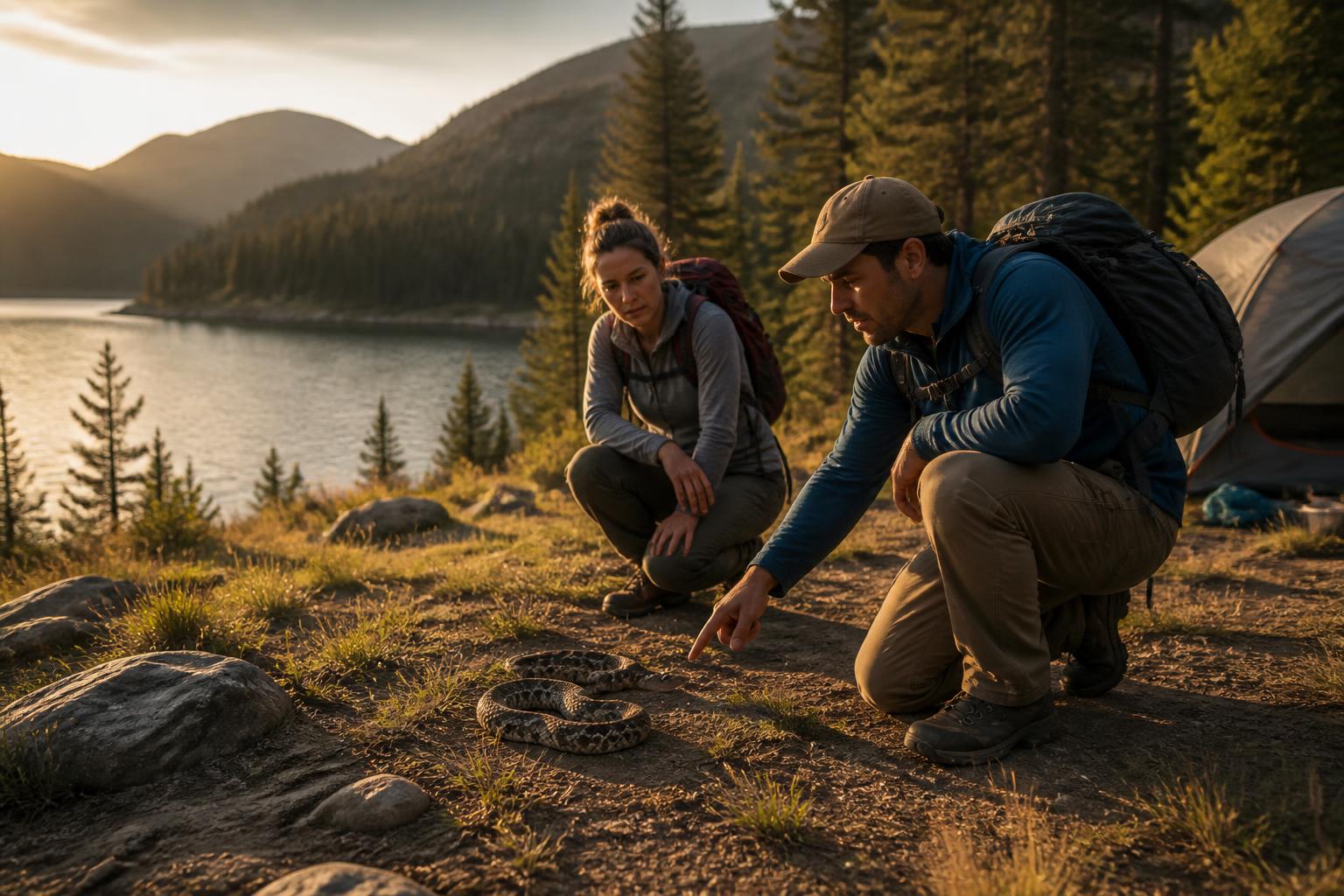
Identify Venomous Snakes at a Glance
No single rule applies to every snake, but most venomous species in the US share a few visual cues. Focus on these traits instead of color or size. Important boundary: these identification tips apply only to North America. In Central or South America, the “red touch yellow” rule for coral snakes does not hold – never rely on it outside the US.
Pit vipers (rattlesnakes, copperheads, cottonmouths):
– Wide, triangular head (wider than the neck)
– Elliptical (cat-like) pupils
– A heat-sensing pit between the eye and nostril – this is the most definitive feature. To verify, look for a small depression on each side of the head, about halfway between the eye and the nostril.
– Heavy, thick body
Coral snakes (Southeast and Southwest):
– Red bands touching yellow bands – “Red touch yellow, kill a fellow”
– Red touch black, venom lack – but only in the US
– Small, blunt head and round pupils
Non‑venomous snakes (rat snakes, garter snakes, kingsnakes): slender body, rounded head, round pupils.
| Feature | Pit Vipers (rattlesnake, copperhead, cottonmouth) | Coral Snake | Non‑venomous (e.g., rat snake) |
|---|---|---|---|
| Head shape | Triangular, wider than neck | Small, blunt | Oval, same width as neck |
| Pupils | Elliptical (cat-eye) | Round | Round |
| Heat pit | Yes, between eye and nostril | No | No |
| Body | Heavy, thick | Slender, smooth scales | Slender, varied |
Practical implication: If you cannot clearly see the head shape or heat pit, treat the snake as venomous and keep your distance. Most snakebites happen when someone tries to get close enough for a better look.
Prevent Snakes from Coming Near Your Campsite
Snakes follow food, shelter, and warmth. Remove those and you drastically lower your odds of a close encounter.
Set up smart
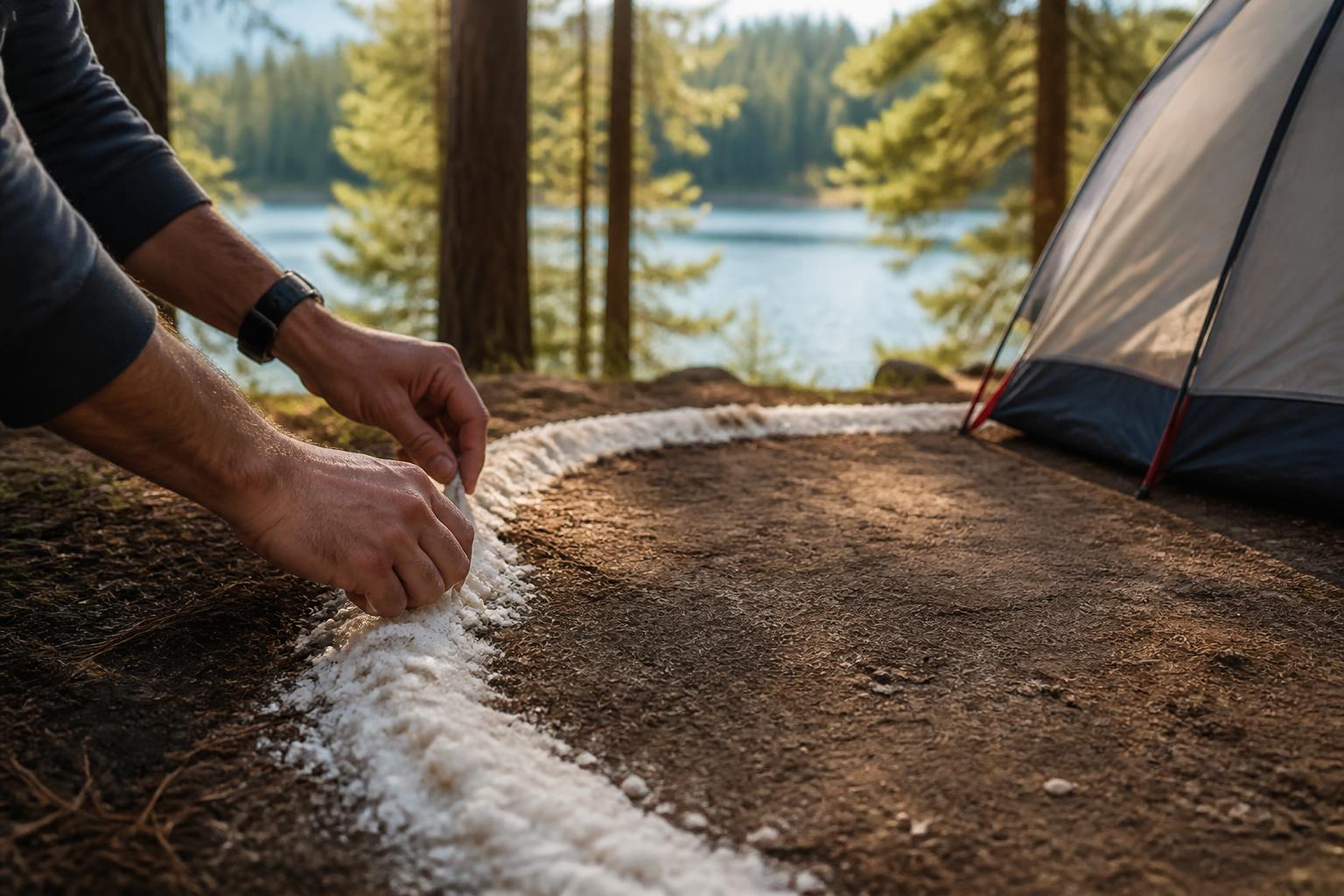
– Clear brush, tall grass, and dead wood at least 10 feet around your tent and cooking area
– Keep your tent zipped at all times – a small gap is an easy entrance
– Avoid sleeping directly on the ground; use a cot or sleeping pad inside the tent
Control food and smell
– Store all food, trash, and toiletries in sealed containers or bear canisters
– Cook and eat at least 100 feet from your sleeping area
– Clean dishes and wipe down surfaces immediately – leftover smells attract rodents, which attract snakes
Wear the right gear
– Thick leather boots or snake-proof gaiters when hiking in tall grass or rocky terrain
– Long pants, not shorts or thin leggings, in snake-prone areas
Use light at night. Snakes are often active after dark. Keep a headlamp or flashlight on while walking to the bathroom, and scan the ground before stepping.
Expert tip #1 – Actionable step: Walk at a steady pace and scan the trail 5–10 feet ahead. Common mistake: Staring at your phone or map; snakes freeze when they hear vibrations, but you can still step on one if you aren’t watching the ground.
Quick Decision Aid: Five Checks Before You Unpack
- Is the tent site on bare, level ground away from rock piles, logs, and dense brush?
- Is your tent completely zipped (including the rainfly opening) when you aren’t inside?
- Are all food, trash, and scented items stored in a sealed container and placed at least 100 feet from the sleeping area?
- Do you have a flashlight or headlamp ready for any nighttime trips to the bathroom?
- Is your first aid kit within easy reach of the tent, and does it contain compression bandages and a splint?
If you answer “no” to any of these, fix it before settling in.
React Calmly When You See a Snake
Counter‑intuitive fact: Most snakebites happen when someone tries to handle or kill the snake. The safest move is to stop, identify it from a safe distance (at least 6 feet), and then give it a wide berth.
If the snake is blocking the trail:
– Wait for it to move on its own – it will usually leave within a few minutes
– Do not throw rocks, poke it with a stick, or attempt to move it
– If you must pass, detour at least 10 feet around the snake
If it’s near your campsite:
– Do not try to chase it away. Wait until it slithers off on its own.
– If it doesn’t leave after an hour, consider moving your tent to another spot rather than trying to remove the snake
Trade‑off: Waiting for a snake to move is usually the best option, but if you are on a narrow trail with steep drop-offs and cannot detour, your only safe alternative is to wait until it leaves – do not attempt to jump over the snake. The risk of a defensive strike is higher if you force passage.
Expert tip #2 – Actionable step: Use a walking stick to sweep tall grass ahead of you while hiking. Common mistake: Poking directly into a brush pile where a snake might be coiled; sweep sideways, not forward.
Administer Correct First Aid for Snakebites
If you or someone in your group is bitten, time and calm are your best tools. The vast majority of venomous snakebites are non‑fatal if treated promptly.
Do this immediately:
1. Move the victim at least 20 feet away from the snake (to avoid a second strike)
2. Keep the bitten limb at or below heart level – do not raise it
3. Remove any jewelry, watches, or tight clothing near the bite area (swelling will occur)
4. Call 911 or arrange evacuation – do not drive yourself if you’re the victim
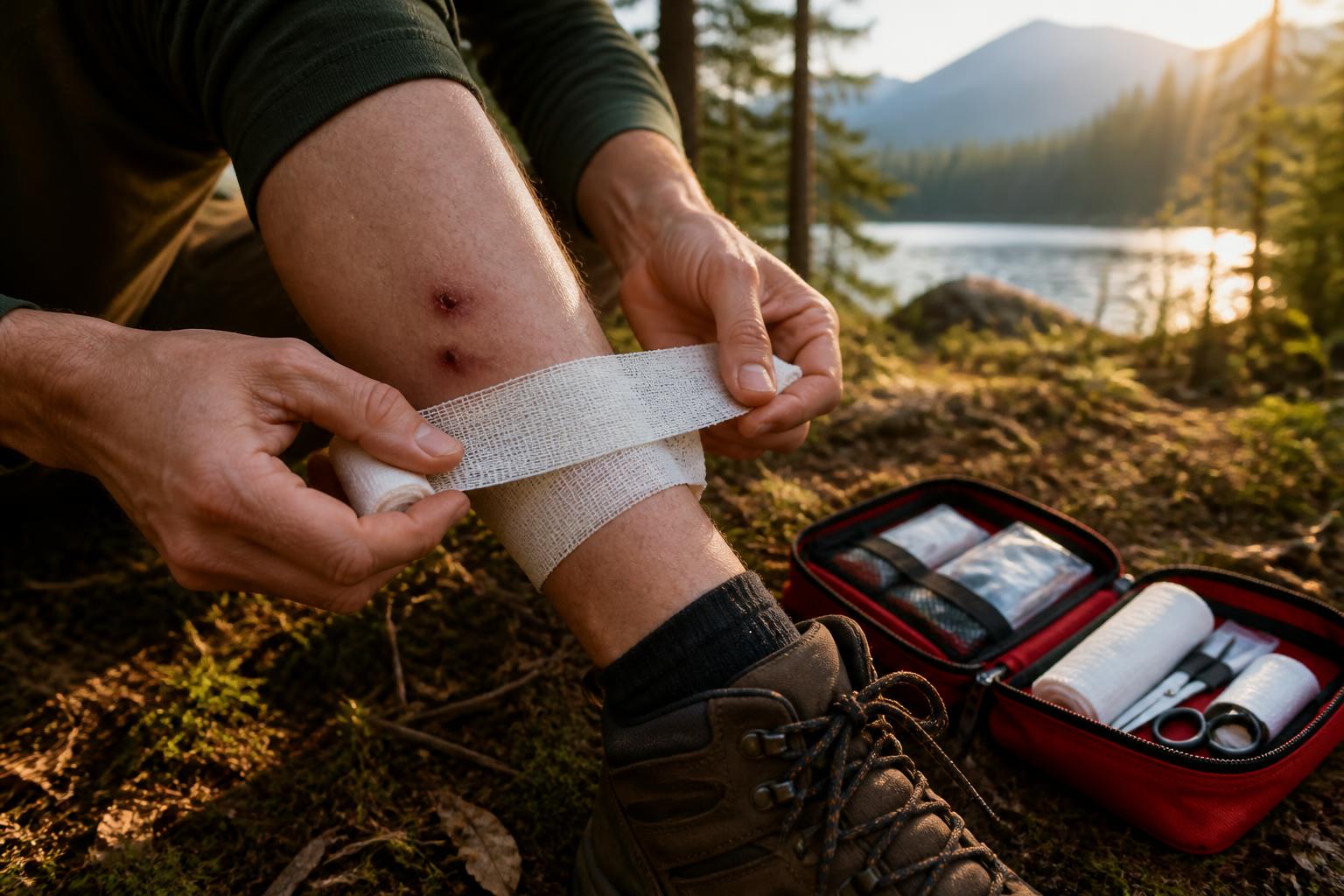
5. Apply a loose compression bandage: wrap the entire limb starting just above the bite, going upward. The bandage should be snug but not cut off circulation – you should be able to slide a finger under it
Trade‑off: A compression bandage can help slow lymphatic spread of venom, but if applied too tightly it acts like a tourniquet and can cause tissue damage. For coral snake bites, a firmer compression bandage is standard. For pit vipers, a loose bandage is acceptable only if you have proper training; otherwise, just immobilize the limb and keep it below heart level. When in doubt, skip the bandage and focus on evacuation.
Do NOT:
– Cut the wound or try to suck out venom
– Apply a tourniquet or ice pack
– Drink alcohol, caffeine, or any painkiller that thins blood (aspirin, ibuprofen)
– Try to catch or kill the snake for identification – it’s not necessary for antivenom
Expert tip #3 – Actionable step: Draw a circle around the swelling with a pen every 15 minutes and write the time next to it. This gives emergency responders a clear picture of how fast the venom is spreading. Common mistake: Wasting time trying to photograph the snake – just note the color pattern and head shape from where you stand.
Verification step for your kit: Before you leave, practice applying a compression bandage on your own arm. Check that you can still feel a pulse in your hand after wrapping – that tells you it’s not too tight.
Pack a Snake-Specific First Aid Kit
Your standard camping first aid kit may not have the right supplies for a snakebite. Stock these extras:
– Elastic compression bandages (at least two, 4–6 inches wide)
– A marker or pen for marking swelling
– A splint (SAM splint works well) for immobilizing the limb
– Antiseptic wipes and sterile gauze (for cleaning the bite area, not for packing the wound)
– A dedicated emergency blanket or space blanket to prevent shock
A good starting kit that already includes many of these items is the First Aid Only 91248 OSHA-Compliant First Aid Kit. It comes with bandages, gauze, antiseptic towelettes, gloves, and scissors – just add the compression bandages and marker yourself.
FAQ
What should I do if bitten by a snake and I’m alone?
Stay as calm as possible. Call 911 immediately, sit or lie down to keep your heart rate low, and do not walk or run. Splint the bitten limb if you can, and wait for rescue. If you attempt to hike out, you will speed venom circulation and risk collapse.
Do snakes chase people?
No. Snakes will strike if cornered or stepped on, but they do not actively pursue humans. If a snake appears to be following you, it is likely moving toward the same escape route – step aside and let it pass.
How long do I have to get to a hospital after a venomous bite?
Typically several hours, but it varies by snake species and amount of venom injected. Seek medical attention as soon as possible – do not wait for symptoms to develop. Mark the time of the bite on your phone or a piece of paper so responders know how long the venom has been spreading.

Camping Bob has spent over 20 years camping across the US — from BLM dispersed sites in the Southwest to KOA campgrounds in the Pacific Northwest. He writes practical, no-nonsense guides to help fellow campers get outdoors with confidence.