
Best Mosquito Nets and Screens for Tent Camping
A mosquito net only works if it stays off your skin, seals at the bottom, and uses mesh fine enough to block the bugs in your area. Most camping nets fail on at least one of those three points. Here’s what to look for and which product fits your setup.
Quick answer
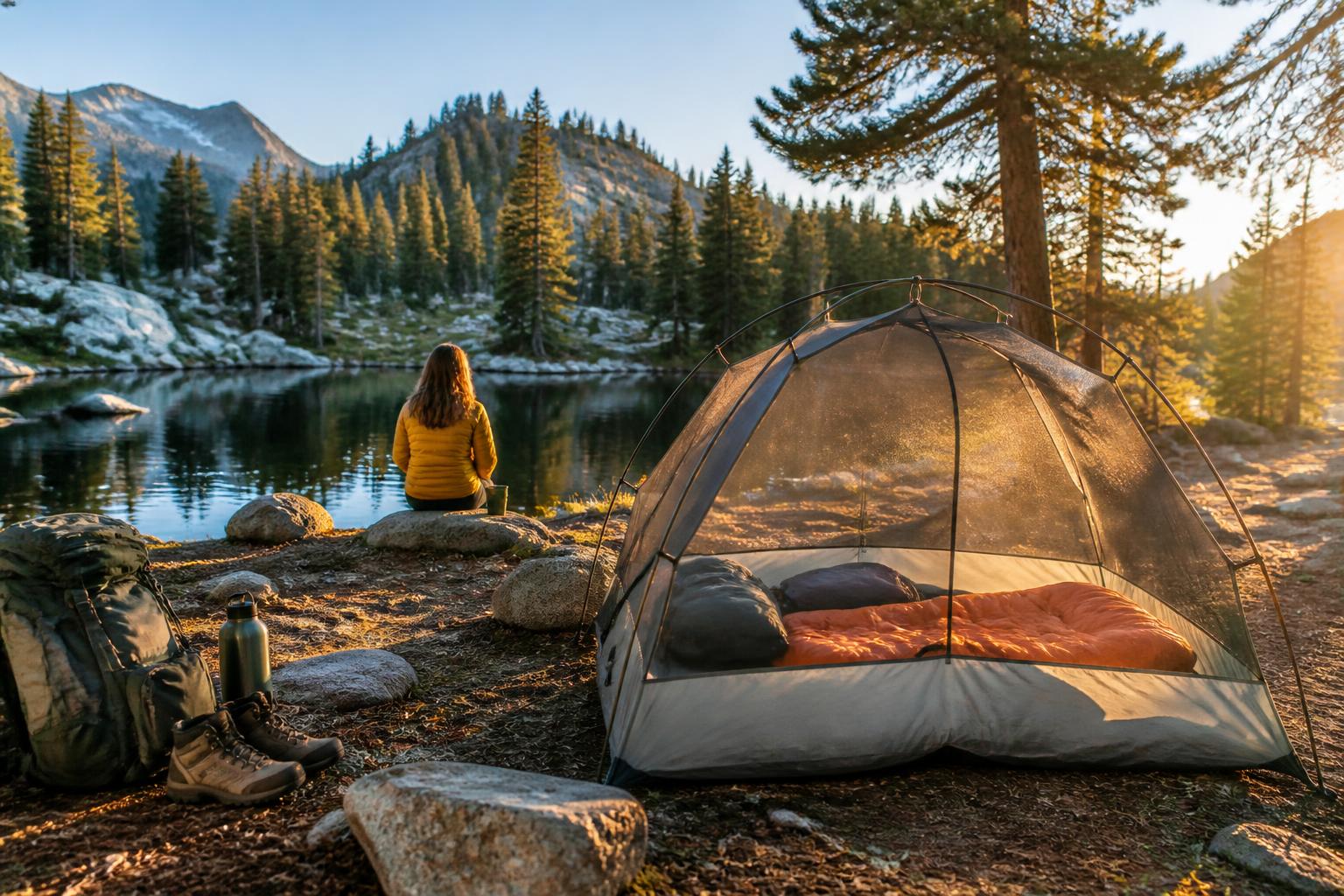
Buy a hanging canopy net for sleeping-area protection and a pop-up screen tent for daytime bug-free zones. For almost all tent camping, the Coghlan’s Rectangular Mosquito Net is the most versatile sleeping net because it comes with a complete hanging kit. But if you camp near water where no-see-ums are common, you need the SANSBUG Screen Tent for One Person instead—its ultra-fine mesh stops biting midges that pass straight through standard mosquito netting.
Applicability boundary: These recommendations apply to car camping and backpacking with a tent, hammock, or tarp shelter. They do not cover permanent cabin setups, RV screen rooms, or decorative bed canopies sold as mosquito nets. If your tent already has fully sealed, no-see-um-rated mesh on all windows and doors, you may not need an additional net at all.
Comparison framework
| Product | Best for | Key feature | Mesh type | What it won’t do |
|---|---|---|---|---|
| Coghlan’s Rectangular Mosquito Net | Sleeping-area protection inside a tent or shelter | Full hanging kit (twine, hooks, anchors, nails) | Standard mosquito mesh (~1.2mm openings) | Stop no-see-ums or gnats |
| SANSBUG Screen Tent for One Person | Solo car camping, day-use bug-free zone | Pop-up frame, integrated tarp floor | No-see-um mesh (400+ holes/sq. in.) | Fit more than one person comfortably |
| Universal Backpackers Mosquito Net for Single to King-Sized Beds | Travel or cot-based camping | Adhesive ceiling hooks, multiple bed sizes | Standard mosquito mesh (~1.2mm openings) | Stay attached to damp tent fabric |
Top Pick: Coghlan’s Rectangular Mosquito Net. It’s lightweight, packs small, and includes everything you need to hang it. The catch is the standard mesh size. If you camp in no-see-um terrain, skip this and buy the SANSBUG instead.
Practical implication for your next purchase: If you buy a standard mesh net and camp near lakes or marshes, you will still get bitten—just by smaller insects. That means you either buy a second net with finer mesh or you learn to live with the bites. The cheapest way to avoid that is to check the mesh rating before checkout.
Best-fit picks by use case
Solo backpacker or lightweight car camper – Choose the SANSBUG Screen Tent for One Person. The pop-up frame sets up in seconds, the no-see-um mesh blocks everything, and the tarp floor eliminates all ground gaps. At about 2 pounds, it’s heavier than a hanging net but replaces the need for a separate rain fly in good weather. The downside: one person only, and the floor makes it harder to air out on wet ground.

Family car camping (sleeping area) – Go with the Coghlan’s Rectangular Mosquito Net for each sleeper. Hang it from a ridge line inside your main tent. One net covers one sleeping pad. You can buy multiple nets to cover a family. The standard mesh stops mosquitoes but not gnats or midges, so this works best in dry or high-elevation campsites.
Travel or cot-based camping – Use the Universal Backpackers Mosquito Net. It fits over a cot or air mattress like a bed canopy. The adhesive hooks are convenient for smooth indoor surfaces but will peel off damp tent fabric—splice in a cord and tie it to a ridge line instead. The loose bottom edge can be tucked under your mattress for a good seal.
Trade-offs to know
Mesh density is the most common failure point. Budget nets like the Coghlan’s and Universal Backpackers use mesh with openings around 1.2mm. That stops a mosquito but gives a free pass to no-see-ums, black flies, and sand fleas. If you camp within a mile of any body of water, buy a net explicitly rated for no-see-ums. The SANSBUG is the only option here that qualifies. Consequences of ignoring this: you will have tiny, itchy bites in places that don’t look bitten, and no amount of DEET will keep them off your face while you sleep.
Hanging nets require a reliable suspension point. If your tent has no interior loops, you must rig a ridge line between two poles or trees. The Coghlan’s kit includes cord, but you need to tie it yourself. A sloppy ridge line means the net sags onto your face, which lets mosquitoes bite through the mesh. A pop-up screen tent avoids this problem entirely but adds bulk.
Floor vs. no floor is a trade-off between convenience and versatility. A net without a floor (Coghlan’s, Universal Backpackers) can be placed directly over a sleeping pad, but bugs can crawl in from the open bottom unless you weigh down the edges with gear or tuck them under your pad. The SANSBUG’s tarp floor seals the ground completely, but it’s less comfortable if you want to sit inside on a hot day—the floor traps heat and moisture.
Quick fit decision aid (5 pass/fail checks)
- Mesh rating says “no-see-um” or lists 400+ holes per square inch? (If not, plan to pair with another barrier or camp only in low-bug areas.)
- Net dimensions are at least 6 inches longer and wider than your sleeping pad or cot? (If not, you won’t get a good seal at the edges.)
- Hanging kit includes cord, hooks, or stakes? (If not, you need to buy them separately.)
- Bottom edge can be sealed completely (tucked under pad, weighed with gear, or sewn-in floor)? (If not, bugs will enter from below.)
- Your tent has interior loops or you have a ridge-line cord ready? (If not, you cannot hang it indoors.)
How to set up a hanging mosquito net (operator flow)
Most failures happen because the net sags onto your skin or leaves a gap at the ground. The fix is simple if you do it in order.
Earliest checks before you start
– Confirm your tent has an interior loop or a solid point to attach a ridge line. If not, prep a length of paracord.
– Test that the net is fully dry and free of tears. A single hole big enough for a mosquito means you will get bitten.
– Check the hang height: the net should be long enough to reach 2–3 inches past your sleeping pad on all sides.
Ordered setup steps
- Rig a ridge line if your tent lacks a center loop. Tie a cord between two opposite tent corners at head height. Pull it taut so it doesn’t droop.
- Hook the net onto the ridge line using the supplied rings or tie loops. The net should hang centered directly above your sleeping area.
- Adjust the height so the bottom edge sits 2–3 inches below the top of your sleeping pad. Too high and bugs crawl underneath; too low and you’ll touch the mesh.
- Seal the perimeter. Place your sleeping bag, shoes, water bottles, or stuff sacks on the four corners and along the sides. Every gap is an entry point.
- Tuck the back edge under your sleeping pad so it stays put when you move at night.
- Test the seal. Lie down and move around. If any part of the net touches your skin, increase tension or lower the hang point.
Likely causes of persistent bites
– The net sags onto your face or arms. Solution: tighten the ridge line or add a frame stick to lift the center.
– There is a gap at the bottom. Solution: add more weight along the sides or switch to a net with a sewn-in floor.
– The mesh is too coarse. Solution: buy a net rated for no-see-ums.
Verification step: Before you commit to sleeping, do a light test. Lie in position and shine a headlamp outward. If you can see light coming through the net in large patches (bigger than the headlamp beam), the gap is large enough for a mosquito to enter. Patch or adjust immediately.
Escalation signal: You have done all adjustments, weighed down all edges, and still wake up with fresh bites. Stop using that net for that campsite and switch to a no-see-um-rated pop-up screen tent or a fully enclosed tent with built-in bug walls.
Success check: You sleep through the night without itching, the net does not touch your skin anywhere, and there are no visible gaps at dawn. You’re good to go with that setup.
Related questions
Do I need a mosquito net if my tent already has mesh windows?
Tent windows are screened, but doors, floors, and zipper tracks often develop small gaps over time. A separate net provides a second barrier and protects you if you leave the door unzipped. If your tent is newer and has fully sealed no-see-um mesh on all vents, you can skip the extra net for lower-bug sites.
Can I use a bed canopy sold for home use for camping?
Only if it’s made of genuine insect mesh, not decorative tulle. The Universal Backpackers net works, but the adhesive hooks will not hold on damp tent fabric. Replace them with a cord-and-knot suspension.
How do I clean a camping mosquito net without damaging it?
Hand wash in cold water with a mild soap. Do not wring or machine wash—agitation tears the mesh. Air dry flat. Store in a dry bag to prevent mildew.
What is the difference between a screen tent and a mosquito net?
A screen tent is a standalone shelter with a frame and floor, designed for sitting or cooking in. A mosquito net is a canopy that hangs over a sleeping area without a floor. Screen tents are heavier but more versatile for daytime protection against flying insects and sun.

Camping Bob has spent over 20 years camping across the US — from BLM dispersed sites in the Southwest to KOA campgrounds in the Pacific Northwest. He writes practical, no-nonsense guides to help fellow campers get outdoors with confidence.