
Tent Heaters: Safe Options for Cold Weather Camping
Not all heaters are safe inside a tent. Combustion heaters that burn propane, butane, or kerosene without proper ventilation produce carbon monoxide (CO)—a colorless, odorless gas that can kill you in minutes. If you need heat inside a tent, your only truly safe choices are electric heaters (when you have shore power) or specifically certified catalytic/radiant propane heaters designed for indoor use with built-in low-oxygen shutoff (ODS) and tip-over protection. The most common failure: assuming any small propane bottle heater is safe. It isn’t.
When the answer changes. The safety rules divide cleanly by power source. If you are car camping at a site with an electrical hookup, an electric space heater eliminates CO risk entirely. If you are backpacking or camping without power, only a propane catalytic heater with an ODS belongs inside your tent. A heater without that certification can kill you before you feel sleepy. This article covers both scenarios, but the choices and risks are fundamentally different.
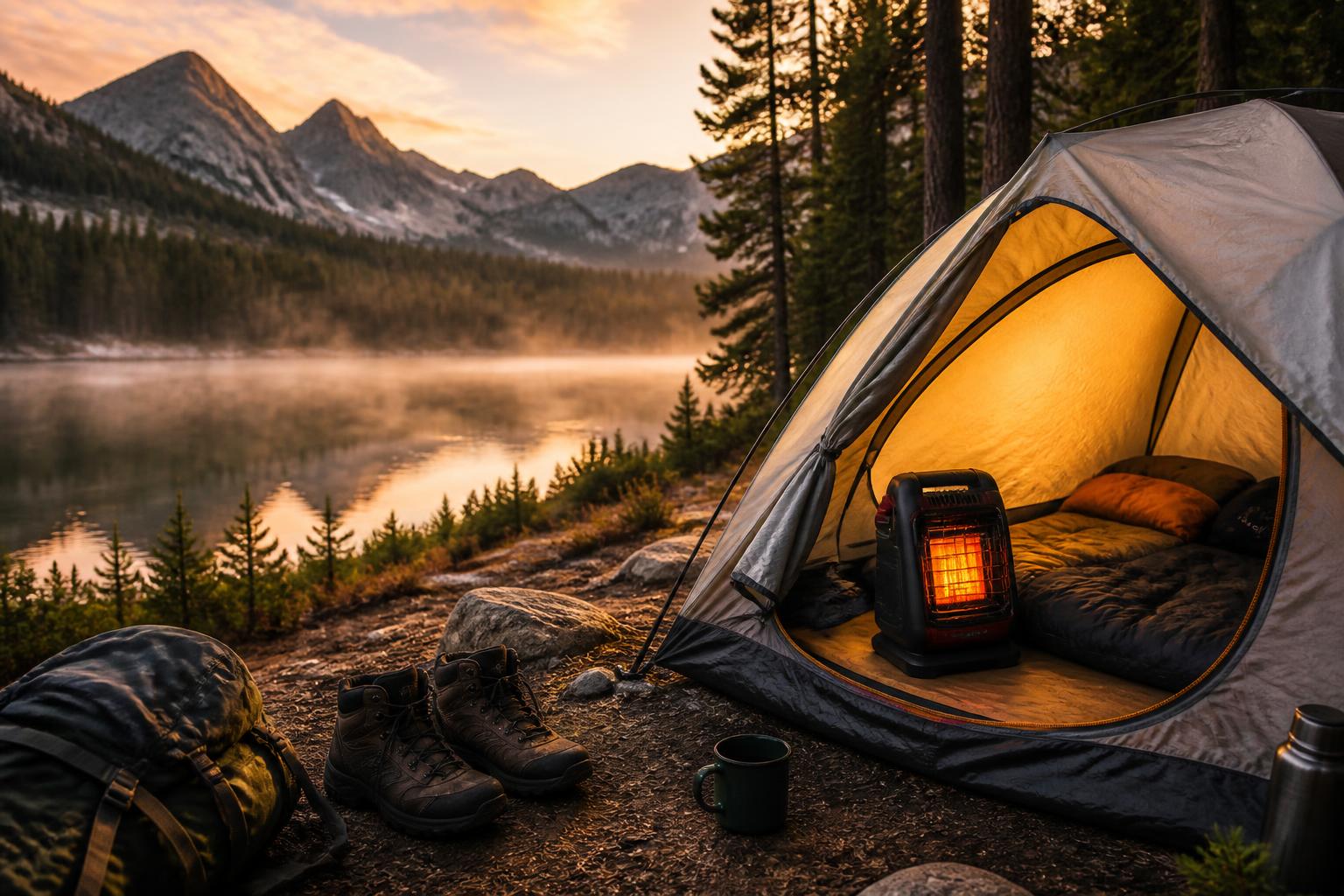
Which Heaters Actually Belong in a Tent
Three categories exist for tent heating. Know where each fits before you buy.
Electric Space Heaters – Safe, but Power-Dependent
Electric heaters produce no combustion gases, so CO is not a concern. However, they require a generator or a 120V RV hookup. Most modern tents lack a purpose-built power cord pass-through, so you’ll need a heavy-duty outdoor-rated extension cord long enough to reach the tent without tripping hazards.
The Amazon Basics Ceramic Portable Mini Space Heater is a cheap, compact option for car camping with power. At 500 watts (about 1,700 BTU equivalent) it’s enough to take the chill off a small tent. It includes tip-over shutoff and overheat protection. Limitation: it has zero use in a backcountry tent because it needs AC power. Also, many electric heaters trip breakers when used on a generator with other appliances—test your generator’s output before relying on it.
How to verify fit: Before your trip, plug the heater into your generator or campsite outlet and run it for 15 minutes at the tent’s location. Check that the extension cord doesn’t get warm (if it does, upgrade to a thicker gauge). Also confirm the heater’s displayed setting matches the temperature you actually feel—cheap models sometimes cycle on/off poorly.
Certified Propane Catalytic/Radiant Heaters – The Go-To for Off-Grid Camping
These are the only fuel-burning heaters safe for tent use. They must have an Oxygen Depletion Sensor (ODS) that kills the flame when oxygen drops too low, plus tip-over shutoff. The two market leaders are both from Mr. Heater:
- Mr. Heater 3,800 BTU Little Buddy – Designed for small tents (up to ~100 sq ft). Runs on 1-lb propane cylinders. Very low output; safe inside a tent only because it’s certified for indoor recreational use with an ODS. On low, it raises interior temp by 10–15°F above outside temp.
- Mr. Heater 9,000 BTU Portable Buddy – Warms a larger tent (up to ~225 sq ft). Still propane, still ODS and tip-over shutoff. Comes with a hose connector for a 20-lb tank, which many campers prefer to avoid single-use cylinders.
How to verify a heater has ODS: Look for a small rectangular or circular grill opening on the side of the heater body—this is the ODS pilot flame intake. On the box or label, find “Oxygen Depletion Sensor” or “ODS” in the certification markings. If neither is present, the heater is NOT safe inside a tent, regardless of brand or advertising.
Unsafe Heaters – Never Use Inside a Tent
Any heater that burns fuel without an ODS, any open-flame propane stove run inside the tent, any charcoal grill, kerosene lantern, or propane lantern not specifically certified for indoor recreational use. These kill campers every year. The failure mode: the flame uses up oxygen, CO builds up, you feel drowsy, and you don’t wake up. Early detection is impossible without a CO alarm, but you can identify risk ahead of time: if the heater does not have a stamped “ODS” certification or a label reading “For indoor recreational use only,” do not put it in a tent.
Realistic trade-off between electric and propane. A propane heater will introduce moisture into the tent—about 1.2 pounds of water vapor per pound of propane burned. On a cold night, that can freeze on the tent walls and drip back down, soaking your sleeping bag and gear. Electric heaters produce no moisture, but they require a generator or shore power, and many generators are noisy, need fuel, and add weight. Neither option is flawless; your choice depends on whether you prioritize CO safety (electric wins) or off-grid independence (propane wins, with condensation as the penalty).
Comparison: Two Certified Propane Heaters vs. an Electric Option
| Model | Fuel / Power | Max BTU / Wattage | Safety Certifications | Best For | Typical Price |
|---|---|---|---|---|---|
| Mr. Heater Little Buddy 3,800 BTU | 1-lb propane canister | 3,800 BTU | ODS, tip-over shutoff, indoor-certified | Solo or 2-person tent, cold nights down to 30°F | ~$75–$85 |
| Mr. Heater Portable Buddy 9,000 BTU | 1-lb or 20-lb tank (hose optional) | 4,000–9,000 BTU | ODS, tip-over shutoff, indoor-certified | 4-person tent, larger vestibules, moderate cold | ~$100–$130 |
| Amazon Basics Ceramic Space Heater | 120V AC (needs generator / hookup) | 500W (~1,700 BTU) | Tip-over shutoff, overheat protection, no CO | Car camp with electricity only | ~$20–$25 |
Top Pick: Mr. Heater 3,800 BTU Little Buddy Portable Radiant Propane Heater – It hits the sweet spot for most tent campers: small enough to pack, certified safe, and cheap enough that you don’t worry about it getting banged around. For larger groups or colder trips, step up to the Portable Buddy.
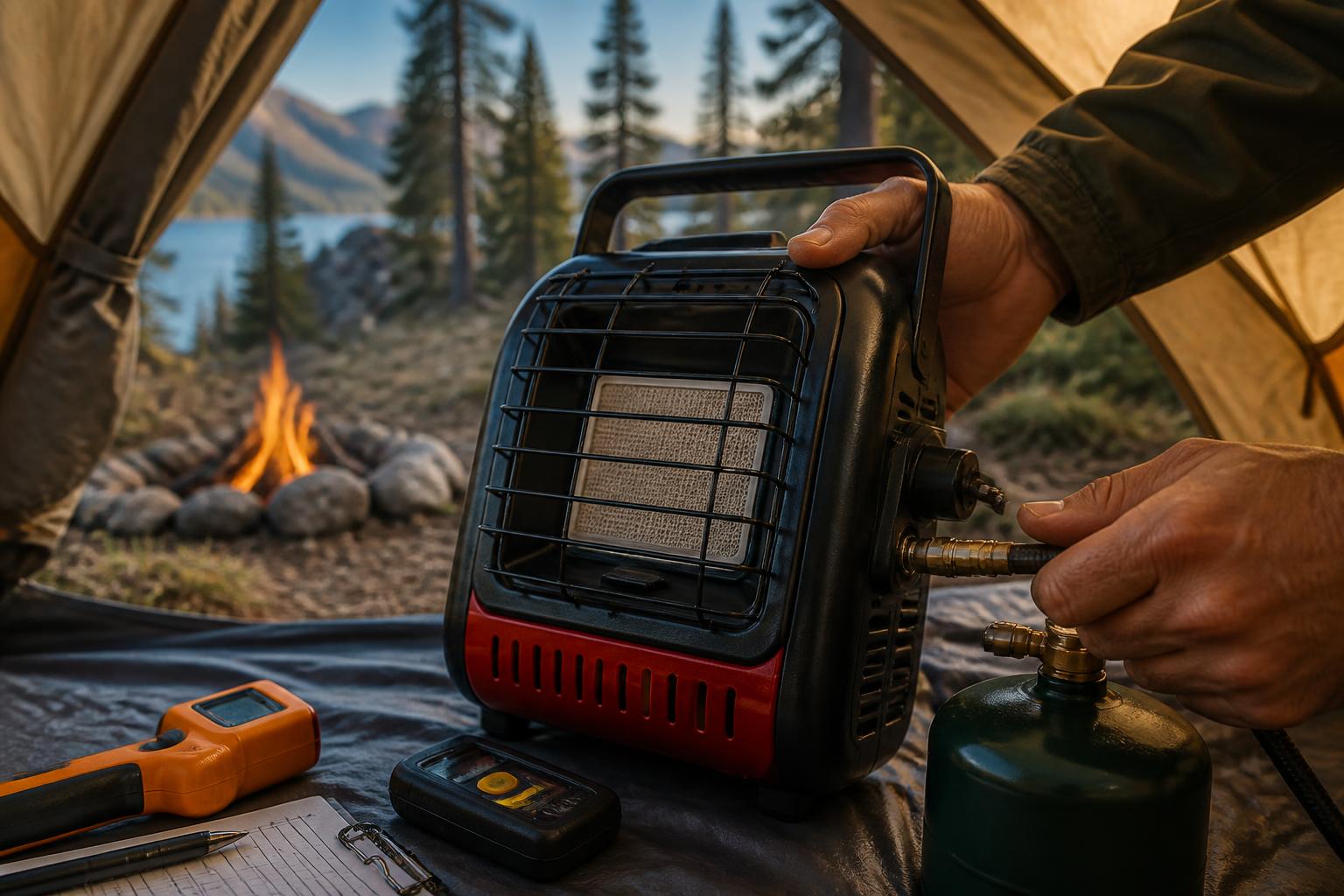
Five Checks Before You Buy Any Tent Heater
Use this quick decision aid. If you answer “no” to any check, that heater is not safe for your setup.
- ODS certification – Does the heater have an Oxygen Depletion Sensor? Look for the sensor hole on the side and a label. No ODS = do not use inside a tent.
- Tip-over shutoff – When you tilt the heater past 30°, does it kill the flame? Test it before your trip by tipping it gently (on a stable surface). If it doesn’t shut off, return it.
- Clearance to tent fabric – The manual will specify minimum distances (often 12–24 inches from walls). Can you place it where nothing will touch it? Anything closer risks melting or fire.
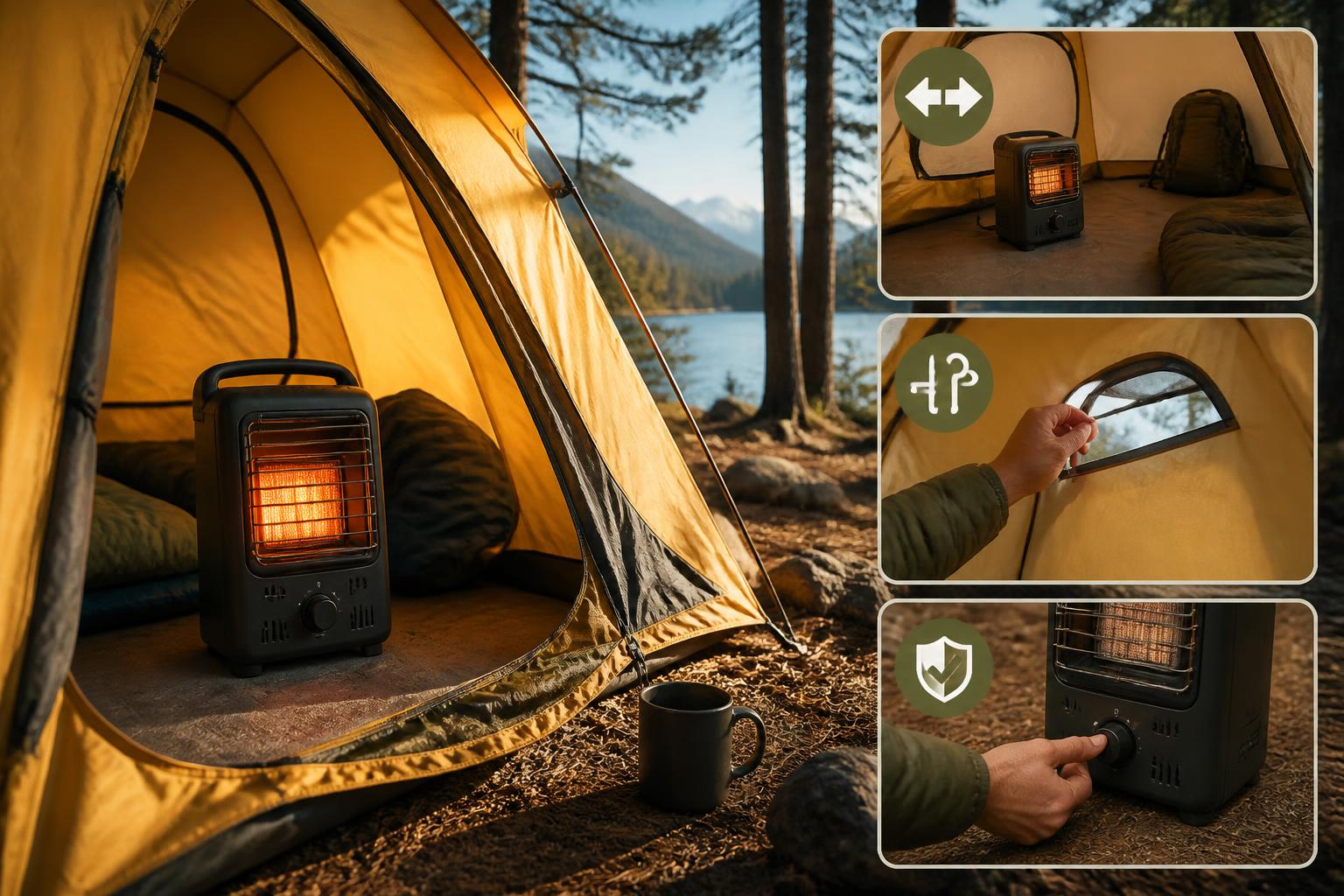
- Carbon monoxide alarm – Are you bringing a separate battery-powered CO alarm rated for low temperatures? A heater with ODS is not a substitute for a CO alarm. ODS only monitors oxygen, not CO.
- Ventilation plan – Do you have a small vent or partially unzipped door to allow fresh air exchange, even in cold rain? Never seal yourself in tight with any fuel-burning device. A 1-inch gap at the bottom of the door is usually enough.
Three Practical Tips for Using a Tent Heater Safely
1. Set your alarm low, not high.
Run the heater on its lowest setting whenever you sleep. The goal is to take the edge off the chill, not to sleep in a T-shirt. A 3,800 BTU heater on low will raise a tent interior by 10–15°F above outside temp. Common mistake: cranking the heater to max, then suffocating in the warmth and forgetting ventilation. Stay cold enough that you still want a sleeping bag rated for the actual low temperature. If you wake up sweating, the heater is too high.
2. Place the heater on a stable, non-flammable surface.
A foldable camp table or a flat rock works. Never put it directly on the tent floor or on a sleeping pad. If the tent floor is wet, the heater’s base can melt or scorch synthetic fabric. Also, an uneven surface can make it tip—even a model with tip-over shutoff will extinguish, but the sudden flame-out can startle you and waste fuel. Common mistake: shoving the heater in a corner “out of the way” where it can tip when you roll over at night. Always in the center of the footprint, away from gear and walls.
3. Know the fuel limit on a single 1-lb canister.
The Little Buddy runs about 5–6 hours on low, 2–3 on high. If you need heat all night, either buy multiple canisters or use the Portable Buddy with a hose to a 20-lb tank. Common mistake: assuming one canister lasts all night and waking up shivering (or worse, running out of fuel and not waking up due to CO because the ODS shutoff didn’t fire—though this is extremely rare, a CO alarm is your backup). Always carry a spare canister and a CO alarm with fresh batteries. Mark the time you started the heater so you know when it will run out.
FAQ: Tent Heater Safety
Can I use a camping stove to heat my tent?
No. Stoves are not certified for indoor use and lack an ODS. They produce carbon monoxide quickly. Cook outside and never use a stove for warmth.
How long can I run a propane heater in a tent?
Until the canister runs out or the ODS shuts it off due to low oxygen. Many models run 5–6 hours on a 1-lb cylinder. Never run it unattended or while you are not awake to monitor it.
Do I still need a CO alarm if my heater has ODS?
Yes. ODS only detects oxygen level, not CO. A separate battery-powered CO alarm (look for a model rated to at least –4°F) provides a second layer of safety. Place it at sleeping height, not on the floor.
What’s the best tent heater for freezing temperatures?
For sub-20°F nights, the Mr. Heater Portable Buddy with a 20-lb tank gives the most output and runtime. Even so, no tent heater will keep a tent warm in extreme cold—your sleeping bag and pad do that work. Use the heater only to knock the chill off while changing clothes or before sleep.

Camping Bob has spent over 20 years camping across the US — from BLM dispersed sites in the Southwest to KOA campgrounds in the Pacific Northwest. He writes practical, no-nonsense guides to help fellow campers get outdoors with confidence.