
How to Stay Warm Camping: Cold Weather Sleeping Strategies
Sleeping warm in winter camping comes down to three non-negotiable layers: a high-R-value sleeping pad, a sleeping bag rated well below the expected low, and dry, non-cotton clothing. Most cold nights are sabotaged by ground heat loss, drafts, or moisture-trapping layers. Fix those three things and you will sleep comfortably even in single-digit temperatures.
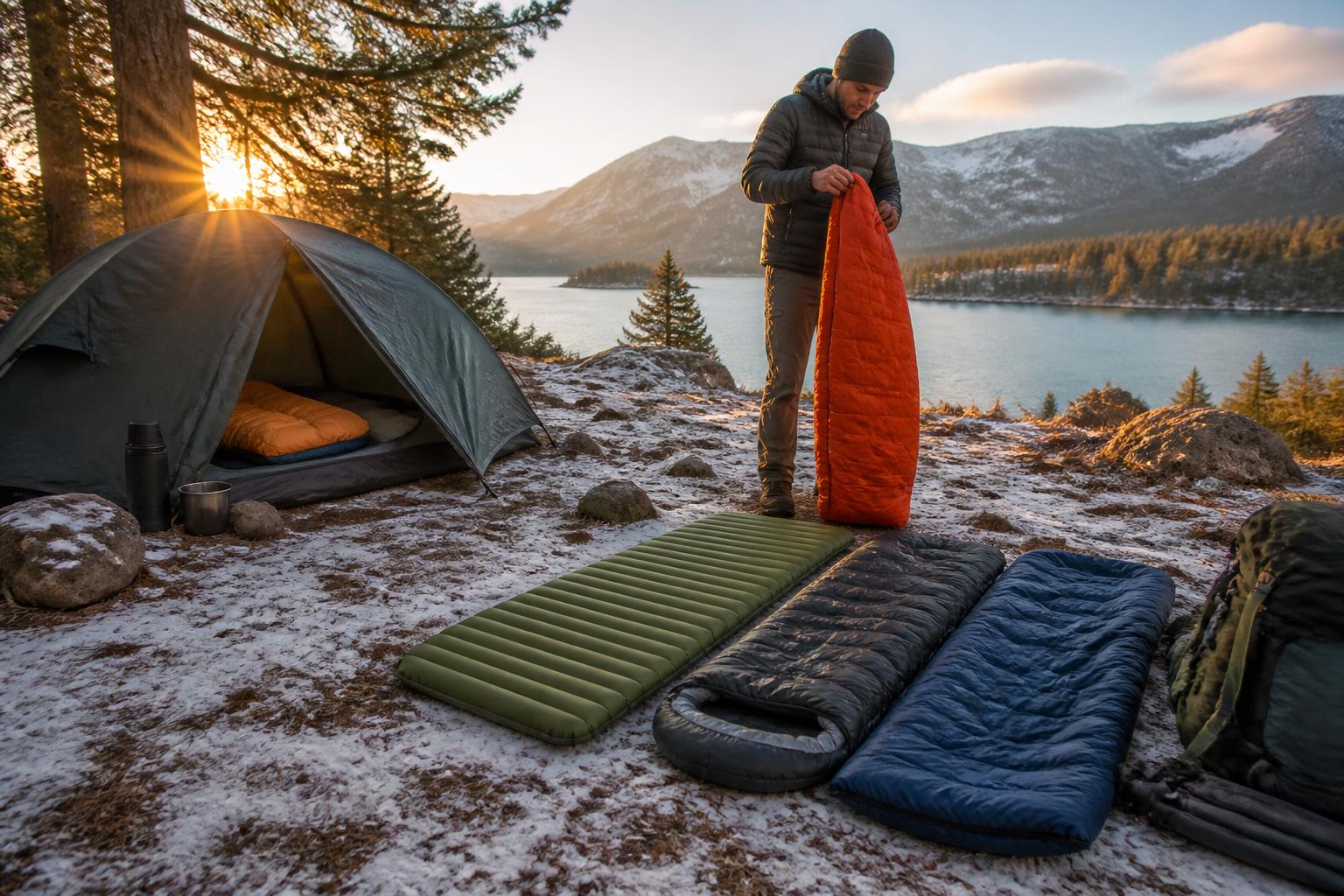
Your Winter Sleep System: Three Non-Negotiable Layers
Ground Insulation
A sleeping bag only insulates the top and sides. All the weight on your body compresses the bottom insulation against the ground, leaving you with almost no warmth underneath. You need a pad with an R-value of 4 or higher.
- Car camping: Bring a thick foam pad (R-value 5+) plus an inflatable pad on top. The foam adds backup insulation and will not deflate.
- Backpacking: Choose an inflatable pad with an R-value of 4–6. Add a closed-cell foam pad underneath if the ground is frozen or snowy.
Check the pad’s R-value before you go. Many three-season pads are R-2 to R-3 and will let the cold through. If your pad’s R-value is below 4 and you cannot replace it before your trip, double up on foam pads or add a reflectix layer underneath—it buys you about 5–10°F of margin.
Sleeping Bag
The bag’s temperature rating is a survival limit, not a comfort guarantee. For winter camping, select a bag rated 10–20°F lower than the lowest temperature you expect.
| Expected low | Recommended bag rating |
|---|---|
| 20°F | 0°F to 10°F |
| 0°F | -10°F to -20°F |
| -10°F | -20°F or lower |
Mummy-shaped bags trap heat better than rectangular. Look for a draft collar, a snug hood, and a full-length zipper baffle. The 0 Degree Winter Sleeping Bags for Adults Camping (350GSM) is one example designed for sub-freezing use (rated 5°F–32°F, but treat the lower end as survival, not comfort).
If you sleep cold, add a synthetic or down liner to boost the bag’s warmth by 10–15°F without buying a new bag. This is also the cheapest fix if you already own a 20°F bag and need to stretch it to 10°F.
Clothing and Liners
Cotton is dangerous in winter — it absorbs moisture and stays wet. You want a dry, moisture-wicking base layer that you change into just before getting in the bag.
- Top: A long-sleeve merino wool or synthetic crew. The 100% Merino Wool – Men’s Midweight Long Sleeve Crew Shirt is a solid choice: soft, odor-resistant, and warm when damp.
- Bottom: Merino or synthetic long underwear.
- Feet: Clean, dry wool socks (not the ones you hiked in).
- Head: A warm beanie or balaclava.
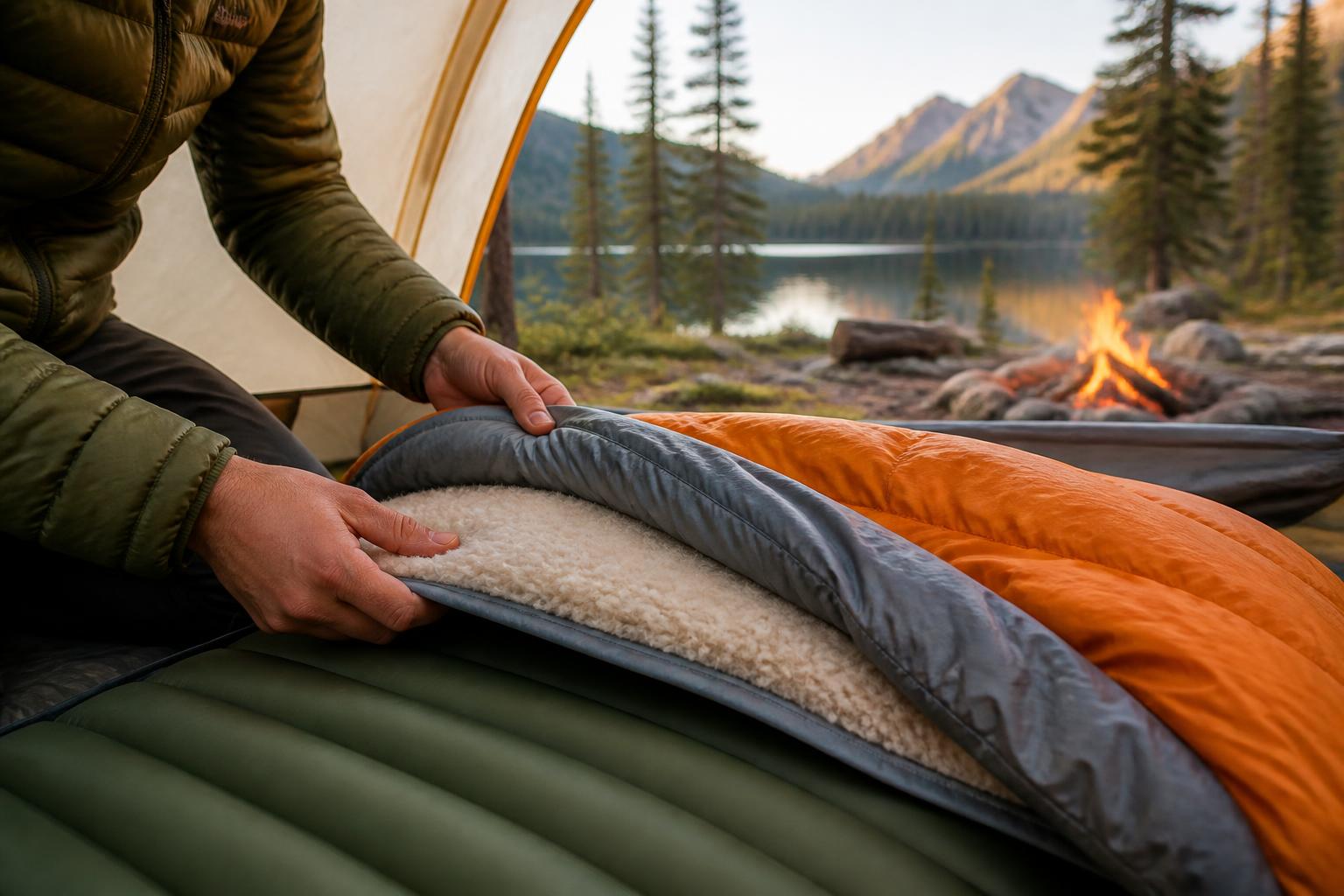
A bag liner (silk, fleece, or Thermolite) adds 5–15°F of warmth and keeps your bag cleaner.
Quick Check: Is Your Sleep System Ready for Winter?
Run through this checklist before your cold-weather trip:
- [ ] Sleeping pad R-value ≥ 4 (check manufacturer spec)
- [ ] Sleeping bag rated at least 10°F below the forecast low
- [ ] Bag has a draft collar and a snug hood you can cinch
- [ ] You have a dry base layer to change into at bedtime
- [ ] No cotton clothing (socks, underwear, shirt, hat) anywhere near your sleep system
- [ ] You have a way to pre-warm the bag (hot water bottle, hand warmers)
- [ ] Your tent floor has a groundsheet to block moisture and wind
If you answered “no” to two or more items, ground insulation and bag rating are the highest-impact fixes—address those first. A single “no” on the pad or bag rating means you should adjust your setup or postpone the trip if the low is within 10°F of your comfort limit. One “no” on clothing or pre-warming can be fixed at camp with a dry change and a hot water bottle.
Step-by-Step: Setting Up a Warm Sleep Environment
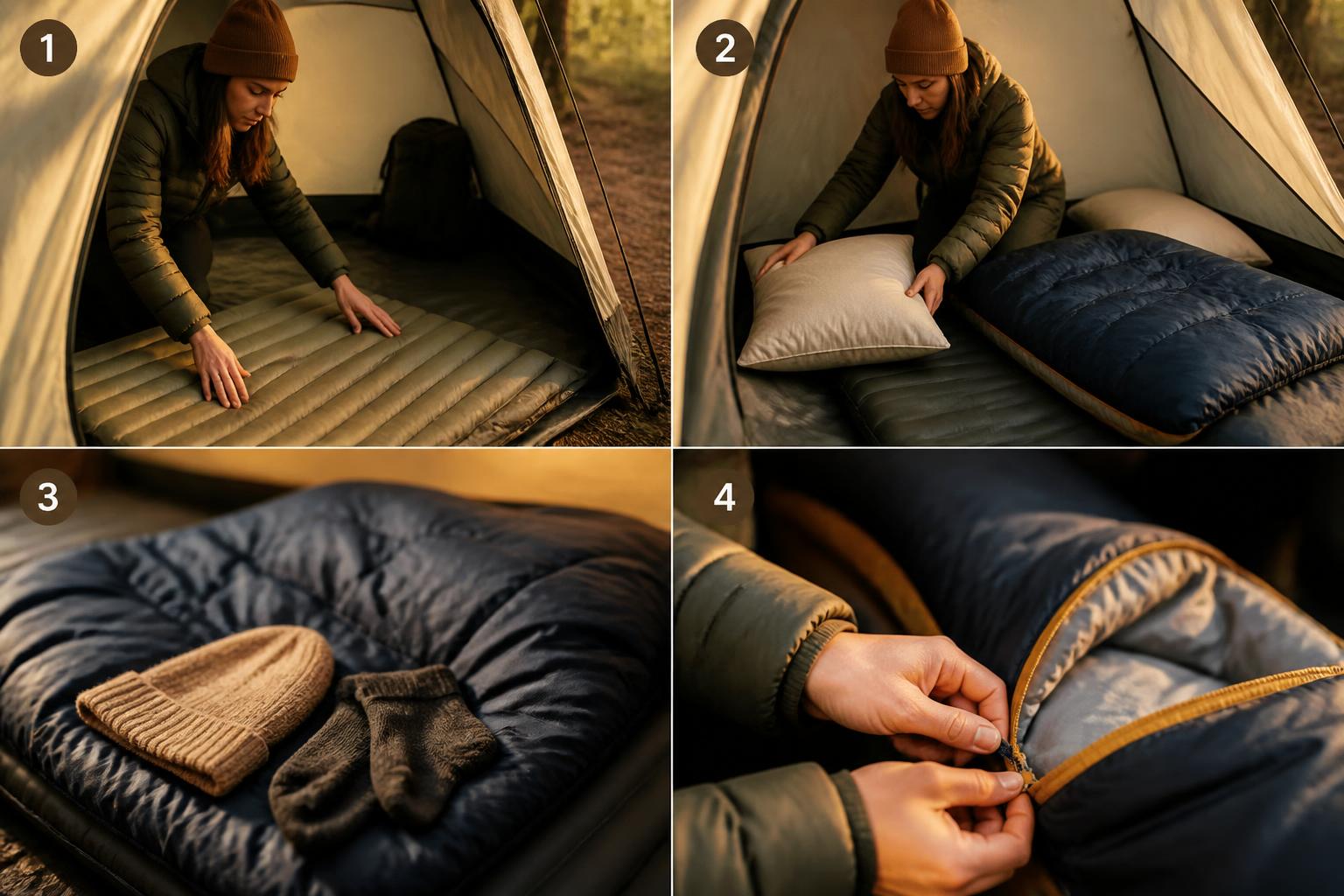
- Choose a sheltered campsite. Pitch your tent out of the wind — behind a rock, tree line, or snowbank. Avoid valley floors where cold air pools.
- Set up your tent with good ventilation. Crack the vents slightly to let moisture escape. Condensation inside the tent will freeze overnight and soak your bag.
- Layer your sleeping pad. Place the foam pad (if you have one) directly on the tent floor, then the inflatable pad on top. This creates an air gap that boosts insulation.
- Unpack and fluff your sleeping bag. Shake it out as soon as you set up camp so the insulation re-lofts.
- Change into dry, clean base layers. Do this right before you get into the bag. Your hiking clothes are damp even if they feel dry.
- Pre-warm the bag. Boil water, fill a Nalgene or stainless steel bottle, wrap it in a sock, and place it in the foot of the bag 15 minutes before you climb in. This lifts the internal temperature dramatically and warms your feet overnight.
- Add hand warmers to pockets or the foot box if the temperature is below 10°F.
- Wear a warm hat or balaclava and cinch the bag hood around your face — only leave a small opening to breathe.
Troubleshooting Common Cold Night Problems
Cold Spots Under Your Back or Hips
Your sleeping pad’s R-value is too low or the inflatable pad deflated slightly during the night. Re-inflate before bed, and add a foam pad underneath. If you are still cold after 30 minutes, the pad is the problem—use your backpack or extra clothing as a temporary layer beneath you.
Waking Up with Cold Feet
The foot of your bag is compressed or your socks are too tight, restricting circulation. Use a loose-fit sock and place the hot water bottle at your feet. If your feet are still cold after these steps, check whether your bag’s foot box has enough room—a tight fit compresses insulation and reduces warmth.
Dampness Inside the Bag
You are breathing moist air into a sealed bag. Unzip the hood slightly, or crack the tent vent. If your bag is down, it is ruined for the night — switch to a synthetic bag for wet conditions, or use a waterproof bivy. A damp down bag loses about 90% of its insulating ability and will not recover until it is thoroughly dried.
Shivering That Lasts More Than 10 Minutes
This means your system is fundamentally inadequate. Your body is losing heat faster than it can generate it. Get up, do jumping jacks, put on more layers, or retreat to a warm vehicle. Do not try to “sleep it off.” If you cannot warm up within 20 minutes of active effort (movement, warm drink, extra dry layers), that is your stop threshold—pack up and head to a heated shelter. Prolonged shivering that prevents sleep for more than an hour increases the risk of mild hypothermia, even if you do not feel dangerously cold yet.
Success Check
You wake up at a normal hour without shivering, your bag feels dry inside, and you can comfortably sit up and start your morning routine without feeling chilled. If you woke up once but warmed up again quickly, your system is borderline—add a liner or an extra pad layer for the next night.
Car Camping vs. Backpacking: One Decision That Changes Your Strategy
If you are driving to your site, you can carry a heavy closed-cell foam pad, an air mattress with built-in insulation, and multiple hot water bottles. Backpackers have to sacrifice weight for warmth.
Car Camping Strategy
Your pad R-value should be 5.5 or higher. Bring a thick foam pad like a Z-Lite Sol or a self-inflating pad. You can also bring a heavy mummy bag rated to -20°F.
Backpacking Strategy
Aim for R-value 4–5 with an inflatable pad like the Therm-a-Rest NeoAir XTherm or similar. Use a lighter bag (rated 0°F to 10°F) and supplement with a liner and a down jacket worn inside the bag.
If weight is not a constraint, over-insulate. If it is, focus on pad quality and a bag liner. One practical rule: if you are backpacking and the forecast low is below 20°F, take the weight penalty on the pad before the bag—ground heat loss is harder to compensate for than air temperature.
Frequently Asked Question
Should I sleep in my hiking clothes to stay warmer?
No. Your hiking clothes are damp from sweat or snow, even if they feel dry. Sleeping in damp clothing causes evaporative cooling that will wake you up shivering hours later. Change into a clean, dry base layer just before bed.

Camping Bob has spent over 20 years camping across the US — from BLM dispersed sites in the Southwest to KOA campgrounds in the Pacific Northwest. He writes practical, no-nonsense guides to help fellow campers get outdoors with confidence.