
Best Kids Sleeping Bags: Safe, Warm and Fun Options
The best kids sleeping bag is one that actually fits your child’s body and sleep style, not just the one with the coolest dinosaur print. Many adult-oriented temperature ratings are misleading for children, who sleep colder than adults and lose heat faster due to their smaller body surface area. A bag rated to 30°F for an adult will often leave a 7-year-old shivering at 40°F. Focus on safe construction (no drawcords that pose strangulation risk), synthetic fill (for moisture resistance against nighttime accidents and sweat), and the right length—buying a bag for your child to “grow into” usually backfires because excess empty space creates cold spots.
Applicability boundary: This guide covers children ages 3–12 for car camping, backyard sleepovers, and mild-weather backpacking (overnight lows above 25°F). If your child is under 3, you need a specialized toddler bag with a safety harness and no removable hood. If you’re backpacking above treeline or camping in conditions where lows drop below 25°F, skip kids bags entirely and use a short adult bag—kids-specific extreme-temperature bags are rarely well-insulated enough.
Quick answer
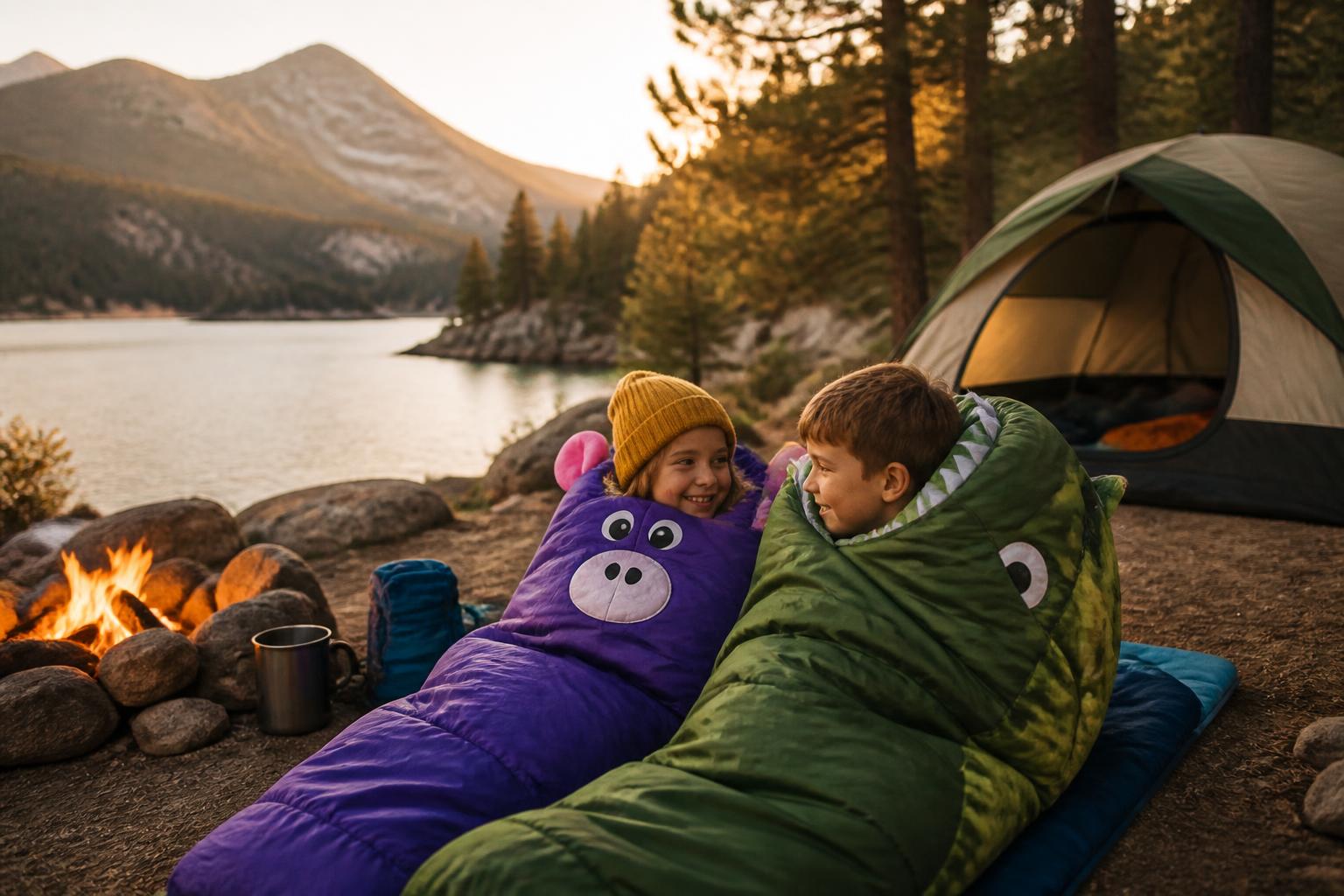
Choose a synthetic-insulated kids sleeping bag with a temperature rating at least 10°F lower than the coldest temperature you expect your child to sleep in. For a car-camping trip where overnight lows hit 40°F, get a bag rated to 25–30°F. Look for a hood or draft collar, a full-length zipper that won’t catch fabric, and a machine-washable shell. Avoid bags with neck drawcords on models for children under 7, and skip down insulation for kids under 10—down loses nearly all insulating value when wet, and kids sleep damp.
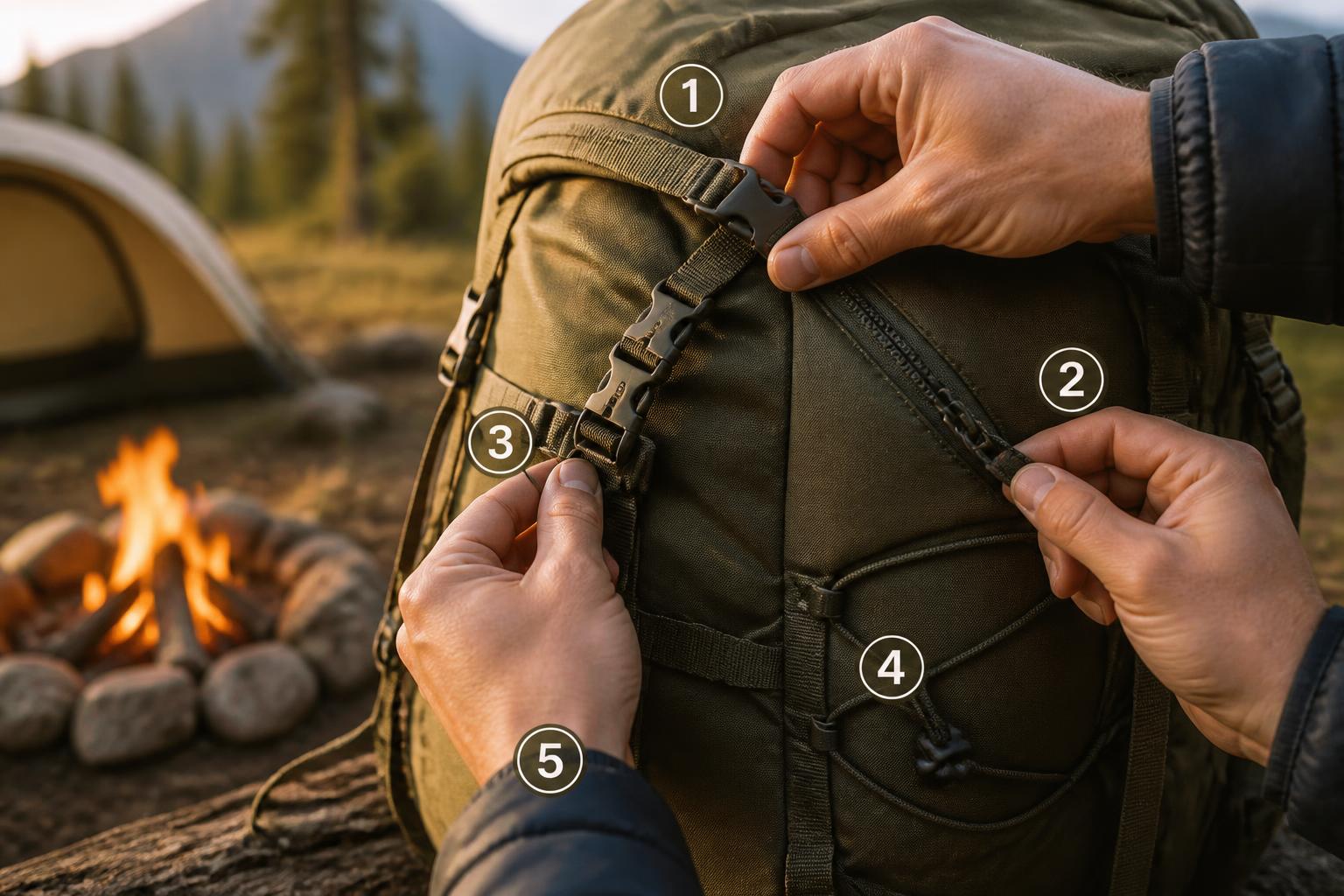
Five quick checks before you buy
These pass/fail checks take 30 seconds each. If a bag fails any one of them, move on.
- Temperature rating check. Does the bag have a clearly stated EN or ISO comfort rating (not just a survival limit)? If the tag says “32°F comfort” but your child sleeps cold, pass. Look for a comfort rating at least 10°F below your expected low.
- Zipper test. Open and close the zipper fully. Does it snag on the fabric or lining? If yes, that bag will cause a meltdown at 10 PM in the dark.
- Fill material. Is it synthetic or down? For kids under 10, if it’s down, fail it. For older kids who sleep dry, down can work, but only if the bag has a water-resistant shell.
- Neck drawcord. Is there a cord with a toggle near the face opening on a bag intended for a child under 7? If yes, fail it. This is a strangulation hazard, and many budget bags still include them.
- Length fit. Lay your child down on the bag. Is there more than 6 inches of empty space beyond their feet? If yes, the bag is too long and they’ll lose heat overnight.
How to fit and test a kids sleeping bag step by step
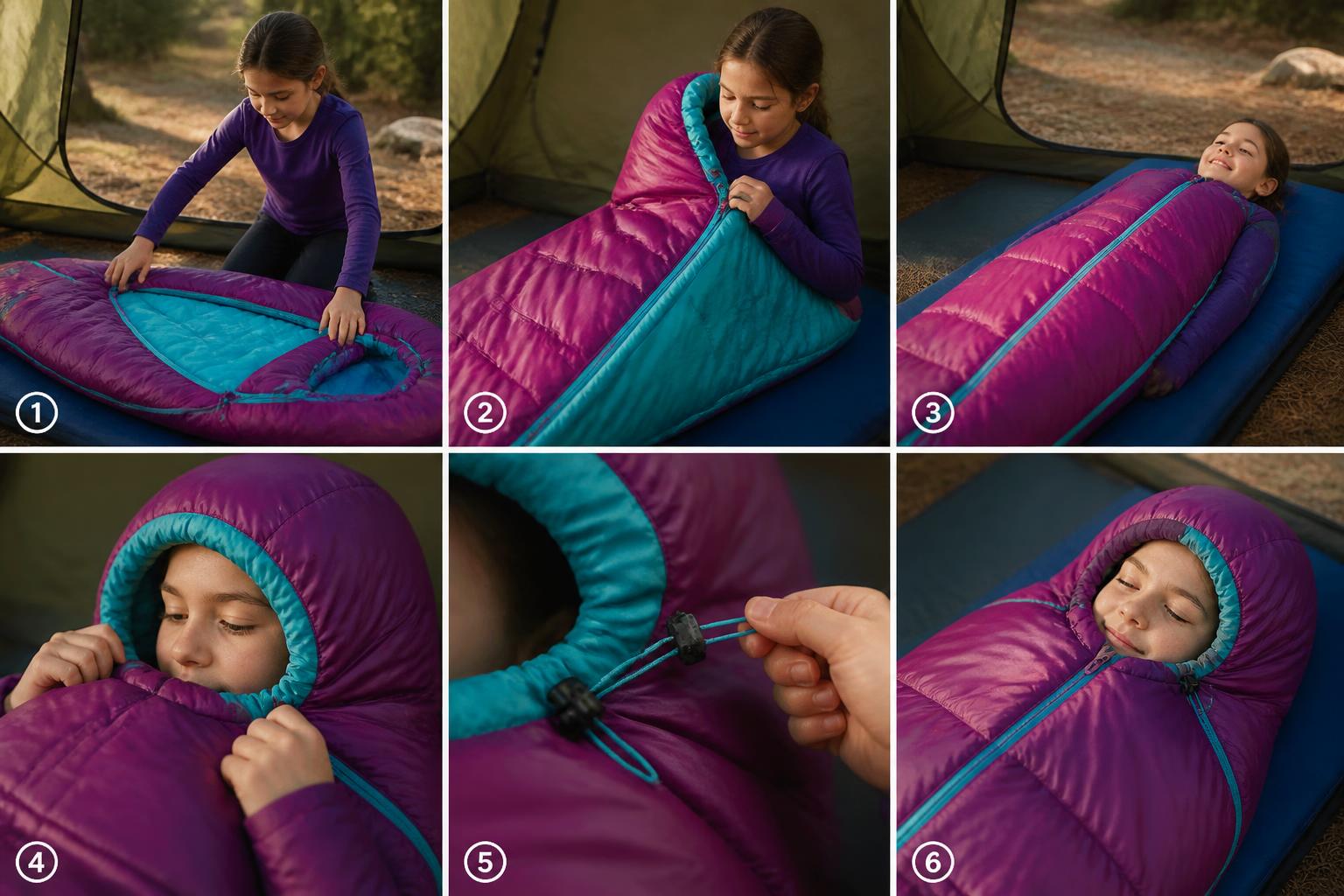
A proper fit test takes less than five minutes and can save you from returning a bag after the first trip. Follow this sequence, and use the pad attachment verification in Step 5—it’s the step most buyers skip, and it’s where rectangular bags frequently fail.
Step 1: Check the length. Have your child lie on the bag unzipped, feet at the bottom seam. The top of the bag should reach their chin, not their nose. Mark the spot where the bag ends above their head—more than 6 inches of empty space is a fail.
Step 2: Test the hood or collar. If the bag has a hood, cinch it around your child’s head. You should be able to fit two fingers between the cinch and their chin. A hood that tightens too much restricts airflow; one that can’t cinch at all lets heat escape. For bags without a hood, check that the draft collar (a padded tube at the neck) closes the gap around the shoulders.
Step 3: Run the zipper test. With the bag zipped halfway, unzip fully while watching the fabric. Any snagging, jamming, or fabric catching at the zipper body means the zipper will fail early. Open and close it five times. If it catches once, it will catch again.
Step 4: Check the drawcord. For any bag with a neck drawcord, pull the cord taut and look at the toggle. A toggle that is large enough to pass through the cord lock or that has no breakaway feature is a hazard. The safest bags use a two-part cord lock that releases under pressure.
Step 5: Verify pad attachment compatibility. Most rectangular kids bags have a webbing loop at the foot that’s supposed to hook onto a sleeping pad. Lay the bag on your actual pad and try to connect the loop to the pad’s strap system. You’ll often find the loop is too short, too long, or positioned at the wrong angle to reach the pad’s attachment point. If it doesn’t connect firmly, the bag will slide off the pad as your child moves, creating a cold gap against the tent floor. The fix is a separate pad strap system (about $10–15) that wraps around both the bag and pad—budget for this if the bag fails the direct-connect test.
Step 6: Roll and store. Stuff the bag into its included sack and see if it fits without excessive force. If you have to force the bag in, the compression will damage synthetic fill. Unstuff it and store loose overnight—if the bag doesn’t fluff back to its original shape by morning, the insulation is already compromised.
Friction point to watch for: Kids under 6 often hate mummy bags because the narrow footbox feels confining. If your child resists the fit test, try a rectangular bag instead, but know that rectangular bags are less warm for the same weight and almost always have a poor pad attachment system.
Escalation signal: If after the test the bag still feels too big or too tight for the temperature range you need, don’t settle. Return it and move to a short adult bag in a junior length—brands like Therm-a-Rest and Marmot make them. A short adult bag gives better draft seals and a proper hood that kids bags in the same price range often skip.
Side-by-side comparison of bag types
| Bag shape | Best for | Insulation type | Typical comfort range | Main trade-off |
|---|---|---|---|---|
| Mummy | Cold nights, backpacking | Synthetic or down | 20–35°F | Less room to move; can feel restrictive |
| Rectangular | Backyard sleepovers, car camping | Synthetic | 35–50°F | Heavier, less warm for weight; pad loops rarely fit |
| Pod/”wearable” | Wiggly kids who kick covers | Synthetic | 40–50°F | Bulky; awkward to pack |
| Character/fun-shaped | Style-first kids, occasional use | Thin synthetic | 50°F+ | Minimal warmth; low zipper quality |
Best-fit picks by use case
For car camping and backyard sleepovers
A rectangular or slightly tapered bag with synthetic fill and a rated comfort of 30–35°F covers most three-season car-camping situations. Look for a bag with a full-length separating zipper so two bags can zip together for sibling sleepovers or colder nights. Avoid anything with a “fun” shape that cuts corners on insulation weight—character bags aimed at toddlers often use half the fill of a comparable plain bag and won’t keep a child warm below 55°F.
Realistic mismatch to watch for: Many rectangular bags marketed as “family camping” bags use a thin polyester fill with no stated EN/ISO rating. The tag might say “suitable for 40°F,” but that’s a survival limit, not a comfort rating. Your child will be cold at 40°F in that bag, and the only fix is layering a fleece liner inside—which adds bulk and makes the bag harder to zip. If the bag doesn’t list a comfort rating, treat it as a 50°F+ bag at best.
For family backpacking
Weight and packed size matter. A mummy-style kids bag with synthetic fill and a comfort rating of 20–25°F typically weighs 2.5–3 pounds. If your older child (10+) sleeps reliably dry and you want to shave 12–16 ounces, down is an option, but only with a water-resistant shell. A kids-specific sleeping pad with an R-value of 3 or higher is just as important as the bag—ground contact steals heat fast from small bodies.
For the style-conscious kid
Let your child choose the print, but set the non-negotiable specs yourself. Many licensed character bags (unicorns, dinosaurs, space themes) come in rectangular shapes with thin fill rated for 50°F+ comfort. That’s fine for indoor sleepovers or summer nights above 60°F. If your child insists on a character bag for a cooler trip, treat it as a liner inside a proper synthetic bag—that combination works better than buying two separate bags.
For the coldest nights
If you camp in conditions where overnight lows drop below 25°F, skip kids-specific bags entirely and move to a short adult mummy bag rated to 0°F or 10°F. Kids mummy bags at extreme temperatures are rare, and the insulation density typically isn’t enough. A short adult bag (sold as “junior” or “short” length from brands like Therm-a-Rest or Marmot) gives better draft seals, a proper hood, and a reliable zipper.
Trade-offs to know
Temperature ratings are calibrated for adults. The EN/ISO comfort ratings you see on kids bags are often based on a standardized adult male model. A 30°F comfort rating on a child’s bag might actually keep a 5-year-old comfortable only at 40–45°F. If your child complains of being cold in their bag, the first fix is almost never “buy a warmer bag”—it’s add a sleeping pad with R-value 3+, put them in fleece pajamas, and tuck a thin blanket inside the bag as a liner.
Synthetic insulation degrades with compression. Stuffing a synthetic kids bag into a tight compression sack every trip will cut its warmth by 15–20% after 20–30 uses. Store the bag loose in a large cotton sack or hang it. Down bags avoid this issue but introduce the wetness problem, which matters more for kids than adults.
The zipper is the most common failure point. On kids bags from budget brands ($30–$60), the zipper often snags, separates, or catches the inner lining within a few uses. A snagged zipper is not fixable in the field. If you’re buying a bag for frequent use, spend enough ($80+) to get a name-brand YKK zipper with a locking slider.
Pad attachment loops aren’t universal. Most rectangular kids bags have a loop at the foot that hooks onto a sleeping pad, but these loops rarely match the pad’s strap system. Without a secure connection, the bag slides off the pad as your child moves, creating cold contact with the tent floor. The consequence is concrete: your child wakes up cold on one side even though the bag itself is warm. Budget for a separate pad strap system or buy a bag with a sleeve that the pad slides into—sleeve-style bags are more expensive but eliminate this problem entirely.
Related questions
What temperature rating should a kids sleeping bag have?
For most three-season camping, buy a bag rated to 20–30°F comfort for children ages 4–10, and 10–20°F comfort for kids ages 10–13 who sleep cold. These ratings assume a good sleeping pad underneath and proper pajamas—cotton pajamas will make any bag feel 10°F colder.
Are sleeping bag liners worth it for kids?
Yes, a fleece liner adds 8–12°F warmth to any bag and protects the bag from dirt and sweat. A cotton liner is not worth buying—cotton absorbs moisture and makes the bag feel colder when damp. A silk liner is too lightweight to add warmth and only protects against dirt.
How do I wash a kids sleeping bag without ruining it?
Machine-wash on a gentle cycle with cold water and a non-detergent sport-wash formula (like Nikwax Tech Wash). Do not use fabric softener—it clogs synthetic fibers and reduces warmth. Tumble-dry on low heat with two clean tennis balls to break up clumps of insulation. Air-dry for 24 hours after the dryer cycle to ensure no moisture remains inside the bag. Wash a kids sleeping bag no more than once per season unless there’s a soil incident.

Camping Bob has spent over 20 years camping across the US — from BLM dispersed sites in the Southwest to KOA campgrounds in the Pacific Northwest. He writes practical, no-nonsense guides to help fellow campers get outdoors with confidence.