
Hammock Underquilts: Why You Need One and Which to Buy
Even a high-quality sleeping bag leaves you shivering in a hammock because the insulation underneath compresses flat. An underquilt hangs below the hammock, trapping still air against your back without compressing. If you plan to sleep in a hammock in weather below 70°F, you need one, and the right choice depends more on your camping style than on brand names.
Applicability boundary: This guide covers gathered-end hammocks (most common for camping) with a ridge line or suspension that can support an underquilt. If you use a bridge hammock or a gathered-end hammock without a structural ridge line, suspension compatibility changes—check your hammock manufacturer’s underquilt recommendations before buying. The advice below applies to standard 9–11 ft gathered-end hammocks from brands like Hennessy, ENO, Warbonnet, or Dutchware.
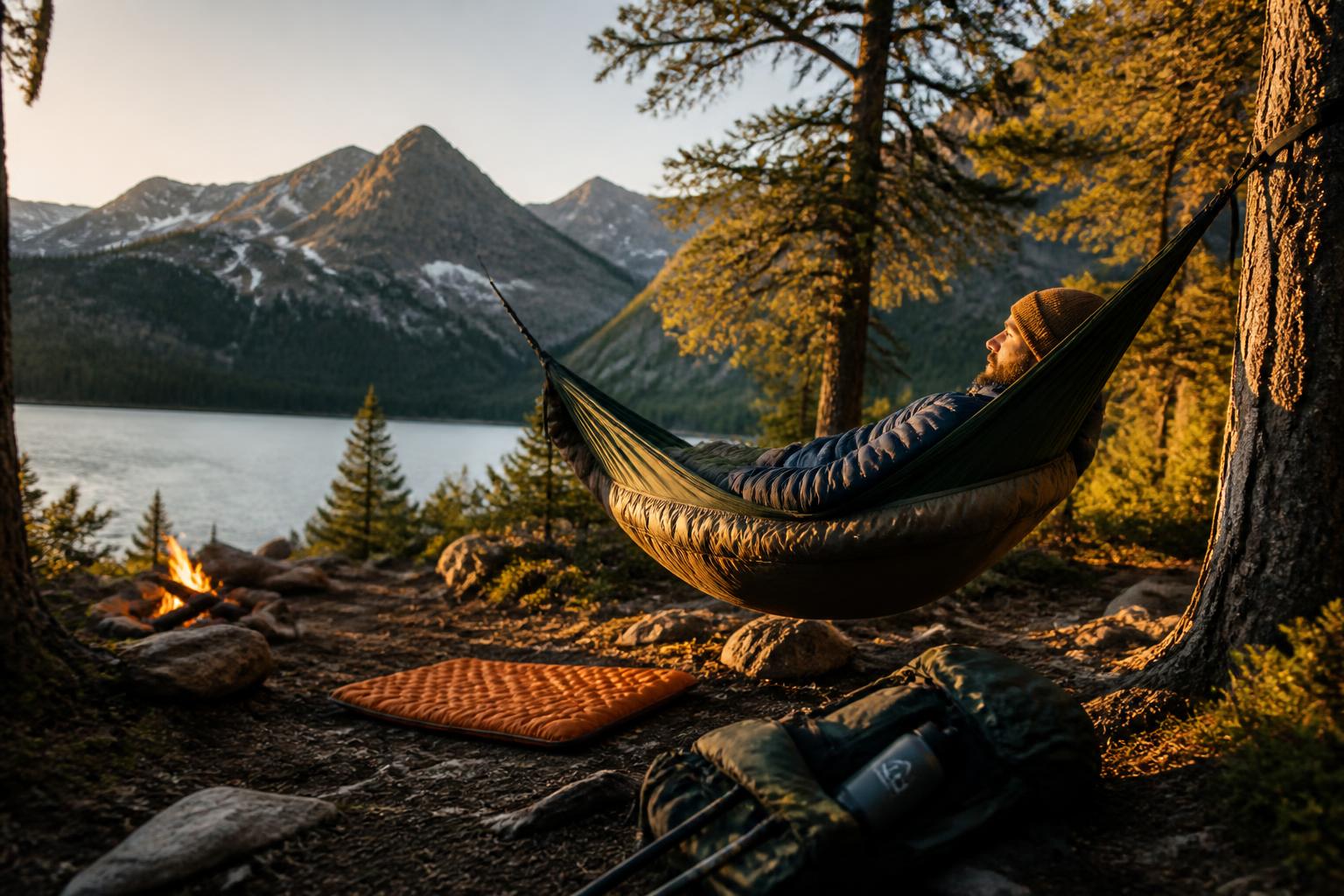
Why a Sleeping Pad Falls Short in a Hammock
Most hammock campers start with a closed-cell foam or inflatable pad inside the hammock. It works, barely. Pads shift when you roll over, create an uneven bottom, and leave cold spots where your weight doesn’t press into the insulation. The pad’s insulation compresses under your body, which cuts its effective R-value by more than half.
An underquilt wraps the outside of the hammock. It doesn’t compress, doesn’t slide around, and covers the full length of your back and legs. The insulation keeps full loft all night, giving consistent warmth that a pad can’t match. That mechanical advantage makes an underquilt a necessity once temps drop below 50°F.
Expert Tip: Pair It With a Top Quilt, Not a Mummy Bag
Actionable step: Switch from a mummy bag to a top quilt. A top quilt saves weight and lets you move freely in the hammock without fighting zippers or fabric bunched under you.
Common mistake to avoid: Zipping a bulky mummy bag inside a hammock while also fitting an underquilt. The bag’s back insulation is wasted (it compresses), and the extra fabric traps moisture against the shell. A top quilt plus underquilt is the standard lightweight system for a reason.
Key Specs That Decide Comfort and Weight
Four specs determine whether an underquilt works for your trips. Ignore extreme temperature claims and novelty features.
Insulation Material: Down vs. Synthetic
Down is lighter and packs smaller. It lasts longer if kept dry. The catch is that down loses almost all insulating ability when wet. Best for dry climates and ultralight backpacking.
Synthetic is heavier and bulkier but insulates when damp and dries fast. It also costs less. Good for humid areas or car camping where weight doesn’t matter.
| Factor | Down | Synthetic |
|---|---|---|
| Weight | Lighter | Heavier |
| Packed size | Smaller | Larger |
| Wet performance | Poor (loses loft) | Good (insulates damp) |
| Durability | High with care | Moderate; compresses over time |
| Best use | Dry climates, backpacking | Humid climates, car camping |
Temperature Rating: Read the Fine Print
Most brands list a comfort rating and a survival limit rating. Shop by the comfort rating. A 20°F limit rating means you will be alive but unable to sleep at 20°F. The comfort rating, typically 10°F to 15°F warmer, is what you should actually plan for. Add 10°F if you sleep cold or use a three-quarter-length quilt.
Size: Full-Length vs. Three-Quarter-Length
Full-length covers head to toe. Warmer, no cold feet, slightly heavier. Best for car camping, cold weather, and anyone who runs cold.
Three-quarter-length covers the torso only. Lighter and cheaper, but leaves your legs exposed. You will need a small sit pad or foam pad under your feet. Best for ultralight backpackers who already carry a tiny pad for the footbox.
Expert Tip: Never Skip the Foot Pad With Three-Quarter-Length Quilts
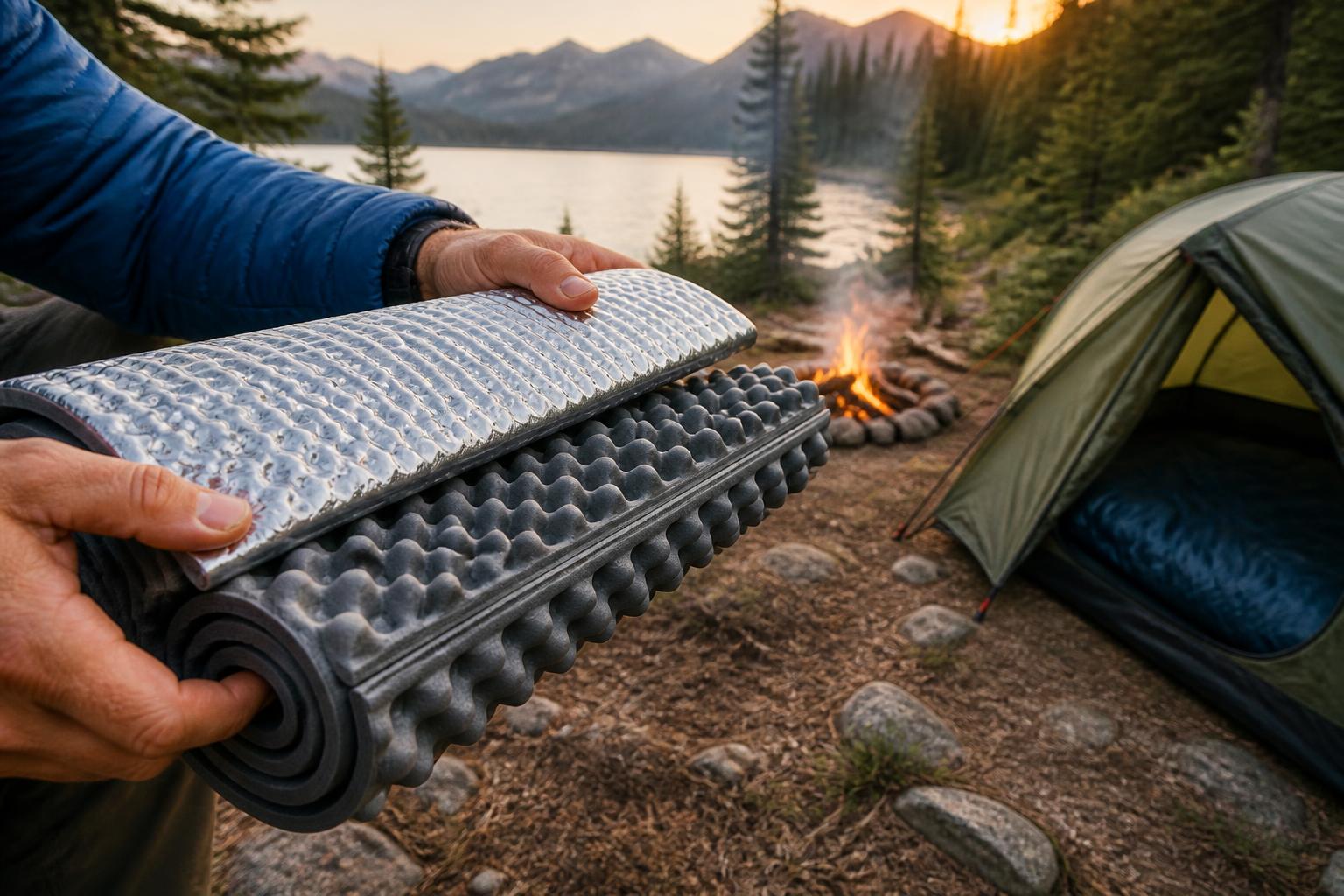
Actionable step: Carry a $10 closed-cell foam sit pad. Trim it to fit inside your hammock’s footbox or stuff it in the bottom of your top quilt’s foot pocket.
Common mistake to avoid: Assuming the three-quarter quilt will stretch far enough to cover your ankles. It won’t, and cold feet will wake you up. The pad weighs almost nothing and fixes this completely.
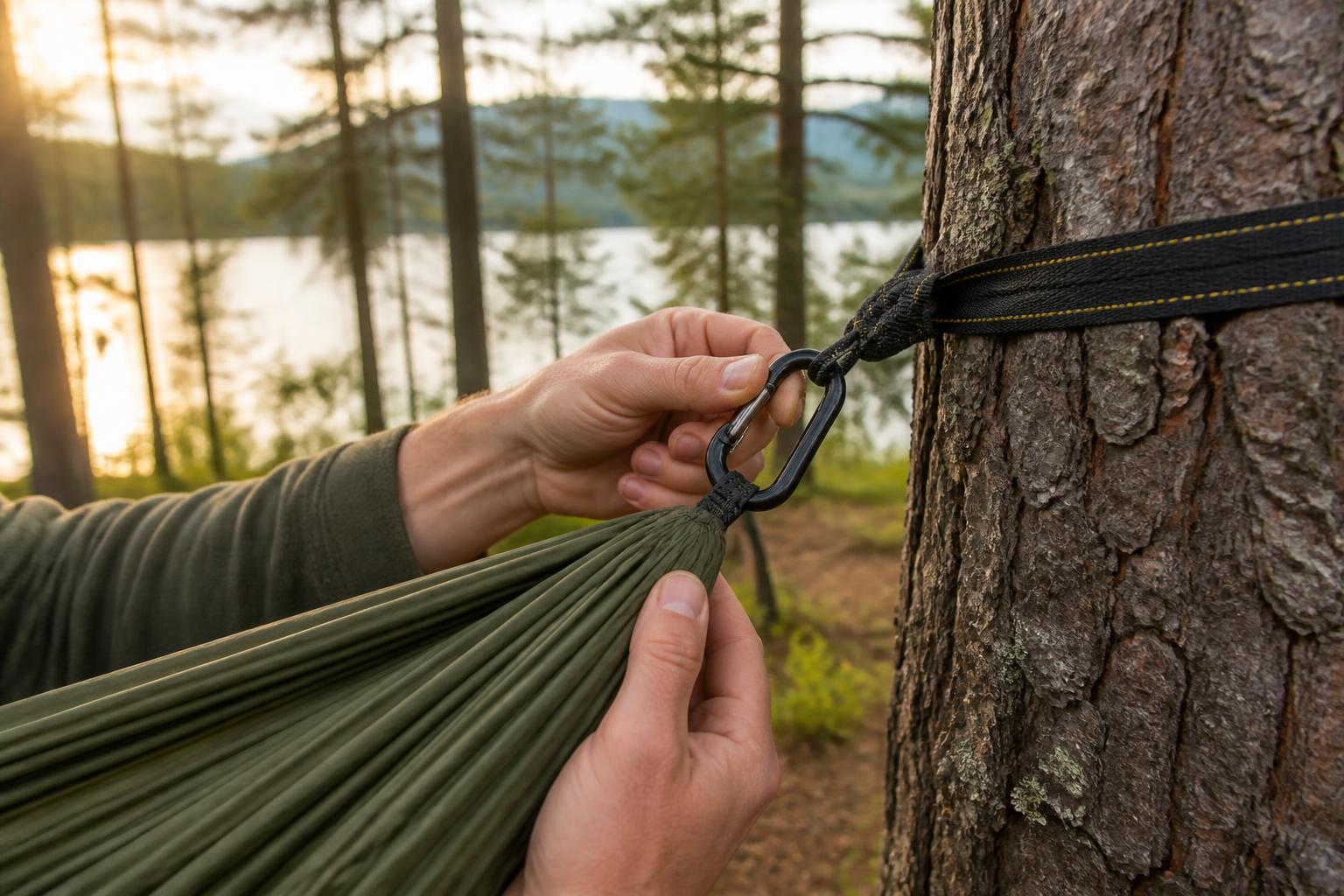
Suspension System: Clip-On vs. Continuous Loops
Your hammock’s design determines compatibility. Clip-on systems attach to the hammock’s suspension lines and are easier to adjust. Continuous loops use shock cord channels that wrap the hammock body for a tighter seal. Check your hammock’s cord and ridge line before buying.
How to Confirm It Fits Your Hammock
Before buying, measure the distance from your hammock’s gathered end to the ridge line (if present) and note the diameter of your suspension cord loop (usually 1/8″ to 1/4″ Amsteel). For clip-on underquilts, the clips must slide over that loop without slipping off. For continuous-loop underquilts, the shock cord channel needs to be long enough to run the full length of your hammock’s bottom seam. Hang your hammock in the yard, drape a blanket under it, and check that the blanket can be cinched tight at both ends without creating a gap wider than 2 inches—any larger draft will let cold air in. If you can’t get a snug fit on a test blanket, the underquilt will likely have the same problem.
When a Different Setup Makes More Sense
Underquilts are not foolproof. If you sleep in a bridge hammock or an asymmetrical design, the suspension points and curvature may prevent an underquilt from sealing properly—drafts appear at the shoulders or feet even after careful adjustment. In those cases, a high-quality sleeping pad with side wings or a dedicated bridge-hammock underquilt (which has a different shape) is safer. Another limitation: underquilts add setup time. On a rainy night, you are attaching shock cord under a flapping tarp while staying dry. If you camp primarily in mild weather (above 60°F) and value quick setup over warmth, a simple pad may be more practical. Getting the wrong underquilt for your hammock type means cold shoulders, wet insulation from poor seal, or a refund headache. Always verify compatibility with your specific hammock model before ordering.
Full-Length vs. Three-Quarter: The Decision That Changes Your Pack Weight
This single decision changes the recommendation for backpackers versus car campers. The critical criterion is your pack’s base weight limit.
For backpackers aiming for a base weight under 10 pounds, a three-quarter-length underquilt plus a foam sit pad for the feet gives the best weight-to-warmth ratio. You sacrifice some leg warmth but save noticeable weight.
For car campers and weekenders, full-length gives trouble-free warmth. No fiddling with foot pads, no drafts. The extra weight doesn’t matter when you aren’t hiking it in.
For cold sleepers and winter campers, always go full-length. A three-quarter quilt cannot eliminate drafts at both ends in below-freezing conditions.
If you buy a three-quarter underquilt for your first trip, you must test the foot pad at home. If you forget the pad on a 40°F night, you’ll wake up with cold feet and regret the lighter choice. If you buy full-length, you never need to worry about that—the trade-off is extra ounces in your pack. Decide based on whether you would rather save weight or eliminate a setup step.
Expert Tip: Layer Two Underquilts for Extreme Cold
Actionable step: Stack a 40°F underquilt over a 20°F underquilt. This combo handles 0°F or lower for less money than a single high-end 0°F quilt.
Common mistake to avoid: Buying one ultrawarm quilt without checking draft gaps. Two mid-range quilts let you adjust independently for a better seal, and each is useful alone in milder weather.
Quick Fit Check: Five Pass/Fail Tests Before Buying
Run these five checks before ordering. Skip the purchase if two or more fail.
-
Temperature match: Is the comfort rating at least 10°F lower than the coldest overnight temp you expect? Pass means you will sleep warm. Fail means cold nights or a second quilt needed.
-
Length covered: Does the quilt reach from just below your shoulders to below your calves? Pass means full coverage. Fail means cold feet or extra pad required.
-
Hammock compatibility: Does the suspension fit your hammock’s ridge line and gathered ends? Pass means it stays attached. Fail means drafts or return shipping fees.
-
Weight ceiling: Is the total weight, including stuff sack, within your pack weight budget? Pass means no trade-offs. Fail means you will leave it behind on trips.
-
Moisture plan: If down, do you have a waterproof stuff sack or pack liner? If synthetic, is the packed bulk acceptable for your pack? Pass means you are prepared for wet conditions. Fail means you risk a soaked quilt.
FAQ
Can I use a sleeping pad instead of an underquilt in warm weather?
Yes, above 60°F a pad works if you accept the shifting and uneven surface. Below 60°F an underquilt gives more consistent warmth.
Do I need an underquilt in summer?
Not typically if overnight temps stay above 70°F. A lightweight 40°F or 50°F underquilt adds safety if a cold front rolls through, but a pad alone is fine for warm-weather trips.
How do I set up an underquilt?
Hang it from the same tree straps as your hammock. Adjust the shock cord so the quilt sits snug against the hammock bottom—too loose creates gaps, too tight compresses insulation. Lie in the hammock and check for drafts at the head and foot ends before your trip.
Can I use a top quilt and underquilt together without a sleeping bag?
Yes. A top quilt plus underquilt is the standard hammock insulation system. It is lighter and more flexible than a sleeping bag, and most top quilts have a footbox and neck snap for draft control.
What if my hammock has no ridge line?
Many gathered-end hammocks without a structural ridge line still work with underquilts that attach to the suspension lines (clips or carabiners). Check the underquilt manufacturer’s footage or guide for no-ridge-line setups. Some models require a separate ridge line accessory.
Match the insulation type to your climate, choose length based on your pack weight, and test the fit at home before heading out. A well-chosen underquilt changes hammock camping from a shivering experiment into a genuinely comfortable night’s sleep.

Camping Bob has spent over 20 years camping across the US — from BLM dispersed sites in the Southwest to KOA campgrounds in the Pacific Northwest. He writes practical, no-nonsense guides to help fellow campers get outdoors with confidence.