
Camping in Moose Country: Safety Tips and What to Do in an Encounter
Moose are not aggressive by nature, but they will charge if they feel threatened, cornered, or protective of calves. The single most important rule: give them at least 50 yards of space, and if a moose shows stress signals you are already too close. Here is exactly what to do before and during an encounter.
Practical implication for your next trip: If you are heading into moose country, the way you set up camp and move through the terrain matters more than any single piece of gear. Plan your campsite layout around escape routes and sightlines, not just comfort. A smart setup eliminates the need for a last-minute reaction when a moose ambles through.
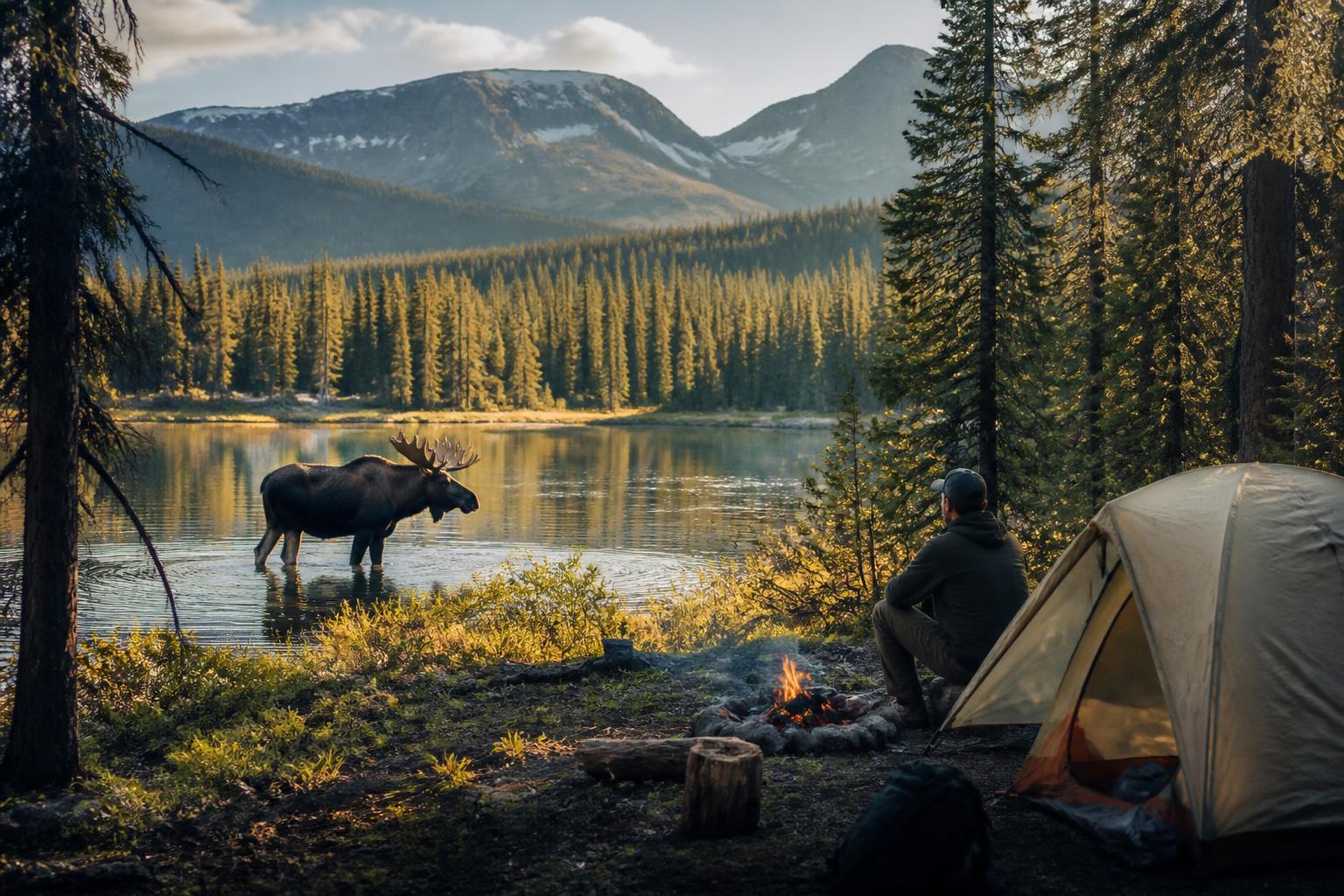
How Moose Differ from Other Wildlife You’ve Camped Around
Unlike bears, moose rarely bluff-charge and then stop. A moose that decides to engage often follows through. They are also unpredictable outside of the typical danger windows—calving season (May–June) and the fall rut (September–October)—because they are large enough that they do not need to fear most predators. A cow moose with calves will aggressively defend her young, and a bull in rut sees anything moving as a potential challenger.
Key Behavioral Markers to Watch
- Ears pinned back: highly agitated
- Hair raised on the hump (similar to a dog’s hackles): stressed
- Licking or chewing lips: nervous
- Walking stiff-legged or circling around you: about to charge
Most campers misread these signals because a moose can look calm right up until it lowers its head and lunges. The failure mode is assuming a moose will walk away if you ignore it. It will not always do that.
How to verify these signals in the field: The next time you spot a moose from a safe distance, pause and run through the list in order. If even one marker is present, you are too close. Back away immediately without turning your back. Testing this from at least 75 yards gives you a safe baseline to practice reading body language.
The One Failure Mode That Gets Most Campers in Trouble
The most common mistake is treating a moose like a large deer: keeping eyes on it but continuing your activity, or slowly backing away while staying in the open. A moose in full charge covers 100 feet in about 3 seconds. You cannot outrun one, and standing your ground without a solid barrier between you and the animal rarely ends well.
How to Detect the Danger Window Early
- If a moose stops feeding and stares at you, that is already a warning
- If it turns sideways and flashes its side profile (a dominance display), you are inside its comfort zone
- If it urinates and then trots forward, it has locked onto you and is preparing to engage
The fix is simple: the moment you see any of these cues, do not wait. Put a large obstacle—a tree trunk, a rock formation, or your vehicle—between you and the moose, then move laterally behind it until you gain distance. Never run in a straight line away from a moose; they will instinctively chase.
Realistic limitation: Bear spray works on moose, but it is not a guarantee. Wind can blow the spray back into your face, and a fully committed moose may keep coming through the cloud. Zigzagging behind trees is more reliable in thick cover, but in open terrain you have almost no second chance. Understand this trade-off before you rely solely on spray.
Setting Up Camp to Reduce Your Risk
A smart camp layout keeps moose from wandering through your site and gives you an escape path if one does.
| Do | Don’t |
|---|---|
| Pitch your tent at least 200 feet from game trails or water access points | Place your tent near willow thickets or marsh edges (prime moose feeding areas) |
| Keep all food, cookware, and scented items in bear-proof containers 100+ feet from sleeping areas | Store anything aromatic—even toothpaste or lip balm—inside your tent |
| Mount a headlamp or camp light on a tree to mark your site perimeter | Leave camp unlit after dusk when moose are most active |
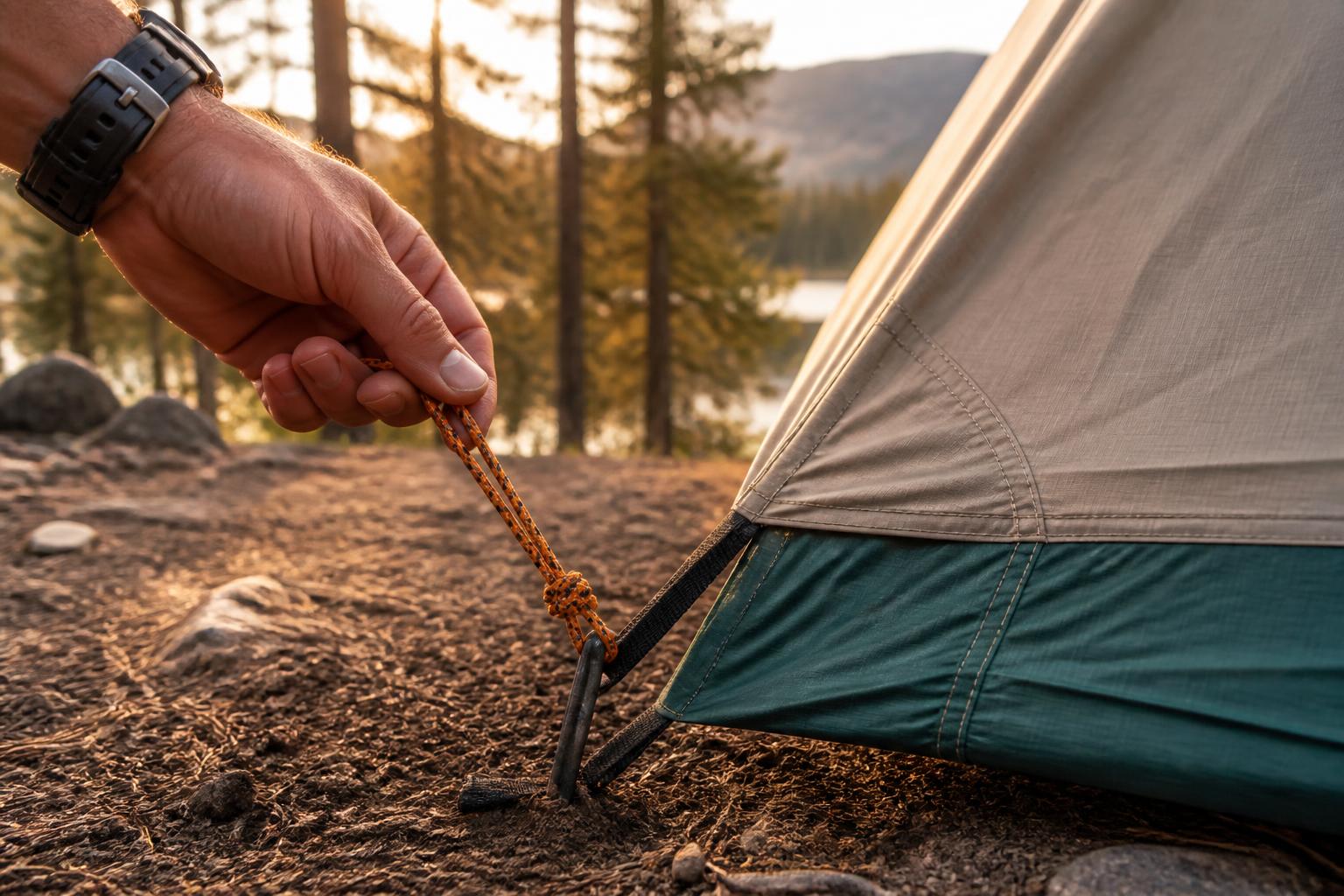
| Stake down tent lines that could trip you during a hasty exit | Set up camp in a dead-end canyon or between two water bodies (moose will run through the corridor) |
A moose that wanders into camp is usually just passing through. Make yourself visible, stay still, and let it move on. Only intervene if it is headed straight for your tent or you are trapped.
Concrete verification step for your camp: Walk the perimeter of your site at dusk. If you cannot see a clear 30-foot gap between your tent and the nearest tree, brush, or rock pile on at least two sides, you do not have an adequate escape route. Move your tent until you have at least two unobstructed exit lanes—one for you and one for anyone else in the tent.
What to Do During a Moose Encounter: Step by Step
Apply this sequence in order. Do not skip steps or escalate prematurely.
-
Freeze and assess. Do not turn your back. Identify the moose’s body language (ears, hair, posture). Check for calves—if calves are present the cow will be more reactive.
-
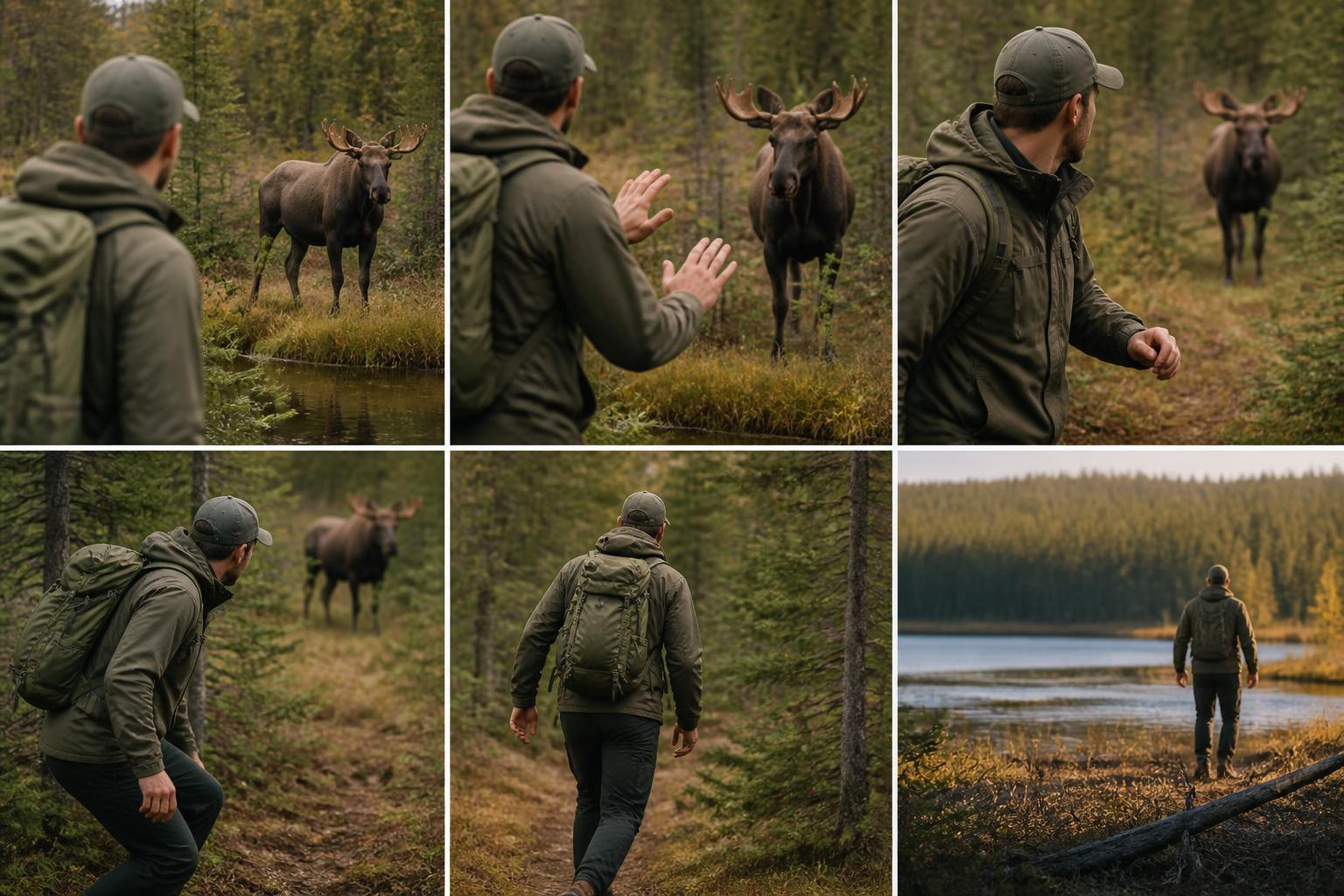
Create distance. Back away slowly at an angle, keeping a tree or rock between you and the moose. Speak in a low, calm voice so the moose registers you as human, not prey.
-
If the moose charges and you cannot reach cover: Run. Moose can hit 35 mph, so you are not outrunning it in a sprint. But you can zigzag behind large trees to break its line of sight. Once you break visual contact, the moose will often stop the charge.
-
If you are knocked down: Curl into a ball, protect your head and neck with your arms, and play dead. A moose will stop stomping once it decides the threat is gone. Do not get up until the animal has moved well away.
-
If the moose pins you in a campsite or against a cliff: Do not attempt to climb a tree. Moose can knock you off low branches. Use bear spray—aim for the face from a distance of 15–30 feet. Bear spray works on moose, but it is a last-resort tool, not a prevention method.
Trade-off to consider: Step 3 (zigzagging) works best in dense timber with at least waist-thick tree trunks. In open meadows or along riverbanks with only thin saplings, zigzagging gives you little advantage. In those environments your best bet is to put a large rock, a vehicle, or any solid structure between you and the moose before the charge begins. If none is available, bear spray becomes your only option—know that before you enter that terrain.
Three Practical Tips for Living and Moving in Moose Country
Tip 1: Make noise on blind corners. A surprised moose is a dangerous moose. Call out or clap loudly before stepping around dense bushes, creek bends, or ridgelines that block your view. Common mistake: Walking quietly to avoid disturbing wildlife—that is how you surprise a moose at close range.
Tip 2: Time your travel. Moose feed heavily at dawn and dusk. Plan your hikes between 9 AM and 4 PM when moose are bedded down in shaded areas. Common mistake: Starting a dusk hike back to camp because it is cooler outside—that is prime moose activity hour.
Tip 3: Keep your dog on a short leash—or leave it at home. Dogs trigger a moose’s predator-response instinct harder than humans do. A loose dog that runs toward a moose will get kicked or chased, and the moose will then redirect onto you. Common mistake: Letting the dog off-leash to scare the moose away. The moose will not retreat; it will fight.
Quick Decision Aid
Before you head out, run through these checks:
- Trail scan: Is your camp at least 200 feet from the nearest game trail or water edge? If no, move your tent.
- Food storage: Are all food, trash, and scented items locked in a bear-proof container placed 100 feet downwind of your sleeping area? If no, fix it before dark.
- Escape route: Does your tent have two clear exit paths not blocked by brush or gear? If no, rearrange your setup.
- Bear spray accessible: Is your bear spray within arm’s reach in your tent and on your hip while hiking? If no, change your storage system.
- Body language knowledge: Can you identify pinned ears, raised hump hair, and lip licking as stress signals? If no, review the signals above before you go.
Pass all five and you have removed the most common setup and awareness failures. Miss any one and you are relying on luck, which runs out faster in moose country than almost anywhere else.
Frequently Asked Questions
How close is too close to a moose?
If you need to ask, you are too close. Maintain at least 50 yards (half a football field) at all times. If a moose notices you and changes its behavior, you are inside the danger zone.
Should I climb a tree to escape a charging moose?
No. Moose are strong enough to shake or push over a small tree, and their legs can reach higher than you think. Run for thick timber where you can put multiple tree trunks between you and the animal.
Does bear spray work on moose?
Yes. Aim for the face from 15–30 feet. But it is a last-resort tool—use it only when you cannot reach cover and the moose is already committed to the charge. Practice drawing it before you need it.
Can a moose be scared off by yelling or waving arms?
Sometimes, but not reliably. A calm, confident moose will ignore noise. A stressed moose may interpret loud movement as aggression. Back away first; escalate to shouting only if the moose is closing distance and you have no other option.

Camping Bob has spent over 20 years camping across the US — from BLM dispersed sites in the Southwest to KOA campgrounds in the Pacific Northwest. He writes practical, no-nonsense guides to help fellow campers get outdoors with confidence.