
How to Identify and Treat Spider Bites While Camping
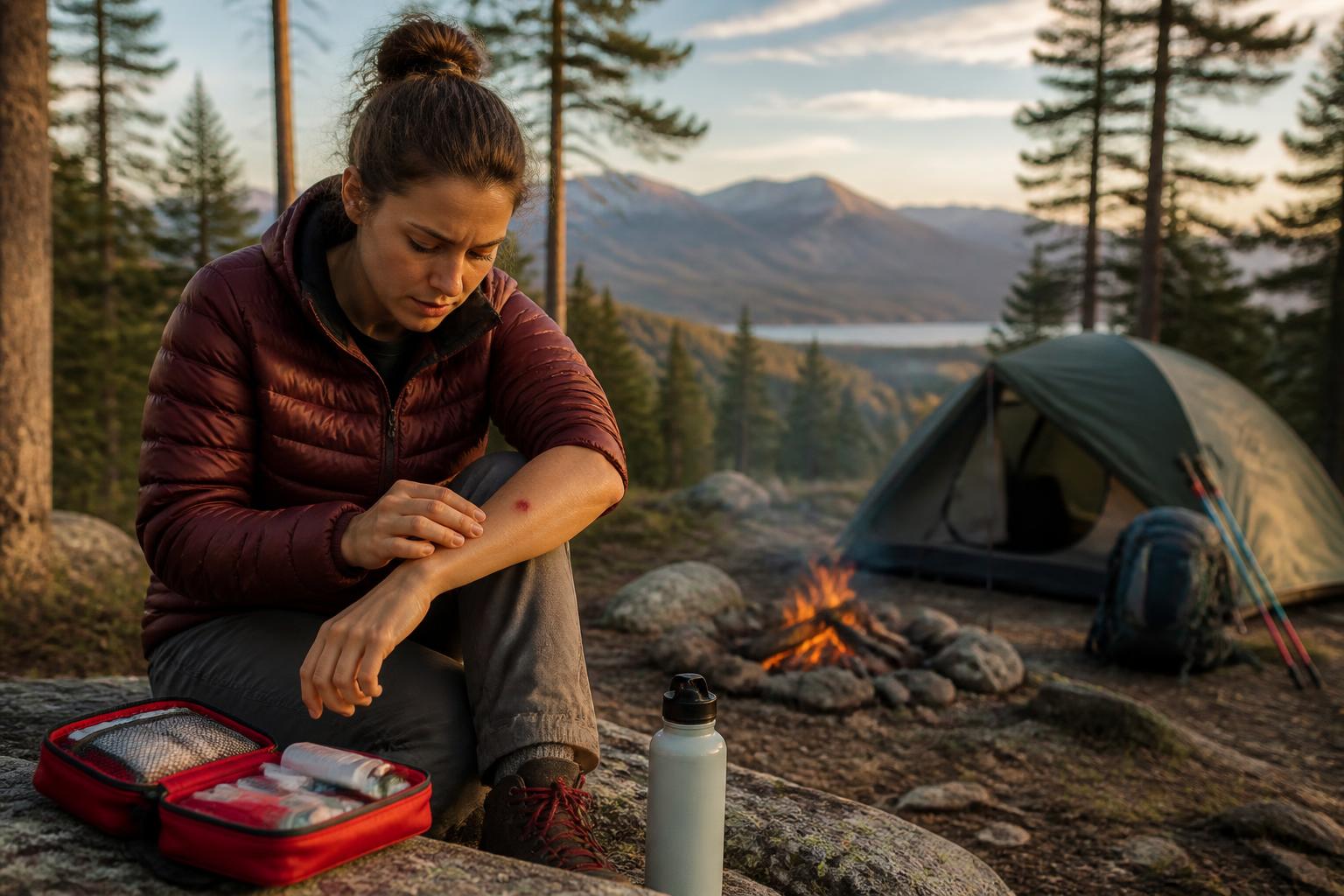
You spot a red, swollen mark on your arm after gathering firewood. The short answer: clean the area, apply a cold compress, elevate the limb, monitor for symptoms, and evacuate only if you develop muscle cramps, breathing trouble, or redness spreading beyond a 4-inch diameter. Treating a spider bite correctly while camping starts with confirming you actually have one—most mysterious welts in the backcountry aren’t spider bites at all. They’re insect stings, tick rashes, or skin infections that need different care.
Before You Treat: Confirm It’s a Spider Bite
The most common failure mode in the field is treating any unexplained welt as a spider bite. Only two spiders in the United States—the black widow and the brown recluse—produce medically significant venom. Every other spider bite is about as dangerous as a mosquito bite. Yet many campers reach for antihistamines or attempt to drain what’s actually a staph infection or a tick-borne rash.
How to detect this early: If you didn’t see a spider on your skin and feel the pinch, look for other clues. A single pimple-like bump that grows over 12–24 hours, especially if it’s warm and spreading redness, is far more likely to be a skin infection from a scratch. A bullseye pattern suggests Lyme disease from a tick. Bites in a cluster of three or more are probably fleas, chiggers, or bedbugs. Only treat for spider venom if you have strong evidence—a confirmed spider sighting or the classic two-fang puncture mark.
Likely causes behind a mysterious welt:
| What It Probably Is | Key Clues |
|---|---|
| Insect sting (bee, wasp, ant) | Sharp, immediate pain; single red dot; swelling that peaks in 1 hour |
| Tick bite | Bullseye rash or tiny dark dot still embedded; no two-fang pattern |
| Skin infection from a scratch | Single spot that grows over 24 hours; feels hot to the touch; may have pus |
| Allergic reaction to plant (poison ivy, oak) | Itchy, blistering, red streaks that follow a linear pattern |
| Chigger or flea bites | Cluster of intensely itchy small red bumps, often on ankles or waist |
Run Through This Symptom Check First
Pause and run through this quick self-check before you treat anything. If you answer yes to any of these, skip field treatment and plan to evacuate or call for medical help.
- Do you have difficulty breathing, chest tightness, or swelling of the face or mouth? This is a possible allergic reaction and an emergency.
- Do you see a red line or streak spreading from the bite toward your torso? This signals lymphangitis and needs antibiotics.
- Is the pain getting worse, not better, after two hours? This could mean necrosis from a brown recluse or an active infection.
- Do you have muscle cramps, sweating, or nausea? These are classic black widow symptoms.
- Do you have a fever or chills? This points to infection, not venom.
If none of those apply, proceed to field treatment.
Step-by-Step Field Treatment for a Confirmed or Likely Spider Bite
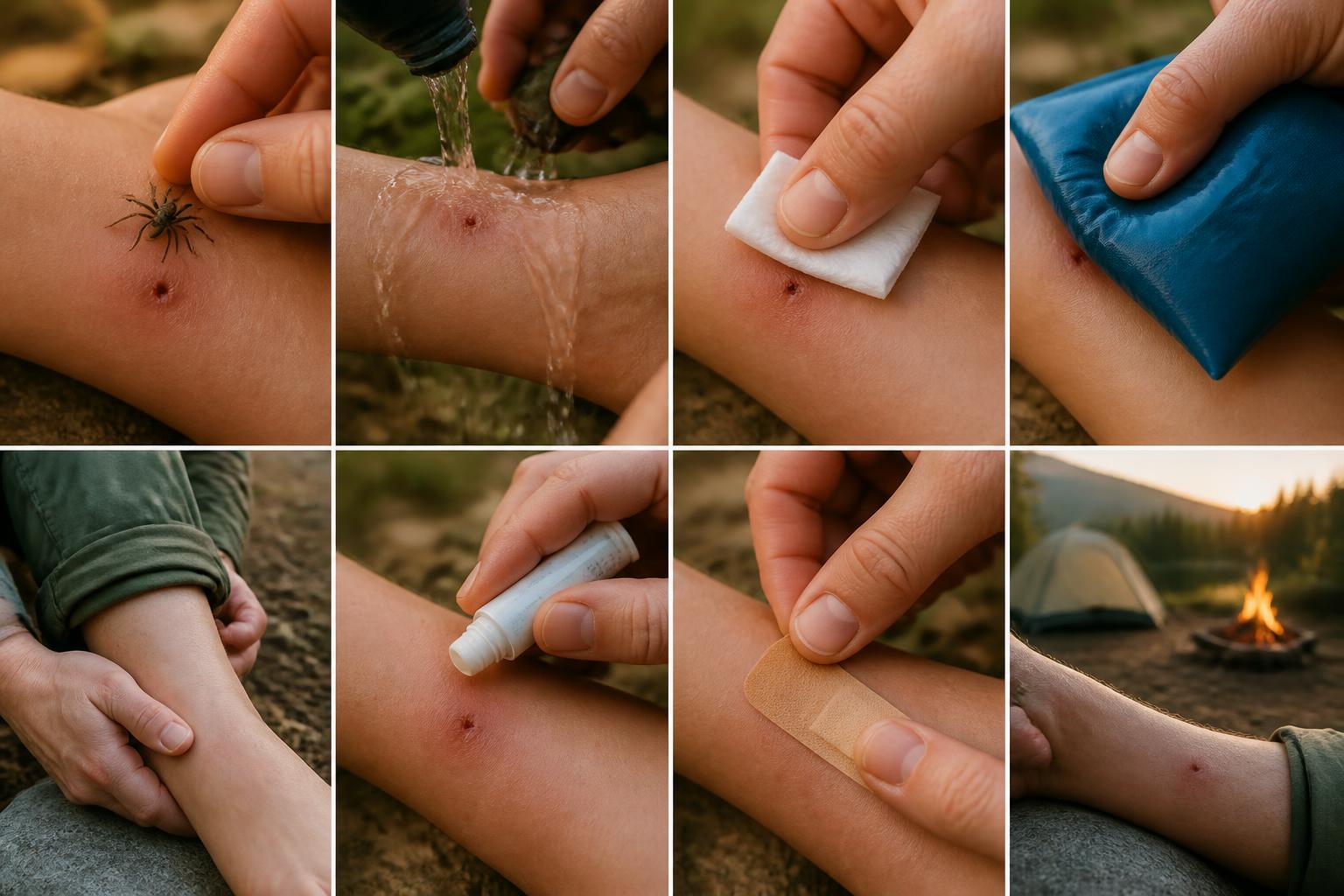
Follow these ordered steps. The goal is to limit venom spread, reduce pain, and prevent infection while you decide whether to seek help.
Step 1: Clean the Bite Immediately
Use soap and water if available. If not, use an alcohol wipe or clean water from your bottle. Gently scrub for 30 seconds, then pat dry. Avoid rubbing alcohol inside the wound—it can damage tissue and slow healing.
Step 2: Elevate and Immobilize
If the bite is on an arm or leg, keep that limb raised above the level of your heart. This helps slow venom spread in some cases and won’t cause harm. If you’re hiking out, pack the limb with a soft splint to minimize movement. Do not use a tourniquet or cut into the bite.
Step 3: Apply a Cold Compress
Wrap ice or a cold pack in a cloth and press it against the bite for 10 minutes on, 10 minutes off. This reduces swelling and eases the burning sensation. Never put ice directly on skin—it can cause frostbite even in mild conditions.
Step 4: Take an Over-the-Counter Pain Reliever
Ibuprofen (Advil) or acetaminophen (Tylenol) can help with discomfort. Don’t take aspirin unless you know there’s no bleeding risk. Antihistamines like Benadryl are only useful for insect-bite itching or a mild allergic reaction—they won’t help with venom itself. If you use Benadryl, be aware it can cause drowsiness.
Step 5: Monitor the Bite Over the Next 12 Hours
Draw a circle around the reddened area with a pen. If the redness expands beyond that circle within six to eight hours, the reaction is getting worse. For bites from black widows or brown recluses, symptoms can take hours to appear, so keep checking through the night. Set an alarm to check every two to three hours.
Friction point you may hit: Itching can be intense, especially once swelling starts. Resist the urge to scratch—opening the skin increases infection risk. If itching is unbearable, apply a cool, damp cloth or take an oral antihistamine, but only if you’re sure the bite isn’t from a venomous spider.
Decision Aid: Is It a Spider Bite or Not?
Use this checklist to decide your next action. Check each box that applies.
| Check if true | Criterion |
|---|---|
| ☐ | You saw the spider bite you and can describe it (for example, black with red hourglass or brown with violin shape). |
| ☐ | The bite has two distinct puncture marks (fangs), not just one or a cluster. |
| ☐ | Pain started within 30 minutes and feels like a deep ache, not a sharp sting. |
| ☐ | No fever, no red streaks, no spreading warmth beyond the immediate bite area. |
| ☐ | You’re able to keep the bite clean and can check it every two to three hours. |
What to do based on your score:
- 4–5 boxes checked: treat the bite as a spider bite using the steps above. Evacuate only if you develop systemic symptoms like cramps or breathing trouble.
- 2–3 boxes checked: you might still have a spider bite, but consider other causes. Continue monitoring and clean the area regularly.
- 0–1 boxes checked: it’s very unlikely to be a dangerous spider bite. Focus on cleaning and watch for infection signs like spreading redness or warmth.
When to Stop DIY Care and Seek Help
Most spider bites heal on their own. But some situations require professional medical attention, even if you’re at a remote campsite. The concrete threshold for stopping home treatment is this: if you have any of the symptoms below, stop all self-care, pack up, and head to a doctor or emergency room immediately. Do not wait to see if they improve.
Evacuate immediately if:
- You develop muscle cramps or spasms, especially in the back, chest, or abdomen, within one to four hours of a black widow bite.
- The bite site develops a bluish-black patch, becomes a deep ulcer, or the pain becomes unmanageable—this signals brown recluse necrosis.
- You have any trouble breathing, swallowing, or speaking.
- Red streaks appear on the skin heading toward your torso.
- The redness around the bite expands beyond a 4-inch diameter within 12 hours.
See a doctor within 24 hours if:
- You’re unsure whether the spider was a black widow or brown recluse.
- The bite doesn’t improve after 48 hours of home care.
- You develop a fever greater than 100.4°F.
- The area around the bite feels hot and hard, suggesting an infection.
In all cases, bring a photo or description of the spider if you safely caught or photographed it. That speeds up diagnosis and treatment. If you’re hiking out, mark the bite location with a pen so medical staff can see the progression.
How to Confirm the Bite Is Healing
After 48 hours of the treatment above, you should see clear signs the bite is resolving. Use these five checks to verify the fix worked before you stop monitoring.
- Redness is shrinking. The red area should be smaller than the circle you drew at hour six. If it’s larger, the bite is getting worse.
- Pain is decreasing. You should need less ibuprofen than on day one, or none at all.
- Swelling has plateaued or gone down. The raised area should feel softer and smaller, not firmer or more puffy.
- No new symptoms. You have no fever, chills, muscle cramps, or spreading warmth.
- The bite looks like a normal scab. The surface should be dry, not weeping, and you should see a small crust forming.
If all five checks pass, you can stop active treatment and just keep the area clean. If even one fails—especially if redness is still growing or pain is worse—treat it as a possible infection or venom reaction and seek medical care.
FAQ: Common Spider Bite Questions While Camping
Should I try to suck the venom out?
No. That’s a myth that only damages tissue and introduces bacteria. Keep the bite clean and elevate the limb instead.
Can I use a spider bite kit with a suction extractor?
Research shows these syringes reduce venom very little and can cause more harm than good. Skip them and stick to cold compresses.
What’s the best antihistamine to take for the itch?
Diphenhydramine (Benadryl) works well for insect-bite swelling but causes drowsiness. If you need to stay alert, use cetirizine (Zyrtec). Neither antihistamine treats venom.
How do I know if it’s a black widow bite?
The pain is often mild at first, then within 30 to 60 minutes you feel severe muscle cramps in the back, abdomen, or legs—even though the bite itself may look small. That combination is the hallmark sign.
I’m camping in the Southwest. Should I be worried about brown recluse?
Brown recluse spiders are mainly found in the Midwest and South Central states like Kansas, Oklahoma, Arkansas, and Missouri. In the Southwest, desert recluse spiders exist but are less common. Most bites in the Southwest are from scorpions or insect stings, not recluse spiders.

Camping Bob has spent over 20 years camping across the US — from BLM dispersed sites in the Southwest to KOA campgrounds in the Pacific Northwest. He writes practical, no-nonsense guides to help fellow campers get outdoors with confidence.