
How to Stay Dry Camping in the Rain: Gear, Setup & Attitude
Staying dry camping in rain comes down to three things: gear that keeps water out, a campsite that sheds it, and one counter-intuitive trick most people miss. The short answer: you need to keep rain outside your shelter, but don’t seal yourself inside so tight that condensation makes everything wet anyway. Follow the steps below, and you’ll sleep dry even when the sky opens up.
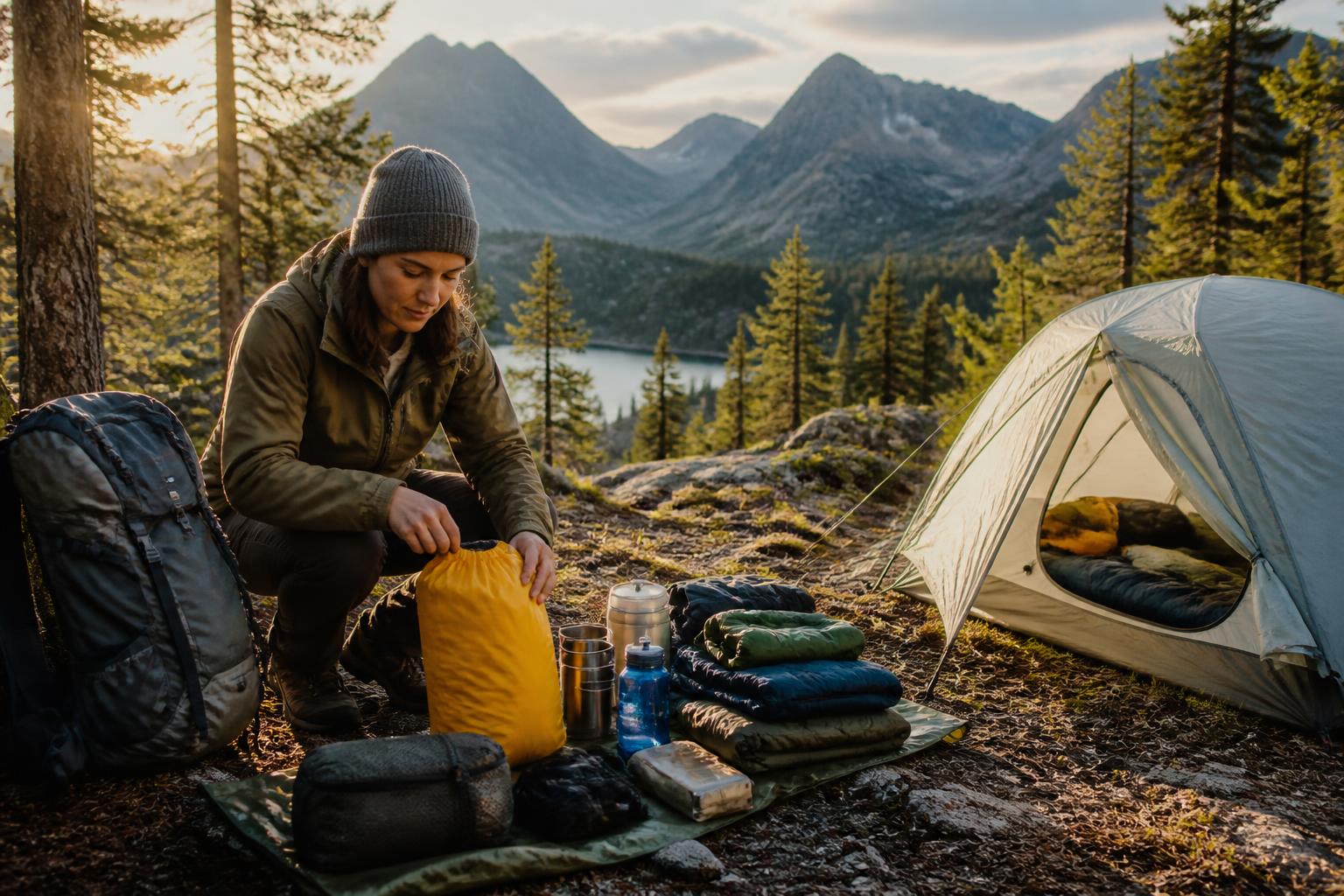
Prep Your Gear Before You Go
Shelter and Ground Protection
Start with a tent that has a full-coverage rain fly. A fly that reaches near the ground stops driven rain and reduces mist blow-in. Check that all seams are taped or sealed. If the tent is more than two seasons old, re-seal seams with a tube of seam sealer.
A heavy-duty poly tarp adds a second waterproof layer. The Xpose Safety Super Heavy-Duty 8′ x 10′ Brown Poly Tarp (16 mil) works as an extra rain fly pitched over your tent, or as a ground sheet under the floor. If you use it as a ground sheet, fold it so it doesn’t poke out and catch water.
Ground tarp rule: Your ground tarp should be slightly smaller than the tent footprint. If the tarp extends past the tent edges, rain runs down the fly, hits the tarp, and pools under your floor. Trim it back one inch all around.
Clothing and Sleep System
Cotton holds water and stays cold – skip it entirely. Pack a moisture-wicking base layer like the 100% Merino Wool Long Sleeve Crew by Minus33 – it moves sweat away from your skin even when you’re active in damp weather. Bring a rain jacket and pants and keep them accessible at the top of your pack, not buried. Put them on before you feel wet.
Store sleeping clothes inside a waterproof bag. The Lekesky Foldable Travel Duffle Bag (80L) has a separate shoe compartment and enough space for a full change set. Keep this bag inside your tent, not in the vestibule.
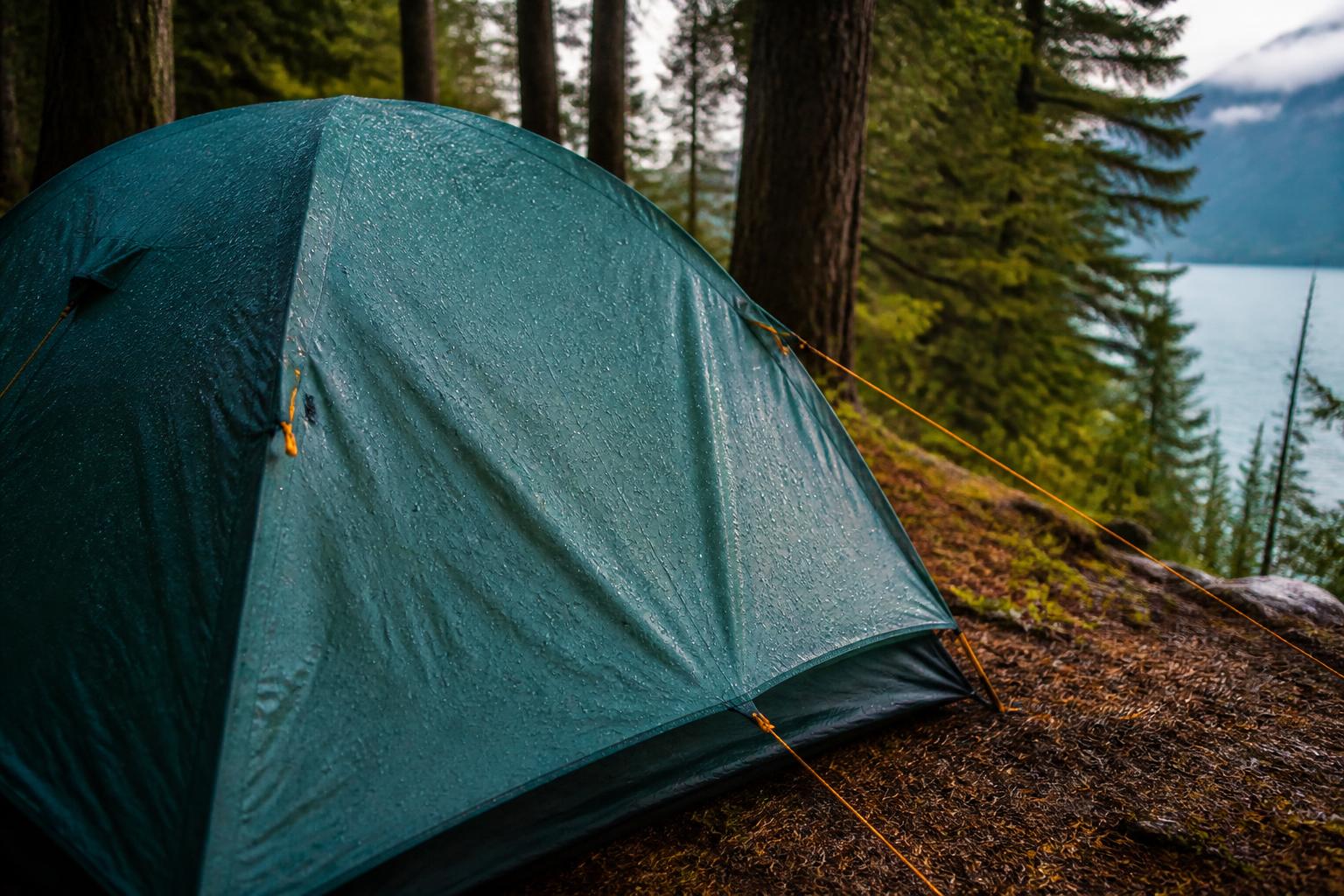
Early checkpoint: Before your trip, set up the tent in the backyard and spray it with a hose for five minutes. Check inside for drips and condensation. If you see moisture on the tent walls, that’s condensation. If you see wet streaks from the seams or floor corners, re-seal.
Choose and Set Up a Water-Shedding Campsite
Site Selection
Pick high ground with a slight slope of 2–5 degrees so water runs past you instead of under you. Avoid low spots, depressions, and compacted soil that won’t drain. Position your tent behind a rock, tree line, or ridge to reduce rain being blown sideways into the fly. Stay at least 10 feet from the nearest tree trunk – rain collects on leaves and falls in heavy droplets long after the storm passes.
Pitch Orientation
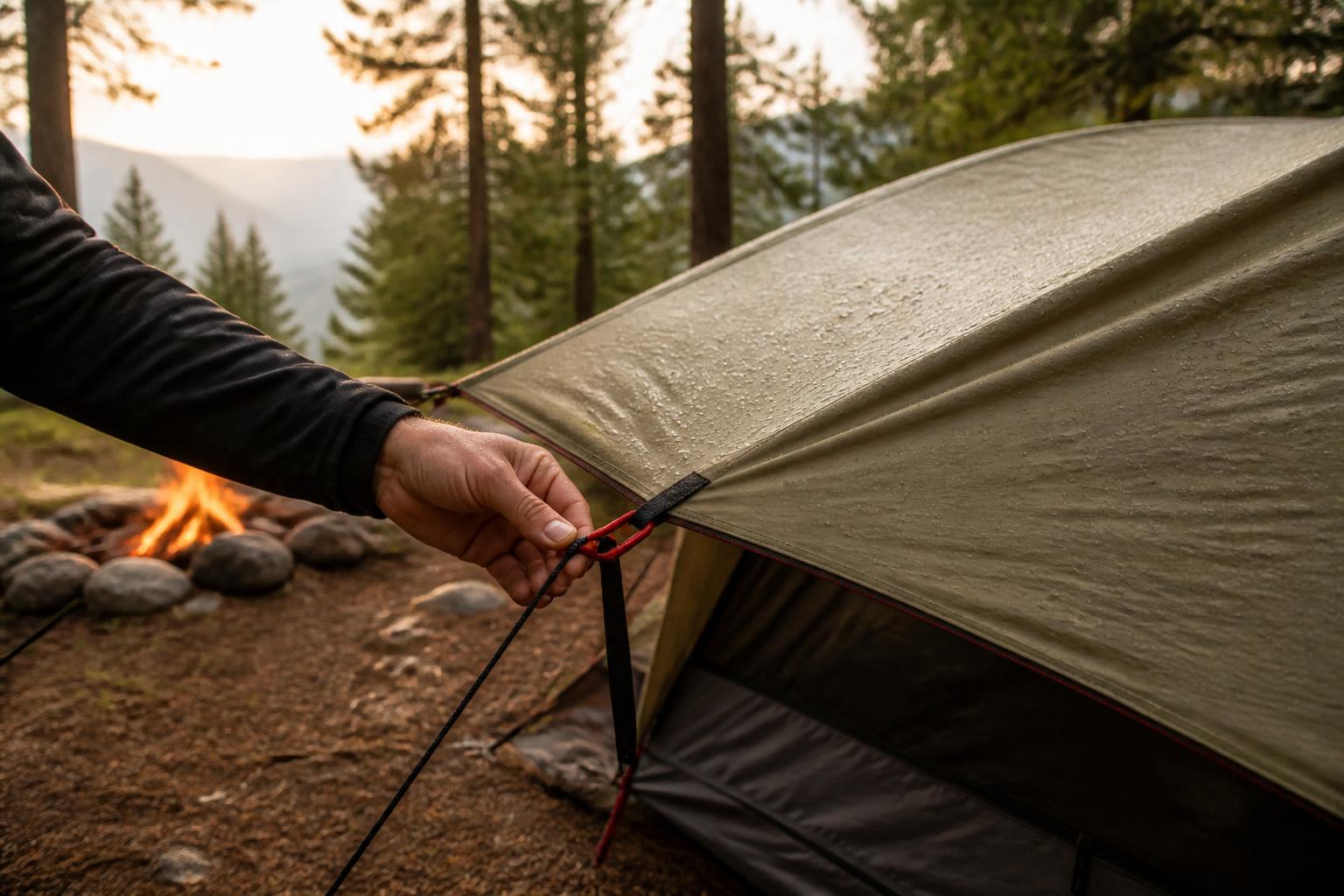
Point the narrow end of your tent into the wind. This reduces side load on the fly and keeps rain from slapping the fabric all night. Tighten the rain fly so it is taut and sheds water properly. Use guy lines and stake them at 45-degree angles for maximum tension. A sagging fly creates pools that can leak through seams.
Ground Tarp Placement
Lay your ground tarp exactly to the tent footprint size. If you must use a tarp that is bigger, fold the excess under itself so that no tarp edge sticks out beyond the tent floor. Water will run off the fly, hit the exposed tarp edge, and wick under the tent floor – a tarp that is too large is worse than no tarp at all.
Pitch Your Tent for Maximum Rain Protection
- Stake out the tent body first, pulling the floor taut. A loose floor wrinkles and creates low spots where water can pool.
- Drape the rain fly over the tent. Attach all clips or rings before tensioning.
- Pull the fly tight so it clears the tent body by at least 4 inches. This gap allows air to flow between the fly and the tent, reducing condensation.
- Stake out all guy lines, especially the ones on the fly’s corners and ridge. Angle stakes at 45 degrees away from the tent. In windy rain, double-stake the windward side.
- Close the rain fly’s zippers until the doors are sealed. Leave the top vent partially open.
Checkpoint: Walk around the tent and look for any spots where the fly touches the inner tent. If it touches, rain can soak through the inner wall. Readjust the guy lines until the fly stays off the mesh.
Use Ventilation to Beat Condensation
Most people batten down every vent and zipper the moment rain starts, thinking that sealed equals dry. That is exactly wrong.
Why condensation is the bigger enemy: Body moisture, breathing, and wet gear inside a sealed tent raise humidity to 100%. When the tent walls are colder than the inside air, water condenses on the fabric and drips back onto you. A small leak might wet one corner, but condensation can soak your sleeping bag by morning.
Fix it: Open two low vents and one high vent to create cross-flow. Even in light rain, keep the fly’s lower vents cracked an inch and the top vent partially open. This draws moist air up and out while keeping rain out. Use bug netting layers if needed – the airflow is worth the minor draft.
Friction point: If you hear the fly flapping hard, close the vents halfway but do not seal them shut. Reopen once the wind drops.
Failure mode: Condensation that turns into frozen ice crystals on the inner tent wall in cold weather means your ventilation is still too low. Crack the vents another half inch and ensure the fly gap is at least 4 inches. If ice forms despite that, you may need a double-wall tent with a separate inner mesh and fly.
Success check: After the first rainy night, feel the inside tent walls. They should be damp but not dripping. If they are wet to the touch, increase ventilation next time. If they are dry, you have nailed it.
Manage Moisture Inside the Tent During the Storm
Leave wet gear in the vestibule. Rain jackets, muddy boots, and wet tent flies belong outside the sleeping area. Use the vestibule or a small tarp porch to keep them out of the living space.
Wring out boots and socks, remove the insoles, and store them in a mesh bag hanging under the vestibule. Do not bring them inside overnight. Microfiber towels dry faster than cotton and can be wrung out – use one to wipe down tent walls if condensation builds up.
Change into dry clothes before getting into your sleeping bag. Even slightly damp clothing inside the bag will steal heat and create more condensation.
Escalation signal – when to stop and move your setup: If water begins to pool on the tent floor, and it is not condensation streaks, you have a ground-tarp or site problem. First, try redirecting the water by digging a small drainage trench uphill of the tent, aiming the trench to carry water around the tent. If the pooling continues or the tent floor is visibly saturated through the bathtub fabric, staying put will ruin your sleep system. Stop and move the tent to higher ground, even if it means setting up in a less-than-ideal spot. If the ground is a shallow bowl and you cannot relocate, pack your dry gear into waterproof bags, set up a tarp shelter, and wait for the rain to pass. Your safety comes before comfort.
Keep Your Attitude Dry
Rain camping is more about managing frustration than managing water. Small habits prevent big misery. Schedule short tasks like setting up and cooking, and do them in bursts between downpours. Keep a dry change of clothes in a waterproof bag inside your sleeping bag at night – they will be warm and dry in the morning. Accept that you will get a little wet; the goal is to be dry enough to sleep comfortably and stay warm.
Rain-Ready Campsite Checklist
Use this before you leave the trailhead:
| Check item | Pass / Fail |
|---|---|
| Tent seams sealed within the last two seasons | ☐ |
| Rain fly covers tent walls within 2 inches of the ground | ☐ |
| Ground tarp is cut or folded smaller than tent footprint | ☐ |
| Dry clothes packed in a waterproof bag (not just a stuff sack) | ☐ |
| Two mesh laundry bags for wet gear drying (one for socks, one for gloves and hardware) | ☐ |
| Spare stake and guy line to replace broken ones in wind | ☐ |
| Site is on a slight rise, at least 10 ft from tree drip lines | ☐ |
If any item is marked Fail, address it before the next rainy trip.
FAQ
How do I dry my tent after a rainy campout?
Set it up at home in a dry, shaded area with the fly removed. Wipe interior walls with a microfiber towel, then air it for 24 hours. Never store a damp tent – mildew ruins waterproof coating in one season.
What should I do if my tent starts leaking?
First, check that the leak is not condensation by wiping the wall and seeing if the spot returns. If it is a drip from a seam, seal it with a tent seam sealer when dry. If the floor leaks, add a ground tarp or patch the pinhole.
Can I use a cheap tarp as a rain fly?
Yes, but it must be pitched with enough gap (6–12 inches) between the tarp and the tent for airflow. A cheap tarp lacks grommets and UV resistance – the 16-mil poly tarp linked above holds up better in sustained rain and wind.
How can I prevent gear from getting damp inside my tent?
Store everything in dry bags or stuff sacks. Keep wet items in the vestibule. Use a small battery-operated fan to keep air moving on humid nights.

Camping Bob has spent over 20 years camping across the US — from BLM dispersed sites in the Southwest to KOA campgrounds in the Pacific Northwest. He writes practical, no-nonsense guides to help fellow campers get outdoors with confidence.