
Frostbite Prevention for Winter Camping: Signs, Treatment & Gear
Frostbite starts when exposed skin or extremities freeze, typically in fingers, toes, nose, ears, and cheeks. The window to reverse damage without permanent tissue loss is narrow—catch it at the frostnip stage (pale, numb skin that still feels soft) and rewarm within minutes. For winter campers, the two immediate threats are moisture inside your gear and wind chill that can drop effective temperature far below the air reading. Here’s the systems approach that keeps your digits intact.
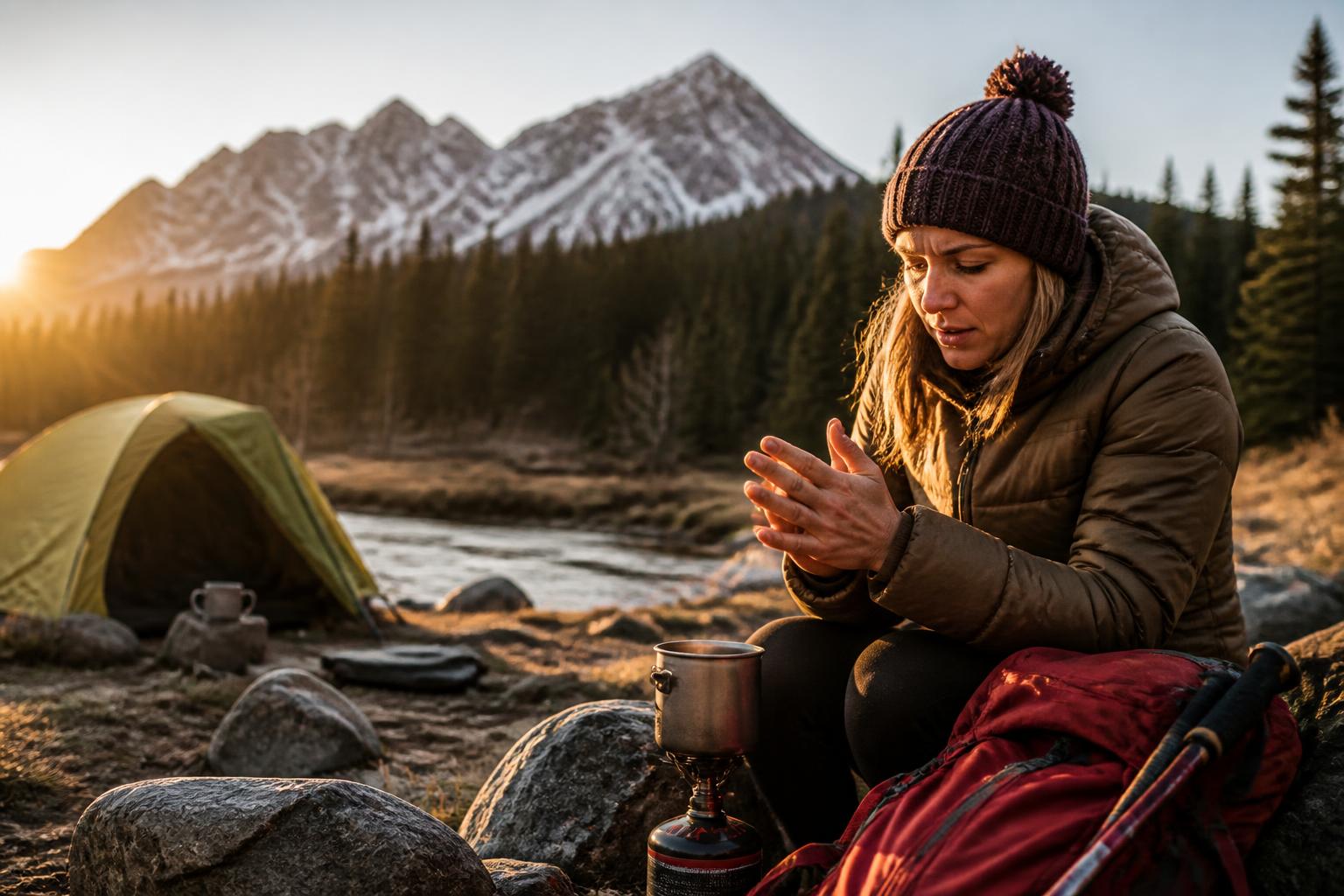
Recognizing Frostbite Early
Frostbite progresses in three stages. The earlier you act, the less tissue you lose.
Frostnip (superficial freezing)
- Skin turns pale or white, feels cold and numb but remains soft and pliable.
- Rewarming produces tingling or burning; no long-term tissue loss.
- Action: Get into shelter immediately. Warm the area with body heat (tuck fingers under armpits) or immerse in water at 100–105 °F (warm to the touch, not hot). Do not rub.
Superficial frostbite (partial-thickness freezing)
- Skin feels hard and frozen on the surface, but underlying tissue stays soft.
- Blisters may form 12–36 hours after rewarming.
- Action: Rewarm in water at 100–105 °F until skin returns to normal color and sensation returns. Do not pop blisters.
Deep frostbite (full-thickness freezing)
- Skin appears white, waxy, and hard; complete numbness.
- Blisters are often blood-filled.
- Action: Medical emergency. Do not attempt field rewarming if there is any risk of refreezing—thawed-then-refrozen tissue causes massive damage. Immobilize the area, elevate, and evacuate to a hospital.
Prevention That Works in Real Winter Conditions
The standard advice—”stay warm and dry”—is incomplete. You need a layered system and the discipline to manage moisture.
Gear Essentials
- Layering system: Base layer (merino wool or synthetic—never cotton), mid layer (fleece or Primaloft), outer shell (windproof and breathable). Switch layers before you sweat.
- Hand and foot insulation: Mittens are warmer than gloves because fingers share heat. For dexterity, use a thin liner glove under mittens. Boots must be loose enough for two sock layers (thin wool + thick wool); tight boots restrict circulation and cause cold feet faster than any insulation deficit.
- Face protection: Balaclava or neck gaiter plus a windproof mask when temps drop below 20 °F. Ears and nose are the first to go.
- Chemical warmers: Place them against the back of your hand or top of foot, not directly against skin. They work best when activated on already-warm skin—put them inside your mittens five minutes before heading out.
Behavior Choices
- Stay hydrated: Cold air is dry; you lose water through respiration. Dehydration reduces blood flow to extremities. Drink warm fluids frequently.
- Avoid alcohol and tobacco: Alcohol increases heat loss through dilated vessels and impairs judgment. Nicotine constricts vessels, cutting circulation to extremities.
- Eat high-calorie snacks: Your body needs fuel to shiver. Trail mix, cheese, chocolate, or nut butter provide sustained energy for thermogenesis.
Applicability Boundary
This prevention system assumes ambient temperatures below freezing (32 °F) with wind chill pushing effective temperature below 20 °F. If you’re car camping in 25 °F still air with a properly rated sleeping bag and no strenuous activity, the risk is lower—you can get away with lighter layering. The protocols here become critical when you are hiking, hauling firewood, or building camp in sustained cold, or when wet conditions (rain, snow, creek crossings) soak your gear. Above 32 °F with no wind, frostbite is unlikely; focus on hypothermia prevention instead.
The Counter-Intuitive Angle: Sweat Is More Dangerous Than Cold
Most frostbite articles hammer “stay warm.” For winter campers, the real enemy is sweat. When you overdress for high-exertion tasks (chopping wood, hiking with a pack), your base layer soaks. That moisture turns to ice inside your insulation, destroying loft and accelerating heat loss from your skin. The classic mistake: wearing the same jacket while chopping wood and while sitting around the fire.
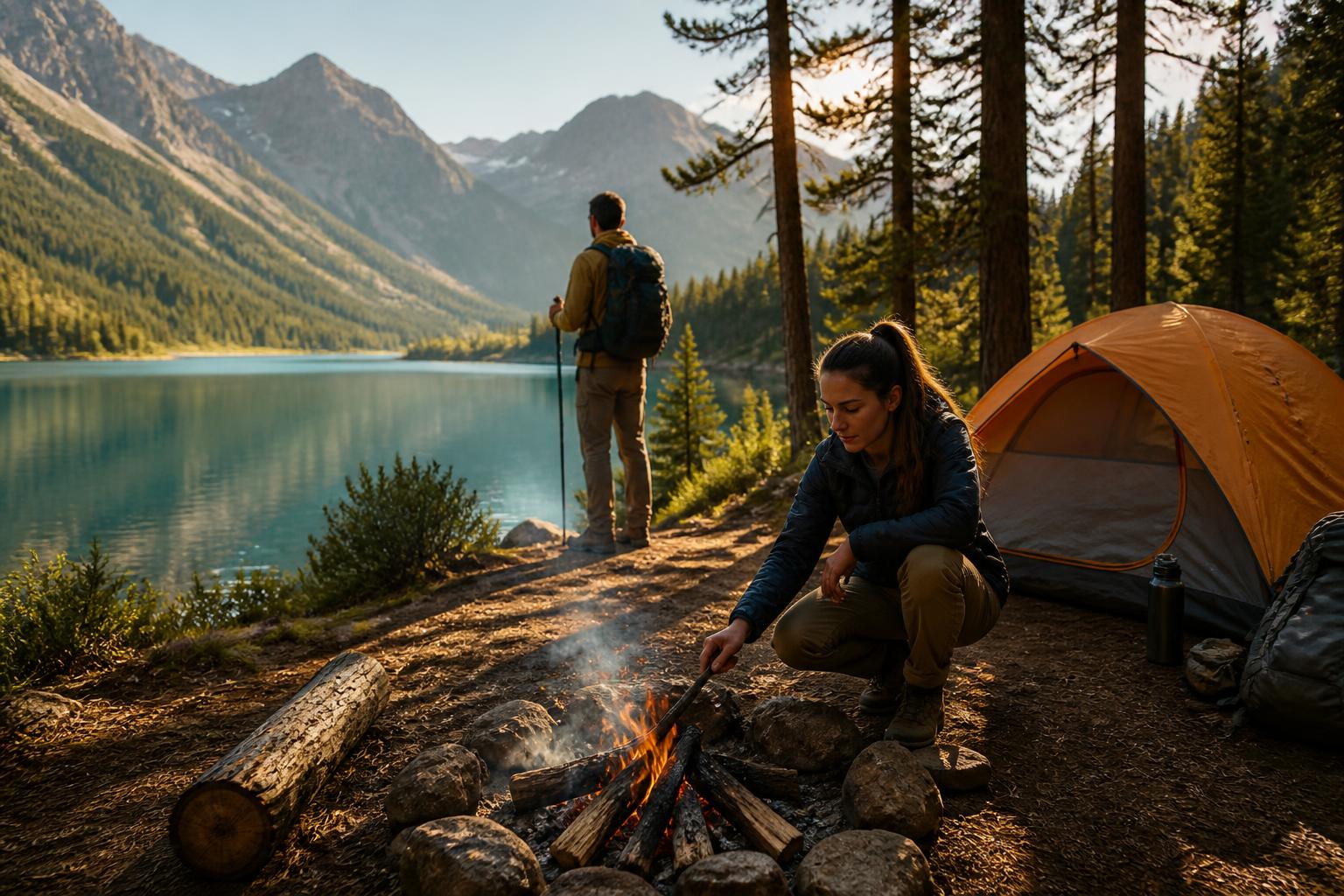
Actionable step: Before any high-exertion activity, remove your mid layer or fully unzip your shell. Keep your base layer dry. After the activity, put a dry layer on immediately—don’t wait for the chill to set in.
Common mistake: Assuming “you can’t sweat in winter.” You absolutely can, and frozen sweat causes frostbite faster than dry cold air ever will.
Expert Tips for Staying Safe
Tip 1: Pre‑warm your boots every morning
Actionable step: Stuff a pair of chemical warmers into your boots 10 minutes before putting them on. This raises the interior temperature so your feet don’t get a cold shock on first step-out.
Common mistake: Putting boots on stone‑cold feet and hoping circulation will warm them up—that takes much longer and encourages moisture buildup inside the boot.
Tip 2: Use chemical warmers only on already‑warm skin
Actionable step: Place warmers against skin that is already warm (e.g., after exercise). If your fingers or toes are cold, warm them first by rubbing them gently against your palm or tucking them under your armpit.
Common mistake: Slapping a warmer onto a numb digit—the heat can actually accelerate damage because you can’t feel if it’s too hot.
Tip 3: Buddy‑check each other’s face every hour
Actionable step: In a group, pair up and look at each other’s ears, nose, and cheeks every hour. A patch of white, waxy skin that one person can’t see is easily spotted by a partner.
Common mistake: Only checking yourself in a mirror or by touch. Numbness masks the early signs; you can miss a growing patch until you warm up inside.
Practical Implication: Your Gear Choices Have Real Consequences
Choosing mittens over gloves may reduce dexterity, but that trade-off is worth it when temperatures drop below 10 °F—you lose less heat and retain more grip because your fingers stay warm enough to function. Conversely, buying boots that are a half-size too large (to accommodate two sock layers) may feel slightly loose, but that circulation is what keeps your toes alive. A snug boot that cuts off blood flow will cause frostbite even with high-loft insulation.
Verification Step: Test Your Boot Fit for Two Sock Layers
Before a winter trip, put on a thin wool liner and a thick wool sock, then insert your foot into the boot. Wiggle your toes. If you cannot move them freely, the boot is too tight—exchange for a half-size up or a wider model. With the boots laced loosely (not cranked down), your heel should not lift more than ¼ inch when you walk. Any constriction point around the instep or ankle will reduce circulation and increase frostbite risk.
Quick Decision Aid: Frostbite Prevention Check
Run through these five checks before you leave camp each day. If any item is a “no,” fix it before starting your activity.
- [ ] Did I dry my base layer and socks completely from yesterday? (No damp spots in toes or armpits.)
- [ ] Are my boots loose enough to wiggle all toes with two sock layers on?
- [ ] Am I carrying a spare dry base layer and socks in my pack (for mid-day change after sweating)?
- [ ] Does my outer shell fully cover my neck, ears, and chin with no gaps?
- [ ] Have I set a 30-minute reminder to wiggle fingers and toes and check my buddy’s face?
What to Do If You Suspect Frostbite
Do
- Get out of the wind and into shelter immediately.
- Remove wet or constrictive clothing.
- Immerse the affected area in water at 100–105 °F (warm to the touch, not hot). Do not use direct heat from a stove, fire, or heater—numb skin burns easily.
- Elevate frostbitten extremities to reduce swelling.
- Take ibuprofen or acetaminophen for pain and inflammation.
Don’t
- Thaw if there is any chance of refreezing (thawed-then-frozen tissue causes massive damage). Wait until you can get to a warm medical facility.
- Rub or massage the area—ice crystals inside cells shred tissue.
- Pop blisters—they protect underlying tissue from infection.
- Use alcohol or smoke for “warmth”—both worsen circulation.
Stop/Escalate Signal
If after 30 minutes of rewarming in 100–105 °F water the skin remains white, waxy, and numb, you are dealing with deep frostbite. Do not continue field rewarming—immobilize, protect from further cold, and evacuate to a hospital. Pain that does not subside with ibuprofen, or the appearance of blood-filled blisters, also means immediate medical attention is needed.
FAQ
Q: How can I tell if it’s frostbite or just cold skin?
A: Press the area gently. If the skin feels firm or waxy and won’t dent, it’s frostbite. Cold skin remains soft and pliable. Also, rewarm for 10 minutes; if color and sensation return, it was frostnip. If it stays white and numb, treat as frostbite.
Q: Can I use snow to rub frostbitten skin?
A: No. Never rub snow or ice on frozen tissue. That mechanically disrupts frozen cells and worsens damage. Warm water at 100–105 °F is the only safe rewarming method in the field.
Q: Should I rely on hand warmers alone for my feet?
A: No. Hand warmers help, but they cannot compensate for wet socks, tight boots, or poor circulation. Keep feet dry, boots loose, and change socks if they get damp. Warmers are a backup, not a primary defense.

Camping Bob has spent over 20 years camping across the US — from BLM dispersed sites in the Southwest to KOA campgrounds in the Pacific Northwest. He writes practical, no-nonsense guides to help fellow campers get outdoors with confidence.