
How to Identify Poison Oak: Leaves, Stems and Look-Alike Plants
Poison oak has three leaflets with scalloped, oak-like edges, and grows as a shrub or climbing vine with green or reddish stems. Check the leaf shape, stem color, and berry clusters to separate it from look-alikes. Use the checklist and step-by-step guide below to confirm your ID—and if you’re ever unsure, keep your distance and take a photo for a second opinion.

Leaf Clues: The Three-Leaflet Rule and Shape
Every poison oak leaf has three leaflets arranged on a single stalk. The center leaflet has a short stem of its own; the two side leaflets attach directly to the main stalk with no separate stem. This pattern is your first and most reliable clue, and it holds true across both western and eastern varieties.
Leaf shape and edge. The leaflets are broadly oval with wavy, scalloped, or lobed edges that resemble a true oak leaf. Unlike poison ivy (which has pointed, smooth-edged leaflets), poison oak lobes are rounded and give the leaf a bumpy, almost ruffled silhouette. The upper surface can be glossy or dull, depending on the region and maturity.
Western vs. Eastern Poison Oak
Western poison oak (Toxicodendron diversilobum) grows along the Pacific coast from Baja California to British Columbia. Its leaflets are smooth and glossy with a slightly waxy sheen, even in dry conditions. The lobes tend to be deeper and more pronounced than the eastern variety.
Eastern poison oak (Toxicodendron pubescens) is found primarily in the southeastern United States, from Texas to Florida and up the Atlantic coast to Virginia. Its leaflets feel fuzzy or velvety due to fine hairs (pubescence), giving them a dull green appearance. The lobes are shallower and the leaf outline is more rounded than western poison oak.
That hair difference matters: if the leaf is shiny, it’s likely western; if it’s rough and hairy, it’s eastern. Both forms contain the same rash-causing oil, so treat them identically.
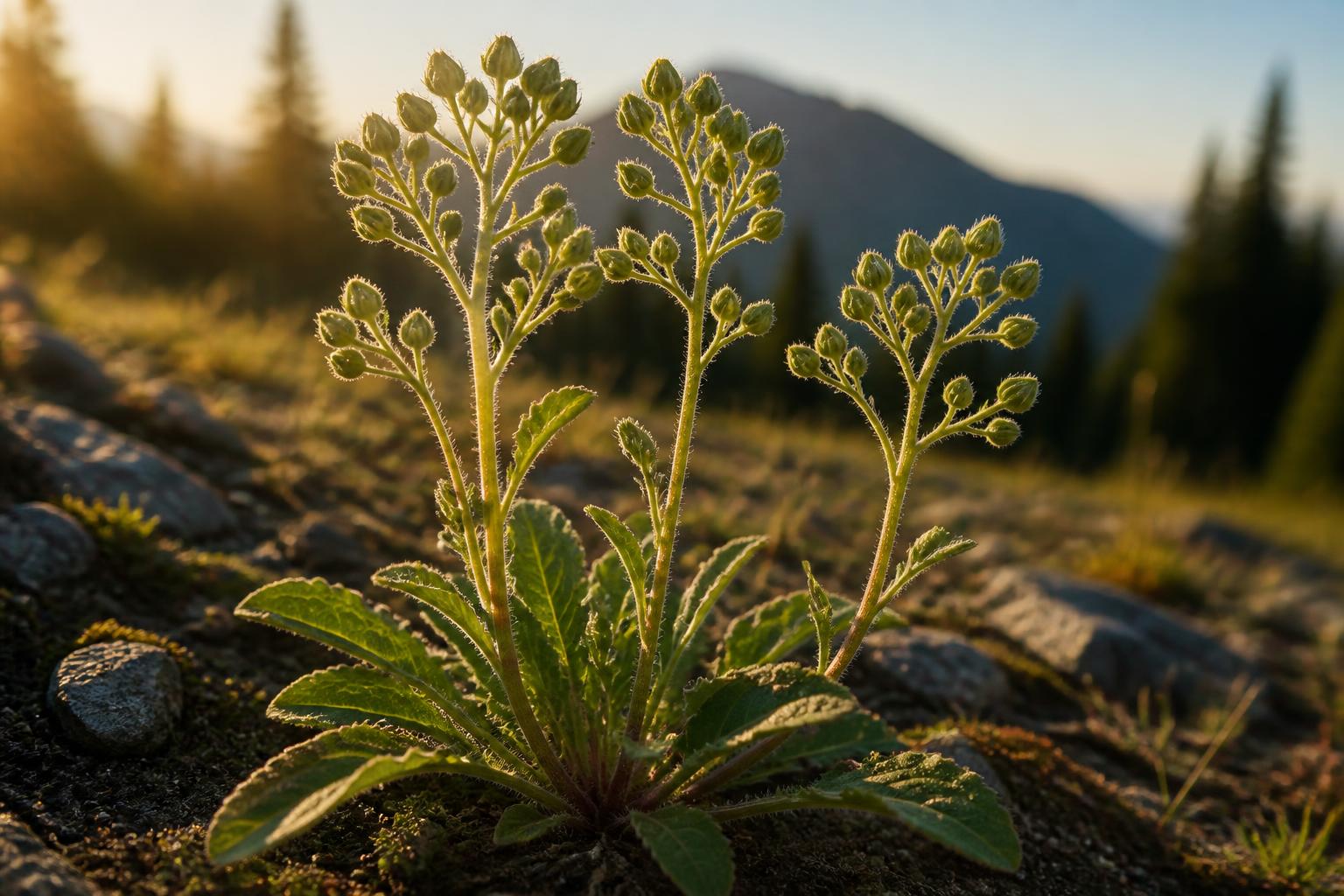
Seasonal color shifts. In spring, leaves are bright green with a reddish tint on new growth. By summer, they darken to a solid medium green. In fall, they turn vivid red, orange, or yellow. This color change often tricks people into thinking it’s a different plant—especially in autumn when the bright red leaves stand out. Always prioritize leaf shape and stem color over color alone, because many harmless plants also turn red in fall.
Stem and Growth Habit
Look at the stem where the leaf meets the branch. Young stems are green or reddish, especially near the tip of the plant. Older stems become woody and grayish brown, with a rough texture. Eastern poison oak stems are covered in fine hairs; western stems are smooth and hairless.
Growth forms. Poison oak can take two shapes, and recognizing both is critical. As a shrub, it grows upright to about 3 feet tall, branching from the base. As a climbing vine, it attaches to trees, fences, or walls using brown aerial rootlets—small, fuzzy-looking “roots” that sprout along the stem. These rootlets anchor the vine to bark or masonry. If you see a climbing vine with those rootlets and three lobed leaflets, treat it as toxic.
Root system. Poison oak spreads through underground rhizomes, meaning a single plant can send up new shoots several feet away. You may encounter clusters of stems that all connect underground. This is why clearing poison oak often requires digging out the root system, not just cutting the visible growth.
Six Common Look-Alikes (and How to Rule Them Out)
The table below compares the most frequent confusion plants. Use it when one of the checklist items doesn’t match.
| Plant | Leaflets | Key Differences from Poison Oak |
|---|---|---|
| Virginia creeper | 5 (rarely 3 on young shoots) | Tendrils with adhesive disks; blue-black berries; leaflets pointed and sharply toothed |
| Box elder (young) | 3, but opposite arrangement | Leaflets sharply toothed, not scalloped; arranged opposite on stem (poison oak is alternate) |
| Blackberry / raspberry | 3–5 | Stems have sharp thorns (poison oak has none); leaflets more elongated and serrated |
| Poison ivy | 3 | Leaflets pointed and smooth-edged or slightly toothed, not lobed like an oak leaf; center leaflet has a long stem |
| Poison sumac | 7–13 | Grows as a tall shrub or small tree in wet areas; leaflets paired with one at tip; leaf edges smooth; stems are red |
| Fragrant sumac | 3 | Leaflets look similar but are aromatic when crushed; stems are hairy; berries are bright red (not white) |
Concrete failure mode: The most common mistake is confusing young Virginia creeper (which sometimes produces three leaflets on juvenile shoots) with poison oak. Check for the adhesive disks on the tendrils—Virginia creeper has them, poison oak does not. Also, Virginia creeper leaflets are pointed and sharply toothed, not scalloped. If you see a plant with five leaflets on mature growth but three on new shoots, look for those disks before ruling out Virginia creeper.
Another frequent error: assuming all three-leaflet plants with red fall color are poison oak. Fragrant sumac and some maples also turn red but have opposite leaf arrangement or red berries. Take a second look at the stem arrangement before making your call.
Quick Identification Checklist
Run through these five checks before deciding. A “yes” to all five means it’s almost certainly poison oak. If any check fails, consult the look-alike table above.
- [ ] Leaflet count: Exactly three leaflets per leaf stalk?
- [ ] Leaf shape: Leaflets rounded with scalloped or lobed edges (like an oak leaf)?
- [ ] Stem color: Stems are reddish, green, or brownish (not uniformly green from base to tip)?
- [ ] Berries: Clusters of small white or cream-colored berries present (late summer or fall)? If berries are red or blue-black, it’s not poison oak.
- [ ] Leaf arrangement: Leaves alternate along the stem (not opposite)?
Verification step: After checking all five, confirm one more detail: look for thorns (none on poison oak) and count leaflets again. If everything matches, you have a positive ID. If any check fails, re-examine using the look-alike table.
Step-by-Step Identification Guide
Step 1 – Count the leaflets. Find a single leaf stalk where it attaches to the main stem. If you see exactly three leaflets, move to step 2. If you see five or more, it’s not poison oak (likely Virginia creeper or a bramble). If you see three but they feel thin and papery, it could be box elder—check the arrangement in step 3.
Step 2 – Assess leaf shape. Run your gloved finger gently along the edge of one leaflet. Scalloped or wavy? That’s a strong indicator of poison oak. Sharply toothed or smooth? Look-alike. The scalloped edges are the single most distinctive visual cue after the three-leaflet rule.
Step 3 – Inspect the stem color and texture. Use a stick or gloved hand to lift a leaf and look at the stem where it joins the branch. A reddish tint on newer growth is a strong indicator. Eastern plants have hairy stems; western plants are smooth. Also check the arrangement: are leaves alternating on the stem (one per node) or opposite (two per node)? Opposite arrangement rules out poison oak.
Step 4 – Look for fruits. White or off-white berry clusters (late summer or fall) confirm poison oak. Greenish-yellow flowers appear in spring before berries form. If you see red berries, you’re looking at fragrant sumac or a different harmless plant. If you see blue-black berries, it’s Virginia creeper.
Step 5 – Note growth habit. Is it a low shrub or a climbing vine with aerial rootlets? Both are possible. If it climbs like a vine with those “fuzzy” rootlets along the stem, treat it as toxic.

Camping Bob has spent over 20 years camping across the US — from BLM dispersed sites in the Southwest to KOA campgrounds in the Pacific Northwest. He writes practical, no-nonsense guides to help fellow campers get outdoors with confidence.