
Camping in a Thunderstorm: Safety Tips & What to Do When Lightning Strikes
If you hear thunder while camping, lightning is close enough to hit your location—act immediately. The single most effective move is getting into a low-risk position and staying there until 30 minutes after the last thunderclap. Do not wait for rain, count seconds, or assume you’re far enough away. Your safety depends on how fast you react, not how far away the storm looks.
Practical implication for your next trip: Choose your campsite with lightning risk as a primary factor. Pick a spot with a natural low area (valley floor, dense young forest) within a two-minute walk. If your preferred site is on an exposed ridge or open field, plan a different location—even if the forecast is clear. For car camping, park your hard-topped vehicle within reach; it is the safest shelter. If you backpack, always know the nearest low-lying terrain before you set up.
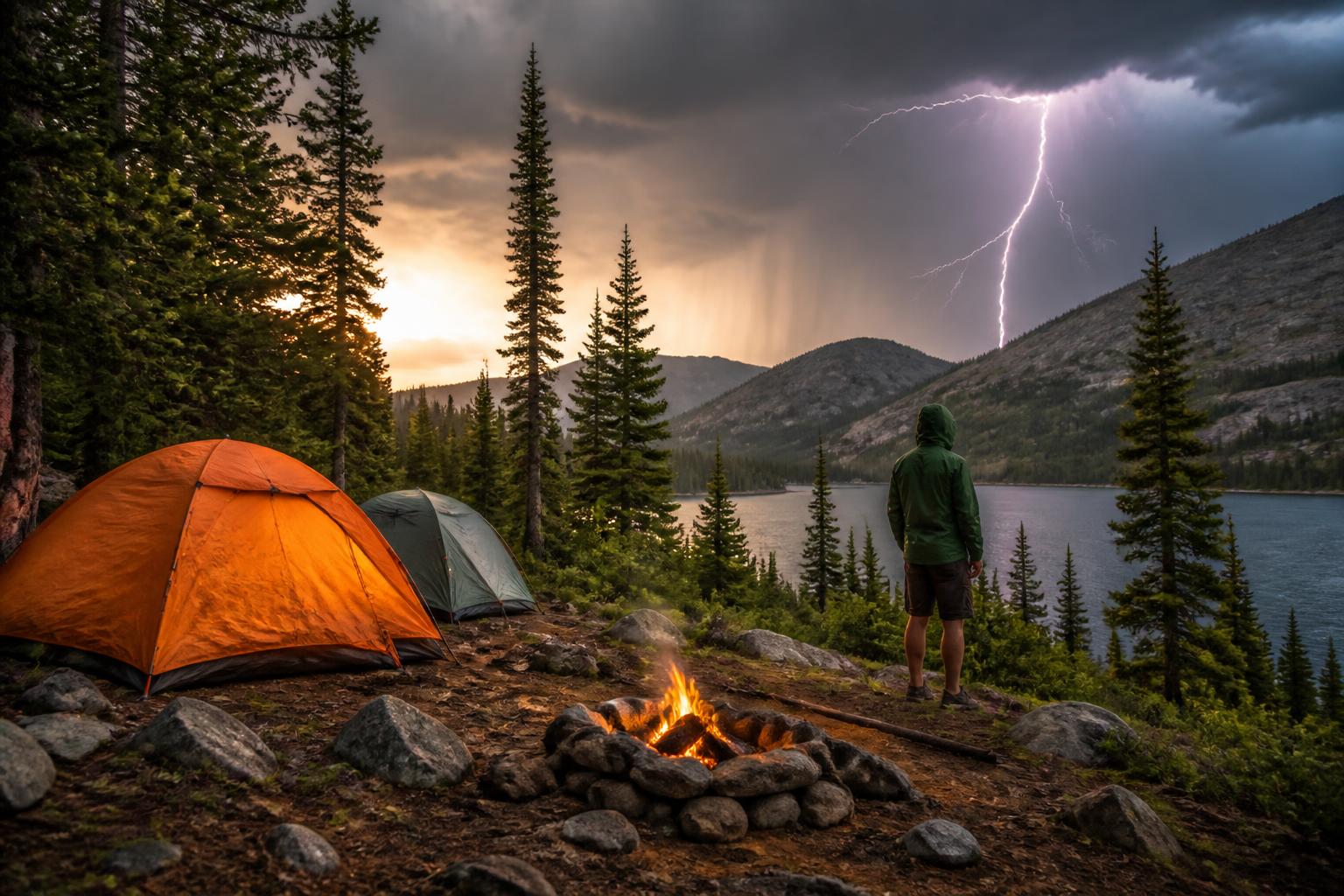
The Real Danger: Waiting Too Long to Act
The most common failure mode among campers is underestimating how fast a thunderstorm moves and overestimating your ability to judge distance. Lightning can strike 10 to 15 miles from the storm core—a “bolt from the blue” under clear skies. By the time you feel raindrops or see the first flash, you may already have seconds to act.
How to detect it early: Use the 30/30 rule. Count the seconds between seeing lightning and hearing thunder. Divide by 5 to get distance in miles. If the gap is 30 seconds or less (about 6 miles), you are in the danger zone and must take cover immediately. If the gap shrinks between strikes, the storm is moving toward you.
Common mistake: Waiting for rain before reacting. Rain is a late indicator—lightning often arrives 10 to 20 minutes before precipitation.
What to Do When Lightning Is Close (Step by Step)
Follow these steps in order. Do not skip or delay.
Step 1: Stop moving. Drop metal objects (trekking poles, pack frames, tent poles) at least 30 feet away from where you’ll shelter. Being in motion and carrying metal makes you a taller target.
Step 2: Get to a low-risk position. Move off ridges, peaks, open fields, and away from water. Look for a low area—valley floor, dry ravine, or dense stand of small trees of uniform height. Avoid lone trees, rock overhangs, and cave entrances.
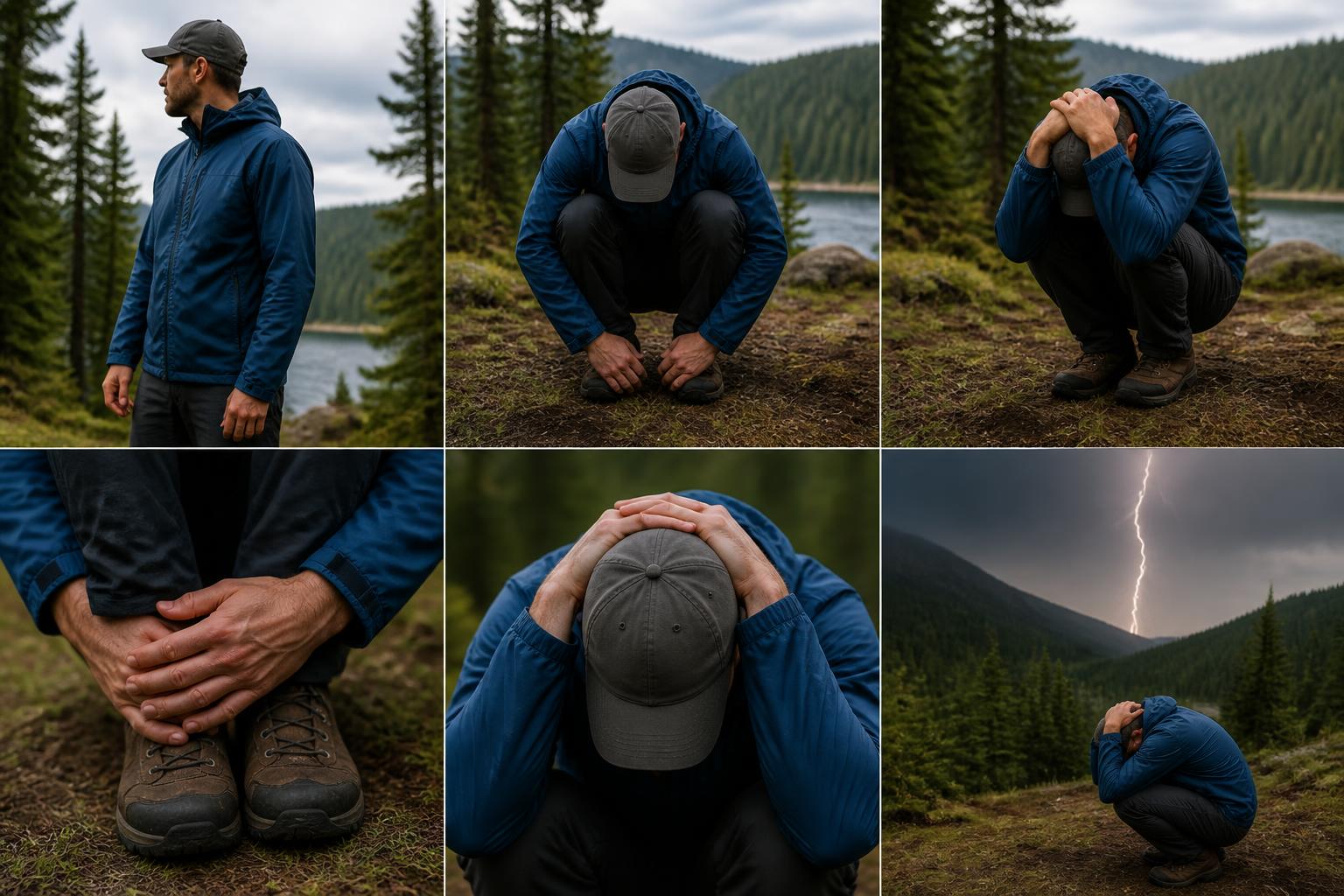
Step 3: Assume the lightning position. Crouch low on the balls of your feet, feet together, head tucked, hands covering your ears. Minimize contact with the ground. Do not lie flat—that increases ground current exposure.
Step 4: Wait 30 minutes after the last thunder. This is the most commonly skipped step. Many lightning injuries happen after the storm appears to have passed.
Checkpoints:
| Checkpoint | Action |
|---|---|
| Thunder heard | Begin 30-second count. If ≤30 seconds, go to Step 1. |
| Flash-to-bang gap shrinking | Storm approaching—take position now. |
| Rain starts | You should already be in position. |
| Last thunderclap | Start a 30-minute timer. |
| 30 minutes clear | Safe to resume normal activity. |
How to verify you are in a safe position: Use a compass or GPS to confirm you are at least 50 feet away from the nearest taller object. If hiking, check a topographic map beforehand to identify low areas that stay dry. During the storm, verify that no lone tree, rock spire, or ridge is within 4× its height from your crouch position. If your phone has service, pull up a lightning strike map (e.g., NOAA Weather Radar app) to confirm the storm’s center has moved past your location.
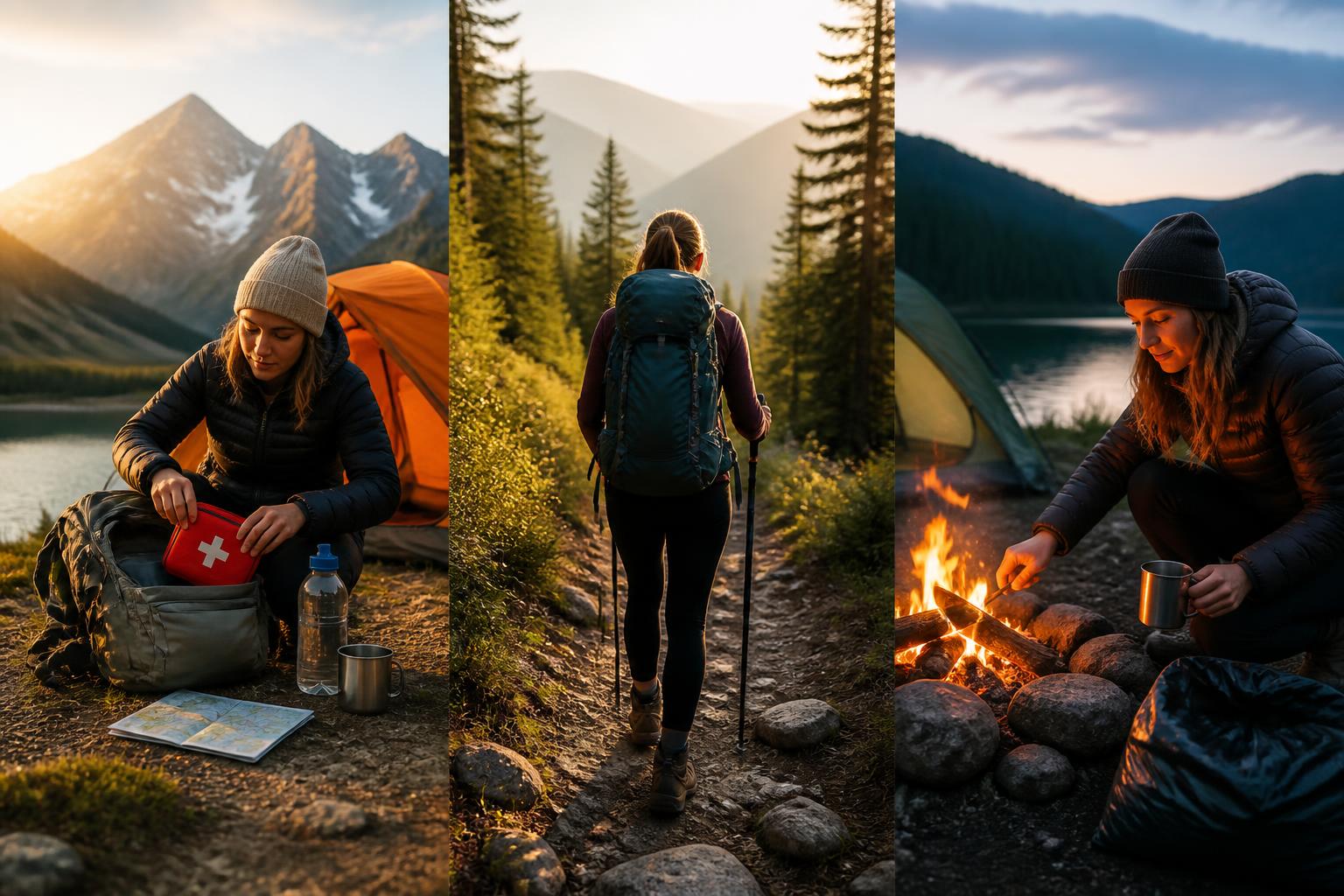
Friction point: You may want to pack up and leave right after the storm. Don’t. Lightning can strike from the trailing edge of the storm. Wait the full 30 minutes.
Escalation signal: If your hair stands on end or you hear a buzzing/crackling sound, lightning is about to strike your immediate area. Drop into the lightning position immediately and do not move.
3 Practical Tips for Staying Safe Before, During, and After
Tip 1: Check the forecast before you go, and monitor it in real time
Actionable step: Before leaving, check NOAA weather alerts for your exact camping location. Look for “severe thunderstorm watch” (be prepared) versus “warning” (immediate action). During the trip, keep a weather radio or a phone with a lightning-aware app (such as WeatherBug or My Lightning Tracker). Pre-download the offline map of your area in case you lose signal. Re-check forecasts every 4 hours—mountain and coastal weather can change fast.
Common mistake: Trusting a morning forecast for an afternoon storm. Thunderstorms often develop rapidly in the heat of the day. A clear morning does not mean a clear afternoon.
Tip 2: Set up your camp with an escape route in mind
Actionable step: When picking a campsite, identify a low-lying area within a two-minute walk that can serve as your lightning shelter. Avoid pitching your tent on the highest point of a ridge or next to a single tall tree. Instead, choose a spot in a dense cluster of small, evenly sized trees—they reduce your risk compared to a lone tree or open meadow. If you are in an area with no good natural low spot, consider camping within 100 yards of a hard-topped vehicle if possible.
Common mistake: Assuming your tent is safe. A tent offers zero lightning protection—its poles can conduct electricity, and the fabric provides no insulation. The tent is not a shelter from lightning. Setting up in a beautiful meadow surrounded by tall pines may feel protected, but those trees can attract strikes and the meadow leaves you as the shortest object—still at risk.
Tip 3: Have a dry change of clothes sealed and ready
Actionable step: Store a full set of dry clothes (base layer, mid layer, socks) in a waterproof dry bag. A Merino.tech Merino Wool Base Layer – Mens 100% Merino Wool Long Sleeve Thermal Shirts is a smart choice because merino retains warmth even when damp. Before the storm, test the seal of your dry bag by submerging it briefly in a water source; if any moisture gets in, double-bag. Store the dry bag in a place you can grab without leaving your safe position.
Common mistake: Relying on a single rain layer. Sweat and condensation inside a rain jacket can soak your base layer. Use a Bikewa Men’s Cycling Rain Jackets Waterproof Running Bike Windbreaker Hooded Reflective Biking Windproof Bicycle Riding as your outer shell and pair it with a breathable mid-layer so you stay dry from both rain and sweat. After the storm passes, change into the dry clothes immediately—even a slight chill can escalate to hypothermia when you’re wet.
Quick Answers to Common Questions
Is a tent safe during a lightning storm? No. A tent provides no lightning protection. Do not rely on it as shelter. If your tent is in a low, protected area, staying inside and crouching off your sleeping pad may reduce ground contact, but the tent itself does not protect you.
Should I leave my tent if lightning is close? If your tent is in a high-risk location (ridge, open field, near a lone tree), you are safer outside in the lightning position in a low area. If the tent is in a well-chosen low spot, staying inside and assuming the lightning position on your sleeping pad is acceptable—but the tent is not the reason it’s safe.
What about a car or RV? A hard-topped metal vehicle is one of the safest places during lightning—the metal shell directs current around occupants. An RV with a fiberglass body offers less protection. Either way, avoid touching metal surfaces, windows, or electronics.
Can lightning strike the same place twice? Yes. Lightning frequently strikes the same tall object multiple times during a single storm. Do not return to a ridge or exposed area until the 30-minute all-clear has passed.
What if I’m hiking with a group? Spread out at least 15 feet apart from each other to reduce the chance of multiple people being hit by the same ground current. Use hand signals to communicate—shouting over thunder is unreliable. Count heads after the storm to account for everyone.

Camping Bob has spent over 20 years camping across the US — from BLM dispersed sites in the Southwest to KOA campgrounds in the Pacific Northwest. He writes practical, no-nonsense guides to help fellow campers get outdoors with confidence.