
Sleeping Pad R-Value Explained: What It Means and How Much You Need
Sleeping pad R‑value measures how well the pad blocks heat loss to the ground. The higher the number, the more insulation it provides. For most three‑season camping, R‑2 to R‑4 is sufficient. If you’ll sleep below freezing, you need at least R‑5. Knowing this one number lets you avoid a cold night – or a heavy, over‑insulated pad that makes you overheat in warm weather.
What this means for your next purchase: If you already own a pad with a known ASTM R‑value, you can calculate whether it’s warm enough by comparing it to the temperature guide below. If the pad lacks an ASTM label, treat any number on the box as a rough estimate—you may need to add 0.5 to 1.0 to your target R‑value to compensate for non‑standard testing.
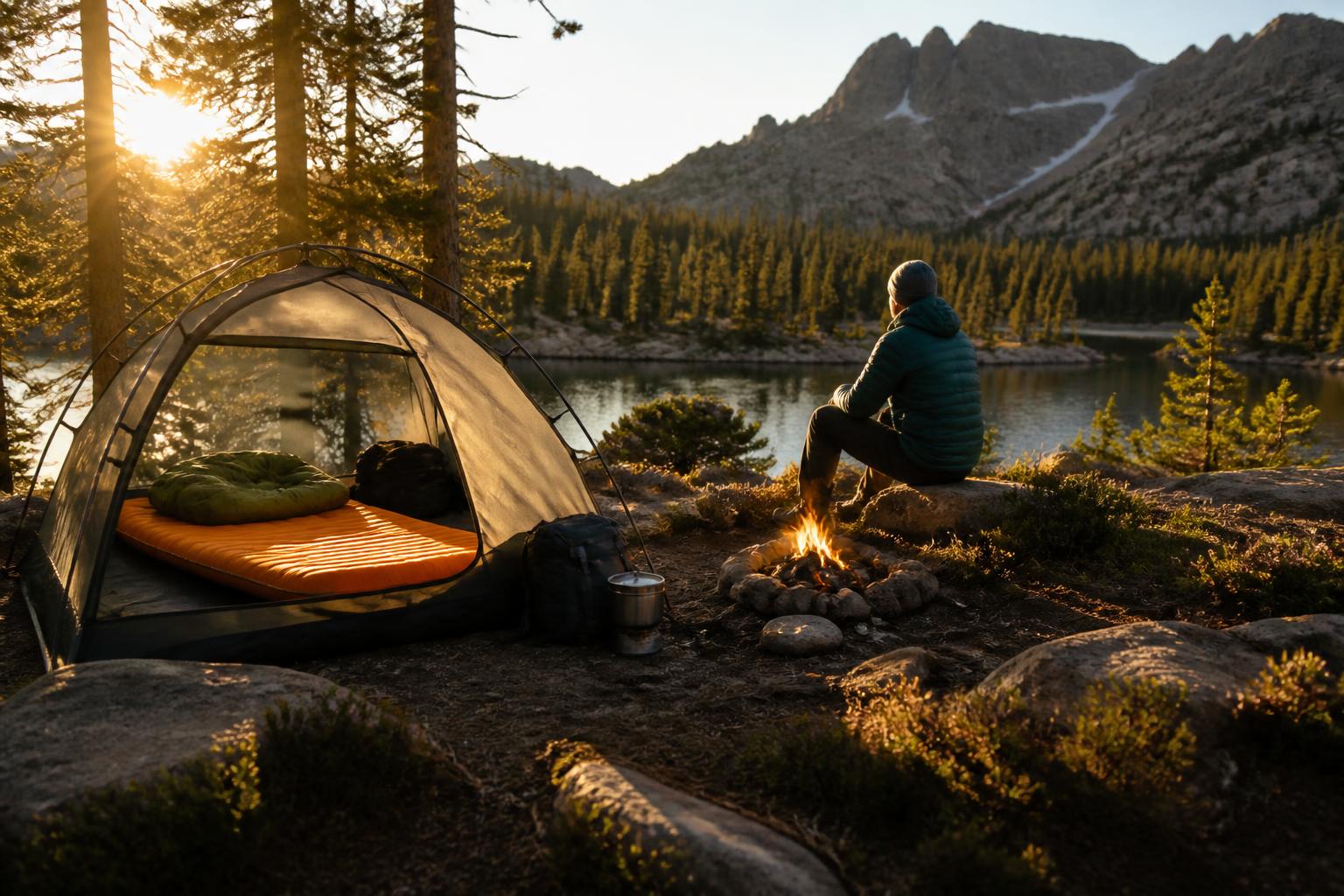
What R‑Value Actually Tells You (and What It Doesn’t)
R‑value stands for “thermal resistance.” It is a lab‑tested number (ASTM F3340) that measures how much the pad slows heat transfer from your body to the cold ground. A pad with R‑1 lets heat escape quickly; an R‑8 pad keeps almost all of it in.
- Typical range: 1.0 (thin uninsulated air pad) to 8.0+ (expedition‑grade insulated pad).
- Stacking rule: You can place one pad on top of another, and their R‑values add up. A 2.0 pad plus a 3.0 pad equals R‑5.0 total.
- What R‑value doesn’t tell you: it does not account for drafts, wind, or moisture under the tent floor. Those factors can make even a high‑R pad feel colder.
Concrete verification step: Look for the ASTM F3340 marking on the pad’s cardboard hang tag or the sewn‑in product label. If you see only a “tested to” number without the ASTM acronym, the manufacturer likely used a different method. In that case, plan to add 0.5 to the listed number when comparing to standard recommendations—or buy from a brand that publishes ASTM results (Therm‑a‑Rest, Nemo, Exped).
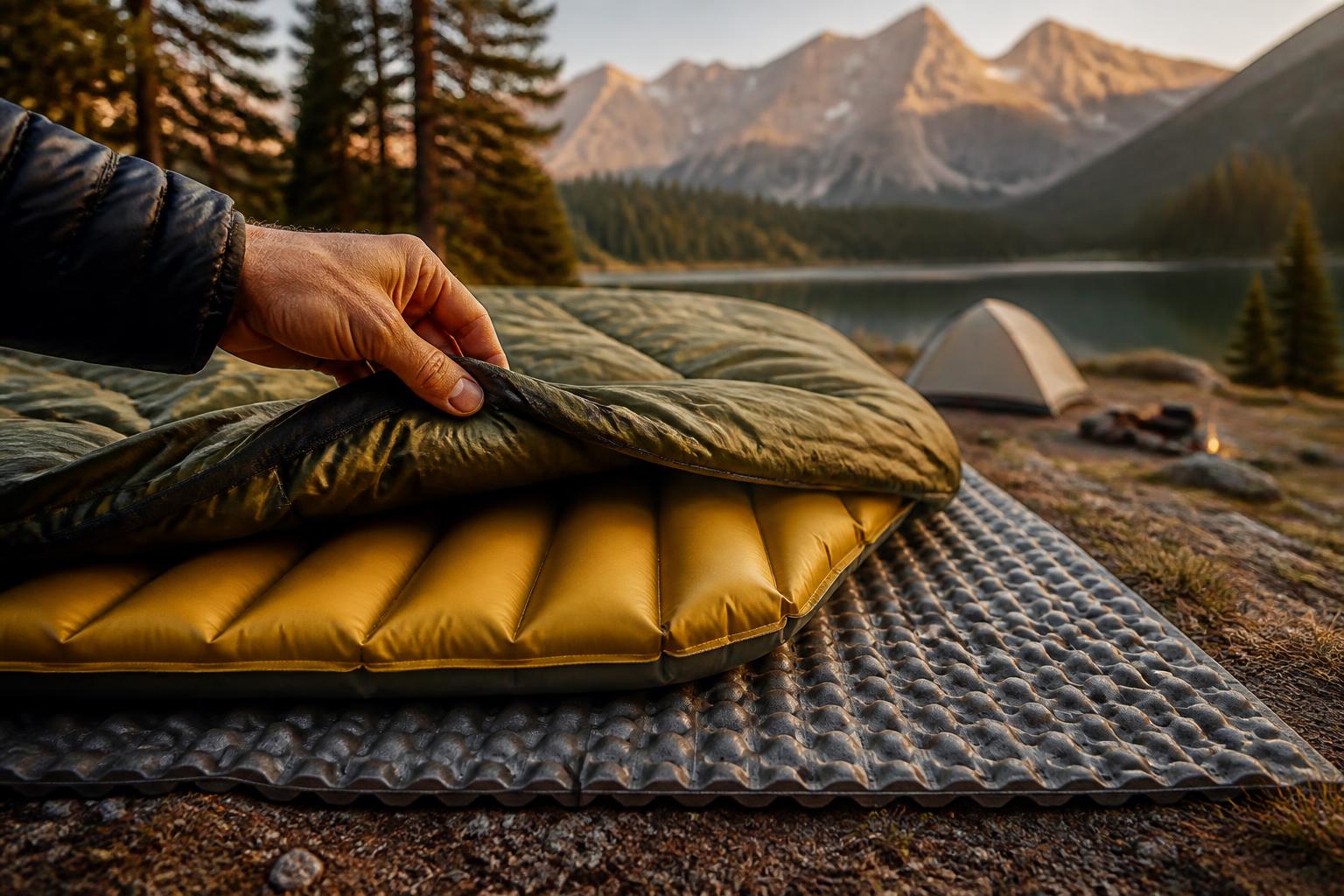
Important boundary: Not all manufacturers use the ASTM test. Some report “equivalent” R‑values from non‑standard methods. If the box does not say ASTM F3340, treat the number as a rough guide – it may be off by 0.5 to 1.0.
How Much R‑Value You Actually Need
The right number depends on the lowest temperature you expect overnight, your sleeping bag’s insulation, and your personal metabolism. Use these benchmarks as a starting point.
| Condition | Recommended R‑value | Pad examples |
|---|---|---|
| Summer only (above 50°F) | 1.0 – 2.0 | Uninsulated air pad, thin foam pad |
| Three‑season (above 30°F) | 2.0 – 4.0 | Self‑inflating pad, insulated air pad |
| Shoulder‑season (20°F to 30°F) | 4.0 – 5.5 | Thick insulated air pad or stacked pads |
| Winter / below 20°F | 5.5 – 8.0+ | Expedition foam + insulated air pad combo |
One decision criterion that changes the recommendation: Weight vs. modularity.
If you backpack, a single very high‑R pad (R‑6 to R‑8) can be heavy and bulky. A smarter trade‑off is to take a moderate R‑3 to R‑4 insulated air pad and add a closed‑cell foam pad (R‑1.5 to R‑2.0) underneath. The total weight is often lower than a single thick pad, and you can leave the foam pad at home in summer. For car campers, weight does not matter, so just get the highest R‑value within your budget.
A Realistic Mismatch: When R‑Value Alone Leads You Wrong
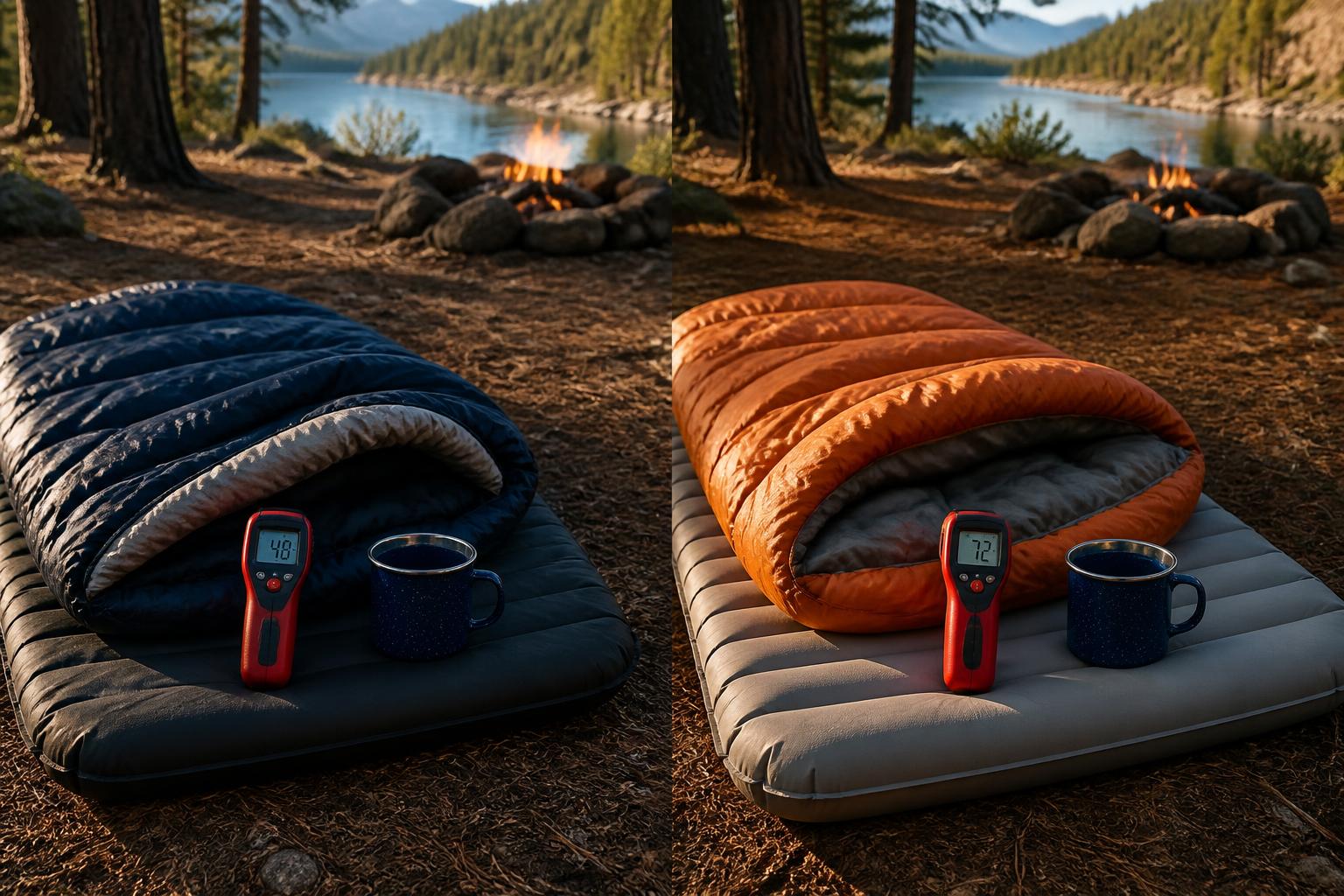
A high R‑value label doesn’t guarantee uniform warmth across the pad. Some insulated air pads use a single layer of insulation that leaves the edges and inflation valve area with less material—creating cold spots where ground chill seeps through. If you’re a side sleeper, your hip can press through the insulation, reducing effective R‑value by 0.5 to 1.5 in practice. The consequence is waking up with a cold shoulder or hip even though the pad’s spec sheet says R‑4.5.
How to check for this before buying: Press the pad fully inflated and feel (or have a store employee lift it) to gauge the thickness of the insulation layer near the edges. A true all‑body insulation pad will feel equally dense end to end; a budget model often feels thin and hollow at the corners.
Insulated vs. Uninsulated Pads – When Common Recommendations Fail
Many guides say “always buy an insulated pad for cold weather.” But if you camp mostly in mild conditions (40°F+ at night), an uninsulated air pad is lighter, cheaper, and packs smaller. Adding a reflective emergency blanket under the pad can boost effective R‑value by about 0.5 at negligible cost.
Where recommendations fail: For winter campers who sleep cold, a mid‑range insulated pad (R‑4) alone rarely cuts it. They are better off with a foam pad plus an insulated air pad instead of a single expensive R‑6 pad that may still let cold seep through from the ground. The “4‑season” label on a pad is no guarantee – check the ASTM R‑value before buying.
For example, a three‑season sleeping bag like the oaskys Camping Sleeping Bag – 3 Season Warm & Cool Weather – Summer Spring Fall Lightweight Waterproof for Adults Kids works best with a pad in the R‑2 to R‑4 range for typical spring-through-fall use. If you pair that same bag with a high‑R pad in warm weather, you can overheat.
Quick Fit Check: 5 Questions to Decide if a Pad Works for You
Use these pass/fail checks to sort pads instantly. Answer each question honestly—if you get any “yes” in the cold‑weather category, adjust your target upward.
-
Will you sleep below 30°F?
Yes → Need R‑4 or higher. No → Move to next question. -
Is packed weight your top priority?
Yes → Consider a modular setup (moderate R‑pad + foam pad) rather than a single heavy high‑R pad. -
Do you usually sleep cold (even in a thick sleeping bag)?
Yes → Add 1 to 2 to the recommended R‑value for your temperature range. -
Is your tent floor insulated (e.g., a thick footprint or snow under the tent)?
No → Stick with the standard recommendation. Yes → You can reduce R‑value by about 0.5. -
Will you share the pad with a partner?
Yes → Get a wide single pad (25+ inches) or use two separate pads. Two thin pads stacked won’t share heat evenly.
If you answered “no” to all cold‑weather questions, a low‑R pad (1–2) is fine. If any “yes” appeared, adjust your target upward.
Expert Tips for Choosing and Using Sleeping Pad R‑Value
Tip 1 – Test for cold spots before your trip.
Actionable step: Inflate your pad and lay on it on a tile or hardwood floor at home. Wait 5 minutes and feel for cold patches, especially along the edges.
Common mistake: Assuming the “R‑value” printed on the box guarantees uniform insulation. Some pads use non‑ASTM tests, so always look for ASTM F3340 certification on the package.
Tip 2 – Stack pads for extreme cold, but do it right.
Actionable step: Place a closed‑cell foam pad directly on the tent floor, then put your inflatable pad on top. This adds R‑1.5 to R‑2.0 and protects the inflatable from punctures.
Common mistake: Stacking two inflatable pads. They can slide apart or create an unstable surface that lets cold air circulate between them.
Tip 3 – Ignore “4‑season” or “extreme” marketing claims.
Actionable step: Only trust an ASTM‑tested R‑value. If the manufacturer doesn’t publish it, look for a pad from a brand that does.
Common mistake: Assuming a thick pad with a high price is automatically warm. Some thick air pads have no internal insulation and have an R‑value of only 1.0–1.5.
FAQ
Can I use two sleeping pads together to increase R‑value?
Yes. R‑values are additive, so an R‑2 foam pad under an R‑3 inflatable gives you R‑5.
Does R‑value degrade over time?
Not normally if the pad is intact. However, foam pads can lose loft after years of compression, reducing their R‑value by 0.5–1.0. Inflatable pads hold their R‑value unless they develop a leak.
Is higher R‑value always better?
No. In warm weather (above 50°F), a high R‑value pad can cause you to overheat and sweat. Use the lightest pad that matches the coldest temperature you expect.
For colder conditions, a well‑rated down bag like the SYWSKW Ultralight Down Sleeping Bag with Pillow,15°F 32°F 46°F Sleeping Bag for Women,Men,Youth Backpacking,Hiking and Camping Outdoor with 680FP Duck Down requires a pad with at least R‑4 to prevent ground chill from negating the bag’s warmth. Pairing any bag with an inadequate R‑value is the fastest way to lose the insulation battle.

Camping Bob has spent over 20 years camping across the US — from BLM dispersed sites in the Southwest to KOA campgrounds in the Pacific Northwest. He writes practical, no-nonsense guides to help fellow campers get outdoors with confidence.