
How to Dispose of Propane Canisters: Recycling & Hazardous Waste Rules
Never toss a propane canister into household trash or curbside recycling – even if it feels empty. Residual pressure and gas make it a fire and explosion hazard. Your only safe disposal paths are a household hazardous waste (HHW) facility, a retailer exchange program (for refillable tanks), or a certified scrap metal recycler that accepts properly drained cylinders. Start by checking your city or county waste authority online – they’ll tell you exactly what’s accepted locally and where to take it.
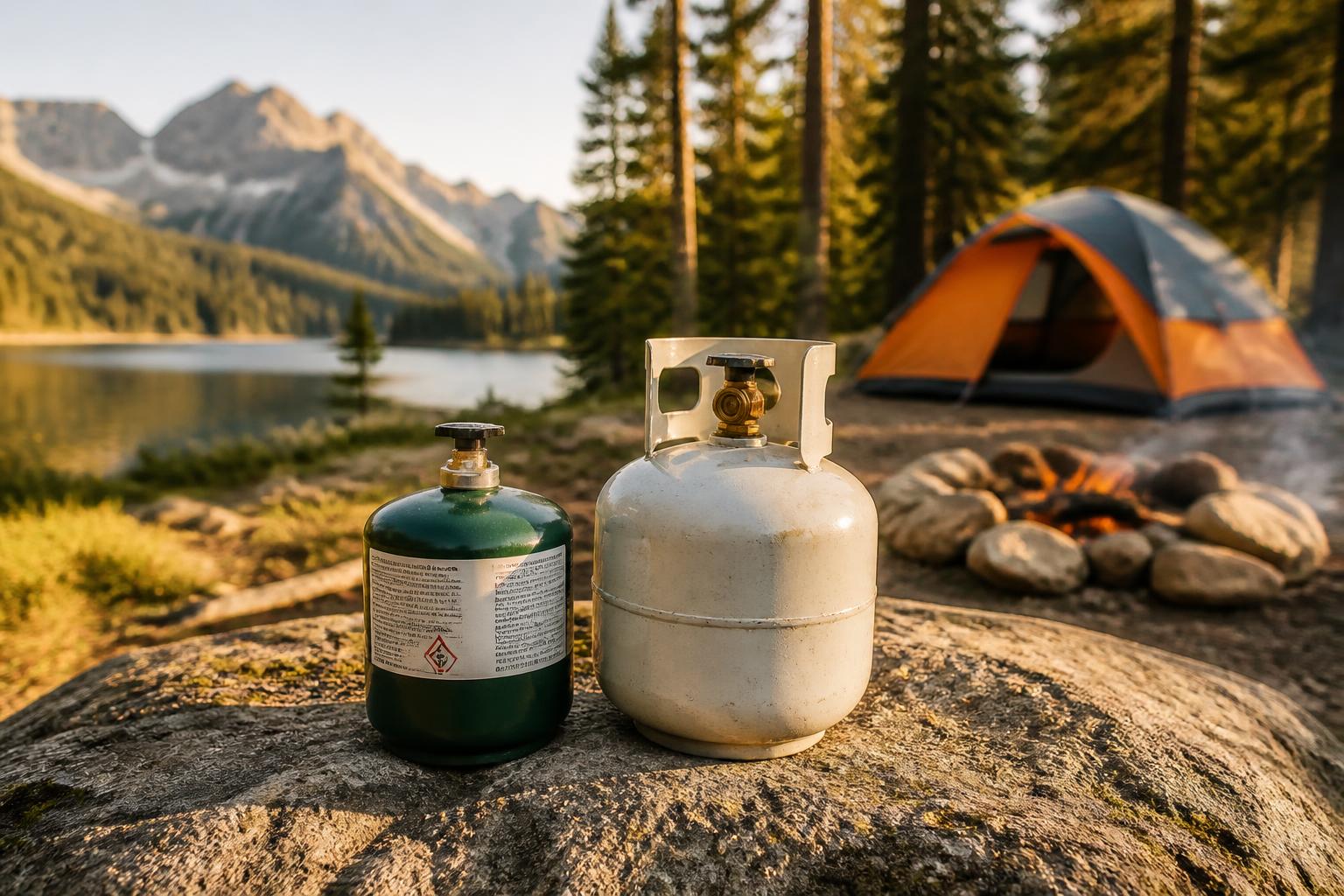
Identify What You Have: Disposable vs. Refillable
Disposal rules split cleanly along this line, so identify what you’re holding before you act.
Disposable 1-lb Canisters
These green camping‑style cylinders are meant for one use. You cannot legally refill them in the U.S. Even after the flame dies, a small amount of pressurized propane remains. That leftover gas turns them into dangerous projectiles if crushed in a trash truck or recycling sorter. Check the label – if it says “non‑refillable” or “single‑use,” it’s disposable.
Refillable Propane Tanks

Standard 20‑lb grill tanks and larger RV or camper cylinders have an overfill prevention device (OPD) with a triangular handwheel. They’re built to be refilled or exchanged. Look for a date stamp on the collar – tanks older than 12 years (or 5 years in some states) may need recertification. You never send these to the landfill – you take them to a retailer, propane supplier, or HHW facility.
Safe Disposal Steps for 1-lb Canisters
Most people accumulate these after camping or using portable heaters. Follow this order to stay safe and get them out of your home.
Step 1: Verify It’s Truly Empty
Attach the canister to a propane device outdoors and open the valve. If no gas flows, you’re ready for the next step. If any gas remains, use it normally – connect a stove or torch and burn it off in a well‑ventilated area away from buildings and sparks. Do not try to vent the gas by opening the valve and walking away; that releases flammable vapor into your yard and can pool near the ground.
Once you’re confident the canister is empty, confirm with a weight check if possible. A full 1‑lb canister weighs about 16 oz full and 8 oz empty. If it feels heavier than an empty one, there’s still propane inside. A quick kitchen scale can settle the question.
Step 2: Find a Household Hazardous Waste Drop‑Off
County public works, fire departments, and waste authorities run HHW sites or periodic collection events. Call ahead and confirm they accept propane canisters – some take them only during special events. Use search terms like “household hazardous waste [your city]” or search Earth911.com. When you drop them off, leave the canisters whole – do not remove the valve or puncture them. This is the safest route and requires no DIY work.
Stop and escalate here if:
– You cannot find an HHW facility that accepts them.
– The canister is rusty, dented, or has a damaged valve. Do not attempt to puncture it – damaged cylinders can fail unpredictably. Store it upright in a cool, dry place and call your local waste authority for guidance.
Step 3: Use a Certified Scrap Metal Recycler (With Caution)
Some scrap yards accept 1‑lb canisters if they’ve been punctured and fully drained. Call first – they’ll tell you whether you need to remove the valve or leave it. If you go this route, use a tool designed for gas cylinders (about $10–15). Work outdoors, away from any ignition source, and puncture on the sidewall near the top (not the bottom, where liquid may still sit).
Verification step after puncture: Wait until you hear no more hissing. Then apply a soapy water mixture to the puncture hole – no bubbles mean no residual gas. Once confirmed, the steel is safe for scrap.
Never puncture a canister with a hammer and nail – the spark risk is real. And never put a whole canister in curbside recycling; the sorting equipment can crush it and cause an explosion.
Decision Aid: Which Path Should You Take?
Use this quick checklist to pick your disposal method for a 1‑lb canister.
- [ ] Canister is completely empty (no gas flow when valve opened outdoors)? Yes → continue. No → use the gas up safely.

- [ ] Local HHW facility accepts propane canisters? Yes → drop off unmodified. No → see next item.
- [ ] Certified scrap metal recycler accepts pre‑punctured cylinders? Yes → follow their prep rules. No → store safely until the next HHW event.
- [ ] You have a proper puncture tool and can work outdoors away from sparks? Yes → puncture, drain, verify with soapy water, then recycle steel. No → do not attempt – take to HHW.
- [ ] Canister shows rust, dents, or a defective valve? Yes → skip any DIY steps; treat as hazardous waste and go straight to HHW.
How to Handle Refillable Tanks
These are simpler because the system already exists for handling them.
- Exchange at a retailer – Grocery stores, hardware chains, and gas stations offer tank exchanges. You swap your old tank for a pre‑filled one. This works even if your tank is out of certification – the exchange company recycles it. Blue Rhino, AmeriGas, and many local propane dealers are common options. Just bring the tank in your vehicle upright and secured.
- Return to a propane supplier – If you own the tank and want it back empty, most distributors will take it for a small fee (often around $5–10). They recertify or scrap it properly. Some suppliers also offer a “tank buyback” if the tank is still within its certification period.
- Household hazardous waste – If the tank is damaged, severely rusted, or has a bad valve, take it to HHW. Do not exchange a damaged tank – the retailer may refuse it, and transporting a leaking tank is dangerous.
Stop and escalate if: the tank’s valve is stuck open or you smell propane near it. Move it outdoors away from buildings, call your propane supplier or fire department’s non‑emergency line, and do not drive with it.
Transport and Storage Safety
- Keep canisters upright and secure in your vehicle – never let them roll around in the trunk. Use a milk crate or cardboard box to keep them from tipping.
- Store away from heat, direct sun, and ignition sources (pilot lights, water heaters, electrical panels). A garage floor or shed shelf is usually fine as long as temperatures stay below 120°F.
- Don’t leave canisters in a hot car in summer – temperature swings can build pressure and cause the relief valve to vent flammable gas.
- If you smell propane near a stored canister, move it outdoors immediately and contact your HHW facility. Do not operate any electrical switches or lights in the area.
- For long‑term storage, keep canisters in a well‑ventilated, secure area inaccessible to children and pets.
Frequently Asked Questions
Can I throw an empty propane canister in the regular trash?
No. Even an “empty” canister contains trace propane that can explode when compacted in trash trucks or landfills. Most states classify them as hazardous waste, and fines for improper disposal can apply.
Is it safe to puncture a 1-lb canister at home?
It can be safe if you do it outdoors, away from any flames or sparks, and use a proper puncture tool. Never use a hammer and nail. If you’re unsure, take it to HHW – it’s not worth the risk.
What about small butane canisters from camping stoves?
Treat them the same way – never trash or curbside recycle. Check with your HHW facility for their rules on small fuel canisters. Butane is similarly volatile and must be handled as hazardous waste.
Can I refill a 1-lb disposable canister to avoid disposal?
No. U.S. law prohibits refilling these single‑use cylinders – they lack the overfill prevention device and can leak or burst. Attempting to refill them is dangerous and illegal. Your only safe move is proper disposal.

Camping Bob has spent over 20 years camping across the US — from BLM dispersed sites in the Southwest to KOA campgrounds in the Pacific Northwest. He writes practical, no-nonsense guides to help fellow campers get outdoors with confidence.