
Propane Tank Sizes Explained: 1 lb to 100 lb — What You Need to Know
Propane tank sizes are labeled by the weight of propane they hold, not the total weight of the cylinder. A 20 lb tank, for example, holds 20 pounds of propane and weighs about 18 pounds empty. The most common sizes range from 1 lb disposable cylinders up to 100 lb tanks for large appliances, and choosing the right one depends on your device, runtime needs, and how often you move the tank.
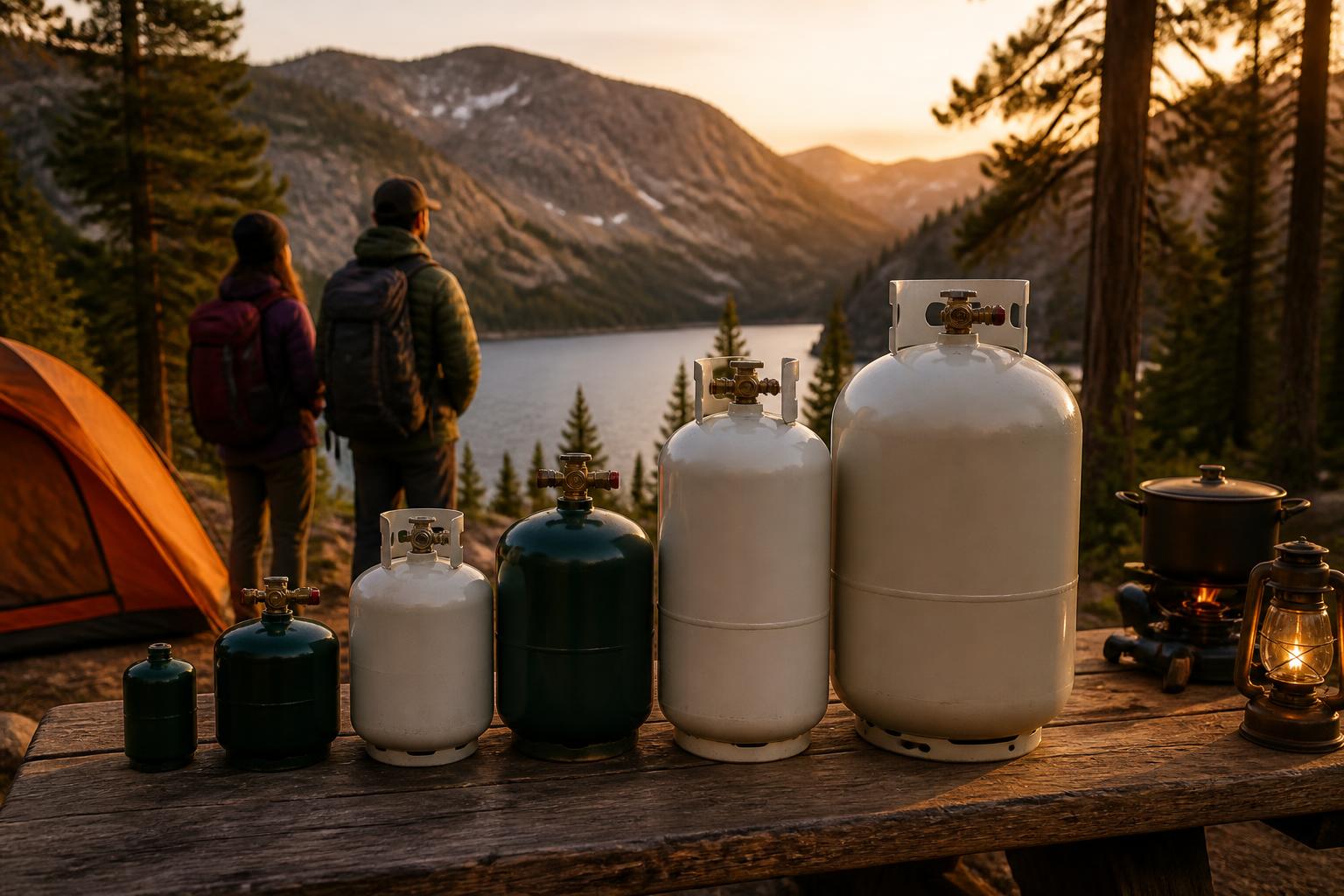
Tank Sizes and Typical Applications
The table below gives the key specs for the most frequently used propane tank sizes. “Empty weight” is approximate and varies by manufacturer. Runtime is estimated for a 10,000 BTU/hr grill (typical output of a small gas grill on medium heat); your actual runtime will depend on the appliance’s BTU rating.
| Tank Size (lb) | Propane Net Weight | Empty Weight (approx) | Full Weight (approx) | Typical Use | Runtime @ 10,000 BTU/hr* |
|---|---|---|---|---|---|
| 1 lb (disposable) | 16 oz (1 lb) | 1.5–2 lb | 2.5–3 lb | Portable camp stoves, tabletop grills, torches | ~1–1.5 hr |
| 5 lb | 5 lb | 4–5 lb | 9–10 lb | Small portable grills, camping | ~5–6 hr |
| 10 lb | 10 lb | 8–9 lb | 18–19 lb | Backup for small appliances, RVs | ~10–12 hr |
| 20 lb | 20 lb | 17–18 lb | 37–38 lb | Standard gas grill, smoker | ~20–24 hr |
| 30 lb | 30 lb | 25–27 lb | 55–57 lb | Larger RV fuel tanks, home standby grills | ~30–36 hr |
| 40 lb | 40 lb | 34–36 lb | 74–76 lb | Home heating, large cookers | ~40–48 hr |
| 100 lb | 100 lb | 70–75 lb | 170–175 lb | Whole-house generator, furnace, BBQ islands | ~100–120 hr |

*Runtime is an estimate. Divide your appliance’s actual BTU/hr into 91,500 (BTUs in 1 gallon of propane, with each gallon weighing about 4.2 lb) to get hours per gallon, then adjust for tank capacity.
Why the Number on the Tank Isn’t the Whole Story
A common misconception is that “20 lb” refers to the total weight you lift. In reality, it’s just the propane weight. A full 20 lb tank weighs roughly 38 lb, which matters if you regularly move it from garage to patio.

The 1 lb disposable cylinders present another surprise: they are not refillable. Even though the threaded valve looks similar to a refillable tank’s, federal regulations prohibit refilling DOT-39 single-use cylinders. Attempting to do so is dangerous and illegal. If you want a reusable small bottle, choose a refillable 5 lb or 10 lb tank instead.
For reference, a Coleman 2 Pack Propane Fuel Tank – 16 oz is a typical 1 lb disposable cylinder. You get convenience at the cost of higher per-pound expense and landfill waste.
Step-by-Step: Selecting the Right Tank Size
Follow this three-step process to match a tank to your situation.
Step 1: Know your appliance’s fuel consumption.
Check the label or manual for the BTU rating. A standard gas grill runs 30,000–50,000 BTU at high heat; a camp stove might be 10,000 BTU per burner.
Step 2: Estimate how long you need to run continuously.
Multiply the BTU rating by the hours you plan to cook. For example, a 40,000 BTU grill used for 3 hours consumes 120,000 BTU. One gallon of propane has ~91,500 BTU (at 4.2 lb/gallon), so you’d need about 1.3 gallons = 5.5 lb of propane. That means a 20 lb tank gives you about four 3-hour cooks.
Checkpoint: If your typical session is less than 1 hour on a small stove, a 1 lb disposable may be fine. If you cook weekly on a full-sized grill, a 20 lb tank will save you money per cook.
Step 3: Verify tank-to-appliance compatibility on the actual unit.
Look at the valve on your current tank and the fitting on your appliance’s regulator. Most 20 lb and larger tanks built after 2002 use a Type 1 (QCC1) connection with a coarse-thread brass nut and an OPD (overfill prevention device) — visible as a triangular handwheel with three prongs. Smaller refillable tanks (5 lb, 10 lb) often use a POL fitting (left-hand thread).
The 1 lb disposable cylinders use a CGA-600 self-sealing threaded valve. If the threads or sealing mechanisms don’t match, you’ll need an adapter (e.g., a 1 lb to 20 lb hose) or a different tank. Action: Remove the old tank and physically check that the new tank’s valve seats fully into your regulator without cross-threading — if it does not, stop and change tank type.
Likely cause of running out mid-cook: Underestimating how much propane you’ll use or relying on a single small tank. Most grillers run out because they haven’t calculated cooking time for high-heat searing or long slow smokes.
Escalation signal: If you run out more than once a season, buy a 30 lb tank (55 lb full) or keep a spare 20 lb tank on hand. For a whole-house generator that runs for days, you need a 100 lb tank plus a supply contract.
Expert Tips for Propane Tank Handling
Tip 1: Transport tanks upright and secured.
Always keep propane cylinders upright in your vehicle to prevent liquid propane from entering the valve. Use a milk crate or tie-down strap to stop tipping. Common mistake: laying a tank on its side during transport, which can cause leaks.
Tip 2: Never refill disposable 1 lb cylinders.
The Coleman Propane Fuel Cylinders, 4 pk./16 oz. and similarly designed bottles are single-use only. Even if a fitting seems to work, the cylinder isn’t designed for pressure cycling and can burst. Instead, buy refillable 5 lb or 10 lb tanks if you want a reusable small option.
Tip 3: Check the tank’s recertification date.
Most DOT propane tanks have a 12-year lifespan from the manufacture date, then must be recertified every 5 years. Look for a stamped letter and date (e.g., “E 2019” means expired in 2019). Common mistake: assuming a tank is fine just because it doesn’t leak. Old tanks can corrode internally and fail under pressure.
FAQ
Can I refill a 1 lb propane cylinder?
No. Federal law and safety standards prohibit refilling DOT-39 single-use cylinders. Use them once and recycle them properly. For a portable refillable alternative, buy a 5 lb tank.
How long does a 20 lb tank last on a standard gas grill?
It depends on your grill’s BTU output. At 30,000 BTU/hr (medium heat on a 3-burner grill), you get roughly 10–12 hours. At 50,000 BTU/hr (high heat), that drops to about 6–7 hours.
Is it safe to store propane tanks indoors?
No. Even empty tanks can release residual propane vapor. Store tanks outdoors in a well-ventilated area at least 10 feet away from building openings. Never store them in basements, garages attached to living spaces, or near ignition sources.
What size tank do I need for a generator?
Match the tank to the generator’s run time at full load. A 100 lb tank powers a 10 kW generator at 50% load for about 2–3 days. For longer outages or larger generators, you’ll need a 100 lb tank or larger stationary tank (250–500 gallons) delivered by a supplier.
Choosing the right propane tank size depends on your appliance, usage habits, and portability needs. Use the table and steps above to match the tank to your situation.

Camping Bob has spent over 20 years camping across the US — from BLM dispersed sites in the Southwest to KOA campgrounds in the Pacific Northwest. He writes practical, no-nonsense guides to help fellow campers get outdoors with confidence.