
Where Are Campfires Banned? How to Check Fire Restrictions Before You Go
Campfires are banned on millions of acres of public land every year, often with little notice. The exact answer to “where are campfires banned right now” depends on current fire danger, local drought conditions, and the agency that manages the land. To get a reliable answer, check InciWeb for federal land, call the local ranger station, or use a wildfire-alert app like Watch Duty. Always confirm the date of the restriction order before you pack – older orders may have expired, and rules can change daily.

How to Check Fire Restrictions Before You Go
Finding out whether campfires are banned requires checking multiple sources because restrictions are set by different agencies and can vary within the same region. Use these steps to get a definitive answer before you leave.
Step 1: Identify who manages the land – National Forests are under the U.S. Forest Service, BLM land is managed by the Bureau of Land Management, National Parks by the National Park Service, and state parks by your state’s natural resources agency. Private campgrounds fall under the owner or county fire marshal.
Step 2: Check official online sources – InciWeb (inciweb.nwcg.gov) lists fire restrictions and closures for federal land. Agency-specific websites have an “Alerts and Notices” section. Wildfire tracking apps like Watch Duty include restriction updates alongside fire maps and often update faster than printed signs. Many states (California, Oregon, Washington, Colorado) publish a central burn-ban map on the state fire marshal’s site.
Step 3: Call the local ranger station or fire department – A quick phone call confirms whether online info is current. Ask:
– “What stage of fire restrictions is in effect?”
– “When was the order last updated?”
– “Are propane stoves or gel-fuel fire pits allowed?”
Step 4: Confirm upon arrival – Look for posted signs at entrance stations, ranger kiosks, and campground bulletin boards. If nothing is posted, do not assume it’s safe – ask a ranger or call the district office.
Early checkpoint: Before you leave, verify the date on any restriction order. Orders can be issued for a specific period (e.g., “through September 30”) and may not be updated daily. If the order is more than a week old, call to confirm it hasn’t changed.
Likely cause of confusion: Many visitors rely on a single source (like a national park’s homepage) and miss that adjacent national forest land has stricter rules. Always check the specific jurisdiction where you will sleep and cook.

Stop/escalate signal: If after following these steps you cannot confirm that campfires are allowed in your exact location and campsite, do not light a campfire. Instead, use a propane stove (if permitted) or change your meal plan. Escalate by calling the local land management office for a definitive answer before proceeding.
Understanding Fire Restriction Stages
Restrictions are tiered. Knowing the stage tells you exactly what is banned.
Stage 1 – Moderate Fire Danger
Campfires allowed only in developed fire rings at designated campgrounds. No campfires in dispersed camping areas. Charcoal grills are usually banned unless in a designated ring. Propane stoves with an on/off valve are allowed everywhere.
Stage 2 – High Fire Danger
All open flames banned, including campfires, charcoal grills, and wood-fired stoves. Propane or liquid-fuel stoves with an on/off valve are typically exempt. Some orders also prohibit propane fire pits unless they have a flame-arrestor screen.
Stage 3 – Extreme Fire Danger (Area Closure)
No entry except for residents and emergency personnel. Even propane stoves are often prohibited. If you had a planned trip, cancel or move to a different area.
Decision criterion that changes the recommendation: The type of fire device matters more than the location. Propane or liquid-fuel stoves with an on/off valve are almost always exempt from campfire bans because they can be instantly shut off. Gel-fuel and wax-fuel fire pits (like the City Bonfires Portable Fire Pit) may also be allowed, but you must check the exact wording – some bans explicitly prohibit any open flame, even contained. Always confirm with the land manager.
Quick Decision Checklist
Use this before you leave to make sure you have the right answer for your trip.
- [ ] Have you identified the exact land manager (e.g., Shasta-Trinity National Forest, not just “U.S. Forest Service”)?
- [ ] Did you check the official website or call the ranger station within the last 48 hours?
- [ ] Does the restriction order list a valid date range (not expired)?
- [ ] If the ban allows “propane only,” does your stove have an on/off valve? (Charcoal, wood, and gel fuel may still be banned.)
- [ ] Is your campfire or stove going to be inside a designated fire ring or rock-lined pit? (Many Stage 1 bans require this.)
- [ ] Do you have a backup plan – such as a propane stove or a no-fire meal – in case a ban is issued after you arrive?
If you answer “no” to any of the first three items, do not build a campfire until you get a confirmed answer from the agency.
Alternatives When Campfires Are Banned
When campfires are not allowed, you still have safe, legal options for cooking and warmth.
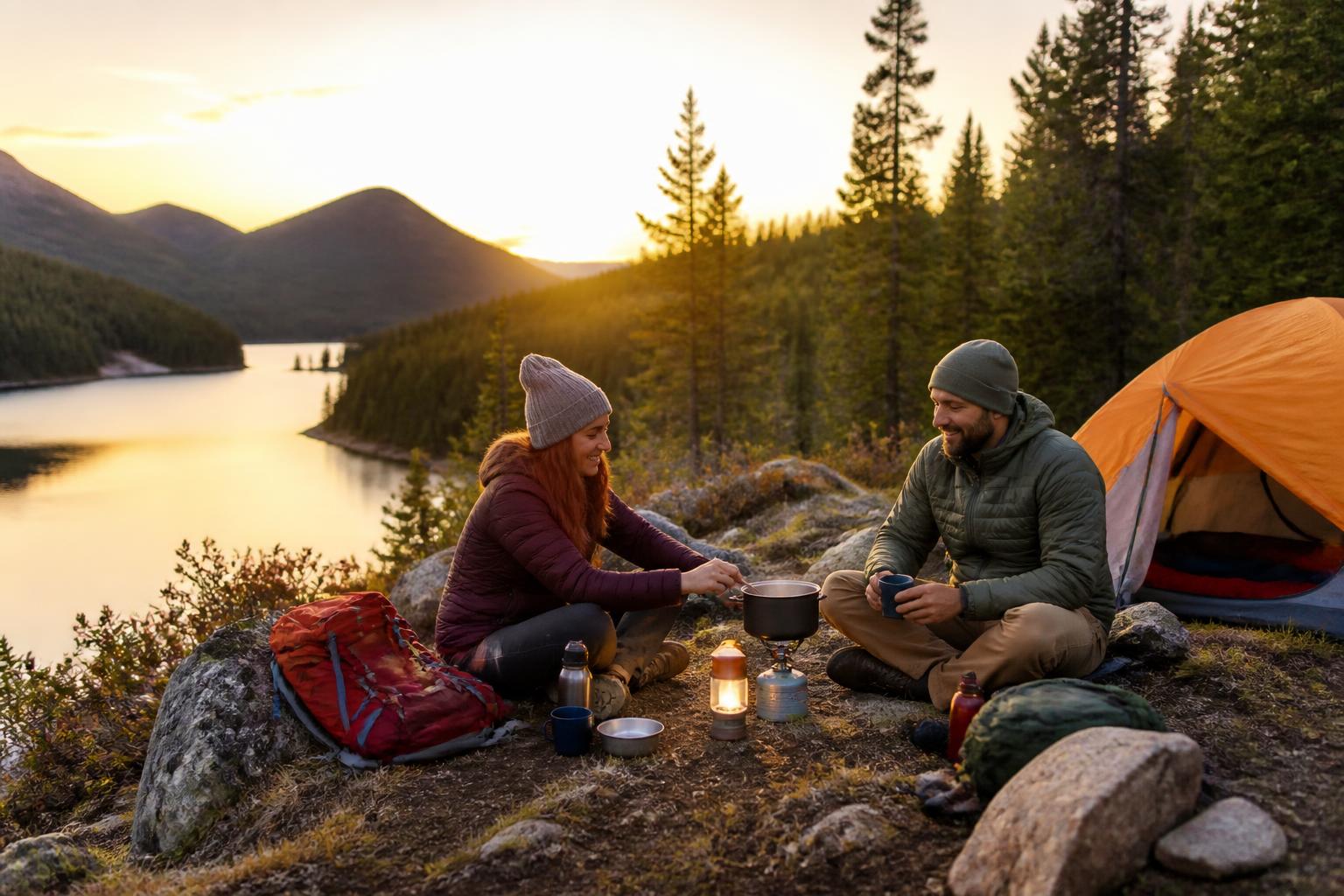
Propane or liquid-fuel stoves – Almost always allowed under Stage 1 and Stage 2 bans because they can be turned off. Check that your stove has a valve and use it on a fire-resistant surface.
Portable gel-fuel or wax-fuel fire pits – Some bans exempt these if they are self-contained and have a shut-off lid. The City Bonfires Portable Fire Pit uses soy wax and produces no embers, but you still need to verify with the land manager. If in doubt, treat it like a campfire.
Fire starter cubes – When fires are allowed, a product like Fire Starter Cubes makes lighting a campfire easy and reduces the need for lighter fluid. Keep them in your emergency kit even during a ban – you might use them for a stove.
Windproof lighters – A reliable lighter like the LcFun Waterproof Outdoor Electric Lighter (USB rechargeable, IP56 rated) is handy for lighting stoves. It also serves as a backup fire starter when conditions are wet or windy.
When to stop and change plans: If you cannot confirm that any open-flame device (including propane fire pits) is permitted, do not risk it. Switch to a no-cook meal plan or eat cold food. Relying on an unverified campfire could result in fines, liability for a wildfire, or both.
Frequently Asked Questions
Are propane fire pits allowed during a campfire ban?
It depends on the wording of the restriction. Many Stage 2 bans prohibit all open flames including propane fire pits unless the device has a shut-off valve and is used with a flame-arrestor screen. Always check the specific order.
Can I use a portable charcoal grill?
Charcoal grills are typically classified as open flames and are banned under Stage 1 and Stage 2 restrictions. If you’re unsure, treat them like a campfire.
How often do fire restrictions change?
Restrictions can be updated daily during high fire danger. A Stage 1 ban can move to Stage 2 overnight. Check the agency website or call the day before you leave, then again on arrival.

Camping Bob has spent over 20 years camping across the US — from BLM dispersed sites in the Southwest to KOA campgrounds in the Pacific Northwest. He writes practical, no-nonsense guides to help fellow campers get outdoors with confidence.