
How to Layer Sleeping Bags for Extra Warmth in Cold Weather
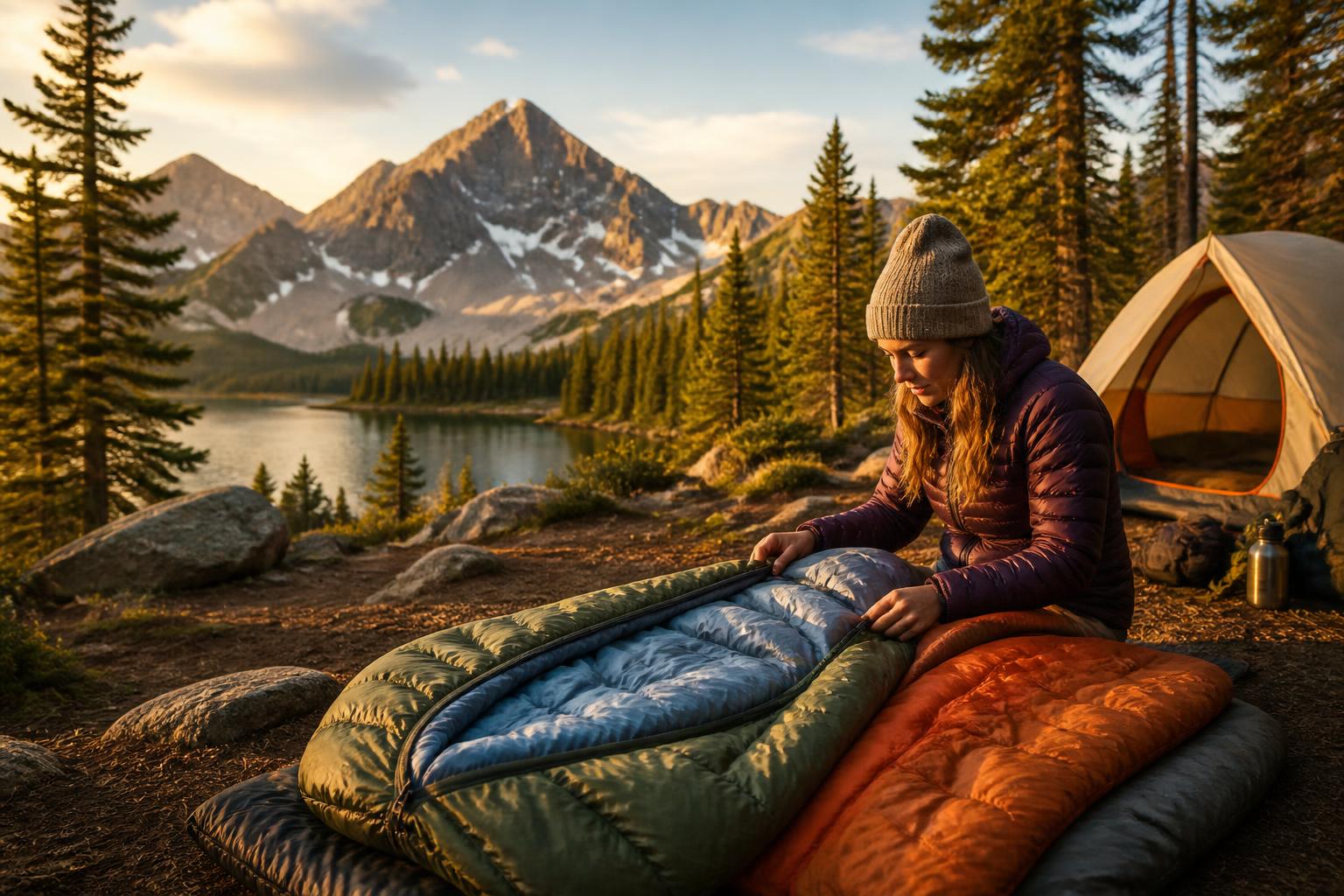
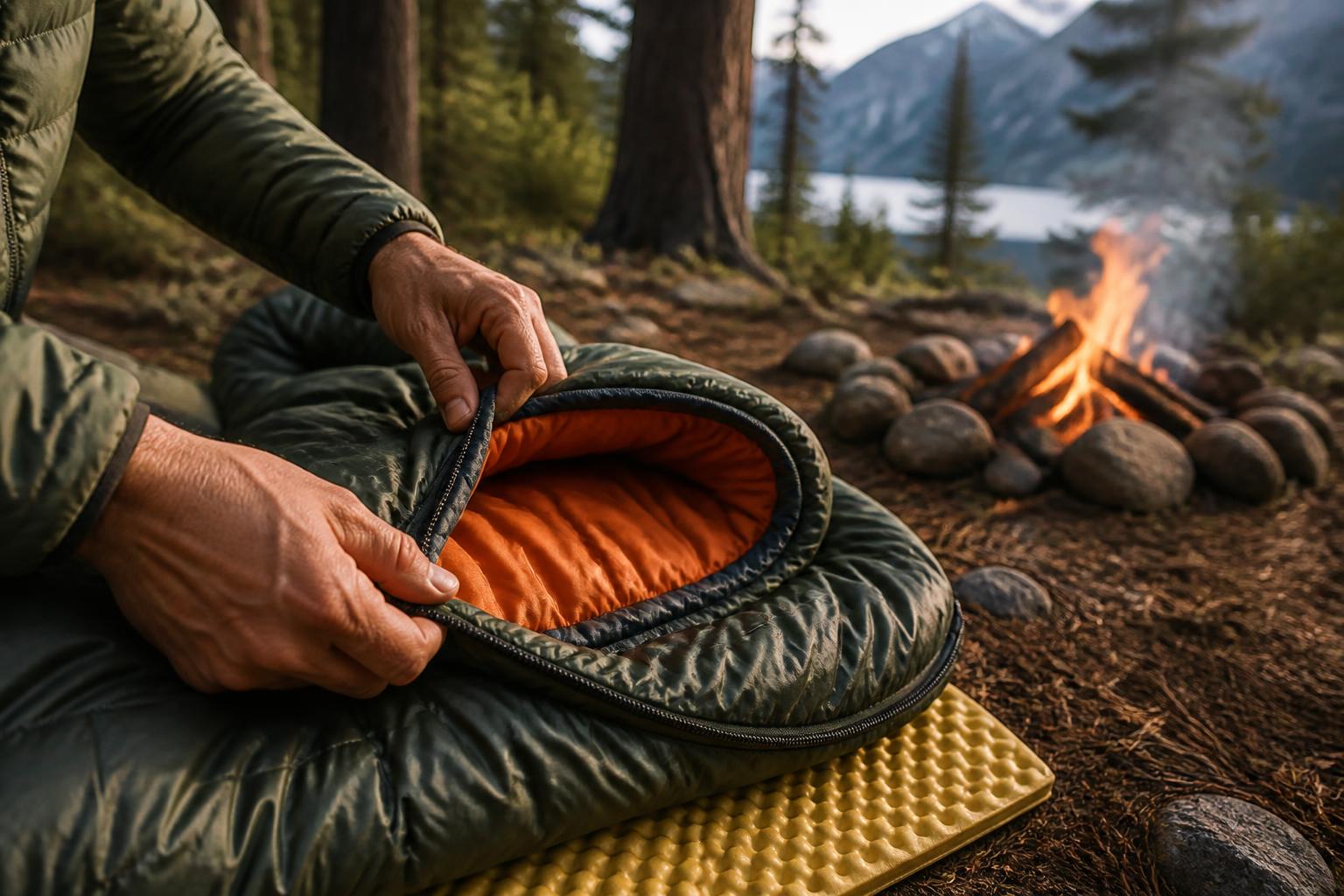
The fastest way to layer sleeping bags is to place a lighter bag inside a heavier one, or drape a quilt over your main bag. The trapped air between layers adds insulation without requiring a single expensive extreme-cold bag. Start by checking that the inner bag fits comfortably inside the outer bag without compressing its loft — if the inner bag is too bulky, it will crush the outer bag’s insulation and make the setup useless.
Quick Decision Aid
Run through these six checks before you commit to a layering plan. Each is a pass/fail test you can do in 10 minutes at home.
- Inner bag fits inside outer without force — Pass: slides in easily. Fail: bag is jammed or outer zipper won’t close.
- Outer bag’s loft remains fluffy after zipping — Pass: you can still pinch an inch of fill. Fail: fill feels thin or flat.
- Zippers align on the same side — Pass: both zippers face the same direction. Fail: you can rotate the inner bag 180 degrees, but expect a small gap at the zipper track.
- No gaps at neck or foot box when lying down — Pass: no draft feels cold. Fail: air sneaks in — add a buff, beanie, or liner.
- Combined setup fits inside your tent or bivvy — Pass: you can roll over without touching the walls. Fail: test a different bag combo or sleep diagonally.
- Sleeping pad has R-value 4 or higher — Pass: ground insulation is adequate. Fail: add a closed-cell foam pad underneath.
If you fail more than one check, try a different bag combination or skip layering altogether.
Pick the Right Bag for the Inside Layer
The single most important decision is which bag goes on the inside — and it depends entirely on bag shapes and sizes. A mummy bag (narrow, tapered) usually fits well inside a rectangular or semi-rectangular bag because the outer bag has more room. If you try to put a wide rectangular bag inside a tight mummy bag, you risk compressing the outer bag’s fill and ruining its insulating ability.
Both bags are mummy style
Test the fit before you leave home. Slide the inner bag into the outer, then zip both. If the inner bag feels squeezed or the outer bag feels stretched, the layers are too tight. Switch to using the warmer-rated bag as the inner layer and a looser-fitting bag or quilt as the outer layer instead.
One bag is a quilt or blanket-style
Use it as the outer layer over a mummy bag. Quilts have no back insulation — they rely on your sleeping pad for that — so they drape over a bag without compressing it. This is often the most practical setup for backpackers who already own a quilt.
Decision criterion
If the inner bag compresses the outer bag’s loft by more than about 20% (you can feel this by pinching the outer bag’s fill after zipping both), switch to a quilt-over-bag setup or use a looser outer bag. Compression kills insulation — don’t force a bad fit.
Step-by-Step Layering Process
Follow these steps in order. Check at each stop before moving on.
Step 1 — Test the fit indoors
Lay both bags flat on a clean surface. Slide the inner bag into the outer bag, aligning the zippers on the same side. Zip the outer bag about halfway. The inner bag should lie flat without bunching. If you have to force it, stop — this setup won’t work well.
Step 2 — Fluff the inner bag
Shake the inner bag and let it sit for 10–15 minutes to restore full loft. Use a stuff sack to keep it clean if you’re packing it separately.
Step 3 — Insert and zip
Slide the inner bag into the outer, then zip the outer bag fully. Next, zip the inner bag if it has a separate zipper. Some users prefer to leave the inner bag unzipped and use it like a blanket inside the outer bag — this works well if the inner bag is roomy enough to move around.
Step 4 — Check for cold spots
Lie in the setup for 2–3 minutes. Feel around the neck, zipper line, and foot box. Cold air sneaks in where bags bunch up or gaps form. If you feel a draft, add a buff or beanie around your neck, or use a sleeping bag liner inside the inner bag to seal gaps.
Step 5 — Verify the warmth gain
After 5 minutes, you should feel noticeably warmer than with the outer bag alone. If you’re still cold, the layers may be too compressed or the inner bag may be too light for the temperature.
Success check: You should feel warmth building within 5 minutes, with no persistent cold spots at the neck, zipper, or foot area. If the setup feels colder than the outer bag alone, the inner bag is compressing the outer bag’s insulation — undo and try a different combination.
When Layering Two Bags Won’t Work — and When to Stop
Layering fails in three common scenarios. Recognize these early so you don’t waste time on a setup that’s doomed.
Both bags are wide and bulky
Two rectangular bags stuffed together usually create too much internal dead space, causing cold air to circulate rather than trapping heat. You end up colder than with one bag alone. Fix: Use one bag with a liner or wear extra clothing layers instead.
One bag is significantly smaller than the other
A kids’ bag inside an adult bag leaves empty space that doesn’t insulate. Cold air pools there. Fix: Use a bag liner or a camp blanket to fill the gap, or don’t layer those two bags.
You’re in wet conditions
Moisture kills loft in minutes — especially for down bags. If rain, snow, or condensation is likely, choose a bag with a water-resistant shell for the outer layer. The SOULOUT 3-4 Season Sleeping Bag has a water-resistant outer shell that repels light moisture, making it a solid pick for the outer layer in damp weather. If your outer bag isn’t water-resistant, pair it with a bivvy sack or a tent with a solid fly.
Stop/escalate threshold: If you’ve tested two different bag combinations and each one leaves you cold after 5 minutes, stop layering those bags. The fit is wrong, or the combined warmth is insufficient for the conditions. Escalate to a single bag rated for the temperature, or add a high-quality liner and insulated clothing instead. Do not rely on a poorly fitting layer setup in backcountry cold — the consequences of a cold night go beyond discomfort.
Estimating Your Combined Warmth
There’s no precise formula, but a practical guideline is: the combined rating is about 10–20°F warmer than the warmer bag alone, depending on fit and fill type. Here’s how common combinations typically perform.
| Outer Bag Rating | Inner Bag Rating | Estimated Combined Low | Notes |
|---|---|---|---|
| 20°F | 40°F | 5°F to 10°F | Good fit, synthetic inner |
| 0°F | 30°F | -10°F to -5°F | Down inner, good loft |
| 10°F | 50°F | 0°F to 10°F | Works well if inner bag is loose |
| 20°F (quilt) | 20°F (mummy) | 0°F to 5°F | Quilt-over-bag, minimal compression |
These are estimates. Your actual comfort depends on your sleeping pad, clothing layers, tent ventilation, and personal metabolism. A 0°F bag like the rioyalo 0 Degree Winter Sleeping Bag used as the outer layer with a lighter inner bag can push you well below zero, but only if the fit is right and ground insulation is adequate. Always test your setup in a safe location before relying on it in backcountry cold.
FAQ
Can I layer a 50°F bag inside a 0°F bag for extreme cold?
Yes, that combination can push you down to around -10°F to 0°F, but only if the inner bag fits without compressing the outer bag’s loft. If the inner bag is too bulky, you’ll lose most of the benefit.
Should I zip both bags fully or leave one open?
Leaving the inner bag unzipped and using it like a blanket inside the outer bag often works better if the inner bag is roomy. Zipping both bags fully can create pressure points and reduce loft. Test both ways and go with what feels warmer.
Does layering work with down and synthetic bags mixed?
Yes, and it’s a smart combination. A down inner bag (lightweight, compressible) inside a synthetic outer bag (handles moisture better) gives you warmth without overpacking. Just keep the down bag dry — the synthetic bag acts as a moisture barrier.
Will layering two bags damage the zippers?
It can, if you force the outer bag zipper over a thick inner bag. Always zip slowly and stop if you feel resistance. If the outer bag zipper won’t close smoothly, the fit is too tight — change your layering plan.

Camping Bob has spent over 20 years camping across the US — from BLM dispersed sites in the Southwest to KOA campgrounds in the Pacific Northwest. He writes practical, no-nonsense guides to help fellow campers get outdoors with confidence.