
Heat Exhaustion vs. Heat Stroke: Prevention & Treatment for Campers
Heat exhaustion leaves you dizzy, weak, and sweating heavily. Heat stroke turns off your sweating, clouds your thinking, and can kill you within minutes. If you or someone in your group has a core temperature above 104°F and is confused or unconscious, that’s heat stroke—call 911 and start aggressive cooling immediately. For heat exhaustion, you have more time, but the line is thin. Here’s how to tell them apart and what to do.
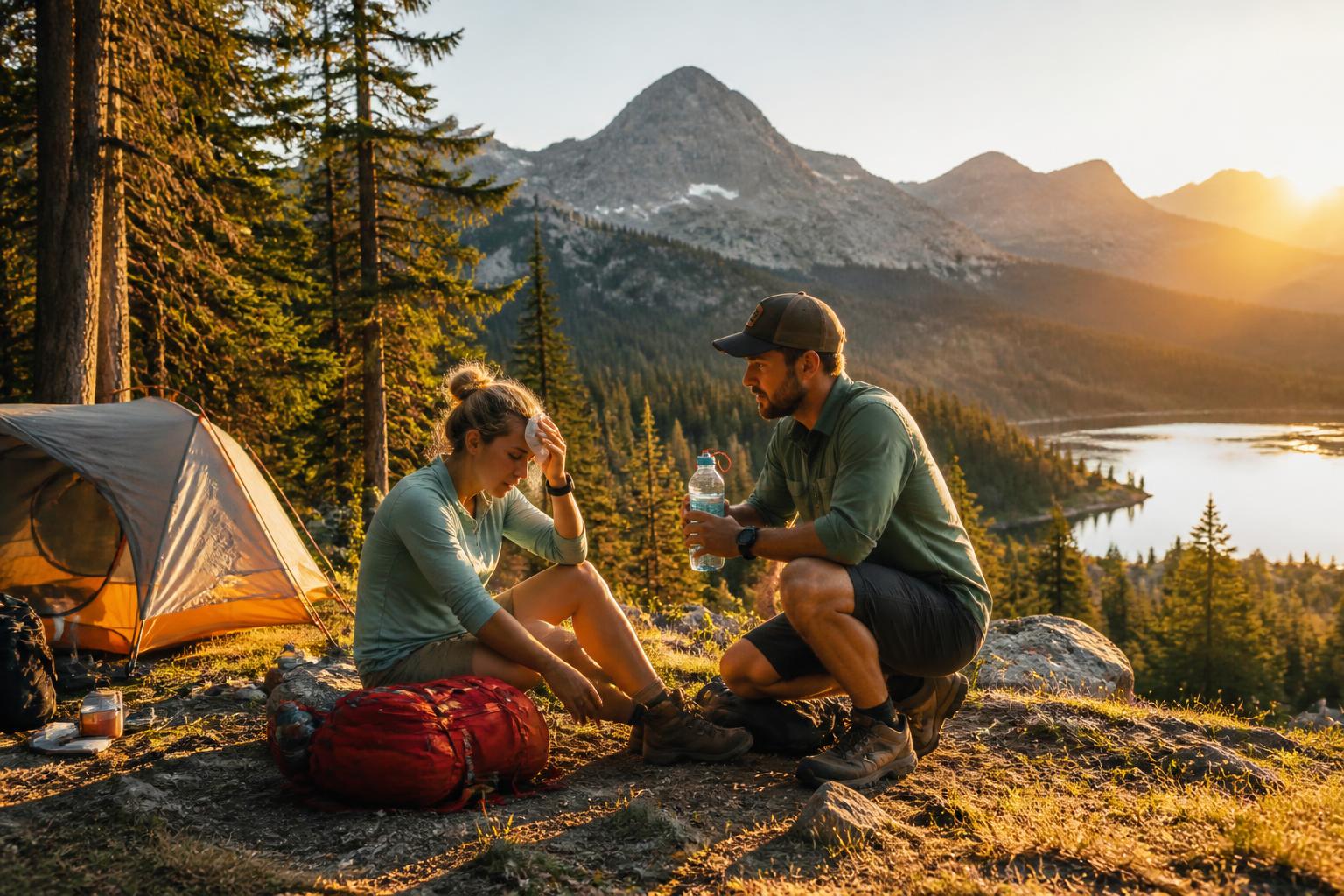
Quick answer
| Symptom | Heat Exhaustion | Heat Stroke |
|---|---|---|
| Skin | Cool, pale, clammy (heavy sweating) | Hot, red, dry (sweating stops) |
| Core temp | Below 104°F | Above 104°F |
| Mental state | Dizzy, irritable, weak | Confusion, slurred speech, unconsciousness |
| Pulse | Weak, rapid | Strong, racing |
| Action | Move to shade, drink cool water, rest | Emergency – cool aggressively, call 911 |
Camping-specific rule of thumb: If the person can’t hold a normal conversation or doesn’t respond to their name, treat it as heat stroke until proven otherwise.
Comparison framework
Heat exhaustion and heat stroke sit on the same continuum. Heat exhaustion is your body’s distress signal: you’re dehydrated, you’ve lost too much salt through sweat, and your core temperature is rising. It’s serious but manageable if you catch it early. Heat stroke is when your internal thermostat fails completely. Your body can no longer shed heat, organs start to cook, and brain function goes haywire.
Why campers are at higher risk
– Physical exertion (hiking, setting up camp, gathering firewood) generates massive internal heat.
– Direct sun exposure at high altitude or open campsites.
– Limited access to shade, ice, or cold water.
– Alcohol or caffeine consumption that worsens dehydration.
The single most useful on-trail decision rule: check the “skin + mental status” combo. If the skin is wet and the person is coherent, it’s exhaustion. Dry skin plus altered mental state = stroke. That split changes everything — for exhaustion you can manage on-site; for stroke you need evacuation.
Why this distinction matters for your next move: If you misidentify heat stroke as exhaustion and let the person rest in shade, you lose the critical window for aggressive cooling. Conversely, if you treat mild exhaustion like a stroke and call for backcountry evacuation, you waste resources and risk hypothermia from over-iceing. Your practical decision is simple: the moment you see confusion, stop debating and start emergency cooling. That one checkpoint determines whether you stay put or activate your emergency plan.
How to confirm mental status on the trail: Ask three simple questions: “What’s your name?” “What day is it?” “Can you count backward from 10?” If they miss any answer, or if their speech is slurred, treat as heat stroke. Recheck every five minutes. This takes 30 seconds and requires no equipment — it’s your most reliable verification tool when you don’t have a thermometer.
Prevention and treatment by camping style
Backpacking or long day hikes
You carry everything, so weight and practicality matter.
- Prevention: Start each day fully hydrated (urine pale yellow). Carry at least 1 liter per 2 hours of hiking. Use electrolyte tabs when sweating heavily. Wear a wide-brim hat — the EINSKEY Wide Brim Sun Hat, UPF 50+ UV Protection Waterproof Packable Bucket Hat for Men & Women, Fishing Hiking Beach Garden is lightweight, adjustable, and stays on in wind.
- Treatment for exhaustion on trail: Stop immediately. Find shade (under a tree, rock overhang, or set up a tarp). Drink cool water with salt or electrolyte mix. Soak a bandana or buff in cold water and wrap around your neck, wrists, and head. Rest 30 minutes before deciding to continue. If symptoms worsen, turn back.
- Treatment for suspected stroke on trail: Call for help. Strip excess clothing. Pour any available water over the person. Fan vigorously. If you have a portable thermometer, aim to get core temp below 102°F. Do not give oral fluids if the person is unconscious or confused — they can choke.
Family car camping
You have a cooler, ice, and a vehicle for escape. No excuse to skip serious cooling.
- Prevention: Set up camp near shade or bring a canopy. Plan active periods for early morning and late afternoon. Keep a spray bottle of cool water at the picnic table. Set a timer to drink fluids every 20 minutes, especially for kids and older adults.
- Treatment for exhaustion: Move the person into the car or tent with air conditioning if possible. Apply ice packs (wrapped in a towel) to armpits, groin, and neck. Have them drink a sports drink or lightly salted water. Do not let them go back to activity for at least an hour.
- Treatment for stroke: Call 911 before doing anything else. Immerse the person in a cold lake, stream, or a large tub of ice water if available. If no water source, wrap them in wet sheets and keep them wet while fanning. Do not give fluids. Wait for emergency medical services — heat stroke requires IV fluids and monitoring.
Desert or high-altitude camping
Extreme heat, low humidity, and intense sun multiply risk. Your sweat evaporates so fast you may not realize how much fluid you’re losing.

- Prevention: Pre-hydrate the night before. Wear light-colored, loose clothing covering arms and legs. Use a wet bandana under a sun hat. Check urine color hourly — bright yellow means you’re already behind.
- Treatment for exhaustion: Find shade under a rock overhang or inside a canyon. Do not lie directly on hot sand — use your sleeping pad or a reflective blanket. Drink small amounts of water with electrolyte powder every 5 minutes. Monitor mental status closely. If you see any confusion, treat as stroke.
- Treatment for stroke: Heat stroke at altitude can escalate faster. Evacuate immediately — do not wait for paramedics to arrive if you have a vehicle. En route, keep the person’s head and neck covered with wet towels and the vehicle’s AC on max.
Trade-offs to know
Why “drink more water” isn’t always the answer
Overhydration without electrolytes can cause hyponatremia (low blood sodium), which mimics heat exhaustion symptoms. If someone has been drinking plain water heavily and still feels lousy, switch to salty snacks or an electrolyte drink. Table salt dissolved in water (¼ teaspoon per quart) works in a pinch.
The real risk of getting this wrong: A common mistake is giving plain water to someone with early hyponatremia, thinking they have heat exhaustion. The result can be worsening confusion, seizures, or even coma. The trade-off is concrete: if the person has been drinking lots of water but not eating, and their symptoms include nausea, headache, or confusion without hot skin, they may have low sodium rather than hot core. In that case, salty fluids are the answer, not more water. This mismatch happens most often with new backpackers who follow “hydrate constantly” advice without eating real food.
How to verify your hydration strategy is working: Check your urine color before every snack break. Pale yellow means you’re on track. Clear urine suggests overhydration and low electrolytes. Dark amber means you’re already dehydrated and need to drink now. This simple color check takes five seconds and saves you from guessing whether your water intake is helping or hurting.
When cooling too fast hurts
Shivering actually generates heat. If you dump ice water on someone without monitoring, they may shiver and raise their core temperature. In non-emergency heat exhaustion, use cool (not icy) water. For heat stroke, the risk of shivering is outweighed by the need to cool quickly — just be prepared to wrap them in a dry blanket once temp hits 102°F.
The “wait and see” trap
It’s tempting to let a tired camper “sleep it off” under a tree. But if that camper has heat stroke, they may slip into a coma. Never leave an overheated person unattended. Reassess every 10 minutes.
Related questions
Can you have heat stroke without a fever?
No — heat stroke is defined by a core temperature above 104°F. But you may not have a thermometer. If the skin is hot and the person is confused, assume stroke regardless of a measured temperature.
How long does it take to recover from heat exhaustion?
Most people feel better within 30–60 minutes of rest and hydration. Full recovery may take 24 hours. Do not resume strenuous activity the same day.
Should I give ibuprofen for heat exhaustion?
No. Fever-lowering drugs like ibuprofen or acetaminophen do not treat environmental heat illness and can damage the kidneys or liver when you’re dehydrated. Use physical cooling only.
Does sunscreen help prevent heat illness?
Sunscreen prevents sunburn, but it doesn’t cool your core. Sunburn does reduce skin’s ability to sweat, so preventing burn helps indirectly. But shade, hydration, and timing are your primary defenses.

Camping Bob has spent over 20 years camping across the US — from BLM dispersed sites in the Southwest to KOA campgrounds in the Pacific Northwest. He writes practical, no-nonsense guides to help fellow campers get outdoors with confidence.