
Permethrin for Clothing: How to Apply, Safety & How Long It Lasts
Spraying your clothes with permethrin creates a fabric-bound barrier that kills ticks, mosquitoes, and other biting insects on contact. The treatment lasts through multiple washes and stays effective for weeks. Here’s how to apply it correctly, what to expect for duration, and the safety rules that matter — plus the one mistake that ruins coverage and how to catch it early.
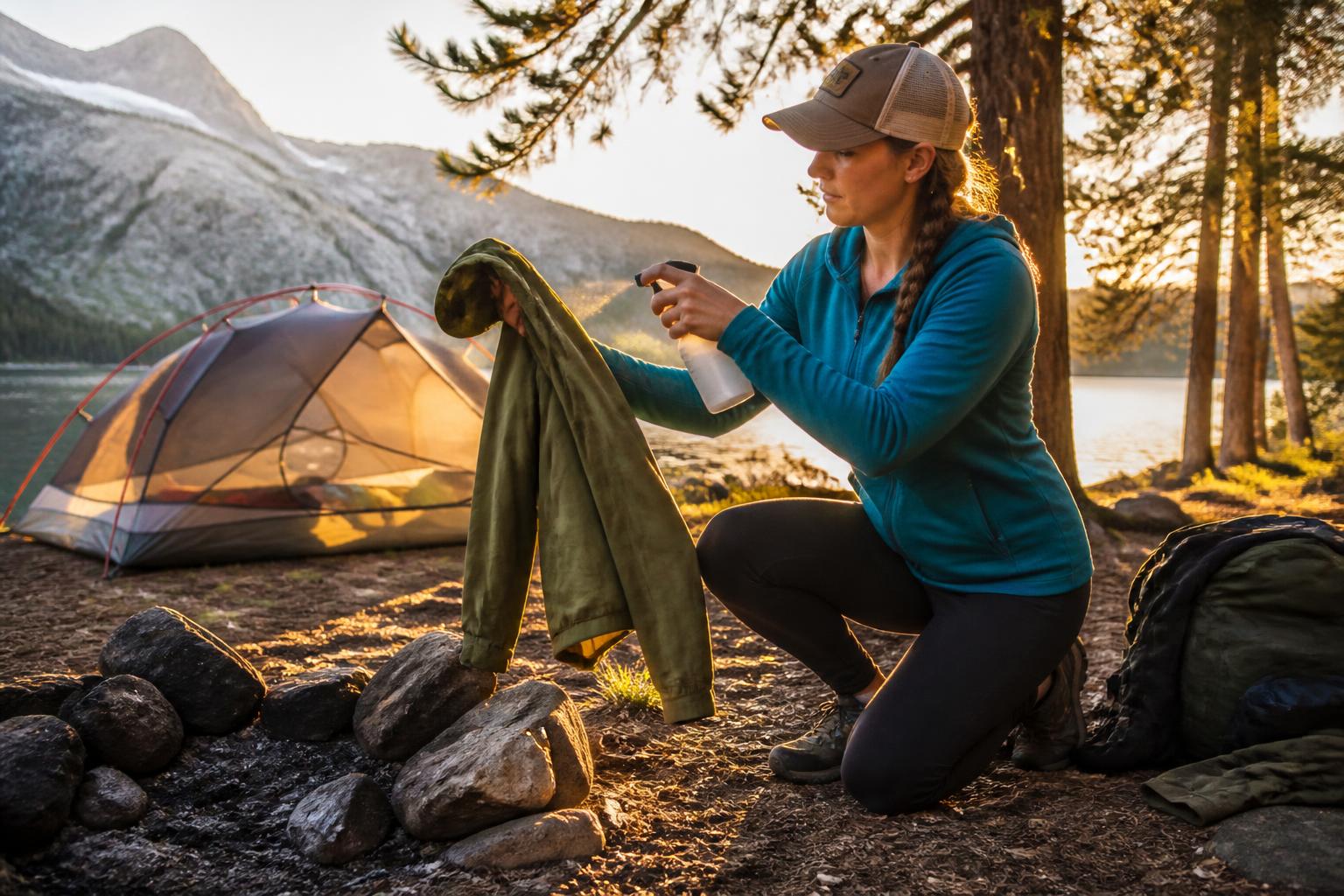
How to Apply Permethrin to Clothing
You treat the clothing, not your skin. Permethrin is a fabric treatment, not a skin repellent. For exposed skin, use a separate repellent like OFF! Deep Woods Mosquito and Insect Repellent Wipes, Long lasting, 12 Individually Wrapped Wipes (Pack of 1) alongside treated clothing for full coverage.
What you need:
– Permethrin spray designed for fabric (typically 0.5% permethrin pump or aerosol)
– Clean, completely dry clothing
– Outdoor or very well-ventilated area
– Drop cloth or cardboard to protect the ground
Step-by-step application:
-
Start with clean, dry clothing. Wash and fully dry the items before spraying. Damp fabric dilutes the active ingredient and creates patchy coverage — this is the most common failure point.
-
Work outdoors or in a space with strong airflow. Permethrin spray can irritate lungs and eyes if inhaled in an enclosed room. A shaded outdoor spot is ideal; direct sun can degrade the spray before it bonds.
-
Hang or lay the clothing flat. Use a clothesline, hanger, or spread items on a drop cloth. Avoid spraying on grass or surfaces you don’t want treated — the chemical is persistent.
-
Hold the can 6–8 inches from the fabric. Spraying closer than 6 inches causes puddling (uneven coverage); farther than 8 inches wastes product and leaves gaps.
-
Apply a light, even mist to both sides. Move the can in a steady sweeping motion. You want the fabric to look damp, not soaking wet. Focus extra attention on cuffs, collars, waistbands, and lower legs — areas where ticks and insects typically crawl on. For a typical long-sleeve shirt, expect to use about 1.5–2 oz of spray.
-
Let each piece dry completely before wearing or storing. Hang treated items for 2–4 hours in a shaded, ventilated area. Direct sunlight may degrade the active ingredient before it bonds fully.
-
Mark the treatment date. Use a permanent marker on a fabric tag or store a note with the garment. This single action prevents the most common confusion later — forgetting when you applied and whether it still works.
How to Verify the Treatment is Working Properly
After the clothing is fully dry, hold the fabric up to a bright light or window. A correctly treated garment will have a uniform, slightly duller sheen compared to untreated fabric. If you see lighter streaks or spots where the fabric appears different in texture, those areas were under-sprayed and will not repel insects reliably. Re-wash, dry completely, and reapply.
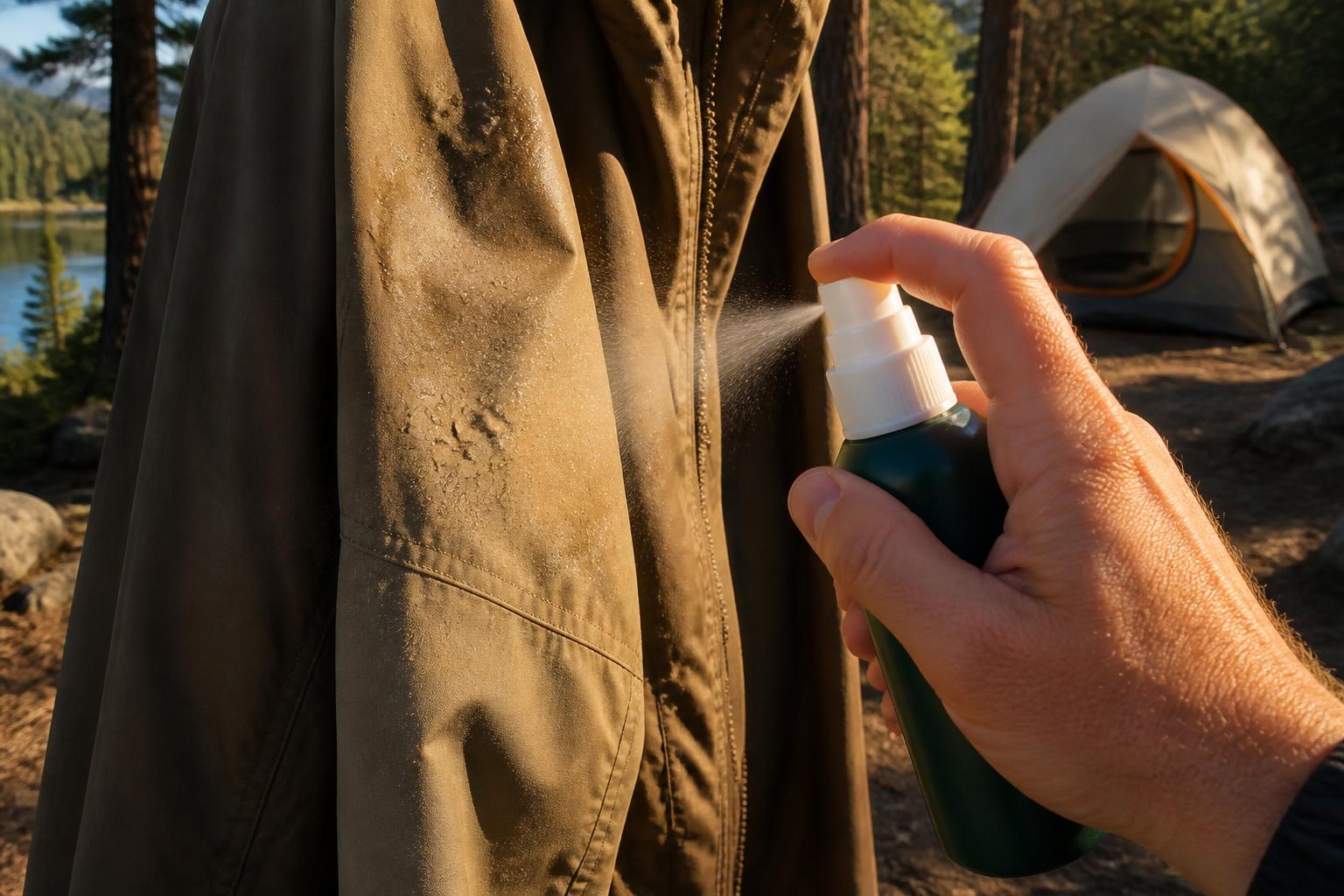
If you want a quick functional check: lightly spray a small hidden area (inside a pocket seam) with a water mist. A well-bonded permethrin layer causes the water to bead and roll off rather than soak in immediately. This isn’t a perfect test, but if the fabric soaks water instantly in patches, your coverage is uneven.
How Long Permethrin Lasts on Clothing
A single treatment typically holds up through 6 washes or about 6 weeks of regular wear, whichever comes first. The exact duration depends on fabric type, wash frequency, and detergent choice.
| Fabric type | Expected wash cycles before retreating |
|---|---|
| Cotton & cotton blends | 4–6 washes |
| Synthetic (nylon, polyester) | 5–6 washes |
| Wool | 3–4 washes (avoid hot water) |
| Waterproof/breathable shells | 2–3 washes (fragile coatings) |
When to retreat: Reapply after six washes or at the start of each tick/mosquito season. If you store treated clothing over winter, the protection does not degrade during storage — count only actual washes. If you treat a garment and never wear or wash it, it remains effective for months.
What reduces duration:
– Hot water and bleach-heavy detergents strip permethrin faster
– Machine drying on high heat may reduce bond strength over multiple cycles
– Abrasive wear (kneeling, crawling, backpack straps) on treated areas
Safety Rules for Treating Clothing
Permethrin-treated fabric is safe to wear once dry, but the spraying step requires care. Wet permethrin can irritate skin and eyes. Follow these boundaries:
- Never spray permethrin directly on skin. It is not formulated for skin contact. Use a separate DEET-based or picaridin repellent for exposed skin.
- Keep spray away from pets, especially cats. Permethrin is highly toxic to cats, even in small amounts. Treat clothing in an area cats cannot access, and keep treated items out of reach until fully dry.
- Do not treat underwear or next-to-skin layers. Permethrin bonds best to outer layers — shirts, pants, socks, hats, and jackets. Skin contact with dried permethrin is generally safe, but keep it on garments meant for insect protection.
- Wash treated items separately for the first two washes. Residual permethrin can transfer to non-treated clothing in the load.
- Store spray cans per local hazardous waste rules. Permethrin spray cans are often classified as household hazardous waste; check local disposal guidelines.
When to Stop Using Treated Clothing and Escalate
Stop using a permethrin-treated garment and either retreat or discard it if you notice any of these signs:
- You or someone wearing the garment develops a rash, redness, or skin irritation after wearing the dried fabric. Wash the clothing and discontinue use.
- The clothing has a strong chemical odor after being fully dry (more than 24 hours). This indicates the bond didn’t set properly — wash and re-treat.
- You accidentally spray permethrin on your skin (hands, arms, face) during application. Wash that area immediately with soap and water. If irritation persists, seek medical advice.
- You get a tick bite or mosquito bite while wearing treated clothing. This means the coverage has failed — retreat the garment or replace it.
The Most Common Application Mistake (and How to Spot It)
Treating damp clothing is the failure mode that trips up most people. If you spray fabric that’s even slightly moist from a previous wash, the permethrin fails to bond evenly. When the fabric dries, some areas have full coverage and others have none — invisible to the eye but completely ineffective.
How to detect it early:
– After drying, hold the treated fabric up to light. Uneven residue patterns (lighter streaks or spots where the fabric doesn’t look uniformly dark when damp) indicate patchy coverage.
– The water-beading test described earlier will reveal inconsistencies.
Other early warning signs:
– You sprayed inside a garage or basement with poor airflow (hazards up, bond quality down)
– You used a “stream” nozzle setting instead of “mist” (creates puddles and misses)
– You stopped before the fabric looked uniformly damp on both sides
Quick Check: Did You Treat It Right?
Run through these items before you head out. If any fail, retreat before relying on the treatment.
- [ ] Was the clothing clean and completely dry before you sprayed?
- [ ] Did you spray 6–8 inches from the fabric in a steady sweep?
- [ ] Did you treat both sides of each garment (especially cuffs, collars, and lower legs)?
- [ ] Did you let the clothing dry for at least 2 hours in a ventilated area before wearing?
- [ ] Have you recorded the treatment date and counted how many washes it has been through?
- [ ] Did you do a visual inspection under light to confirm uniform coverage?
FAQ
Can I use permethrin spray on my tent or backpack?
Yes, but the bond on nylon tent floors and backpack straps wears off faster due to abrasion. Expect 2–3 washes before needing re-treatment.
Does permethrin spray work against deer ticks?
Yes. The Centers for Disease Control and Prevention (CDC) recognize permethrin-treated clothing as an effective defense against blacklegged (deer) ticks, the primary vector for Lyme disease.
Can I wash treated clothing with regular laundry?
Yes. Wash with cold or warm water and mild detergent. Skip bleach and fabric softener, which degrade the permethrin coating faster. Also avoid high-heat drying for the first cycle.
Is permethrin-treated clothing safe for kids?
Yes once dry. Treat the outer layers (jacket, pants, socks) and follow the same application steps. Keep wet spray away from children during application.
How much spray do I need per garment?
A typical adult long-sleeve shirt uses about 1.5–2 oz; a pair of pants uses 2–3 oz. Check the label on your specific product for coverage estimates, as concentrations vary slightly by brand.

Camping Bob has spent over 20 years camping across the US — from BLM dispersed sites in the Southwest to KOA campgrounds in the Pacific Northwest. He writes practical, no-nonsense guides to help fellow campers get outdoors with confidence.