
How to Prevent Bug Bites While Camping: Repellents, Clothing & Strategy
The most effective way to prevent bug bites while camping isn’t the repellent you apply at the campsite — it’s the pretreatment of gear and clothing hours before you leave. Most campers grab a single spray at the last minute and wonder why they still get eaten. A three-layer system — repellent, clothing, and campsite strategy — eliminates the guesswork and dramatically reduces bites.
Treat Your Gear Before You Leave
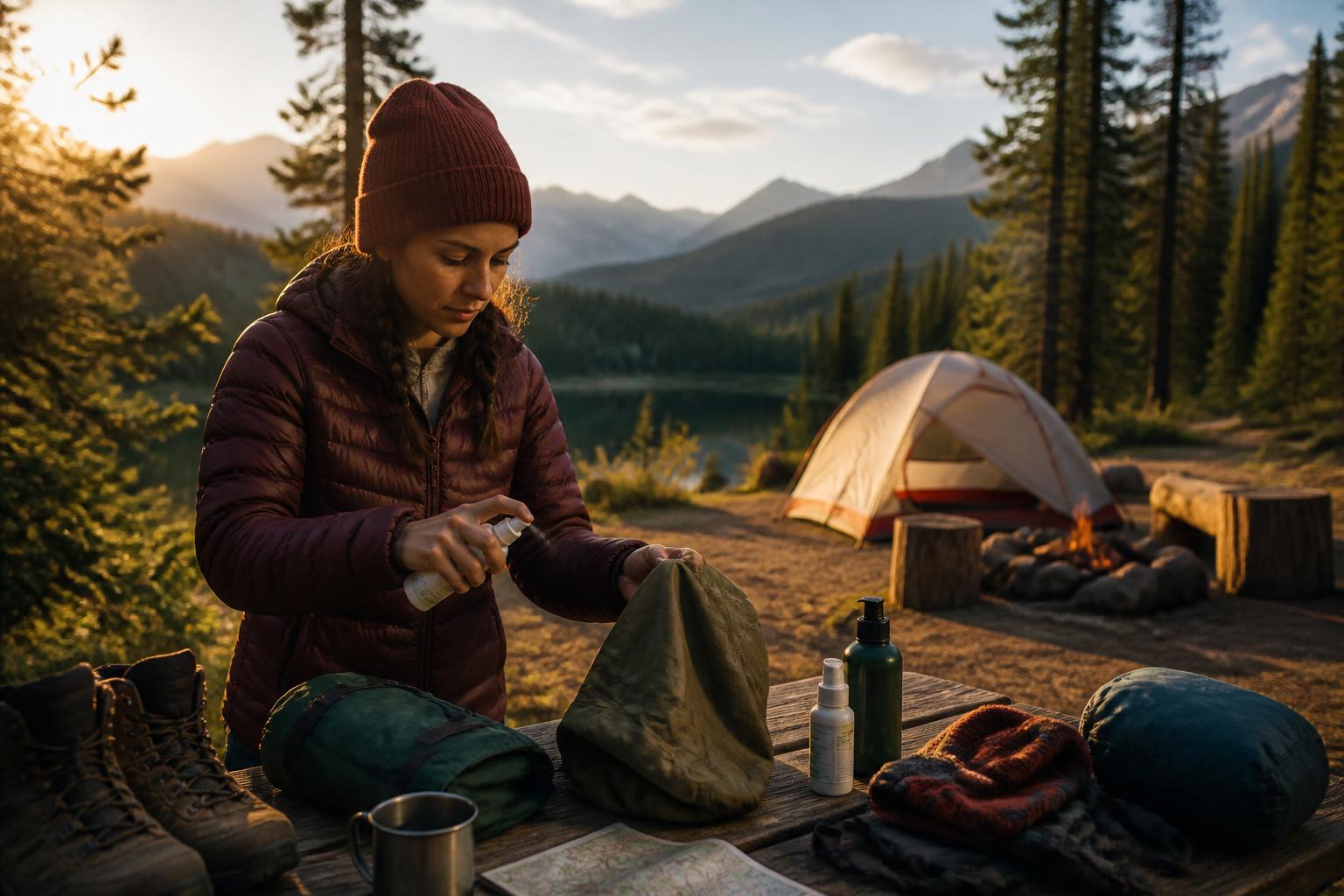
The common approach is to buy repellent at the camp store and spray exposed skin when bugs appear. The smarter play happens the day before you pack. Permethrin spray — a synthetic insecticide that binds to fabric fibers — can be applied to your tent, camping chair, backpack, and clothes at home. Once dry, it’s odorless, invisible, and will repel mosquitoes and ticks through multiple washes. This pretreatment turns your entire shelter and gear into a bug barrier before you ever step into the woods.
Why this matters more than you think: mosquitoes are attracted to body heat, CO₂, and movement. Your tent and chair sit still, but they radiate heat and hold your scent. Treating them beforehand removes those surfaces as landing zones. Most prevention articles skip this step entirely, focusing only on what you put on your skin.
Preparation checkpoint: Spray all fabric gear at least 4 hours before your trip to allow full drying. Do this outdoors or in a well-ventilated space. One treatment typically lasts 6 weeks or up to 6 washes through the season.
Realistic branch: If you cannot pretreat gear because you’re leaving in the next hour, skip the permethrin and instead pack a high-concentration DEET repellent (30%) plus a head net. You’ll still get some bites on exposed skin, but the head net and aggressive reapplication will keep the situation manageable. Treat the gear as soon as you return home for the next trip.
Layer 1: Repellents — What to Put on Your Skin
No single repellent works for every situation. Here’s a comparison of the main options and when to reach for each.
| Repellent Type | Effective Duration | Best For | Key Trade-off |
|---|---|---|---|
| DEET (20–30%) | 4–6 hours | Heavy mosquito pressure, extended hikes | Can damage synthetics and plastics |
| Picaridin (20%) | 3–5 hours | All-around use; gear-safe | Feels lighter on skin but slightly shorter duration |
| Oil of Lemon Eucalyptus (30%) | 2–3 hours | Short trips, low bug pressure | Not for kids under 3 |
| Essential oil blends | 30–60 minutes | Very low pressure, quick breaks | Needs frequent reapplication; short window |
For a reliable, non-greasy option that won’t damage your gear, consider Buggins Original – Insect Repellent – Gnats & Mosquitoes, DEET Free, Non-Greasy – 4 oz Pump Spray Bottle – 2 Pack. Its water-based essential oil formula works for about an hour and can be reapplied as needed without damaging plastics or fabrics — useful if you’re rotating between camp chores and sitting around the fire.
Ordered steps for applying repellent correctly:
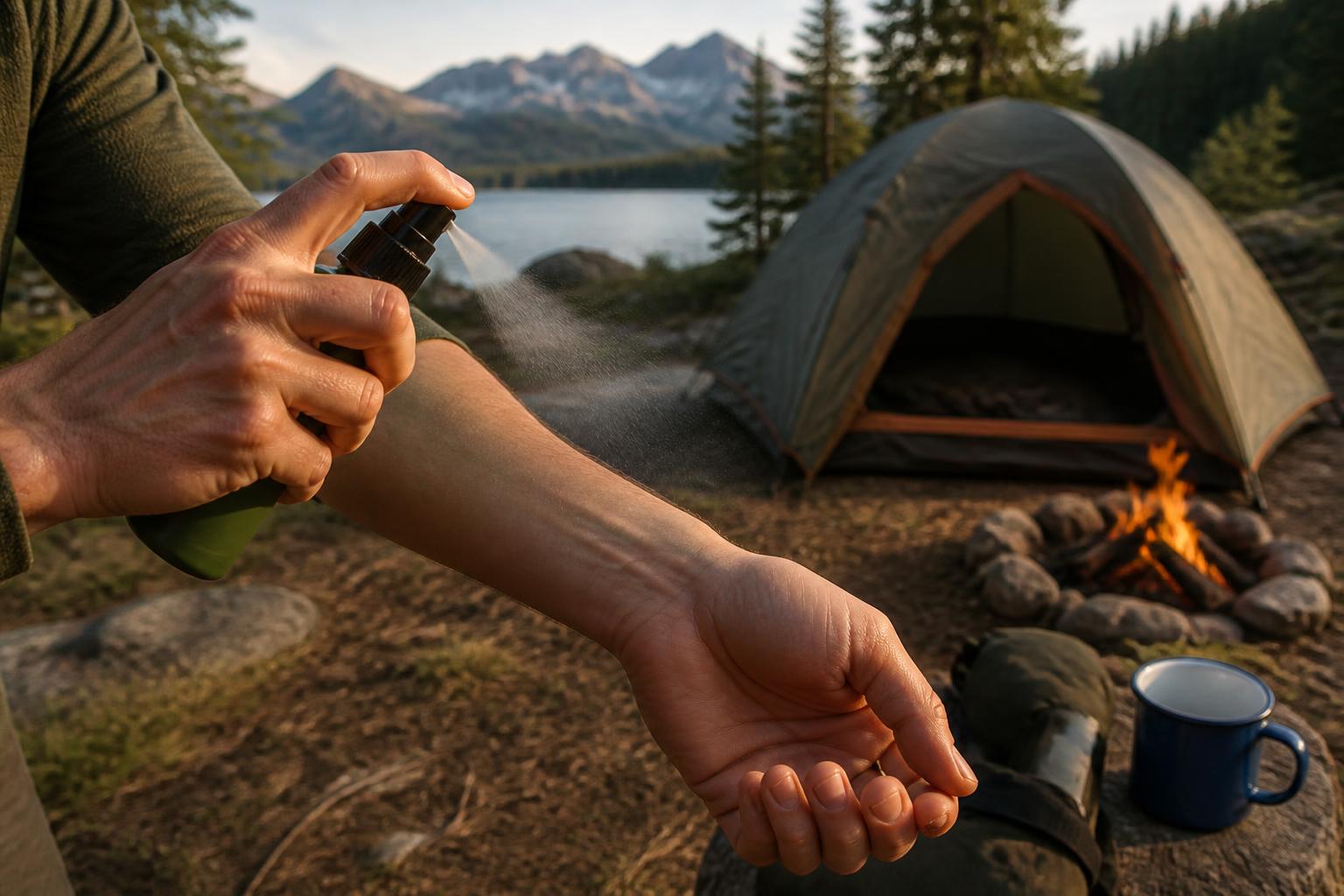
- Spray into your hands first, then rub onto your face — never spray directly into your eyes or mouth.
- Cover exposed skin only; don’t waste repellent under clothing where it won’t reach bugs anyway.
- Reapply after swimming, heavy sweating, or every 2–4 hours depending on the product label.
- Wash repellent off your skin before sleeping in your tent to avoid prolonged skin exposure overnight.
Friction point: Many people miss their ankles, backs of knees, and wrists — the exact spots mosquitoes target. Pay special attention to these areas during application.
Verification step after application: After you’ve applied repellent and been outside for 15 minutes, check your wrists and ankles. If you see any mosquitoes landing or feel bites in those spots, you missed coverage. Reapply to those areas immediately.
Layer 2: Clothing as Physical and Chemical Armor
Repellent on your skin is good. Repellent plus treated clothing is better. Here’s the combination that works in practice.
Treat your clothes with permethrin in advance. Spray it on pants, long-sleeve shirts, socks, and the brim of your hat. Let them dry fully before wearing. This lasts through several wash cycles and stops mosquitoes, ticks, and chiggers on contact. You can buy pre-treated clothing, but spraying your own is cheaper and covers exactly what you already own.
Wear the right fabrics and colors. Loose-fitting, light-colored clothing makes it harder for bugs to bite through fabric and less attractive to mosquitoes (dark colors attract them). Denim and thick cotton work fine, but lightweight nylon treated with permethrin is ideal for hot weather.
Add a physical barrier when the pressure is high. If you’re hiking through marshland or sitting around camp at dusk, a head net is cheap insurance that works when nothing else will. The South to East Premium Mosquito Head Net for Insect, 2 Pack, Fly & Bug Protection | Ultra Large & Long, Extra Fine Holes for Camping, Hiking, Fishing, Gardening, Safari, Fits All Hats for Men & Women provides full-face coverage without obstructing vision. It fits over any hat, packs flat, and takes two seconds to deploy. When the swarm arrives and repellent isn’t cutting it, a head net solves the problem immediately.
Don’t forget your feet. Ticks and chiggers crawl upward from grass level. Tuck your pants into your socks and treat your socks and boots with permethrin. This single step prevents the vast majority of tick encounters.
Escalation signal: If you find ticks crawling on your clothing even after treatment, upgrade to pre-treated clothing made with Insect Shield or similar bonded permethrin technology, which lasts through 70 washes. If you still find ticks on your skin after that, stop relying on clothing alone — add a full-body tick check every 2–3 hours and consider using a DEET-based repellent on exposed skin.

Stop/escalate threshold: If you experience any signs of an allergic reaction to repellent — rash, swelling, difficulty breathing — stop using the product immediately, wash the area with soap and water, and seek medical attention. Do not try to “push through” a suspected chemical reaction; swap to a different active ingredient for future trips.
Layer 3: Campsite Strategy — Where and When You Set Up
You can control more than what you wear. Your campsite setup directly affects how many bugs find you.
Check the wind. Mosquitoes are weak fliers. Position your tent and camp chair upwind of standing water, marshes, or dense brush. A consistent breeze of 5–10 mph keeps most biting insects away from your immediate area. If you’re in a calm valley, even a small fan on your picnic table can create enough airflow to disrupt their flight.
Time your activities. Dawn and dusk are peak feeding hours for mosquitoes. Schedule cooking, campfire time, and gear setup to minimize exposure during these windows. If you’re hiking at dawn, wear your treated long sleeves and bring a head net.
Remove attractants from your site. Don’t leave food scraps, open drinks, or standing water in buckets or tarps. Empty any collected rainwater from tent rainflies or chair seats. Bugs follow scent and moisture — a clean, dry campsite attracts fewer of them.
Create a barrier around your tent. If you’re staying more than one night, consider setting up a perimeter of citronella candles or a Thermacell-style device about 10–15 feet from your sleeping area. These won’t solve the problem alone, but they reduce the local mosquito population in that zone.
Quick Pre-Trip Bug Prevention Checklist
Run through these five items before you leave for your camping trip. Each one is a simple yes/no check that takes less than two minutes but can make or break your bug-free experience.
- Permethrin treatment applied to tent, chair, backpack, and all outer clothing at least 4 hours before departure? Yes / No
- Repellent (DEET, picaridin, or essential oil blend) packed and within easy reach (pocket or hip belt)? Yes / No
- Long-sleeve shirts and long pants in light colors packed, plus a head net if heading into marshy or high-pressure areas? Yes / No
- Socks and boots treated with permethrin, and pants designed to tuck into socks? Yes / No
- Campsite location scouted or planned to be upwind of water and away from dense brush? Yes / No
If you answered “No” to any of these, fix it now — it takes far less time than dealing with bites later.
Success Check: How to Know Your System Worked
After your first night at camp, do a quick scan: did you wake up with any new bites on exposed skin? Did you find ticks crawling on your clothing? If the answer to both is no, your layers are working. If you have a few bites on your ankles or wrists, double-check your permethrin coverage on those areas and re-treat clothing before the next trip. If you’re still getting bitten despite all three layers, consider swapping your repellent to a higher DEET concentration or adding a Thermacell unit to your campsite perimeter.
Verification step: Before you go to sleep on the first night, do a head-to-toe tick check using a mirror or a buddy. Have your partner check your back and scalp. If you find no ticks, your clothing barrier is effective. If you find one, note where it was — that spot likely needs better treatment or a tighter seal (e.g., pants tucked into socks).
The goal is not zero bites — it’s low enough that you don’t think about them. Most campers achieve that with the pretreat-plus-layers approach on the first try.

Camping Bob has spent over 20 years camping across the US — from BLM dispersed sites in the Southwest to KOA campgrounds in the Pacific Northwest. He writes practical, no-nonsense guides to help fellow campers get outdoors with confidence.