
Water Purification Tablets vs Filters: Which Is Better for Camping
Filters win for most campers who need clean, good-tasting water from clear sources right now. Tablets are lighter, cheaper, and work in freezing conditions—but they leave behind chemical taste, won’t remove sediment, and take 30 minutes to four hours to work. The real difference most articles skip: tablets chemically kill organisms but leave them in your water. Filters physically remove everything, giving you water that looks as clean as it is safe.
Quick Answer
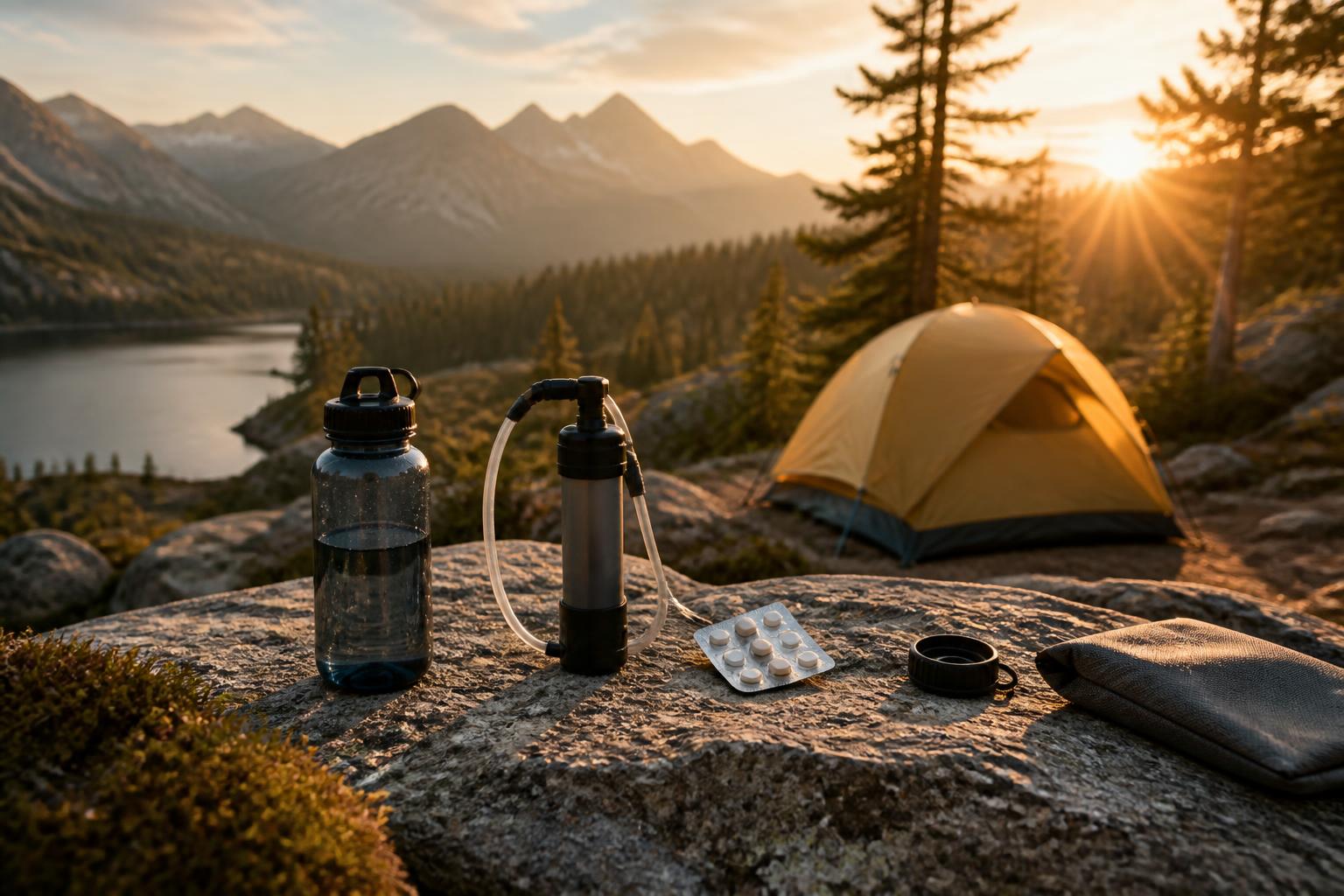
If you’re pulling water from a clear mountain stream on a weekend trip, a filter like the LifeStraw Personal Water Purifier is faster, tastes better, and requires no wait time. You drink immediately from the source. If you’re packing for a multi-day trip where every ounce counts, traveling internationally where viruses are a concern, or camping in below-freezing temps where a filter can freeze and crack, Potable Aqua tablets are the more reliable choice.
The decision comes down to which failure mode you can live with. Filters clog and freeze. Tablets leave a taste and take time to work.
Comparison Framework
| Product | Type | Key Advantage | Key Limitation | Best Use Case |
|---|---|---|---|---|
| Potable Aqua Water Purification Tablets With PA Plus – Two 50 count Bottles | Iodine tablets + vitamin C neutralizer | Lightweight, long shelf life, kills viruses | Chemical taste even with PA Plus, 30-min wait, no sediment removal | Ultralight backpacking, international travel, emergency kits |
| Potable Aqua Water Purification Treatment – Portable Drinking Water Treatment for Camping, Emergency Preparedness, Hurricanes, Storms, Survival, and Travel (50 Tablets), Black, single pack | Iodine tablets | Same core purification, single pack | Same as above, no taste neutralizer included | Budget emergency prep, short trips where weight is critical |
| LifeStraw Personal Water Purifier for Hiking, Camping, Travel, and Emergency Preparedness | Hollow-fiber membrane filter | Instant drinking, no chemical taste, removes bacteria + parasites | Doesn’t remove viruses, can freeze, must be kept from clogging | Day hikes, solo trips, clear water sources |
Top Pick: Potable Aqua Water Purification Tablets With PA Plus – Two 50 count Bottles — This is the most versatile option because the tablets themselves are proven by decades of military and emergency use, and the PA Plus neutralizer packet fixes the taste issue that drives most people away from chemical treatment. Two 50-count bottles cover 100 gallons of treated water, making it a strong value for groups or frequent trips.
Best-Fit Picks by Use Case
Solo day hiker or short overnight with clear water sources: Choose the LifeStraw. You pull water directly from the source and drink immediately. No waiting, no bottles, no aftertaste. The trade-off is that it only filters down to 0.2 microns—viruses are smaller and pass through. In North American backcountry streams, that risk is low. Internationally, it’s a real concern. A concrete check: if you’re hiking anywhere south of the US border or in developing countries, don’t rely on a standard filter alone.
Ultralight backpacker or thru-hiker: Choose Potable Aqua tablets with PA Plus. Tablets weigh nearly nothing, you don’t need to carry a filter housing, and there’s no risk of the unit freezing overnight. The four-hour wait for full virus kill at cold temperatures is the main friction point. Plan ahead and treat water at camp before you actually need it.

Group camping trip (4+ people): Tablets scale better. One bottle treats 50 gallons. A single filter can handle hundreds of gallons, but pumping or squeezing for a group is slow, and the filter will clog faster with heavy use. Combine tablets for bulk water treatment with a small filter for drinking on the move.
Emergency kit or car bug-out bag: Tablets win. They don’t freeze, they don’t expire for years, and they require no maintenance. Throw a bottle in the glove box and forget about it. One concrete verification step: check the printed expiration date on the bottle before storing it. If it’s within a year of expiring, replace it. An expired tablet may not fully disinfect, and you won’t know until you’re sick.
Trade-offs to Know
The big one most articles skip: Tablets don’t actually filter anything. They chemically kill or inactivate microorganisms, but the dead organisms, sediment, and organic debris remain in your water. If you’re pulling from a silty creek or a pond with visible floaters, the water will look and smell exactly as nasty as it did before treatment—it’ll just be less likely to make you sick. A filter physically removes all of that material, giving you clear water. The consequence is real: cloudy water treated with tablets still has a muddy taste and can cause nausea from the suspended particles alone, even if the pathogens are dead.
Taste is the #1 reason people stop using tablets. Iodine tablets leave a distinct chemical flavor. The PA Plus neutralizer helps significantly, but it’s not a perfect fix. Chlorine dioxide tablets have a milder taste but take longer to work. If you’re picky about water taste, go with a filter.
Filters have a hidden failure mode. You can’t always tell when a filter is compromised. If the hollow fibers crack from freezing or rough handling, unfiltered water passes through and you have no visual warning. Tablets are binary—they either dissolve and work, or they don’t. There’s no mechanical failure to worry about.
Freezing is the filter’s worst enemy. A wet filter left in a freezing tent overnight is likely ruined. If you’re camping in temperatures below 32°F, tablets are the safer bet unless you’re prepared to sleep with your filter in your bag.
Quick Decision Check
Run through these five questions before you buy:
- Will you ever need to treat water that looks muddy or has visible debris? → If yes, get a filter. Tablets won’t clear it, and the gritty water can make you gag even if it’s safe.
- Are you camping in freezing temps? → If yes, get tablets. A frozen filter is a broken filter—cracked fibers mean unfiltered water passes through with no warning.
- Do you have a strong aversion to chemical aftertaste? → If yes, get a filter. Even neutralized tablets leave a trace of iodine flavor that some people find unbearable.
- Are you traveling internationally where viral contamination is a real risk? → If yes, get tablets (or a purifier that handles viruses). Most portable filters do not.
- Is weight and pack space your absolute top priority? → If yes, get tablets. A bottle of 50 weighs less than 3 ounces.
If you answered “yes” to at least three of the first four, you already know which direction to go. If you’re split, the safest bet is to carry both—tablets as a backup are only a couple of ounces.
How to Use Each Option Correctly
Both methods have critical timing steps that people ignore, and getting them wrong can mean drinking unsafe water.
Using tablets (Potable Aqua)
- Fill your bottle with the clearest water you can find. If it’s murky, pre-filter through a bandana or coffee filter to reduce sediment—this prevents the tablet from reacting with organic matter and losing potency.
- Drop in one tablet per quart (or two per liter for cloudy water). Close the bottle and let it dissolve for a few seconds, then shake.
- Wait 30 minutes at room temperature. If the water is very cold (below 50°F), wait four hours for full virus kill. Do not skip the extended wait in cold conditions—it’s non-negotiable. Checkpoint: If the water is still visibly cloudy after 30 minutes, it means the sediment load is too high. Re-filter through a cloth and add a second tablet, then wait the full time again.
- If using PA Plus, add the neutralizer tablet after the 30-minute treatment wait. Shake and wait an additional 5 minutes. The water will now taste noticeably better. Verification: The water should no longer smell strongly of iodine. If it still has a sharp chemical odor, the neutralizer didn’t fully dissolve. Shake again and wait another 5 minutes.
- Success check: The water will have a slight yellow tint from the iodine (that’s normal). If the tablet didn’t fully dissolve or the water still smells strongly of chlorine, add another neutralizer if you have it, or simply aerate the water by pouring it between two bottles several times.
- When to escalate: If you taste anything metallic or chemical after adding PA Plus, and the taste persists, the water may not have been fully treated. Switch to a backup method or boil.
Using a filter (LifeStraw)
- Find your water source. Avoid obviously muddy or silty water if possible—sediment clogs the filter faster and reduces flow rate significantly within hours.
- Remove the cap and dip the filter directly into the water. Suck gently to start the flow. Do not force it; the filter is designed to work with normal suction. Checkpoint: If you have to suck hard to get any water, the filter is partially clogged. Backflush it by blowing air back through the mouthpiece, or tap the filter gently against your palm to dislodge sediment.
- Drink directly from the filter or use it to fill a bottle. The flow rate is about 1 liter per minute with clean water. If the flow drops to a trickle within the first few uses, you likely have a heavy-sediment source. Pre-filter through a bandana next time.
- When to escalate: If you taste anything earthy, metallic, or simply “off” during use, stop immediately. The filter may have a crack or bypass—unfiltered water can flow around damaged fibers. In the field, switch to backup tablets or boil your water until you can replace the filter.
- After use, shake out excess water and store the filter in a sealed bag. Never let it freeze while wet. Verification: Before your next trip, inspect the filter housing for cracks and test the flow with tap water. If it flows noticeably slower than when new, the filter may be compromised.
When to escalate (both methods): If you develop nausea, cramping, or diarrhea within 12–48 hours of using a new treatment method for the first time, your gear or technique may have failed. Switch to boiling (rolling boil for one minute) or a different treatment method until you confirm your primary system is working. This is not a gear failure you can diagnose in the field—assume infection risk and treat all water as unsafe until you’re back to a reliable source.
Related Questions
Can I use tablets and a filter together? Yes, and it’s actually a smart strategy for questionable water. Filter first to remove sediment and large organisms, then treat with tablets for viral protection. This gives you clear, chemically safe water with minimal taste issues.
Do tablets expire? Yes. Most iodine and chlorine dioxide tablets have a shelf life of about 4–5 years when stored in a cool, dry place. Check the printed date on the bottle. Expired tablets lose potency and may not fully disinfect the water. If you’re unsure, replace them—it’s cheap insurance.
Will a filter remove viruses? Not a standard portable filter like the LifeStraw. It removes bacteria and parasites, but viruses are too small for a 0.2-micron filter. To remove viruses, you need a purifier that uses UV, chemicals, or smaller pore sizes, or you need chemical treatment.
Which is cheaper in the long run? Tablets have a lower upfront cost but a recurring expense—you buy more as you use them. A filter costs more initially but can treat hundreds to thousands of gallons before replacement is needed. If you camp more than a few times a year, a filter pays for itself within two seasons.

Camping Bob has spent over 20 years camping across the US — from BLM dispersed sites in the Southwest to KOA campgrounds in the Pacific Northwest. He writes practical, no-nonsense guides to help fellow campers get outdoors with confidence.