
Folding Your Pop-Up Play Tent: Easy Instructions
Quick answer
- Unfold the tent completely.
- Locate the flexible poles and identify the main folding points.
- Bend poles inward, creating a circular shape.
- Twist and tuck, guiding the tent into a smaller bundle.
- Secure with straps or a carrying bag.
- Practice makes perfect.
What to check first (do this before you drive out)
Before you pack up and head out, a few quick checks will save you a headache.
Land manager / legality
Know who’s in charge of the land you’re on. Is it National Forest, BLM, a state park? Each has its own rules. A quick look at their website or a call to the ranger station is smart. Don’t get surprised by regulations.
Access/road conditions
Is the road to your spot paved, gravel, or just a suggestion? If it’s rough, you’ll want to know if your rig can handle it. Low clearance or 2WD might mean parking it and hiking in. Check recent reports if you can.
Fire restrictions + weather + wind
This is huge. Are campfires allowed? Are there burn bans? Check the local fire danger level. Also, look at the weather forecast. High winds can make setting up and tearing down a pop-up tent a real challenge.
Water plan + waste plan (Leave No Trace)
Bring enough water or know where to filter. Pack out everything you pack in. That includes food scraps, wrappers, and trash. Leave your campsite cleaner than you found it. That’s the golden rule.
Safety (wildlife, distance to help, comms)
Be aware of local wildlife. Know what to do if you encounter bears or other critters. How far are you from the nearest town or ranger station? Cell service is often spotty. Have a plan for emergencies. A satellite messenger is a good idea for remote trips.
Step-by-step (field workflow)
This is how you get that pop-up tent back in its bag. It takes a little practice, but it’s not rocket science.
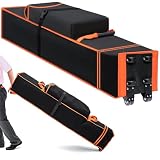
Getting your pop-up tent back into its bag can be tricky, but with a little practice, it’s easily done. If your original bag is lost or damaged, consider a durable pop up tent carrying bag to keep your tent protected.
1. Unfold the tent completely.
- What to do: Lay the tent out flat on the ground. Make sure all the poles are extended and the fabric is smooth.
- What “good” looks like: The tent is fully open, showing its shape and structure.
- Common mistake: Trying to fold it while it’s still partially collapsed. This makes it harder to see how it’s meant to go. Avoid it by giving it full space.
2. Locate the flexible poles.
- What to do: Feel along the edges of the tent. You’ll find the thin, flexible poles that give it its shape. They’re usually connected by elastic.
- What “good” looks like: You can easily identify the main pole structure.
- Common mistake: Not realizing the poles are designed to bend and collapse. Thinking you have to force them. Avoid this by gently flexing them to feel their give.
3. Identify the main folding points.
- What to do: Look for the natural curves or joints in the poles. These are where the tent is designed to fold in on itself. Often, it involves bringing two opposite sides together.
- What “good” looks like: You can see where the tent will naturally crease or bend.
- Common mistake: Trying to fold it in random spots. This will just make a mess. Avoid it by observing the tent’s existing structure.
4. Bend poles inward, creating a circular shape.
- What to do: Pick up two opposite points of the tent’s frame and push them towards each other. The flexible poles will start to bend.
- What “good” looks like: The tent begins to form a rough circle or oval.
- Common mistake: Trying to bend it too much at once. This can strain the fabric. Avoid it by making smaller, controlled bends.
5. Twist and tuck, guiding the tent into a smaller bundle.
- What to do: Once you have a circular shape, twist your wrists in opposite directions. This will cause the tent to fold in half on itself, creating a smaller, flatter disc.
- What “good” looks like: The tent is now a compact, flat disc with overlapping sections.
- Common mistake: Not twisting enough, or twisting unevenly. This results in a lumpy, hard-to-manage bundle. Avoid it by applying a consistent, firm twist.
6. Tuck in any loose fabric.
- What to do: As the tent folds, some fabric will bunch up. Gently push this excess fabric into the center of the disc.
- What “good” looks like: The disc is as flat and neat as possible.
- Common mistake: Leaving fabric sticking out. This makes it hard to fit into the bag. Avoid it by taking a moment to smooth and tuck.
7. Secure with straps or a carrying bag.
- What to do: Most pop-up tents come with straps or a bag. Use these to hold the folded disc together.
- What “good” looks like: The tent is securely bundled and easy to carry.
- Common mistake: Not securing it properly. It can spring open when you least expect it. Avoid this by making sure straps are tight and the bag is zipped.
Most pop-up tents come with straps or a bag to secure the folded disc. If your original bag is worn out, a new pop up tent carrying bag can help keep your tent compact and protected.
8. Store it properly.
- What to do: Keep the tent in its bag in a dry place. Avoid storing it wet, as this can lead to mildew.
- What “good” looks like: The tent is clean, dry, and ready for its next adventure.
- Common mistake: Storing it damp or in a humid environment. This ruins the fabric. Avoid it by always ensuring it’s bone dry before putting it away.
Common mistakes (and what happens if you ignore them)
| Mistake | What it causes | Fix |
|---|---|---|
| Not fully unfolding the tent first | Difficulty identifying folding points, leading to frustration and awkward shapes. | Lay it completely flat and observe its structure before attempting to fold. |
| Forcing the poles | Damaged poles, ripped fabric, or a tent that won’t fold correctly anymore. | Gently flex the poles to feel their natural bend. They are designed to be flexible. |
| Folding in random spots | A lumpy, uneven bundle that’s hard to manage and won’t fit in its bag. | Look for the natural creases and curves in the tent’s structure. |
| Not twisting enough or twisting unevenly | The tent won’t collapse into a flat disc, remaining bulky and difficult to handle. | Apply a firm, consistent twist with both hands in opposite directions. |
| Leaving excess fabric sticking out | The bundled tent won’t fit into its carrying bag, or the bag won’t close. | Gently tuck and smooth the fabric into the center of the disc as you fold. |
| Not securing the bundle properly | The tent can spring open unexpectedly, posing a tripping hazard or damage risk. | Use the provided straps or bag to cinch the bundle tightly. |
| Storing the tent when damp | Mildew growth, unpleasant odors, and permanently damaged fabric. | Always ensure the tent is completely dry before packing it away. Air it out if necessary. |
| Cramming it into a too-small bag | Ripped seams, stretched fabric, and a bag that’s difficult to close. | Fold it neatly into the disc shape <em>first</em>, then place it in the bag. Don’t force it. |
| Not practicing at home | Struggling with the fold in the field, especially when tired or weather is bad. | Practice folding and unfolding it a few times in your living room before your trip. |
| Ignoring the tent’s design | Trying to fold it like a traditional tent, leading to damage and frustration. | Remember it’s a “pop-up” – it has a specific, spring-loaded folding mechanism. |
Decision rules (simple if/then)
- If the tent springs open unexpectedly, then you didn’t secure the bundle properly because the straps or bag weren’t tight enough.
- If the folded tent is too bulky for the bag, then you likely didn’t twist it enough to create a flat disc.
- If you see mildew or smell a musty odor, then you stored the tent while it was still damp because it wasn’t dried thoroughly.
- If the poles feel stiff or resistant, then you might be trying to force them instead of letting them flex naturally.
- If the fabric seems strained, then you might be bending the poles too sharply or in the wrong place.
- If the tent won’t lay flat after folding, then you probably have excess fabric that needs to be tucked in.
- If you’re struggling to get it folded, then it’s time to practice at home before your next trip.
- If the tent is damaged (ripped fabric, bent poles), then you may have ignored the “gentle” aspect of folding.
- If you can’t get it back in the bag, then you need to refold it into a tighter disc shape.
- If the tent is dirty, then clean it before storing to prevent stains and damage.
- If you’re in a windy spot, then it’s best to wait for calmer conditions or use extra stakes to manage the fabric during folding.
FAQ
Q: How do I know which way to twist the tent poles?
A: Typically, you’ll bring opposite sides of the tent frame together, forming a circle. Then, you twist your hands in opposite directions, like wringing out a towel, to collapse it.
Q: My tent is still kind of lumpy after folding. What’s wrong?
A: This usually means you haven’t twisted it enough to form a flat disc, or there’s excess fabric that needs to be tucked neatly into the center.
Q: Can I just force it if it’s not folding easily?
A: No, absolutely not. Pop-up tents are designed to collapse with a specific twisting motion. Forcing them will likely break the poles or tear the fabric.
Q: What if I can’t get it back into its original bag?
A: Make sure you’ve folded it as compactly as possible into a flat disc first. Then, try placing it in the bag and gently maneuvering it to fit. Don’t try to stuff it in.
If you’re struggling to get your tent back into its original bag, ensure it’s folded as compactly as possible. A slightly larger or more robust pop up tent carrying bag might also make the process easier.
Q: Is it okay to store my play tent for a while if it’s not completely dry?
A: It’s best to avoid this. Even slight dampness can lead to mildew, which is tough to get rid of and can damage the fabric. Always let it air dry completely.
Q: How many times should I practice folding it before a trip?
A: At least once or twice at home is ideal. This way, you’re familiar with the process and won’t be fumbling around when you’re setting up camp.
Q: My tent has a weird smell. What should I do?
A: If it’s dampness or mildew, try airing it out in the sun on a dry day. You can also gently wipe it down with a mild soap and water solution, then dry it thoroughly.
Q: What are those straps for on the carrying bag?
A: Those straps are usually to cinch down the folded tent disc, keeping it compact and preventing it from springing open before you get it into the bag.
What this page does NOT cover (and where to go next)
- Detailed cleaning instructions for specific stains.
- Repairing torn seams or broken poles.
- Choosing the right pop-up tent for your needs.
- Advanced campsite setup techniques in challenging weather.
- Long-term storage solutions for multiple seasons.

Camping Bob has spent over 20 years camping across the US — from BLM dispersed sites in the Southwest to KOA campgrounds in the Pacific Northwest. He writes practical, no-nonsense guides to help fellow campers get outdoors with confidence.