
Fire, Fuel and Propane: Everything About Campfire and Fuel
A propane campfire gives you instant, controllable heat with zero smoke, ash, or sparks. You turn a knob, press a lighter, and get a steady flame—no kindling, no tending, no cleanup afterward. The system is a simple chain: tank → regulator → hose → burner ring → fire media. That simplicity also creates a common trap: mismatched components or skipped setup checks can turn a convenience into a safety risk. If you’re deciding between wood, propane, or a blend setup, the practical answer is this: **stick with propane if you want 30-second lighting and shut-off, consistent heat, and burn-ban compliance.
Choose wood only if you have the time and tolerance for smoke, ash, and open-embers cleanup.** For most backyard owners, a properly sized propane setup with a 20 lb tank and stainless steel burner is the most versatile, lowest-effort option—but only if you verify the BTU rating, regulator pressure, and fire media clearance before striking a match.

How a Propane Campfire System Works
The system has three essential components, and each must match the others precisely. A mismatch at any point produces either a weak flame, a dangerous flame, or a system that won’t light at all.
Propane source. Most setups use disposable 1 lb canisters (portability) or refillable 20 lb tanks (regular backyard use). A 20 lb tank holds roughly 432,000 BTUs—enough for 8–12 hours at moderate flame. The 1 lb canister holds about 21,600 BTUs, giving you 1–1.5 hours at medium output. Larger tanks (30 lb, 40 lb, 100 lb) exist for permanent installations, but they require a fixed gas line and often professional hookup.
Regulator and hose. The regulator drops tank pressure from 100–200 psi down to roughly 0.5 psi for the burner. Never connect a tank directly to a burner without a regulator—uncontrolled gas flow produces dangerously tall flames and makes heat output impossible to manage. The hose must be rated for propane, free of kinks or cracks, and the correct length for your setup. A hose that is too long adds friction loss; too short stresses the fittings.
Burner assembly. Most burner kits use a stainless steel or cast-iron ring with multiple gas ports. Propane mixes with air at the ports and ignites to create a ring of flame. The Uniflasy 12″ Fire Pit Ring Burner Kit is a common drop-in option for DIY fire pits. Burner size should match your fire pit diameter—a 12–16 inch ring works for a 24–36 inch pit. If the burner is too small, the flame is concentrated and wasted; too large, and the outer edge of the pit gets no heat.
Ignition. Many burner kits include a built-in spark igniter. For manual lighting, the Flame bird 2 Pack Flexible Multi-Purpose Lighter works well. Note: the butane torch version requires refilling; the electric version is ready to use out of the box.
Verification Step: How to Confirm Fit on Your Actual Setup
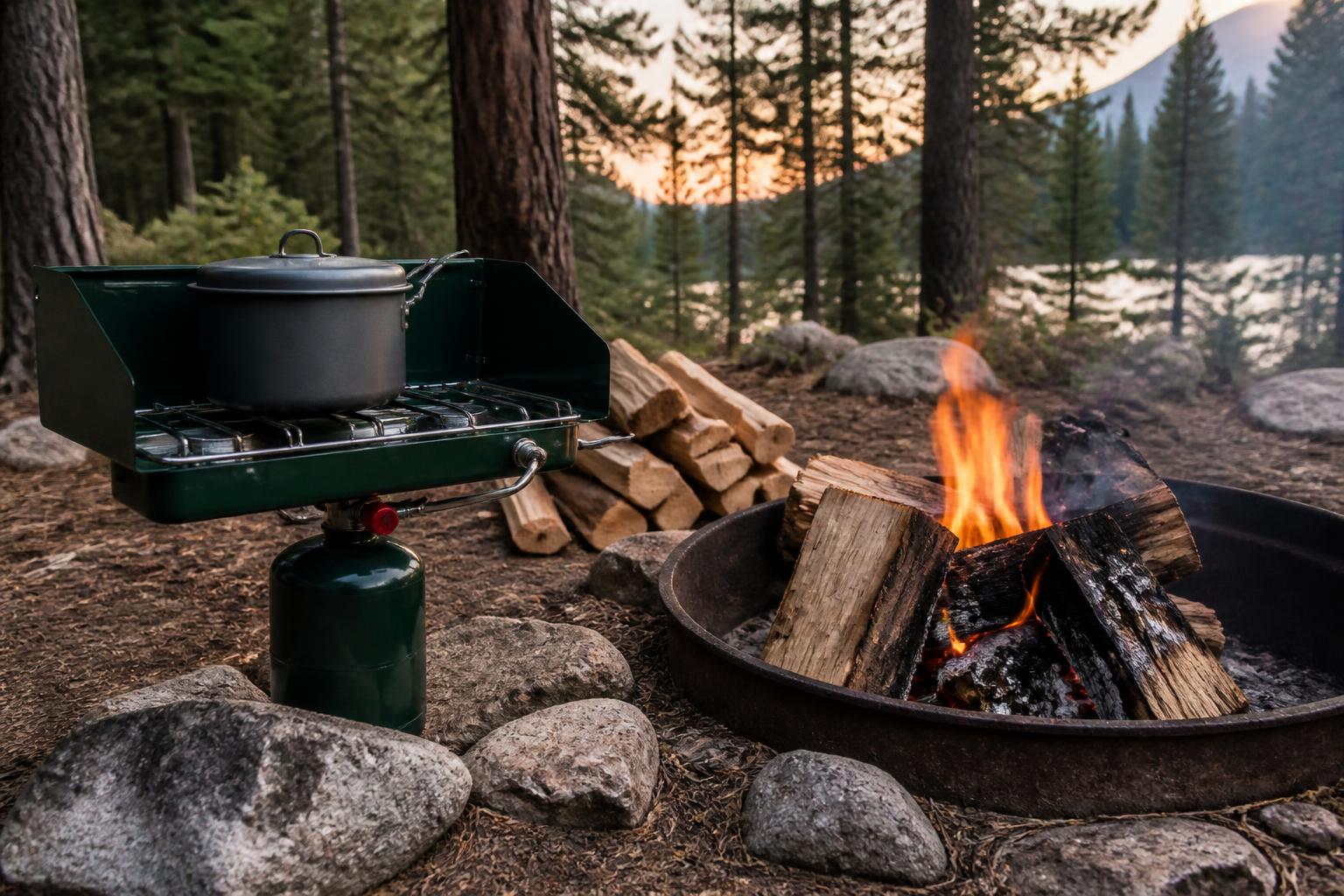
Before you connect anything, check the burner’s rated BTU input—it’s stamped on the burner body or in the manual. Then check your regulator’s output pressure (also stamped, usually “11 inches water column” or “0.5 psi”). If the burner requires 60,000 BTU/hr but your regulator is rated for only 30,000 BTU/hr output, the flame will be starved and unstable. Conversely, a regulator matched to a 40,000 BTU burner but feeding a 20,000 BTU burner will over-deliver gas, causing a tall, sooty flame that wastes fuel and creates carbon monoxide risk. Confirm these numbers match within ±10% before assembly.
Choosing Between Propane and Wood
This decision comes down to how you prioritize convenience versus experience—but there’s a concrete trade-off that many owners miss.
Pick propane when: you want instant on/off control, no smoke or ash, consistent heat output, and minimal cleanup. Propane is also the practical choice during burn bans, since it produces no embers or sparks. Many jurisdictions permit propane fire pits when wood fires are prohibited.
Pick wood when: you want the full sensory experience—crackling logs, variable flame patterns, campfire smell, and the process of building and tending a fire. Wood is often free if you source it locally, but expect smoke, ash, soot, and more cleanup.
The mismatch most people discover too late: propane fire pits produce a fixed flame shape and heat pattern—the burner ring creates a ring of flame with a cooler center. Wood fires fill the whole pit with heat and glowing embers. If you buy a propane burner kit for a pit that was originally a wood-burning bowl, the center stays cold, and guests sitting opposite each other will feel uneven warmth. You can mitigate this by using reflective fire glass or lava rock to radiate heat inward, but the center will never match the edge. Consider this trade-off before converting a compact wood pit to propane.
A common middle ground: keep a propane fire pit for everyday use and occasional wood fires when conditions allow. This gives you the convenience of propane for quick evenings and the option of a traditional fire when you have time to tend it.
Fuel Types and Tank Considerations
Stick with pure propane for reliable performance across all seasons. Propane/butane blends lose vapor pressure in cold weather because butane has a lower boiling point—your flame will weaken or fail below about 30°F. Pure propane works down to about -44°F.
Tank selection guidelines:
- 1 lb canisters: Best for portable fire pits, camping, or short gatherings. Cannot be refilled; recycle after use. Carry spares—a cold canister at half capacity may not produce enough pressure for a full flame.
- 20 lb tanks: Most economical for regular backyard use. Exchange at hardware stores or refill at propane stations. A full 20 lb tank should weigh about 37–38 lb—check the tare weight stamped on the tank collar.
- Larger tanks (30 lb+): Used for large fire pits or permanent installations. These typically require a fixed gas line and professional installation.
Fire media. Lava rock or fire glass sits on top of the burner and absorbs heat, then radiates it outward. This improves efficiency and gives you a more even flame pattern. American Fire Products Medium Lava Rock in ½–1 inch sizes works well as filler and heat distributor. Avoid pebbles smaller than ½ inch—they can block burner ports and create uneven gas flow, which leads to flame rippling and incomplete combustion (more CO). If you use fire glass, ensure it’s rated for propane temperatures; standard glass can crack and shatter.
Safety Practices That Matter
Propane campfires are safe when set up correctly, but the risks are real and specific. Beyond the standard rules, here are the failure modes you need to anticipate.
Leak test every connection. Mix dish soap with water and apply it to all threaded connections—tank valve, regulator fitting, hose ends, burner inlet. Bubbles indicate a leak. Tighten the connection or replace the component before lighting. This is the single most important check and takes less than two minutes. Most common leak point: the hose-to-regulator o-ring. It dries out and cracks over time; replace it annually or at the first sign of bubbles.
Keep 10 feet of clearance. Propane flames are taller than wood fires, and wind can carry heat sideways. Position the fire pit at least 10 feet from structures, trees, dry vegetation, and anything combustible. On a wood deck, use a fire pit mat rated for propane use. Concrete warning: a concrete patio can develop hairline cracks if the fire pit is placed directly on it without a thermal barrier—heat buildup causes localized expansion.
Never operate indoors or in an enclosed space. This includes garages, screened porches, tents, and vehicles. Propane combustion consumes oxygen and produces carbon monoxide—even with ventilation, the risk is too high. Specific consequence: a 40,000 BTU burner running for 20 minutes inside a closed garage can produce CO levels above 100 ppm, which is dangerous in less than an hour.
Secure the tank upright. A tipped tank can leak liquid propane instead of vapor, creating a fireball hazard. Use a tank stand, a level base, or a chain to keep the cylinder vertical. Never lay a propane tank on its side during operation.
Shut off at the tank first. When you finish, close the tank valve before turning the burner knob. This prevents residual gas in the hose from igniting when you relight later and ensures the system is fully isolated. If you forget this step and leave the tank valve open with the burner off, the hose can slowly pressurize—a tiny leak can drain an entire 20 lb tank in a week.
Expert Tips for Performance and Reliability
Tip 1: Use a wind guard to stabilize flame and improve heat output.
Action: Place a metal ring, a row of stones, or the fire pit wall itself around the burner to block wind. This reduces flame flicker and keeps heat concentrated over the burner.
Common mistake: Stacking stones so tightly that they block the burner ports or the air intake gap at the bottom. Leave a 1–2 inch open channel around the base for combustion air. A fully enclosed base starves the flame of oxygen, producing a yellow, sooty flame and more CO.
Tip 2: Match your tank size to your usage pattern, not just your fire pit.
Action: If you entertain frequently for 4+ hours at a time, skip the 1 lb canisters and go straight to a 20 lb tank. You’ll save money per hour and avoid mid-evening tank changes.
Common mistake: Using a 20 lb tank at high flame for a small portable burner. The burner’s BTU rating may exceed what the regulator can safely deliver, leading to flame instability. Always check the burner’s rated BTU input and ensure your regulator matches it.
Tip 3: Store propane tanks properly between uses.
Action: Keep tanks outdoors in a shaded, well-ventilated area away from direct sun and heat sources. Store them upright on a level surface.
Common mistake: Leaving a tank connected to the fire pit when not in use. Disconnect the hose after each use and cap the tank valve. A partially open valve or a slow leak from a worn o-ring can drain a tank in days. Bonus: store spare 1 lb canisters in a cool, dry place—never in a car trunk in summer, where internal temperatures can exceed 120°F and cause the relief valve to vent.
Propane Campfire Decision Aid
Run through these checks before you buy or set up a propane campfire system:
- Fire pit rated for propane? — Natural gas and propane burners use different orifice sizes. Using a natural gas burner with propane produces a high, sooty flame. Confirm the burner is explicitly rated for propane.
- Regulator matches tank type? — 1 lb canisters typically use a high-pressure regulator; 20 lb+ tanks use a low-pressure regulator. Using the wrong one gives you either a weak flame or an unsafe one. Check the regulator’s output pressure rating.
- Burn ban rules confirmed? — Propane campfires are often allowed during wood fire bans, but some jurisdictions explicitly prohibit all open flames. Call your local fire department or check the ban notice.
- BTU output appropriate for your pit size? — For a standard 30–36 inch backyard fire pit, 40,000–60,000 BTUs is typical. Smaller portable pits need 15,000–25,000 BTUs. Too low, and the flame is weak; too high, and heat radiates sideways instead of upward.
- Level, non-combustible base in place? — Grass, wood decking, and dry leaves can ignite. Set the fire pit on concrete pavers, stone, a metal fire pit mat, or bare mineral soil.
- Fire media depth ≤ 2 inches above burner? — Lava rock or fire glass can be piled up to 2 inches above the burner. Deeper piles smother the flame and cause incomplete combustion.
Frequently Asked Questions
Can I use a propane campfire during a burn ban?
Often yes, because propane produces no embers or sparks. But rules vary by jurisdiction—call your local fire department or read the ban notice carefully. Some bans explicitly prohibit all open flames, including propane devices.
How long does a 20 lb propane tank last on a fire pit?
At moderate flame (30,000–40,000 BTU/hr), expect 8–12 hours. At high flame (60,000 BTU/hr), about 7–8 hours. Actual run time depends on your burner’s BTU consumption and regulator output.
Can I convert my wood-burning fire pit to propane?
Yes, using a drop-in burner kit with a propane hose and regulator. Remove the wood grate, place the burner ring on the bottom, and cover it with lava rock or fire glass. For permanent installations, you may need a gas line and professional help.
Do propane campfires produce carbon monoxide?
Yes. Propane combustion produces CO, just like any gas fire. That is why you must use propane campfires outdoors only, away from windows and doors. Never operate one inside a structure or vehicle.

Camping Bob has spent over 20 years camping across the US — from BLM dispersed sites in the Southwest to KOA campgrounds in the Pacific Northwest. He writes practical, no-nonsense guides to help fellow campers get outdoors with confidence.