
How to Make Perfect S’mores Over an Open Campfire
Quick answer
- Grab graham crackers, marshmallows, and chocolate.
- Build a solid campfire, let it burn down to coals.
- Toast marshmallows to golden brown, not black.
- Assemble quickly before the marshmallow cools.
- Enjoy that gooey goodness.
- Pack out all your trash.
What to check first (do this before you drive out)
Before you even think about that perfect s’more, let’s talk logistics. Getting to the right spot matters.
- Land manager / legality: Who’s in charge here? Is it the US Forest Service, BLM, a state park, or private land? Each has its own rules about campfires and camping. Always check the official website or call ahead. Ignorance isn’t an excuse, and fines can ruin a trip.
- Access/road conditions: Can your rig even get there? Some forest roads are rough. A high-clearance 4WD is a must for some spots. Others are paved and easy. Don’t be the guy who gets stuck miles from anywhere. Check recent conditions if possible.
- Fire restrictions + weather + wind: This is huge. Fire bans are common, especially in dry seasons. Don’t be that person who starts a wildfire. Check the local fire danger level. Also, look at the weather forecast. High winds are a no-go for open fires. Rain? Maybe skip the campfire s’mores and bring a propane stove.
- Water plan + waste plan (Leave No Trace): Got water to put out your fire completely? You need more than a sip. Plan to pack out all your trash, including marshmallow sticks and wrappers. Leave No Trace principles are key. Leave the spot better than you found it.
- Safety (wildlife, distance to help, comms): Are there bears? Store your food properly. How far are you from a ranger station or town? Do you have cell service? Let someone know where you’re going and when you’ll be back. A little preparation goes a long way.
Step-by-step (field workflow)
Alright, you’ve checked the boxes. Time to build that fire and get to the main event.
1. Gather your ingredients: Get your graham crackers, chocolate bars (the standard Hershey’s work great, but get fancy if you want), and marshmallows. Make sure you have enough for everyone.
- What “good” looks like: All your fixings are laid out and ready to go. No digging through the cooler mid-roast.
- Common mistake: Forgetting the chocolate. Seriously, it happens. Double-check your pack.
To make gathering your ingredients a breeze, consider bringing a dedicated s’mores kit that includes all the essentials.

2. Build a solid campfire: Start with tinder, then kindling, then larger pieces of wood. Aim for a fire that burns down to a good bed of hot coals.
- What “good” looks like: A healthy fire that’s producing radiant heat, not just flames. Coals glow red.
- Common mistake: Trying to roast marshmallows over roaring flames. You’ll just scorch them. Patience, grasshopper.
3. Select your roasting stick: Find a sturdy stick, about 3-4 feet long. Green wood is best as it won’t burn up too fast.
- What “good” looks like: A stick that’s comfortable to hold and long enough to keep your hands away from the heat.
- Common mistake: Using a dry, punky stick that breaks or burns too quickly.
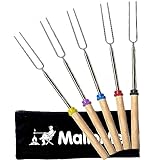
For the best roasting experience, we recommend using a set of durable, extendable marshmallow roasting sticks to keep a safe distance from the flames.
4. Prepare your s’more base: Break graham crackers in half. Place a piece of chocolate on one half.
- What “good” looks like: Ready-made bases waiting for their marshmallow topping.
- Common mistake: Waiting until the marshmallow is perfectly toasted to start assembling. You’ll be rushing.
5. Skewer your marshmallow: Push the marshmallow onto the stick. Don’t put it on too deep, or it might fall off.
- What “good” looks like: The marshmallow is secure but has room to expand as it toasts.
- Common mistake: Pushing the marshmallow all the way to the end of the stick, making it hard to rotate.
6. Toast the marshmallow: Hold the marshmallow over the glowing coals, rotating it slowly and constantly.
- What “good” looks like: An evenly golden-brown, slightly puffed marshmallow. It should be soft and gooey inside.
- Common mistake: Holding it too close to the flames or not rotating it. This leads to a burnt exterior and raw interior.
7. Achieve peak gooeyness: Once it’s toasted to your liking, carefully pull it off the stick.
- What “good” looks like: A perfectly toasted marshmallow, ready to be sandwiched.
- Common mistake: Letting it cool too much before assembly. The magic is in the melt.
8. Assemble the s’more: Place the toasted marshmallow on top of the chocolate-covered graham cracker half. Top with the other graham cracker half.
- What “good” looks like: A perfectly formed s’more, ready for immediate consumption.
- Common mistake: Not pressing down gently to squish the marshmallow and chocolate together.
9. Eat and enjoy: Carefully remove the marshmallow from the stick (it might be hot!) and sandwich it between the graham cracker halves.
- What “good” looks like: Pure bliss. That first bite is everything.
- Common mistake: Trying to eat it too fast and burning your mouth. Slow down, savor it.
10. Repeat: Make another one. And another. You’re camping.
- What “good” looks like: A happy group with sticky fingers and full bellies.
- Common mistake: Stopping too soon.
11. Clean up: Make sure your fire is dead out. Pack out all trash.
- What “good” looks like: A clean campsite, a cold fire pit, and all your waste in your pack.
- Common mistake: Leaving food scraps or wrappers behind. This attracts animals and disrespects the land.
Common mistakes (and what happens if you ignore them)
| Mistake | What it causes | Fix |
|---|---|---|
| Roasting over roaring flames | Burnt, bitter marshmallow; raw inside | Wait for glowing coals; rotate slowly. |
| Not rotating the marshmallow | Uneven toasting, one side charred, other raw | Constant, slow rotation over coals. |
| Using a dry, punky stick | Stick burns up or breaks, marshmallow falls off | Find a green, sturdy stick; test its strength. |
| Forgetting an ingredient (esp. chocolate) | Incomplete s’more; disappointment | Double-check your cooler/pack before leaving home and before roasting. |
| Not assembling immediately | Marshmallow cools and hardens; less gooey | Have your base ready before the marshmallow is perfectly toasted. |
| Leaving food scraps/wrappers | Attracts wildlife; pollutes campsite | Pack out <em>all</em> trash; bury human waste properly. |
| Not extinguishing fire completely | Potential wildfire; ecological damage | Douse with water, stir, feel for heat. Repeat until cold. |
| Building a fire during a ban | Fines, potential wildfire, legal trouble | Always check current fire restrictions before you go. |
| Using a stick that’s too short | Burns on hands; difficult to control heat | Use a stick at least 3 feet long. |
| Not bringing enough water for fire out | Incomplete extinguishment; safety hazard | Carry ample water specifically for fire suppression. |
Decision rules (simple if/then)
- If fire restrictions are in place, then do not build a campfire because it’s illegal and dangerous.
- If the wind is gusting over 15-20 mph, then postpone campfire s’mores because it’s unsafe and difficult to control.
- If you can’t find a sturdy stick, then don’t risk it; find a better stick or use a metal skewer if you have one.
- If your marshmallow catches fire in a big flame, then carefully blow it out and re-evaluate your roasting technique.
- If you’re in bear country, then store all food (including s’more ingredients) properly in a bear canister or vehicle.
- If the ground is dry and covered in pine needles, then be extra cautious with embers because they can travel easily.
- If you don’t have enough water to put the fire out, then don’t start one because a hot fire pit is a hazard.
- If you’re unsure about land management rules, then check the official agency website before you go.
- If your goal is a perfectly toasted marshmallow, then wait for coals, not flames.
- If you’re camping with kids, then supervise them closely around the campfire.
- If you brought foil, then you can wrap chocolate and marshmallows for a “baked” s’more on the coals (different technique, but tasty).
If you can’t find a sturdy stick, then don’t risk it; find a better stick or use a metal skewer, like those found in a good set of marshmallow roasting sticks, if you have one.
FAQ
What’s the best kind of chocolate for s’mores?
Classic Hershey’s milk chocolate is traditional and melts well. Some folks like dark chocolate or even Reese’s Peanut Butter Cups for a twist. Experiment to find your favorite!
How do I keep my marshmallow from falling off the stick?
Don’t push the marshmallow on too deep. Just secure it enough so it won’t slide off, but also leave enough marshmallow sticking out to toast. A good twist as you push it on helps.
My marshmallow caught fire! What do I do?
Don’t panic. If it’s just a little flame, carefully pull it away from the coals and blow it out gently. If it’s a big flame, pull it away and let it burn out before trying to salvage it. This usually means it was too close to the flames.
Can I make s’mores without a campfire?
Sure. You can use a propane stove, a gas grill, or even your kitchen oven (broiler setting, watch closely!). They won’t have that smoky campfire flavor, but they’ll still be delicious.
What are “Leave No Trace” principles for s’mores?
It means packing out all wrappers, any uneaten food, and any trash. It also means ensuring your campfire is completely out and the site is left clean.
Is there a “right” way to toast a marshmallow?
The “right” way is the way you like it! Some prefer lightly golden, others like it deeply toasted. The key is even heat and control.
What if I don’t have a long stick?
If you have a metal skewer or even a sturdy piece of wire, that can work. Just be careful of the heat. Some people even use long-handled tongs to hold their marshmallows.
How do I make sure my fire is completely out?
Douse it thoroughly with water, stir the ashes and embers with a shovel, and then douse it again. Feel the ashes with the back of your hand. If it’s cold, it’s out.
What this page does NOT cover (and where to go next)
- Advanced campfire building techniques (e.g., Dakota fire holes, specific fire lays).
- Detailed information on specific park or forest regulations (always check local sources).
- Recipes for gourmet s’more variations beyond the classic.
- Identifying edible plants or foraging for roasting sticks.
- First aid for burns or other campfire-related injuries.