
Using Your Camping Coffee Maker for Great Coffee
Quick answer
- Pack it all. Coffee grounds, filter, maker, water, fuel, mug.
- Know your maker. Each one works a little different. Read the instructions.
- Water is key. Use good water. Heat it right.
- Clean up. Leave no trace. Pack out used grounds.
- Practice at home. Get the hang of it before you’re miles from anywhere.
- Enjoy the ritual. It’s part of the experience.
What to check first (do this before you drive out)
Before you even think about brewing, a few things need a quick once-over. This saves headaches and ensures you’re set for a good cup.
- Land manager / legality: Who’s in charge here? Is it National Forest, BLM land, a State Park, or private? Each has its own rules. Some places might have specific fire bans or restrictions on camp stoves, even if they’re not open flames. Always check the managing agency’s website or call their local office. You don’t want to get cited for something simple.
- Access/road conditions: Can your rig actually get there? If you’re heading deep into the backcountry, a high-clearance 4×4 might be mandatory. Paved roads are easy, but dirt tracks can turn into mud pits after rain or snow. Check recent conditions if possible, or be prepared to hike in if the road’s too rough.
- Fire restrictions + weather + wind: This is huge. Fire bans mean no campfires, and sometimes even strict rules about stoves. Check the current fire danger level. Also, look at the forecast. High winds can make brewing tricky and dangerous, especially with open flames or hot water. Extreme heat or cold will affect your water temperature and how quickly things cool down.
- Water plan + waste plan (Leave No Trace): Do you have enough water for brewing and drinking? Will you boil it on-site or pack it in? For waste, used coffee grounds are organic, but they can attract critters. Pack them out in a sealed bag. Don’t just dump them in the woods. Same goes for any packaging or cleaning supplies.
- Safety (wildlife, distance to help, comms): If you’re in bear country, store your food and coffee supplies properly. Be aware of your surroundings. How far is the nearest town or ranger station? Cell service is often spotty or non-existent. Let someone know your itinerary. A satellite messenger can be a good idea for remote trips.
Step-by-step (field workflow)
Alright, you’ve checked your boxes. Now let’s get that coffee brewing.
1. Gather your gear.
- What to do: Lay out everything you need: coffee maker, filter (if required), coffee grounds, mug, water, fuel (for stove/burner), and a way to heat the water.
- What “good” looks like: You have all your components within easy reach. No digging around for that one missing piece.
- Common mistake: Forgetting the fuel for your stove. Ouch. Always double-check your fuel levels or pack an extra canister.
2. Set up your brewing station.
- What to do: Find a stable, level spot away from your tent and any flammable materials. If using a stove, ensure it’s on solid ground.
- What “good” looks like: Your station is safe, organized, and won’t tip over.
- Common mistake: Setting up on uneven ground or too close to your tent. This is a fire hazard and a recipe for spilled coffee.
3. Heat your water.
- What to do: Fill your pot or kettle with the right amount of water for your coffee. Heat it to the optimal temperature for your maker.
- What “good” looks like: Water is hot but not boiling furiously for most methods. For French presses, around 200°F (93°C) is ideal. For pour-overs, slightly cooler is often better.
- Common mistake: Boiling the water too long. This can scorch the coffee and make it taste bitter. Or, not heating it enough, leading to weak coffee.
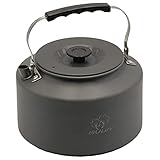
When heating your water, a durable camping kettle can make the process much easier and safer.
4. Prepare your coffee maker.
- What to do: If it’s a pour-over, place the filter and add your grounds. If it’s a French press, add the grounds to the carafe. If it’s an Aeropress, assemble it according to its instructions.
- What “good” looks like: The maker is clean and ready to go. The correct amount of coffee is measured out.
- Common mistake: Using too much or too little coffee. This drastically affects the flavor. Measure it out like you would at home.
If you’re using a portable French press, simply add your grounds directly to the carafe.

5. Brew the coffee.
- What to do: This varies wildly. For pour-overs, slowly pour hot water over the grounds, letting it bloom first. For French presses, add water, stir, steep, and press. For Aeropress, add water, stir, and press.
- What “good” looks like: The coffee extracts evenly and smells amazing. You follow the specific instructions for your maker.
- Common mistake: Rushing the process. Good coffee takes a little patience. Pouring too fast or not letting it steep long enough will result in subpar joe.
6. Serve and enjoy.
- What to do: Carefully pour the coffee into your mug. Take a moment to savor the aroma.
- What “good” looks like: You have a hot, delicious cup of coffee in your hands, ready to fuel your day.
- Common mistake: Spilling hot coffee on yourself or your gear. Be deliberate when pouring.
7. Clean your equipment.
- What to do: Disassemble your maker. Rinse all parts thoroughly with water. Pack out used grounds and any disposable filters.
- What “good” looks like: Your coffee maker is clean and dry, ready for the next use. All waste is properly bagged for packing out.
- Common mistake: Leaving dirty coffee grounds in the maker or just rinsing it poorly. This attracts animals and makes future use unpleasant.
8. Pack up your station.
- What to do: Stow all your gear back in its designated spot. Ensure your stove is off and cool.
- What “good” looks like: Your campsite is as you found it, or better. All your gear is organized for the next step of your adventure.
- Common mistake: Leaving behind small items like coffee filters or a stray spoon. Do a quick sweep of your area.
Common mistakes (and what happens if you ignore them)
| Mistake | What it causes | Fix |
|---|---|---|
| Forgetting fuel for stove | No hot water, no coffee. A very sad morning. | Double-check fuel canisters before you leave. Pack a spare if going on a longer trip. |
| Using dirty water | Bad taste, potential stomach upset. | Use treated, filtered, or boiled water. If unsure, err on the side of caution. |
| Incorrect water temperature | Bitter or weak coffee. | Use a thermometer or learn to judge by eye (just off the boil is good for most). |
| Using stale or wet coffee grounds | Flat, uninspired flavor. | Store grounds in an airtight container. Grind beans just before you go if possible. |
| Not cleaning the maker thoroughly | Lingering old coffee oils make new coffee taste funky. Attracts critters. | Rinse <em>all</em> parts with water immediately after use. Disassemble completely. |
| Over-extraction (too long brewing) | Bitter, astringent coffee. | Time your brew cycle according to your maker’s recommendations. Don’t let it sit too long. |
| Under-extraction (too short brewing) | Sour, weak, watery coffee. | Ensure adequate contact time between water and grounds. Check grind size if it’s too coarse. |
| Not securing the maker/stove | Spilled hot coffee or water, potential burns or fire hazard. | Always use a stable, level surface. Keep kids and pets away from the active brewing area. |
| Not packing out coffee grounds | Attracts wildlife, unnatural presence in the environment. | Use a small zip-top bag to pack out used grounds. Dispose of them in a trash receptacle later. |
| Brewing in strong wind | Uneven extraction, potential for burns from splashing. Stove may blow out. | Find a sheltered spot, use a windscreen for your stove, or wait for conditions to improve. |
| Using too fine a grind for a French press | Grounds slip through the filter, gritty coffee. | Use a coarse grind specifically for French presses. |
| Using too coarse a grind for a pour-over | Water runs through too fast, weak coffee. | Use a medium grind for pour-overs. |
Decision rules (simple if/then)
- If the fire danger is high, then use only a stove that uses liquid fuel or is a self-contained canister system, because open flames are prohibited.
- If you are in bear country, then store your coffee and grounds in a bear-resistant container or canister, because you don’t want to attract unwanted visitors.
- If your road access is rough, then check your vehicle’s clearance and tire condition, because getting stuck miles from help is no fun.
- If the weather forecast calls for high winds, then find a sheltered spot or postpone brewing until it calms down, because hot liquid and wind are a bad combo.
- If you have a French press, then use a coarse grind, because fine grounds will clog the filter and make a mess.
- If you are using a pour-over, then pre-wet the paper filter with hot water, because this removes any papery taste and preheats the brewing cone.
- If you are unsure about water purity, then boil it for at least one minute, because this kills most harmful microorganisms.
- If you are camping for more than a weekend, then consider a larger coffee maker or a way to make multiple cups at once, because one small cup might not cut it.
- If your coffee maker requires a specific filter, then pack extras, because running out of filters means no coffee.
- If you’re making coffee at high altitude, then be aware that water boils at a lower temperature, so you might need to adjust your brewing time or temperature slightly.
- If you plan on brewing coffee first thing in the morning, then set out your gear the night before, because fumbling in the dark is a recipe for mistakes.
FAQ
What’s the best type of camping coffee maker?
There’s no single “best.” It depends on what you value: simplicity (instant coffee, percolator), flavor control (French press, Aeropress), or weight (collapsible pour-over). Many campers love the Aeropress for its versatility and portability.
For excellent flavor control and portability, a portable French press is a fantastic choice for many campers.
How much coffee grounds should I use?
A good starting point is a 1:15 to 1:17 ratio of coffee to water by weight. For example, 20 grams of coffee for 300-340 grams (ml) of water. Adjust to your taste.
Can I just use instant coffee?
Absolutely. It’s the easiest and lightest option. Just add hot water and stir. While it doesn’t offer the same complexity as brewed coffee, it’s perfectly fine for a quick caffeine fix.
What if I don’t have a stove?
You can still make coffee! Some makers, like the Aeropress, can be used with just hot water from a thermos or a pre-heated pot if you have a campfire. Or, go old school with a cowboy coffee method (though this can be messy).
How do I keep my coffee hot?
Use an insulated travel mug. If you make a whole pot, pour it into a thermal carafe if you have one. Otherwise, drink it fresh and hot!
Is it okay to use water from a stream to make coffee?
Only if you treat it properly. Always filter and then boil stream water for at least one minute to make it safe to drink and use for brewing.
What’s the deal with coffee bloom?
When hot water first hits fresh coffee grounds, they release trapped CO2 gas, which causes them to bubble and expand. Letting it “bloom” for about 30 seconds before continuing to pour improves extraction and flavor.
What this page does NOT cover (and where to go next)
- Specific campsite reservation systems and fees. (Check official park/forest websites.)
- Detailed bear-proofing techniques for food storage. (Consult wildlife agency guidelines.)
- Advanced water purification methods beyond boiling. (Research different filter types.)
- Firearm regulations or hunting seasons. (Always check state and local laws.)
- Navigation techniques for off-trail travel. (Look into map and compass or GPS training.)