
Folding Your Beach Tent: A Simple Guide
Quick answer
- Pack it up when it’s dry. Sand and moisture make folding a nightmare.
- Loosen all poles and shake out loose sand.
- Lay it flat, then fold it in half, then in half again.
- Roll it up tightly, starting from the end opposite the poles.
- Stuff it into its bag. Don’t force it.
- Secure the bag with the straps.
What to check first (do this before you drive out)
Before you even think about folding that tent, a few things need to be squared away. It’s all about making the pack-up smooth and keeping your gear in good shape.
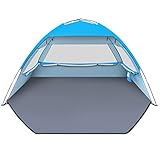
If you’re looking for a hassle-free setup, consider a pop up beach tent; they often simplify the folding process too.
- Land manager / legality: Who owns this patch of sand? Are you even allowed to be here? Usually, it’s the local municipality, county, or state parks. A quick check of signage or a local parks website can save you a headache.
- Access/road conditions: Is the road to the beach a sandy death trap or a paved highway? Some beaches are drive-up, others require a walk. Know your vehicle’s limits and the terrain. A little bit of foresight saves you from getting stuck.
- Fire restrictions + weather + wind: Is there a burn ban? What’s the weather forecast? And for crying out loud, is it windy? Wind can make folding a tent feel like wrestling an octopus. Check local fire advisories and the marine forecast.
- Water plan + waste plan (Leave No Trace): Got enough water to drink and rinse hands if needed? What about trash? Pack it in, pack it out. This applies to everything, including food scraps and tent stakes. Leave the beach cleaner than you found it.
- Safety (wildlife, distance to help, comms): Are there any local critters to be aware of? How far is the nearest ranger station or lifeguard tower? Do you have cell service? Let someone know where you’re going and when you expect to be back.
Step-by-step (field workflow)
Alright, the sun’s dipping, the fun’s winding down. Time to get this tent packed.
Many pop up beach tent models are designed for quick and easy packing, making the end of your beach day less of a chore.
1. Shake out the big stuff:
- What to do: Grab the tent by two corners and give it a good shake. Get rid of loose sand, seaweed, and any other beach debris.
- What “good” looks like: Most of the surface sand is gone. You can see the tent fabric clearly.
- Common mistake: Just kicking at it. This just grinds the sand deeper into the fabric.
2. Loosen all poles and connectors:
- What to do: Disconnect any shock-corded poles. If it’s a frame tent, loosen the joints.
- What “good” looks like: All pole sections are separate or easily collapsible.
- Common mistake: Forcing poles that are still connected. This can bend or break them.
3. Lay it flat on a clean surface:
- What to do: Find the flattest, cleanest spot you can. Lay the tent out as flat as possible.
- What “good” looks like: The tent is spread out, and you can see its whole shape.
- Common mistake: Folding it while it’s still bunched up. This leads to a lumpy, hard-to-fold mess.
4. Fold in half lengthwise:
- What to do: Grab one long edge and bring it to meet the other long edge.
- What “good” looks like: You have a long, narrow rectangle.
- Common mistake: Folding it unevenly, creating a jagged edge.
5. Fold in half lengthwise again:
- What to do: Take the long edge you just created and bring it to meet the opposite edge.
- What “good” looks like: You now have a much shorter, thicker rectangle.
- Common mistake: Not getting the edges aligned. This makes the next steps harder.
6. Fold in half widthwise:
- What to do: Now take one short end and fold it to meet the other short end.
- What “good” looks like: You have a compact square or rectangle.
- Common mistake: Rushing this and creating a ball instead of a neat fold.
7. Roll it up tightly:
- What to do: Start at one end and roll the folded tent as tightly as you can. Try to keep the roll even.
- What “good” looks like: A firm, compact cylinder.
- Common mistake: Rolling too loosely. This makes it harder to fit into the bag and can let it expand.
8. Stuff into the carry bag:
- What to do: Open the carry bag and push the rolled tent inside. Use your body weight if needed, but don’t force it.
- What “good” looks like: The tent is fully inside the bag, and the drawstring or zipper closes easily.
- Common mistake: Trying to jam it in. This can tear the bag or damage the tent. If it doesn’t fit, unroll and try again, maybe a bit tighter.
9. Secure the bag:
- What to do: Cinch the drawstring or zip the bag closed. Use any compression straps that come with it.
- What “good” looks like: The bag is snug and won’t spill open.
- Common mistake: Leaving it half-open. Things can fall out on the drive home.
10. Store it properly:
- What to do: Keep it somewhere dry and out of direct sunlight.
- What “good” looks like: The tent is ready for your next adventure, in good condition.
- Common mistake: Leaving it in a hot car trunk for weeks. This degrades the fabric.
Common mistakes (and what happens if you ignore them)
| Mistake | What it causes | Fix |
|---|---|---|
| Packing a wet or sandy tent | Mold, mildew, fabric degradation, sand grinding into seams. | Always dry it completely and shake out as much sand as possible before packing. |
| Not loosening poles | Bent or broken poles, difficulty folding, ripped fabric. | Disconnect shock-corded poles and loosen frame joints. |
| Folding while bunched up | A lumpy, oversized bundle that won’t fit the bag, uneven wear. | Lay the tent flat and fold systematically. |
| Rolling too loosely | Tent expands, doesn’t fit the bag, takes up more space. | Roll it as tightly as you can, using your body to help compress it. |
| Forcing the tent into the bag | Torn bag, damaged tent seams or poles. | If it’s a struggle, unroll and try rolling tighter or folding differently. |
| Storing in a damp or hot environment | Mold, mildew, fabric rot, UV damage. | Store in a cool, dry place, away from direct sunlight. |
| Not cleaning off salt spray | Corrosion on metal parts, fabric breakdown over time. | Rinse with fresh water if possible, or at least wipe down with a damp cloth. |
| Ignoring the wind while packing | Tent flapping like a sail, making folding impossible and frustrating. | Wait for a lull, use rocks or gear to anchor it, or pack up earlier. |
| Not checking for sharp objects before folding | Punctures or tears in the tent fabric. | Do a quick visual sweep of the tent floor and surrounding area. |
| Over-tightening compression straps | Straining seams, damaging poles or fabric. | Snug is good, crushing is bad. Just enough to keep it compact. |
Decision rules (simple if/then)
- If the tent is still damp, then wait and let it dry before folding, because moisture leads to mold and mildew.
- If it’s windy, then anchor the tent with rocks or gear before folding, because the wind will try to steal it.
- If you have a lot of sand, then shake and brush it off vigorously before folding, because sand acts like sandpaper on your gear.
- If the poles are stiff to disconnect, then check for sand or debris in the connectors, because grit causes them to bind.
- If the tent doesn’t fit easily into its bag, then unroll and try folding or rolling tighter, because forcing it can damage both the tent and the bag.
- If you’re at a popular beach, then be mindful of others and pack up efficiently, because everyone wants to enjoy the sunset.
- If you see any damage (rips, broken poles), then note it now and plan to repair it later, because small problems get bigger.
- If you’re unsure about the folding process, then refer to the tent’s manual or manufacturer’s website, because they know their product best.
- If you packed it wet, then plan to air it out completely at home, because a quick pack-up in the field might not be enough.
- If you’re packing up at dusk, then use a headlamp or flashlight, because it’s easy to miss things in low light.
- If you’re dealing with a larger family-sized tent, then enlist a helper, because more hands make lighter work.
FAQ
Q: How do I get sand out of my beach tent?
A: The best way is to shake it out thoroughly while it’s still damp. Once dry, a soft brush or vacuum cleaner can help. Always try to do a final shake before packing.
Q: Can I just shove the tent back into its bag?
A: It’s better to fold and roll it neatly. Forcing it can damage the fabric, seams, and poles, making it harder to pack next time.
For those who find traditional tents cumbersome, a pop up beach tent can be a game-changer, often featuring intuitive folding mechanisms.
Q: What if my tent bag is too small?
A: This usually means you didn’t roll or fold it tightly enough. Unroll and try again, focusing on a compact roll. Sometimes, bags are just a tight fit.
Q: Should I wash my beach tent after every use?
A: Not necessarily. A good shake-out and airing-out are usually sufficient for sandy conditions. Only wash if it’s really dirty or has something sticky on it, and always dry it completely.
Q: How important is it to pack my tent dry?
A: Extremely important. Packing a wet tent is the fastest way to get mold and mildew, which can ruin the fabric.
Q: My tent poles are stuck together. What gives?
A: Sand or salt spray can cause them to bind. Try gently twisting them apart. If that doesn’t work, a little bit of water might help loosen them. Avoid excessive force.
Q: What’s the best way to store a beach tent long-term?
A: Store it loosely folded or rolled in its bag, in a cool, dry, dark place like a closet or garage. Avoid attics or car trunks where temperatures fluctuate wildly.
Q: Do I need to remove the stakes and poles before folding?
A: Yes, always. Stakes should be cleaned and stored separately. Poles should be disconnected so the tent lies flat.
What this page does NOT cover (and where to go next)
- Specific tent repair techniques (patching rips, replacing poles).
- Detailed cleaning instructions for different types of stains.
- Choosing the right beach tent for your needs.
- Advanced camping skills like wilderness survival.
- Regulations for specific beaches or coastal areas.

Camping Bob has spent over 20 years camping across the US — from BLM dispersed sites in the Southwest to KOA campgrounds in the Pacific Northwest. He writes practical, no-nonsense guides to help fellow campers get outdoors with confidence.