
Tent Sizes Explained: 2-Person to 8-Person and What They Actually Fit
A tent rated for two people fits two sleeping pads side by side with zero extra room. That works for ultralight backpackers, but if you use air mattresses, cots, or want space for gear and rainy-day lounging, size up one or two levels. The practical rule: for air mattresses, subtract two people from the rating; for cots, subtract three.
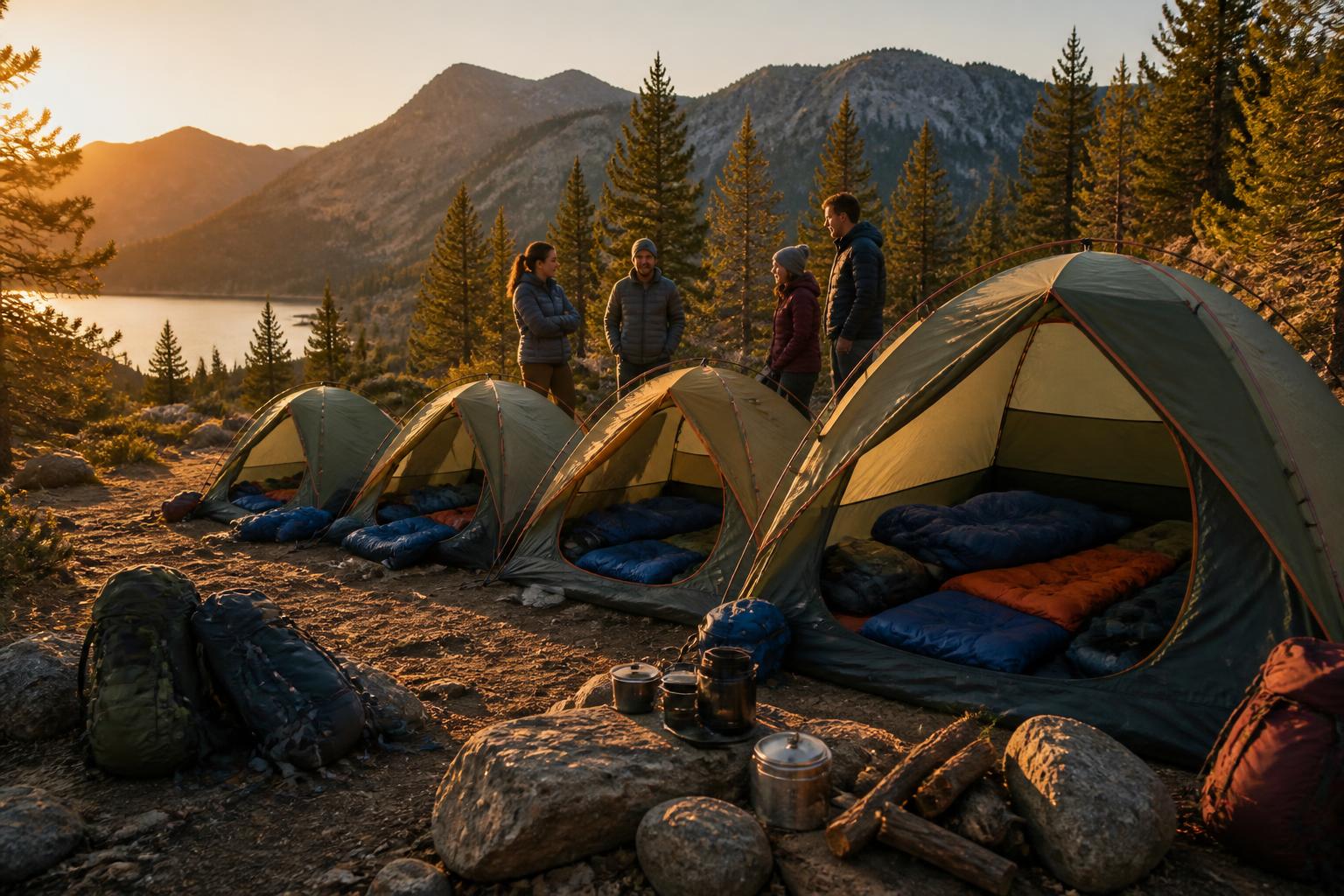
When the Person Rating Falls Short
Manufacturers assume you’ll pack thin sleeping pads in a tight grid with nothing else inside. That rating holds only if you use pads 2 inches or thinner and store all gear outside under a tarp or vestibule. Add a 6-inch queen air mattress, a 30-inch-wide cot, or a duffel bag, and the usable floor space shrinks fast. A 6-person tent that fits two queen mattresses end-to-end leaves no room for bags — you’ll need to stash them in the car or a separate shelter. If you camp in rainy weather where gear must stay inside, treat the rating as two fewer people than printed.
The Slope Factor
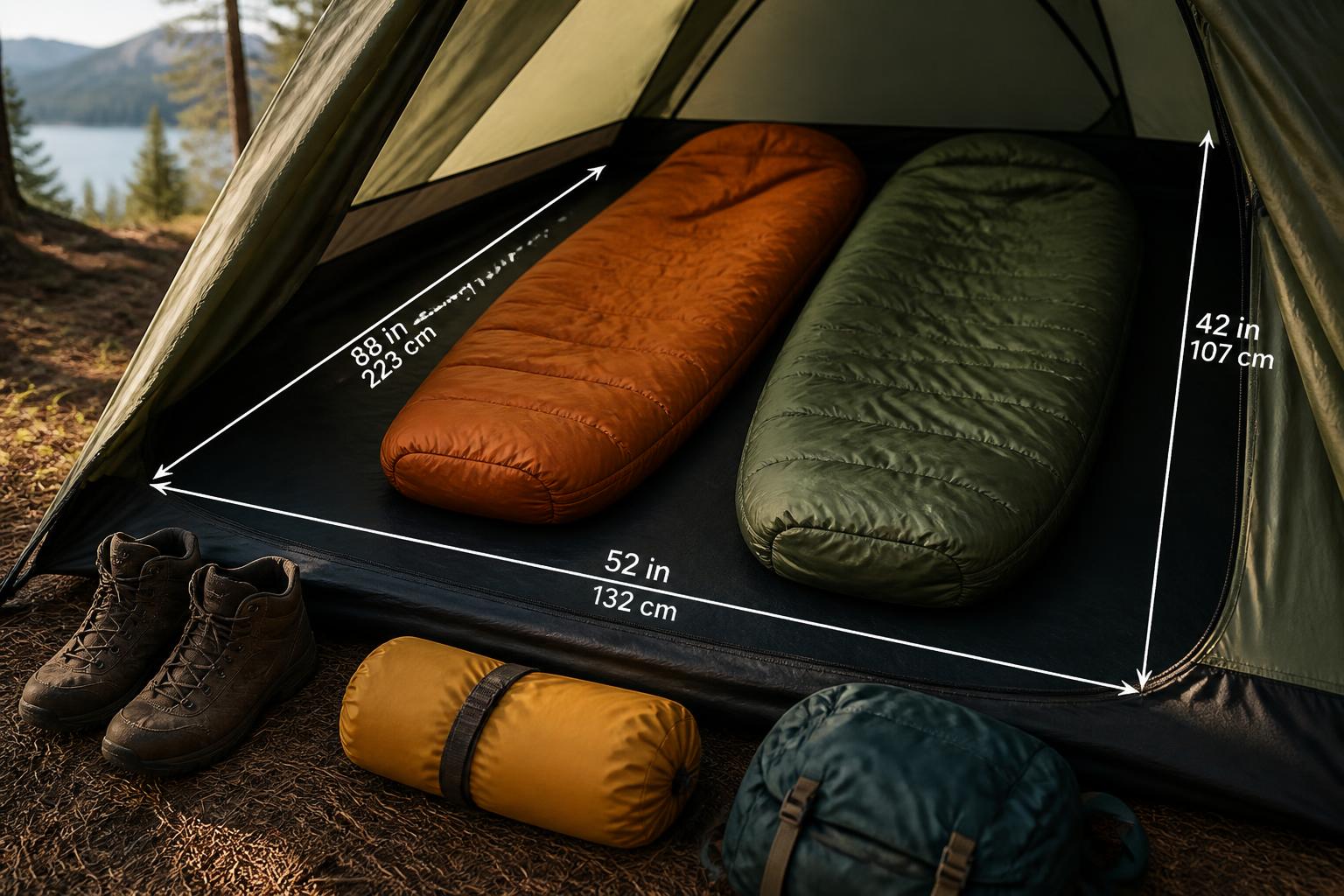
Dome tents lose usable width near the walls. A tent with an 8-foot floor width might offer only 6 feet of usable sleeping width once you account for the sloping walls. Straight-wall cabin tents preserve more of their floor area, but they’re heavier and bulkier. Always measure the usable floor at mattress height, not at ground level.
Floor Dimensions and Real Capacity by Size
The table below shows typical dimensions for common ratings and what each actually holds in real-world use.
| Tent Size | Typical Floor (ft) | Real Capacity (adults + gear) | Max Air Mattresses / Cots |
|---|---|---|---|
| 2-Person | 4 × 7 – 5 × 8 | 1 adult + gear, or 2 snug | 1 twin mattress (no gear) |
| 4-Person | 7 × 7 – 8 × 8 | 2–3 adults + gear | 2 twin or 1 full mattress |
| 6-Person | 8 × 10 – 10 × 10 | 4 adults + gear | 2 queen or 3 twin mattresses |
| 8-Person | 10 × 12 – 12 × 14 | 5–6 adults + gear | 3 queen or 2 full cots |
2-Person Tents: Backpacking Only
Floor area is roughly 4.5 × 7.5 ft. Two 20-inch sleeping pads fit, but packs must go in the vestibule. The Clostnature Lightweight Backpacking Tent and LANSHAN Ultralight Tent both match this spec — under 3 lb and pack small. Two adults sharing one will touch shoulders and have no room to sit up together. If you’re sharing with a partner for more than one night, a 3-person tent adds about a foot of width for an extra pound, which is a worthwhile trade-off.
4-Person Tents: Couple Plus One Child
A 4-person tent typically has a 7 × 7 ft floor (49 sq ft). That fits two twin air mattresses (39 in wide each) with a narrow aisle. Four adults will be shoulder-to-shoulder. The real use case: a couple plus one or two small kids, with backpacks in a vestibule. Cabin-style 4-person tents are taller (5 ft peak) but heavier (15+ lb). Dome 4-person tents are lighter but have severe wall slope — a 6-ft-tall person cannot sit upright at the edges.
6-Person Tents: Small Family Sweet Spot
Floor space of 80–100 sq ft comfortably fits a family of four with gear. Two queen air mattresses (60 × 80 in each) placed side-by-side require at least 10 ft of width — most 6-person tents are 8–10 ft wide, so check the specific width. The KTT Instant Tent 6-8 Person has an interior dimension of 11 × 7.9 ft, which fits two full-size air mattresses (6.7 × 5 ft) but leaves no floor space for bags. For a family of four with two adults and two teens, consider an 8-person if you want to bring gear inside.
8-Person Tents: Standing Room, Not Eight Sleepers
These tents are essentially canvas cabins with 6–7 ft peak height and 120+ sq ft of floor. You can stand upright — a meaningful upgrade for changing clothes or playing games in rain. However, eight adults sleeping on pads will be as tight as a 2-person backpacking tent. Real capacity: five to six people with gear, or a large family with cots. Most 8-person tents are 10–12 ft wide, so three queen mattresses (60 in × 3 = 15 ft total width) will not fit side-by-side. You end up stacking mattresses in a T-shape, leaving a cramped corner.
Three Practical Tips for Sizing Up
Tip 1: Count gear as a person
For every two people, add one to the tent rating. A family of four with coolers and backpacks needs a 6-person tent minimum.
Common mistake: stuffing gear inside a rated tent and waking up with condensation on everything because airflow around the bags was blocked.
Tip 2: Compare cot width to floor slope
Cots are typically 25–30 in wide. In a dome tent, the walls slope inward — a 30-in cot near the wall may be impossible to set up straight.
Actionable step: measure from the center to the wall at cot height. If you use cots, look for a straight-wall cabin tent or one with vertical sides.
Tip 3: Prioritize peak height over person count if anyone is over 5’10”
A tent with a 4-ft peak forces tall people to stoop or lie down.
Actionable step: look for a peak height of at least 5 ft for car camping, 6 ft if you plan to stand. Cabin tents often have 6+ ft peaks.
Five Checks Before You Buy
Run through these with your trip in mind:
- Count warm bodies: List every adult and teen who will sleep in the tent every night. Not occasional visitors.
- Add gear allowance: Add 1 for a couple, 2 for a family of four (backpacks, clothing, coolers). This is your effective occupant number.
- Measure your sleeping surface: Record mattress or pad width in inches. If using cots, measure cot width and add 6 in for legs.
- Check floor width after slope: Subtract 2 ft from the tent’s published width. Divide by your mattress width (in ft). Round down — that’s the max number of side-by-side mattresses.
- Test headroom: If anyone is over 5’10”, the tent’s peak height must be above 5’6″ or you’ll be uncomfortable. For full standing, aim for 6 ft or more.
If you pass all five, the size works. If you fail on “add gear allowance” or “floor width after slope,” move up one size.
Frequently Asked Questions
How many people actually fit in a 2-person tent?
One adult with gear, or two adults who sleep close and store packs outside. For real comfort for two, buy a 3-person tent.
Can I fit a queen air mattress in a 4-person tent?
Yes — one queen fits easily with some floor space left for bags. Two queens will not fit in most 4-person tents.
What’s the minimum floor area per person for comfortable camping?
Most campers find 20–25 sq ft per person comfortable, including gear. Backpackers tolerate 10–15 sq ft. Use the larger number for car camping with air mattresses.
Do I need a footprint or ground cloth?
Yes — a footprint protects the tent floor and prevents punctures from rocks and roots. Many tents sell a custom footprint, or you can cut a tarp slightly smaller than the tent floor.

Camping Bob has spent over 20 years camping across the US — from BLM dispersed sites in the Southwest to KOA campgrounds in the Pacific Northwest. He writes practical, no-nonsense guides to help fellow campers get outdoors with confidence.