
Mountain Lion Encounters: What to Do If You See a Cougar While Camping
If you see a cougar while camping, stop immediately, do not run, and do not crouch or turn your back. Running triggers their chase instinct, and crouching makes you look like prey. Instead, face the animal, make yourself appear as large as possible, and back away slowly while maintaining eye contact. If the cougar attacks, fight back aggressively with any object at hand. This advice applies to cougar encounters across North America, but the specific behavior of the animal and your response should shift based on whether the cougar is showing curiosity, defensive posture, or active stalking—reading that difference matters more than most generic guides acknowledge.

Why Cougars Approach Campers
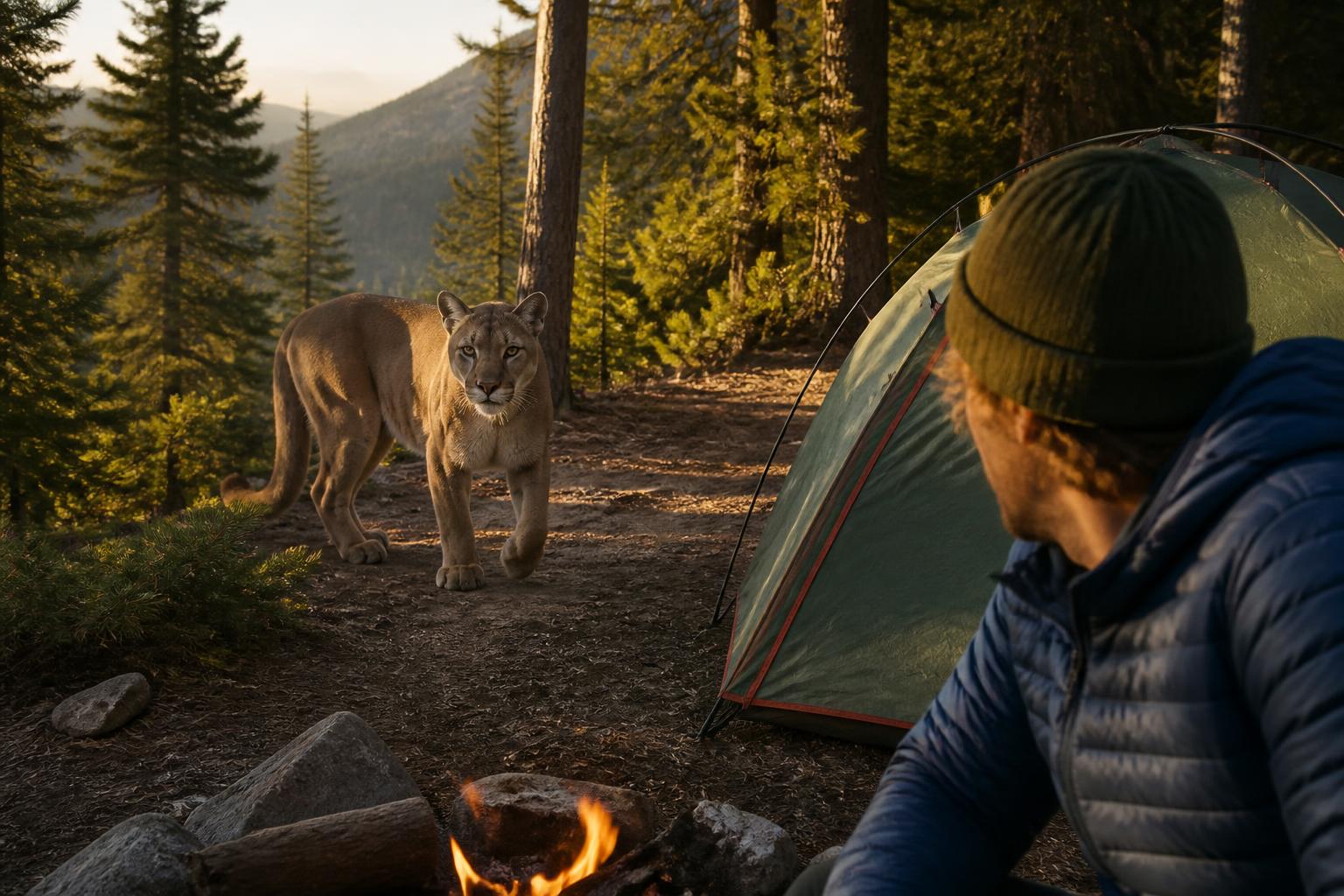
Cougars (also called mountain lions) are solitary ambush predators. They rarely hunt humans, but they may approach a campsite out of curiosity, hunger, or because they are habituated to human presence. Encounters increase in areas where deer populations are high, near water sources, or at dawn and dusk when cougars are most active. A cougar that does not immediately flee upon seeing you is either assessing you as potential prey or is defending a kill or cubs.
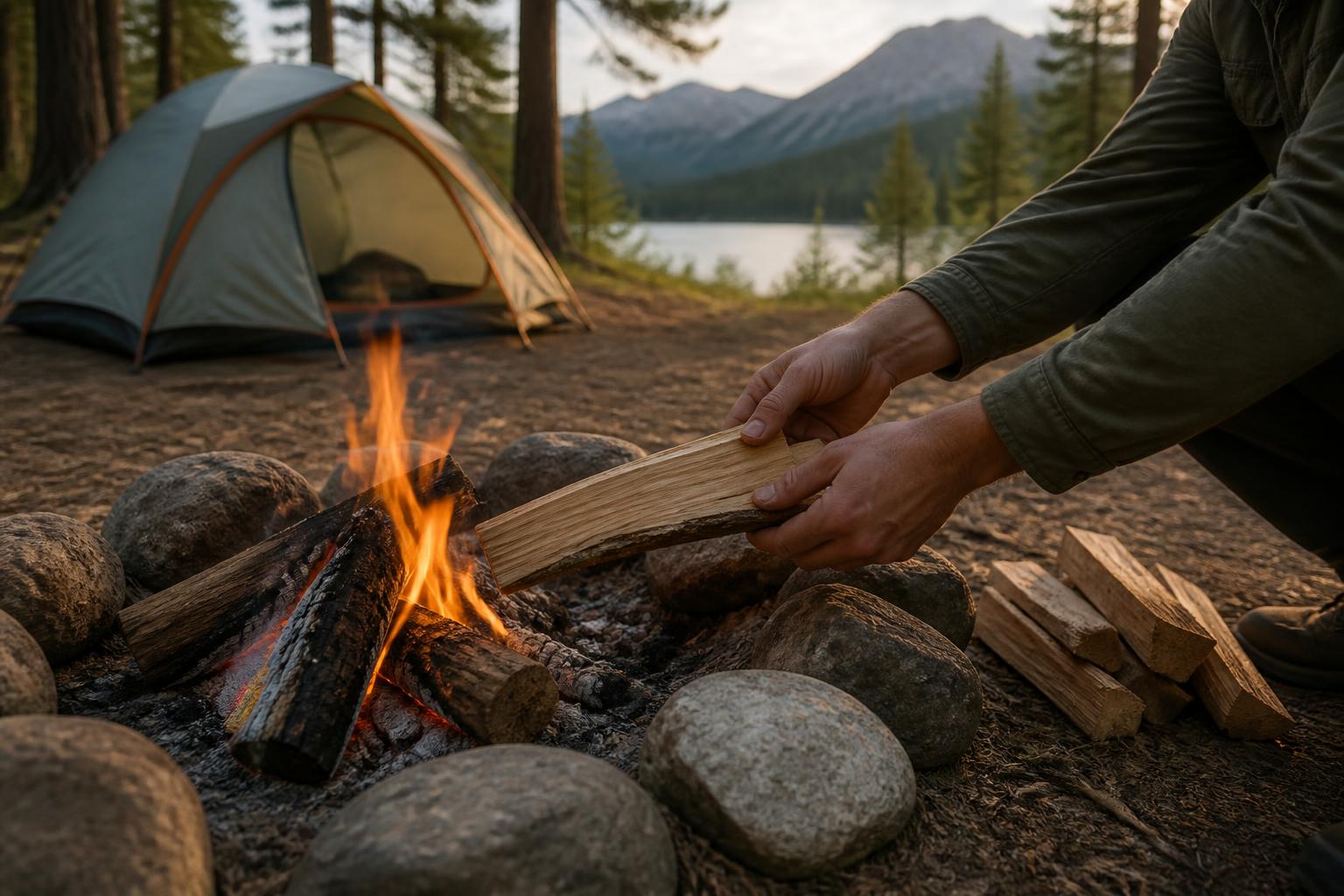
An important boundary to understand: the advice in this article is written for cougar encounters in the wilds of western North America, from the Rockies to the Pacific coast. Cougar behavior in Florida (where the Florida panther subspecies lives) or in parts of Mexico can differ in aggression level and habituation patterns. If you are camping in Florida panther habitat, check with the local wildlife agency, as the encounter protocols may emphasize different escalation thresholds.
What This Means for Your Next Camping Trip
If you camp regularly in cougar country, the practical takeaway is straightforward: you need to carry a defensive tool you can deploy instantly and keep your campsite chosen with predator awareness. Bear spray is the most effective option—it works on cougars just as well as on bears—but only if it is within arm’s reach and not packed in a stuff sack. A INTERTOOL 24-Inch Chopping Axe can also serve as a defensive tool if you carry it while splitting wood, but do not rely on a tool that requires you to close distance or swing accurately under stress.
The smarter choice: carry bear spray on your belt or hip strap during every hike and keep it in your tent vestibule at night.
Immediate Actions When You See a Cougar
The sequence below assumes the cougar has spotted you and is not fleeing. If the cougar is already running away, let it go—do not chase or follow.
Stand Your Ground and Look Big
- Raise your arms, open your jacket, or hold a backpack above your head to increase your silhouette.
- Do not crouch, kneel, or bend over – this mimics the size of a deer or small mammal.
- Use a walking stick, camp axe, or knife to appear armed if available.
Maintain Eye Contact and Back Away Slowly
- Never turn your back – cougars often attack from behind. Keep your eyes locked on the animal.
- Back away diagonally at a slow, steady pace. Do not trip or move quickly.
- Talk firmly in a low, loud voice – this reinforces that you are human and not prey.
If the Cougar Approaches Closer
- Make yourself even louder and more threatening. Yell, bang rocks together, throw sticks or rocks at the ground near the cougar (not at its head, to avoid escalating).
- Use bear spray if you carry it – aim for the face from 10–20 feet.
- Never play dead. This is a common mistake. For a cougar, a motionless target is an invitation.
How to Verify the Cougar’s Intent
The cougar’s body language tells you whether to back away slowly or brace for an attack. Check these signals:
- Ears forward, tail down or swishing, crouched posture with hind legs coiled: the cougar is in stalking mode. This is the highest-risk scenario. Prepare to fight immediately and do not stop moving backward.
- Ears back, hissing, or flattened posture: the cougar is defensive (likely protecting cubs or a kill). Back away more slowly and give it a wide escape route.
- Ears up, relaxed tail, no direct stare: the cougar is curious or habituated but not actively hunting. Keep making noise and back away; it will likely retreat.
If you cannot clearly read these signals because the cougar is partially hidden or the light is low, default to stalking protocol. The cost of treating curiosity as stalking is low; the cost of treating stalking as curiosity is severe.
What Can Go Wrong: Limitations of Common Defensive Options
Bear spray is not foolproof. In a strong wind, spray can blow back into your face, and in heavy rain, the spray stream may not reach the cougar’s face. If you cannot get a clean shot at the face from inside 20 feet, the spray is unlikely to stop an attack. An axe or knife requires you to be within striking range and to land a blow on a fast-moving target—most people miss completely under adrenaline. Shouting and posturing work on most cougars, but not on habituated animals that have lost their fear of humans. If the cougar does not back away after 30–60 seconds of posturing and noise, be ready to escalate to active defense immediately.
If the Cougar Attacks
A cougar attack is rare but requires immediate aggression. Fight back with everything you have. Use rocks, sticks, the axe, or even your fists – aim for the eyes, nose, and throat. Do not stop fighting until the animal retreats. Most attacks end when the cougar realizes you are too dangerous to subdue. The moment the cougar releases its grip, do not turn and run—keep facing it and back away while continuing to yell and swing.
Expert Tips for Prevention and Reaction
Tip 1: Camp away from cover and game trails.
Actionable step: Set up your tent at least 200 yards from dense brush, rocky overhangs, or deer trails. Cougars use these as stalking corridors.
Common mistake: Pitching a tent against a tree or rock wall for shelter – this blocks your escape and gives the cougar a blind spot.
Tip 2: Keep a clean camp and secure food.
Actionable step: Store all food, trash, and scented items in bear-proof canisters or hang them 10 feet up and 4 feet from a tree trunk. Cougars are attracted to campsites that smell like prey (e.g., meat scraps).
Common mistake: Leaving dirty dishes out overnight – the smell draws in raccoons and deer, which then attract cougars.
Tip 3: Travel in groups and make noise.
Actionable step: On hikes, carry a whistle or talk loudly to warn cougars of your presence. Children and small pets are most vulnerable; keep them close.
Common mistake: Hiking silently to enjoy nature – a surprised cougar is more likely to perceive you as a threat.
Quick Decision Aid: What to Check in a Cougar Encounter
Use this mental checklist the moment you spot a cougar. Each item is a pass/fail – if you answer “no” to any, correct your action immediately.
- □ Have I stopped moving and am not running?
- □ Am I facing the cougar with my chest and shoulders square?
- □ Am I making myself as large as possible (arms raised, jacket open)?
- □ Am I maintaining eye contact and backing away slowly (not turning)?
- □ Do I have an object (stick, rock, axe, spray) ready to defend?
- □ Am I speaking in a firm, loud voice?
- □ Have I confirmed the cougar’s body language (ears forward = stalking; ears back = defensive)?
Do’s and Don’ts at a Glance
| Do | Don’t |
|---|---|
| Stop and stand tall | Run or jog away |
| Maintain eye contact | Turn your back |
| Back away slowly | Crouch, kneel, or bend over |
| Make loud noises | Speak in a high, frightened tone |
| Fight back aggressively if attacked | Play dead |
Cougar encounters are rare, but knowing these steps can prevent a frightening moment from becoming a tragedy. The key is to act like a predator, not prey: stand your ground, look formidable, and be ready to defend yourself. If you camp in cougar country, carry bear spray on your hip, not in your pack, and practice deploying it once before your trip so you are not fumbling with a safety clip during an encounter.

Camping Bob has spent over 20 years camping across the US — from BLM dispersed sites in the Southwest to KOA campgrounds in the Pacific Northwest. He writes practical, no-nonsense guides to help fellow campers get outdoors with confidence.