
Bear Safety for Campers: Food Storage, Bear Spray & What to Do If You See One
Bear safety comes down to three actions you can control: store food and scented items where bears can’t reach them, carry bear spray where you can grab it instantly, and know exactly what to do during an encounter. The most common failure campers make is doing just one of these well while neglecting another—like hanging food properly but leaving a tube of toothpaste in the tent. Detect that early by running a quick pre-sleep check: anything with a smell (food, trash, toiletries, even empty wrappers) must be in a bear-resistant container or hung at least 100 feet from your sleeping area. Bear spray buried at the bottom of a backpack is just dead weight—clip it to your belt or pack strap where your hand goes automatically.
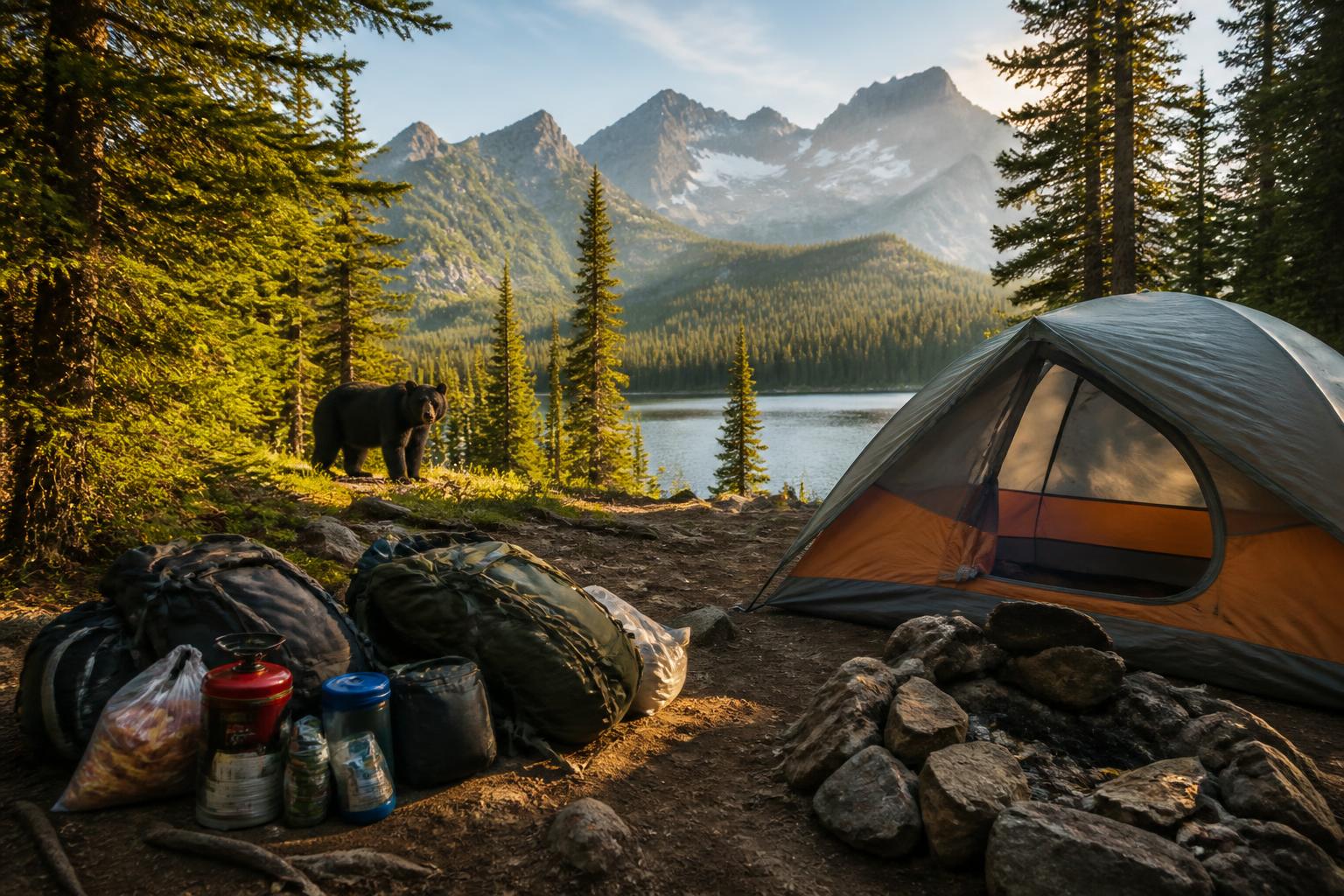
The Most Common Bear Safety Mistake (and How to Catch It Early)
Most people fixate on hanging their food bag and assume the rest will take care of itself. The real failure point is the scent trail you leave between your cook area and your tent. Bears don’t read camping guides—they follow their noses. If you cook, eat, or spill anything within 100 feet of where you sleep, a bear will eventually investigate that distance.
Likely cause: You carried a scented snack into your tent for “just a minute” or you stored your toothpaste in your daypack inside the vestibule. A single odor point is enough.
Checkpoint before dark: Walk the 100-foot line from your tent to your food storage area. Sniff the air at tent height. If you smell anything from last night’s dinner, you’re too close. Relocate your cooking area or move your tent.
If You Can’t Relocate Your Cooking Area
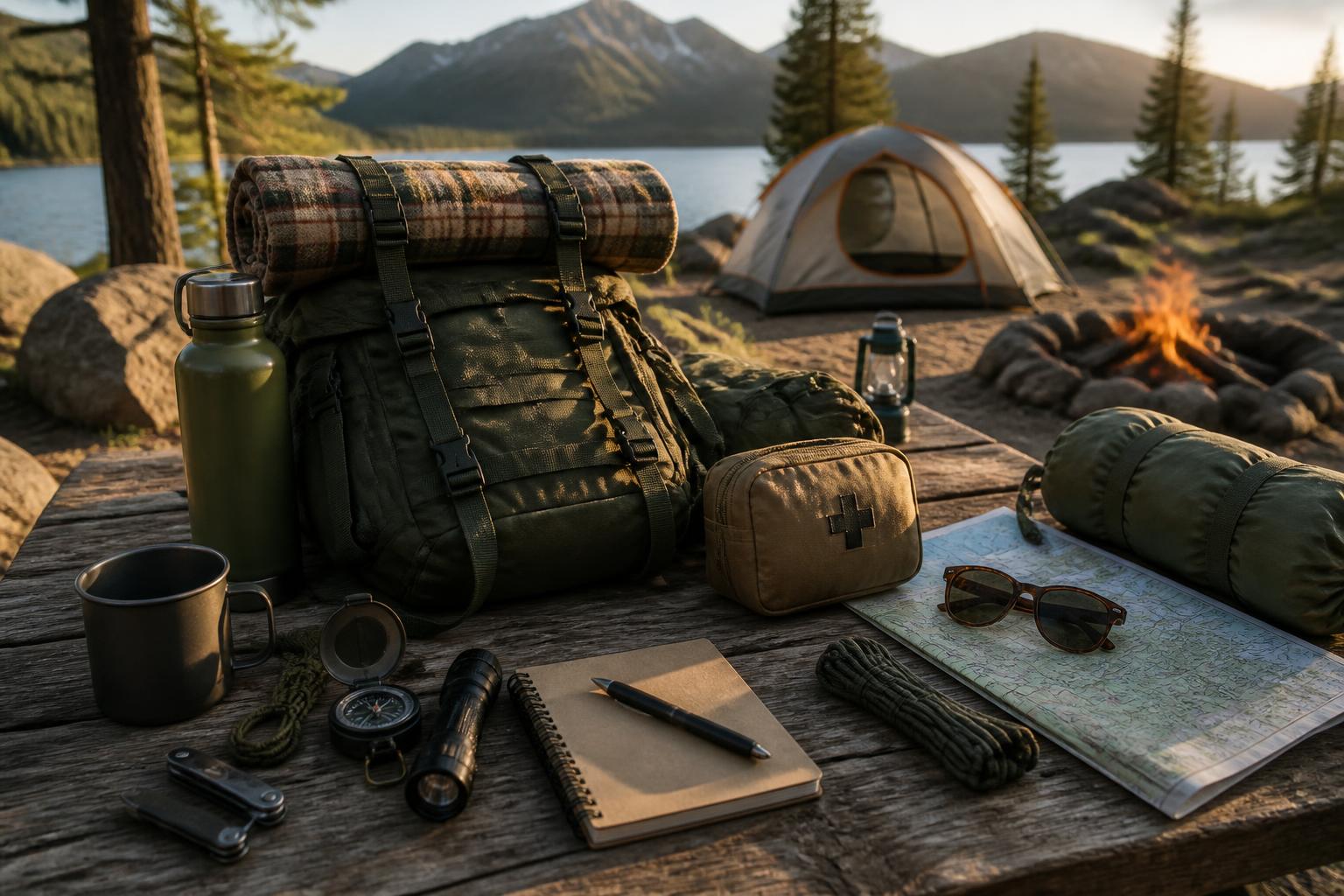
Sometimes the campsite layout forces your cooking area and tent closer than 100 feet—narrow ledges, dense brush, or crowded campgrounds. When that happens, your only safe option is to use a hard-sided bear canister for all food and scented items, and store that canister as far from the tent as terrain allows (even 50 feet is better than nothing). Do not attempt a hang if the closest tree is too low or too close to your tent. A hang that’s only 8 feet high is worse than no hang because it teaches a bear where to find food near your tent. Accept a canister as your backup plan instead of fudging the distance.
Step 1: Prepare Your Gear and Knowledge Before You Go
The wrong gear or missing knowledge is the number one reason bear spray gets left in the car and food bags get hung too low. Run through this short pre-trip sequence.
Choose a Food Storage Method That Matches Your Destination
- National parks and many wilderness areas require a certified bear canister (BearVault, Garcia, or similar). Check regulations before you leave.
- Backcountry with no requirement: use a PCT-style hang, but only if you have 30-plus feet of rope and a tree with a branch at least 15 feet high that won’t sag under the weight.
- Car camping: use a bear-resistant food locker (provided at many campgrounds) or store your cooler in a hard-sided vehicle with no food left inside overnight.
- Branch point: If you arrive at your site and no suitable tree exists for a hang, treat the area as unsuitable for a hang and revert to a canister or vehicle storage. Do not attempt a low hang as a shortcut.
Make Sure Your Bear Spray Is EPA-Registered
Look for “bear deterrent” on the label, and check these minimum specs:
- At least 7.9 oz (225 g) net weight
- Spray range of 30+ feet
- Holster included or compatible
Two reliable options that meet those criteria:
| Product | Net Weight | Spray Range | Burst Duration | Special Feature |
|---|---|---|---|---|
| Counter Assault Bear Spray (10.2 oz) | 10.2 oz | 44 ft | 10 seconds | Works on bears, mountain lions, coyotes |
| SABRE Magnum 120 (92.4 g) | 3.26 oz | 12 ft | 35 bursts | Triple formula includes CS gas and UV dye |
The Counter Assault is purpose-built for bear defense with longer range and larger payload. The SABRE’s 12-foot range is too short for a charging bear—use it only as a backup for smaller threats.
Know Your Bear Species
- Grizzly or brown bear: Humped shoulder, dish-shaped face, long claws. Range includes Alaska, western Canada, and scattered areas in the northern Rockies (Yellowstone, Glacier).
- Black bear: No hump, straight facial profile, shorter claws. Range covers most of the U.S. and Canada.
- Defensive response differs: Grizzly means play dead. Black bear means fight back. Learn this distinction before you go.
Step 2: Set Up Your Campsite to Eliminate Odors
Your goal is to create a sterile zone around your sleeping area. Follow these ordered steps at every camp.
- Choose your tent spot at least 100 feet upwind of your cooking area. Ideally 200 feet if terrain allows.
- Set up a designated cooking and eating zone. Do not eat anywhere else. Keep all food, trash, and scented items (toiletries, sunscreen, fuel canisters) in that zone until they go into storage.
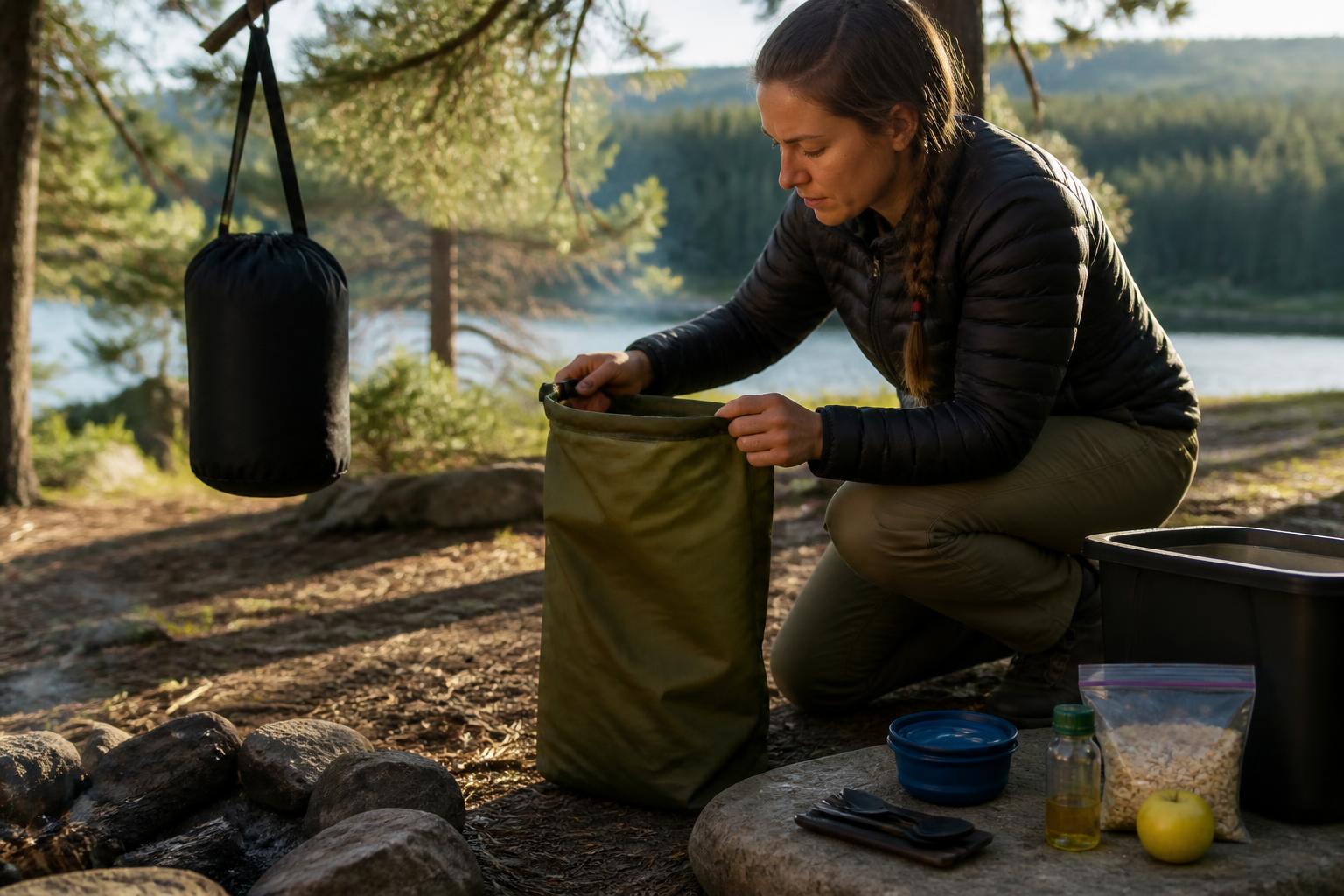
- Store all smelly items before dark. For a bear canister, place it on the ground 100-plus feet from the tent. Do not anchor it—bears can roll it away but won’t open it. For a hang, use the PCT counterbalance technique. The bag must be 12 to 15 feet high and 10 feet from the trunk or any branch a bear could climb.
- Wash dishes and dump gray water directly into a bear-resistant trash bag or a dedicated container. Do not pour it on the ground near camp.
- Double-check your tent interior. No wrappers, no toothpaste, no chapstick, no gum. Nothing scented.
Bear Safety Pre-Sleep Checklist
Run through these items every evening before you zip the tent. Each is a pass/fail check.
- [ ] All food, trash, and scented items are at least 100 feet from the tent (or inside a bear-resistant container stored at that distance).
- [ ] The cooking area is at least 100 feet from the tent and downwind.
- [ ] Your tent interior contains zero scented items—no wrappers, no toiletries, no even-smelling empty bags.
- [ ] Your bear spray is unholstered and clipped to your belt or pack strap, not buried in a pocket or pack.
- [ ] You have practiced drawing your bear spray at least once tonight (tab flick and three-second draw motion).
If any item fails, fix it immediately before going to sleep. That one fix catches 90 percent of storage failures.
Step 3: Keep Bear Spray Where You Can Actually Use It
Likely cause of failure: Bear spray is inside your pack or buried under gear during an encounter. By the time you dig it out, the bear is too close.
How to Carry
- Attach the holster to your belt or pack waist strap on your dominant side.
- Practice the draw: unholster and flick the safety tab off in under three seconds. Do this five times at home before your trip.
- Never put bear spray in a zippered pocket or inside your main pack.
When to Use It
- The bear is charging (full run or fast walk toward you) and is 30 to 40 feet away.
- The bear is exhibiting aggressive behavior (pawing the ground, huffing, snapping jaws) and not backing off after loud noise.
Friction point: Wind. If strong wind is blowing toward you, the spray cloud could blow back. Wait until the bear is closer (20 to 25 feet) and aim slightly upward to create a barrier. If wind is at your back, spray earlier.
Branch scenario: If the wind is too strong (sustained 15+ mph directly in your face) and a bear is charging, you cannot rely on spray to create an effective cloud. In that moment, your only option is to stand your ground, make yourself big, and shout—spray at the last possible second (closer than 15 feet) aiming low toward the bear’s face. Accept that the spray may partially blow back; a partial hit is still better than no spray.
Success check after using spray: The bear should turn away, cough, and leave the area. If it continues, you have a second burst left—save at least a three-second burst. Back away slowly while keeping the can pointed at the bear.
Step 4: React During an Encounter
Your response changes based on the bear’s behavior.
Bear Doesn’t See You
Freeze. Do not make eye contact. Quietly back away the way you came. If it is a grizzly, avoid sudden noise. For black bears, speak calmly and back away.
Bear Sees You but Is Not Aggressive
Stand still. Speak in a low, calm voice. Raise your arms to look bigger. Slowly back away sideways. If the bear stands on hind legs, it is sniffing—do not run.
Bear Bluffs or Fake Charges
Hold your ground. Yell, bang pots, make yourself big. If you have spray, remove the safety and aim. If the bear breaks into a full charge, spray at 30 feet (44-foot-range spray) or closer if using a shorter-range can.
If the Bear Makes Contact
This is the stop-and-escalate threshold. If the bear swipes, bites, or knocks you down, your priority shifts from deterrence to survival. For a grizzly, immediately drop to your stomach, cover your neck with your hands, and play dead. Spread your legs to prevent the bear from rolling you. Stay silent—a grizzly often loses interest if it perceives no threat. For a black bear, do not play dead. Fight back with anything available: rocks, sticks, your bear spray can as a blunt weapon. Target the face and eyes.
When to stop DIY steps and escalate: If a bear makes physical contact or you are bleeding, stop trying to scare it away. Activate your satellite messenger or call 911 if cell service exists. Do not attempt to walk out if you are injured—stay put, treat wounds with the first-aid kit, and wait for help. If you can still move and the bear has left, evacuate to the nearest trailhead and report the incident to park authorities or local wildlife officials. Your safety plan must include a communication device (satellite messenger or inReach) when camping in bear country with no cell service.

Camping Bob has spent over 20 years camping across the US — from BLM dispersed sites in the Southwest to KOA campgrounds in the Pacific Northwest. He writes practical, no-nonsense guides to help fellow campers get outdoors with confidence.