
How to Prevent Tick Bites While Camping: Permethrin, Checks & Removal
The most effective way to prevent tick bites while camping is to treat your clothing and gear with permethrin before you leave home, apply an EPA-registered repellent to exposed skin, and perform a full-body tick check before getting into your tent or vehicle. Each layer adds redundancy, and skipping any one increases your odds of a missed tick. The decision point that changes your approach is how much water you expect to encounter—that determines which skin repellent works best for your trip.
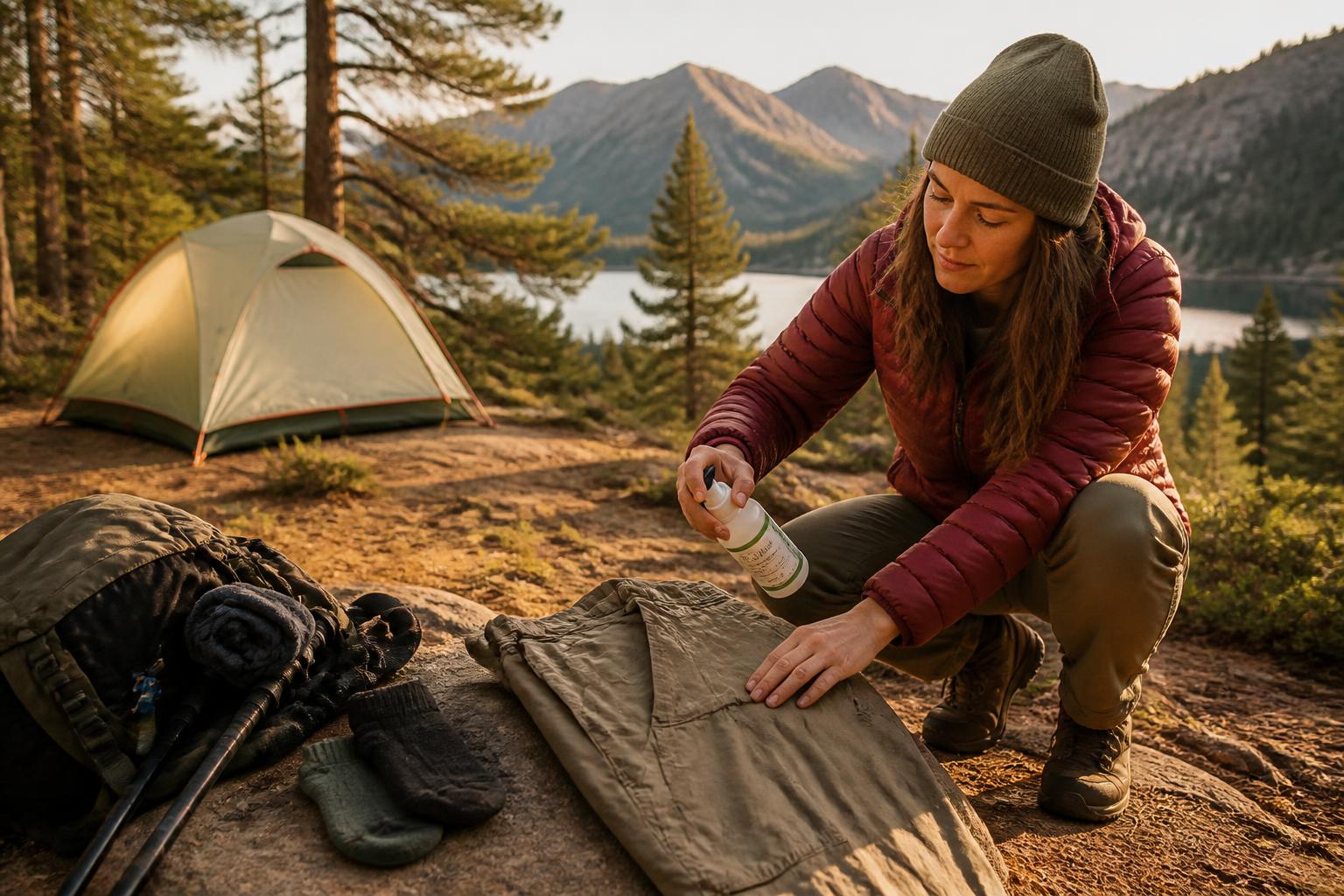
Pretreat Clothing and Gear Before You Leave
Permethrin is a synthetic insecticide that bonds to fabric fibers and kills ticks on contact. Unlike DEET, which evaporates off your skin, permethrin stays active on clothing through multiple washes. This is your first and most durable line of defense.
How to apply it:
– Lay clothing flat outdoors or in a well-ventilated area away from pets and children.
– Spray each side until the fabric is damp but not soaking. Over-saturating wastes product and extends drying time.
– Allow items to dry completely—usually 2–4 hours depending on humidity. Treated fabric must be dry before wear.
– One treatment lasts through about six wash cycles or six weeks of cumulative UV exposure, whichever comes first.
What to treat: long-sleeve shirts, pants, socks, boots, and your tent’s floor or footprint. A single 24-ounce bottle of 0.5% permethrin spray covers roughly one full outfit plus a tent vestibule area.
What not to treat: underwear, skin, or clothing you plan to sleep in. Permethrin is not for direct skin application, and treating sleepwear increases unnecessary exposure.
Friction point: Sunlight degrades permethrin faster than washing does. Store treated gear in a dark bag or closet when not in use. If you camp in high-UV environments, plan to retreat partway through the season even if you haven’t hit six washes yet.
Verification path: Check the bottle label for specific drying time and wash durability. Some brands require two treatments per season for heavy-use campers. If you’re unsure whether a treatment is still active, retreat rather than guess.
Choose the Right Skin Repellent for Your Conditions
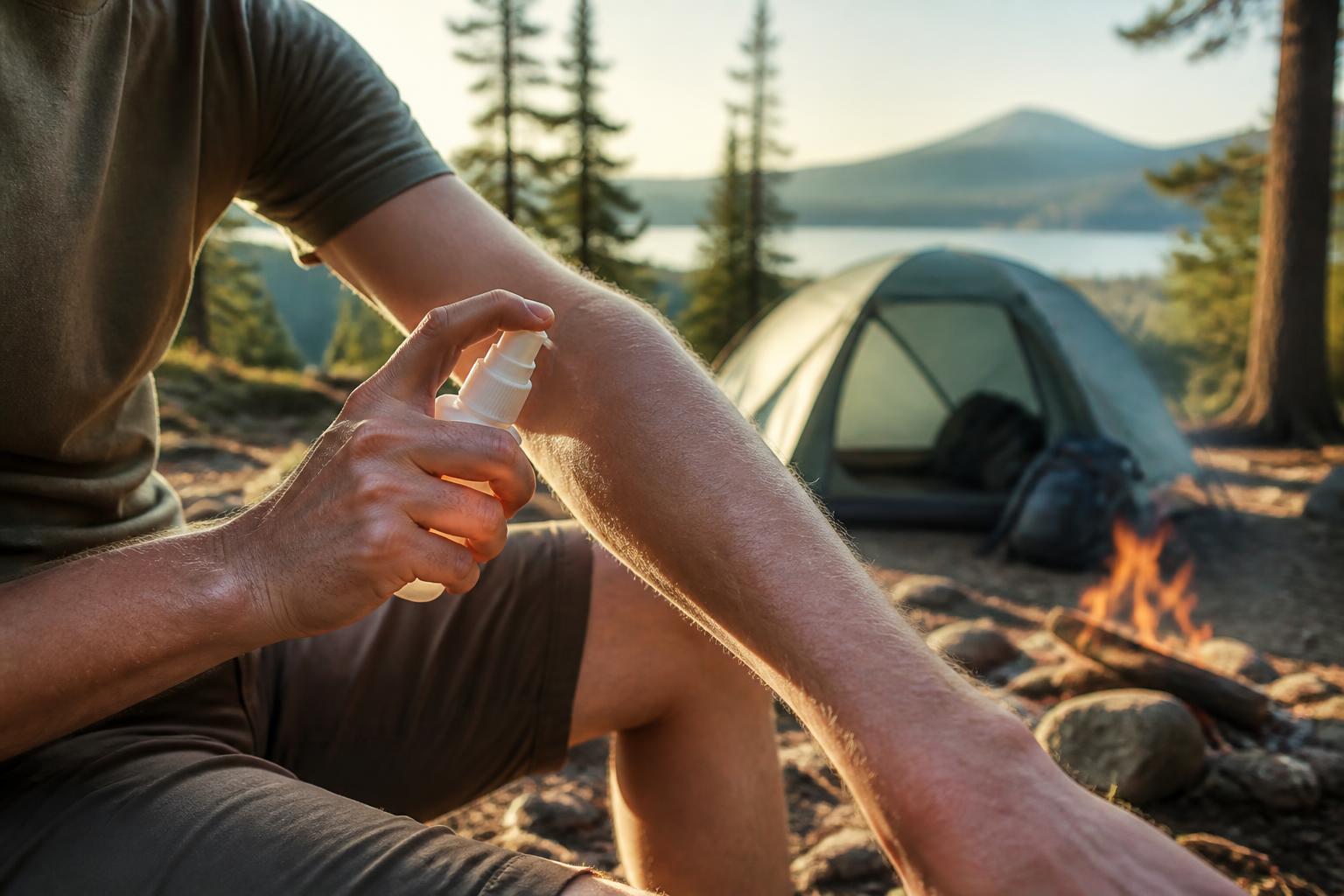
Permethrin covers your clothes, but ticks can still crawl onto exposed skin. An EPA-registered repellent is your second layer. Two options work best for ticks, and the right choice depends on conditions.
DEET 20–30%: Lasts 4–8 hours. Proven baseline for dry conditions. Reapply after heavy sweating or wading through water. DEET at this concentration is the most studied tick repellent and works reliably across most scenarios.
Picaridin 20%: Lasts 8–12 hours. Feels less greasy on skin. Holds up better in wet conditions—rain or stream crossings won’t wash it off as quickly. Critically, picaridin won’t damage synthetic tent coatings, fishing line, or technical gear the way high-concentration DEET can.
When to choose which: If you’re car camping in dry conditions and want maximum repellency per application, DEET at 30% is the more proven baseline. If you’re crossing streams, hiking in rain, or using expensive gear you don’t want to damage, picaridin is the better choice because it stays effective longer without degrading equipment.
Friction point to watch for: DEET concentrations above 30% offer no additional protection time and increase skin irritation risk. Stick to 20–30%. Also, DEET can damage plastics and synthetic fabrics—avoid getting it on tent zippers, sunglasses, or your phone screen.
Failure mode: If you apply repellent only to visible skin but miss the back of your neck or behind your knees, ticks will find those spots. Be systematic: apply to hands first, then work up each arm, then legs, then neck and ears.
Perform Tick Checks at Three Defined Checkpoints
Ticks prefer warm, dark, concealed areas. A glance at your legs isn’t enough. Use these checkpoints as non-negotiable stops during your trip. Each checkpoint catches ticks at different stages of attachment, and missing one increases your risk.
Checkpoint 1: After Each Hike or Bushwhack Session
- Remove and shake out clothing before entering camp. Fold garments inside-out and inspect seams.
- Run your fingers through your scalp and behind your ears—nymph-stage ticks are poppy-seed size and nearly invisible.
- Check armpits, groin, behind the knees, and waistband line where clothing presses against skin.
Checkpoint 2: Before Entering Your Tent or Vehicle
- Strip down to underwear inside a well-lit area. Use a headlamp if it’s dusk.
- Use a handheld mirror for hard-to-see spots: back of neck, lower back, and between shoulder blades.
- Inspect gear: fold seams of your backpack, chair, or camp pillow where ticks can hitchhike. A tick that hasn’t attached yet can crawl off gear and onto you later.
Checkpoint 3: End-of-Day Shower Within Two Hours
- Water won’t flush embedded ticks, but the act of scrubbing gives you a second full-body pass. Use a washcloth or your hands to feel for any small bumps or scabs that might be a tick.
- Pay special attention to areas you visually checked earlier—showering adds a tactile layer that visual inspection misses.
Failure mode: Visual-only checks miss nymph-stage ticks. Always use your fingers to feel for small bumps on the scalp, behind ears, and in skin folds. If you’re camping alone, use a compact handheld mirror and check systematically from head to toe.
Remove an Embedded Tick Correctly and Quickly
If you find an attached tick during a check, removal within 24 hours dramatically reduces the risk of pathogen transmission. The right tool is fine-tipped tweezers—not matches, petroleum jelly, nail polish, or alcohol. Those methods either cause the tick to regurgitate or don’t remove it at all.
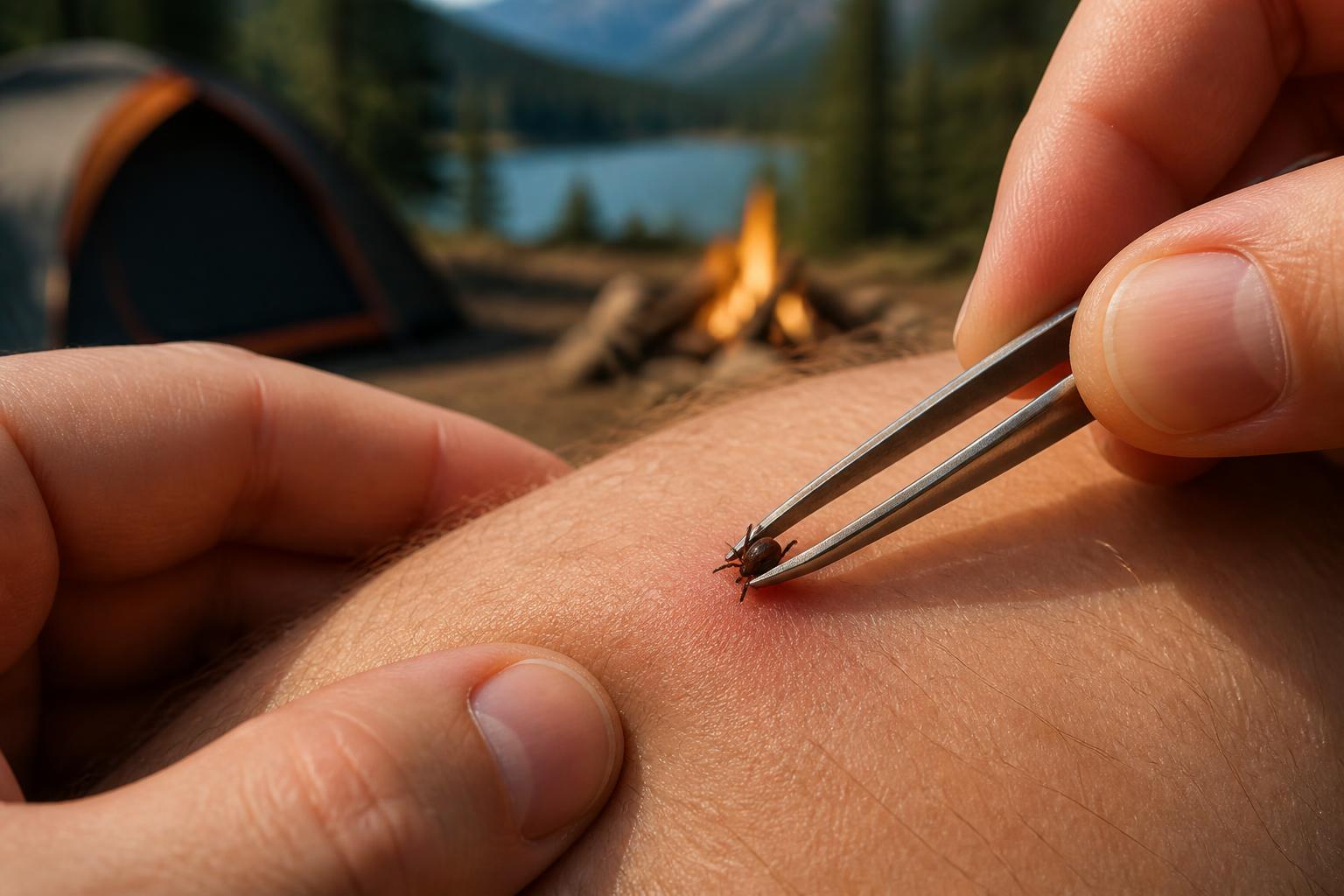
Step 1: Grasp as close to the skin surface as possible. Use the tips of the tweezers to grab the tick by its mouthparts, not the body. Squeezing the body can inject more saliva into the bite, increasing disease risk.
Step 2: Pull upward with steady, even pressure. Do not twist or jerk. Twisting can break off the mouthparts. Keep a steady hand and pull straight out. The tick will release after a few seconds of consistent tension.
Step 3: Clean the bite area and your hands. Use rubbing alcohol or soap and water. Dispose of the tick by flushing it down the toilet or placing it in a sealed bag inside the trash. Do not crush it with your fingers.
Success check: The tick should come out intact. If mouthparts break off and remain in the skin, leave them alone—your skin will push them out naturally within a few days. Do not dig them out with a needle or blade, as that increases infection risk.
Escalation signal: If a bullseye rash appears—an expanding red circle at least two inches across that may have a central clearing—or you develop fever, chills, fatigue, or joint pain within 30 days of the bite, see a doctor. Prompt antibiotic treatment is effective, and early signs can be subtle. Also escalate if the bite site becomes hot, swollen, or intensely red within 48 hours, which may indicate a bacterial skin infection separate from tick-borne illness.
Stop threshold: If you cannot remove the tick because you don’t have fine-tipped tweezers, or if the tick’s body ruptures during removal, stop and clean the area with alcohol. Do not continue attempting removal with improper tools. Head to a clinic or urgent care if you’re unable to remove it cleanly within 24 hours of discovery.
Pre-Trip Tick Safety Checklist
Run through these five items before you load the car. Each is a pass/fail check that confirms you’re prepared.
| Check Item | Pass Condition |
|---|---|
| Clothing pretreated with permethrin | Treated within the last 6 washes or 6 weeks, stored out of direct UV |
| EPA-registered repellent packed | Bottle of DEET 20–30% or picaridin 20%, enough for reapplication |
| Fine-tipped tweezers in first-aid kit | Tweezers with pointed tips, not blunt-edged or angled |
| Hand mirror or buddy system planned | You can inspect your own back or have a partner check for you |
| Tick-removal procedure reviewed | Everyone in your group knows not to twist, squeeze the body, or use heat |
If any item fails, fix it before you go. A missing tool or expired treatment is the most common reason campers skip a step in the field.
Frequently Asked Questions
Can I use permethrin and DEET at the same time?
Yes. Permethrin goes on clothing, DEET goes on skin. They work in parallel and are safe to combine. Just make sure permethrin-treated clothing is fully dry before wearing it over DEET-treated skin.
How long does permethrin last on clothing before I need to retreat?
Approximately six washes or six weeks of cumulative outdoor exposure—whichever comes first. Sunlight degrades it faster, so store treated gear out of direct UV when not in use. If you’re unsure, retreat rather than risk a gap in protection.
Do tick checks work for nymph-stage ticks?
Nymphs are about the size of a poppy seed and harder to see. A thorough finger-comb of the scalp and running hands over the skin surface is more reliable than a visual-only check. Focus on feeling for tiny bumps rather than relying on sight alone.
What should I do if I’m allergic to DEET?
Use picaridin 20% or oil of lemon eucalyptus (OLE). OLE provides shorter protection—about 2 hours versus 8—so you’ll need to reapply more frequently in tick-heavy areas. Test any new repellent on a small patch of skin before your trip to confirm tolerance.

Camping Bob has spent over 20 years camping across the US — from BLM dispersed sites in the Southwest to KOA campgrounds in the Pacific Northwest. He writes practical, no-nonsense guides to help fellow campers get outdoors with confidence.