
Understanding the Wattage of Electric Blankets
Quick answer
- Most electric blankets use between 40 and 150 watts.
- Lower wattage means less heat, higher means more.
- Check the tag for exact wattage.
- Newer models are more efficient.
- Consider your power source: battery vs. AC.
- Wattage impacts how fast it heats up.
What to check first (do this before you drive out)
Before you head out for a camping trip and plug in that electric blanket, there are a few key things to get straight. This isn’t just about comfort; it’s about safety and making sure your gear works.
- Power Source Compatibility: Know what you’re plugging into. Are you running off a portable power station, a generator, or a vehicle’s inverter? Each has different limits. A small battery pack might not handle a blanket that draws a lot of juice.
For camping or off-grid use, consider a battery powered electric blanket designed for efficiency and portability.
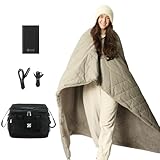
- Blanket Wattage Rating: This is crucial. The tag on your electric blanket will tell you how many watts it consumes. This number is your guide for everything else. If it’s not listed, assume it’s on the higher end for safety.
- Power Station/Inverter Capacity: Your power source needs to be able to handle the blanket’s draw, with some buffer. Look at the continuous output rating. If your blanket uses 100 watts, and your power station outputs 200 watts, you’re good. If it outputs 50 watts, you’re in trouble.
- Cord Length and Condition: Make sure the power cord is long enough to reach from your power source to where you’ll be sleeping. Inspect it for any nicks or damage. A frayed cord is a fire hazard, plain and simple.
- Temperature Settings and Usage: Understand that higher heat settings will draw more power. If you’re trying to conserve battery, stick to lower settings. It’s like driving a car – the faster you go, the more gas you burn.
Step-by-step (field workflow)
Here’s how to get your electric blanket up and running safely when you’re out in the wild.
1. Locate the Wattage Label: Find the manufacturer’s tag on your electric blanket. It usually has care instructions and electrical specs.
- Good: The label clearly states “XX Watts” or “XX W”.
- Mistake: The label is missing, illegible, or only lists volts and amps.
- Avoid: If you can’t find it, err on the side of caution and assume a higher wattage.
2. Assess Your Power Source: Check the specifications of your portable power station, generator, or vehicle inverter. Note its continuous power output in watts.
- Good: The power source clearly states its continuous output (e.g., “200W Continuous Output”).
- Mistake: Relying on the “peak” or “surge” output number, which is only for short bursts.
- Avoid: Always use the continuous rating for sustained loads like an electric blanket.
3. Compare Blanket Wattage to Source Capacity: Ensure your power source’s continuous output is significantly higher than the blanket’s wattage. A good rule of thumb is at least 20-30% buffer.
- Good: Blanket is 100W, power source is 200W+. You have plenty of headroom.
- Mistake: Power source capacity is close to or less than the blanket’s wattage.
- Avoid: Overloading your power source can damage it, shut it down, or even cause a fire.
4. Inspect the Blanket’s Power Cord: Visually check the entire length of the power cord for any cuts, abrasions, or kinks. Ensure the plug is intact.
- Good: The cord is smooth, flexible, and shows no signs of wear.
- Mistake: Using a blanket with a visibly damaged or frayed cord.
- Avoid: A damaged cord is a serious electrical hazard. Replace the blanket or cord if damaged.
5. Connect Blanket to Power Source: Plug the blanket’s power cord into the appropriate outlet on your power source.
- Good: A secure connection, no loose wires or sparks.
- Mistake: Forcing the plug if it doesn’t fit easily.
- Avoid: Ensure the plug is oriented correctly and seats firmly.
6. Turn On the Power Source: If using a generator or a power station with an on/off switch, power it up.
- Good: The power source indicator lights up, showing it’s active.
- Mistake: Forgetting to turn on the power source.
- Avoid: Simple oversight, but it means no power to your blanket.
7. Set Blanket to Low/Medium Heat: Start with the lowest or medium heat setting on the blanket’s controller.
- Good: The blanket begins to feel warm after a few minutes.
- Mistake: Immediately cranking it to the highest setting.
- Avoid: Starting low allows you to gauge comfort and manage power draw.
8. Monitor for Overheating or Issues: After 15-20 minutes, check the blanket, controller, and power source connections for any unusual heat or smells.
- Good: Everything feels normal to the touch, and the blanket is providing comfortable warmth.
- Mistake: Ignoring a cord that feels excessively hot or a strange odor.
- Avoid: Immediate shutdown and inspection if anything seems off. Safety first, always.
9. Adjust Heat as Needed: Once you’re comfortable, you can adjust the heat setting. If you notice the power source’s indicators (like battery level) dropping faster than expected, consider lowering the heat.
- Good: You find a comfortable setting that balances warmth and power consumption.
- Mistake: Running it on high all night if you have limited power.
- Avoid: Be mindful of your power reserves, especially on multi-day trips.
10. Turn Off When Not in Use: Always turn off the blanket and the power source when you get up or leave your campsite.
- Good: Blanket controller is off, and power source is powered down or in standby.
- Mistake: Leaving it on “just in case.”
- Avoid: Wastes power and is a potential safety risk if something malfunctions.
Common mistakes (and what happens if you ignore them)
| Mistake | What it causes | Fix |
|---|---|---|
| Ignoring the blanket’s wattage | Overloading a portable power station or inverter, leading to shutdowns or damage. | Always check the blanket’s wattage and compare it to your power source’s continuous output capacity. Ensure your source has at least 20-30% buffer. |
| Using a damaged power cord | Fire hazard, electrical shock. | Inspect the cord thoroughly before each use. If there are any cuts, frays, or damage, do not use the blanket. Replace the blanket or cord if possible. |
| Plugging into an underpowered source | Power source shuts down, blanket doesn’t heat, or damage to the source. | Verify your power source’s continuous wattage rating. It must exceed the blanket’s wattage. For example, a 100W blanket needs a source rated for at least 120-130W continuous. |
| Running on highest heat setting constantly | Drains power source quickly, potential for overheating the blanket. | Start on a lower setting and gradually increase. Monitor your power source’s battery level and adjust heat as needed to conserve energy. |
| Forgetting to turn off power source | Unnecessary battery drain, potential for damage if left on indefinitely. | Make it a habit to turn off the power source when the blanket is off and not in use. Consider using a power station with auto-shutoff features. |
| Using an adapter not designed for the load | Overheating the adapter, potential fire hazard, poor connection. | Use only the original power adapter or a certified replacement designed for your specific blanket model and power source. Avoid cheap, universal adapters. |
| Overlapping folded sections of the blanket | Uneven heating, potential for localized overheating or damage to elements. | Lay the blanket flat or drape it naturally. Avoid bunching or folding sections directly on top of each other, especially when the blanket is on. |
| Using a blanket with a vehicle inverter | Draining the car battery, potential damage to the vehicle’s electrical system. | Ensure your vehicle’s alternator can handle the continuous load. For longer durations, a dedicated portable power station is usually a better, safer choice. Check your vehicle manual. |
| Not checking temperature settings | Blanket gets too hot or not hot enough, wasting energy. | Familiarize yourself with the blanket’s different heat settings and how they affect warmth and power consumption. Test settings before you get too cold or too warm. |
| Storing the blanket improperly | Damage to internal wiring or heating elements over time. | Fold it loosely or roll it without kinking the cord. Store it in a dry place away from pests. Avoid placing heavy objects on top of it. |
Decision rules (simple if/then)
- If your portable power station has a continuous output of less than 100 watts, then do not use an electric blanket rated at 100 watts or more, because it will likely overload the power station.
- If the electric blanket’s tag is unreadable or missing, then assume it uses more watts than you think and choose a higher-capacity power source, because it’s better to be safe than sorry.
- If you are using a vehicle’s cigarette lighter adapter, then check your car’s manual for the fuse rating on that circuit, because some are only rated for 10 amps (120 watts), which might not be enough for higher-wattage blankets.
- If your electric blanket feels excessively hot to the touch after 10 minutes, then immediately turn it off and unplug it, because it indicates a potential malfunction or an overload.
- If you are camping in a humid or wet environment, then be extra cautious about inspecting the power cord and connections, because moisture can increase the risk of electrical hazards.
- If you plan to run the blanket all night, then ensure your power source has enough capacity to last, or be prepared to run it on lower settings periodically, because continuous high heat will drain most portable batteries quickly.
- If you notice any sparking or unusual noises when plugging in the blanket, then stop immediately and check the connection, because this indicates a faulty connection or an incompatible plug.
- If your power source has a “peak” or “surge” wattage rating but no “continuous” rating, then look for the continuous rating, because peak is only for very short durations and not suitable for sustained loads like an electric blanket.
- If you are using a generator, then ensure it is properly ventilated and placed outdoors, away from sleeping areas, because generators produce carbon monoxide, which is dangerous.
- If the blanket’s controller feels warm during operation, that’s usually normal, but if it feels hot or you smell burning plastic, then unplug it immediately, because this is a sign of a serious issue.
FAQ
How many watts does a typical electric blanket use?
Most electric blankets designed for home use draw between 40 and 150 watts. Newer, more efficient models might be on the lower end of that spectrum.
Can I run an electric blanket off a small portable power station?
It depends on the power station’s continuous wattage output and the blanket’s wattage. A blanket using 100 watts will need a power station capable of at least 120-150 watts continuous output to run safely and efficiently.
If you’re looking for a reliable option, many battery powered electric blankets are specifically designed for efficient use with portable power stations.
Will an electric blanket drain my car battery quickly?
Yes, if plugged directly into a vehicle’s accessory outlet without the engine running, a high-wattage electric blanket can drain your car battery surprisingly fast. It’s generally better to use a portable power station for sustained use.
To avoid draining your car battery, a dedicated battery powered electric blanket with its own power source is often a better solution.
What’s the difference between watts and amps?
Watts (W) are a measure of power, representing the rate at which energy is used. Amps (A) measure the flow of electrical current. You can calculate watts by multiplying volts (V) by amps (V x A = W).
Are older electric blankets less efficient?
Generally, yes. Older models might have less sophisticated heating elements and controls, leading to higher wattage consumption for the same amount of heat compared to modern ones.
Can I use an extension cord with my electric blanket?
It’s best to avoid them if possible, especially long or thin ones, as they can cause voltage drop and reduce efficiency. If you must use one, ensure it’s rated for the blanket’s wattage and is in good condition.
What happens if I overload my power source with an electric blanket?
Your power source will likely shut itself down to protect its components. In some cases, it could lead to permanent damage to the power station or inverter, or even pose a fire risk.
Does the heat setting affect wattage?
Absolutely. Higher heat settings require more power, thus increasing the wattage draw. Lower settings use less wattage, which is ideal for conserving battery life.
What this page does NOT cover (and where to go next)
- Specific battery capacities of various portable power stations (look up reviews and specs for models).
- Detailed troubleshooting for internal blanket malfunctions (contact manufacturer support).
- How to modify or repair electric blankets (this is unsafe and voids warranties).
- The physics of heat transfer and thermodynamics (unless you’re building your own, this is advanced).
- Regulations regarding generator use in specific campgrounds (check park rules).

Camping Bob has spent over 20 years camping across the US — from BLM dispersed sites in the Southwest to KOA campgrounds in the Pacific Northwest. He writes practical, no-nonsense guides to help fellow campers get outdoors with confidence.