
Simple Ways to Check Propane Levels in Your Tank
Quick answer
- Use the hot water trick. It’s old school but works.
- Buy a simple gauge. They’re cheap and easy.
- Weigh the tank. Know the empty weight.
- Listen for the hiss. Not super accurate, but a hint.
- Smell for propane. If you smell it, check connections first.
- Call it a day and swap it if you’re unsure. Better safe than sorry.
What to check first (do this before you drive out)
Before you even think about packing the cooler, make sure your stove and heater are gassed up. Running out of propane mid-meal or on a cold night is a rookie move. Here’s what to check:
- Land manager / legality: This is about where you’re camping. Is it public land (USFS, BLM, NPS), a state park, or private? Each has its own rules, especially for campfires, but for your propane stove? Generally, it’s your gear, your call. Just be aware of any fire bans that might limit what you can cook with, even if your propane is full.
- Access/road conditions: This one’s a bit separate from propane, but crucial. Know your rig and the road. A sedan can handle pavement, but a high-clearance 4WD is needed for rougher stuff. Getting stuck because you didn’t check the road means your propane is useless anyway.
- Fire restrictions + weather + wind: Propane is great because it often works when campfires are banned. But extreme wind can make cooking tricky, and super cold temps can affect propane pressure. Always check the local forecast. High winds mean you might need to rig up a windbreak for your stove.
- Water plan + waste plan (Leave No Trace): You’ve got your propane, now think about the essentials. How are you getting water? Where’s your grey water going? Pack it in, pack it out. This is fundamental camping. Don’t let a full propane tank distract you from the basics.
- Safety (wildlife, distance to help, comms): Bears, snakes, getting lost – standard camping stuff. Let someone know where you’re going and when you expect to be back. Cell service is often spotty. Your propane stove is a tool; make sure you’re safe to use it.
Step-by-step (field workflow)
Alright, let’s get that propane situation sorted. This is how you do it, simple and effective.
1. Locate your propane tank.
- What to do: Find the actual tank connected to your stove, grill, or heater. It’s usually a standard 20lb cylinder, but could be smaller for a portable stove.
- What “good” looks like: You know where it is and can easily access it.
- Common mistake: Forgetting you have a spare tank somewhere in the truck bed. Always do a quick inventory.
2. Identify the tank type and size.
- What to do: Note if it’s a 20lb, 30lb, or a smaller disposable cylinder. This helps if you need to buy a refill or replacement.
- What “good” looks like: You can tell what kind of tank you have.
- Common mistake: Grabbing the wrong size adapter or refill bottle because you weren’t sure.
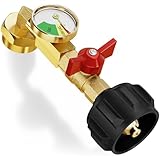
If you’re looking to save money and reduce waste, consider getting a propane refill adapter to safely refill smaller cylinders from a larger tank.
3. Perform the hot water trick.
- What to do: Pour a cup of hot (not boiling) water down the side of the tank. Let it run down. Feel the side of the tank about a minute later.
- What “good” looks like: You’ll feel a distinct temperature change. The area above the propane level will feel warmer than the area below it.
- Common mistake: Using cold water, or not waiting long enough for the temperature difference to register. Patience, my friend.
4. Interpret the temperature difference.
- What to do: The line where the tank feels cold (where the propane is) versus warm (where the empty space is) tells you the fill level.
- What “good” looks like: A clear line indicating roughly how full the tank is.
- Common mistake: Getting confused by condensation or dirt on the tank, making the temperature feel inconsistent. Wipe it down first.
5. Consider a propane gauge.
- What to do: If you camp often, invest in a simple propane level gauge. These attach to the tank valve.
- What “good” looks like: The gauge gives you a clear reading (like a fuel gauge on your car).
- Common mistake: Buying a cheap gauge that’s inaccurate or breaks after a few uses. Read reviews.
6. Use the weighing method (if you know the empty weight).
- What to do: Look for the “Tare Weight” (TW) stamped on the collar of the tank. This is the empty weight. Weigh your full tank.
- What “good” looks like: You have a scale (a simple kitchen scale for small tanks, or a luggage scale for larger ones) and can get a reading.
- Common mistake: Not knowing the TW or having an inaccurate scale. This method is best if you’ve weighed it before.
7. Calculate the remaining propane.
- What to do: Subtract the Tare Weight from the current weight. Compare that to the full weight (Tare Weight + amount of propane).
- What “good” looks like: A number that gives you a pretty solid idea of how much propane is left. For a 20lb tank, the propane itself weighs 20lbs when full.
- Common mistake: Forgetting to account for the weight of the tank itself. It’s just dead weight if it’s empty.
8. Listen for a hiss (use with caution).
- What to do: Briefly turn the valve on your propane appliance (like a stove) to ON. Listen for a faint hiss.
- What “good” looks like: A quiet, steady hiss indicates gas is flowing. No hiss means it’s likely empty.
- Common mistake: Turning the valve on too much, which can be dangerous or waste gas. A tiny, short burst is all you need.
9. Smell for propane (this is a safety check).
- What to do: Propane has a distinct rotten-egg smell added to it. If you smell it strongly around the tank or connections, that’s a problem.
- What “good” looks like: No smell of propane when the valve is off, and only a controlled flow when an appliance is on.
- Common mistake: Ignoring a faint smell. It could mean a slow leak. Always check connections if you smell anything.
10. Decide if it’s enough.
- What to do: Based on your checks, do you have enough for your trip? Consider how much you’ll use for cooking, heating, etc.
- What “good” looks like: You’re confident you have enough fuel, or you know you need to swap/refill.
- Common mistake: Guessing. If you’re on the fence, it’s usually worth swapping it out. Running out is a bummer.
Common mistakes (and what happens if you ignore them)
| Mistake | What it causes | Fix |
|---|---|---|
| Not checking propane level before leaving | Running out of fuel mid-meal or on a cold night. | Always perform a check (hot water trick or gauge) before every trip. |
| Relying solely on the “smell test” for level | Missing a low-fuel situation or ignoring a potential leak. | Use the smell test for safety (leaks), but use other methods for level checks. |
| Using cold water for the hot water trick | Inaccurate reading, leading to a false sense of how much propane is left. | Always use warm or hot tap water. |
| Not knowing the Tare Weight of your tank | Inability to accurately determine propane level by weighing. | Find and note the TW stamped on the tank collar. Weigh your tank periodically to track usage. |
| Buying a cheap, inaccurate propane gauge | Misleading fuel level readings, leading to unexpected shortages. | Invest in a reputable brand gauge. Check reviews before purchasing. |
| Forgetting to check connections for leaks | Wasting propane, potential fire hazard, or a dangerous gas leak. | Periodically check connections with soapy water (bubbles indicate a leak) or a leak detector. |
| Overfilling a tank (if refilling yourself) | Safety hazard; propane can expand and damage the tank or regulator. | Only fill to the safe fill line (usually 80%). Most refill stations handle this correctly. |
| Not considering ambient temperature effects | Propane pressure drops in cold, reducing appliance performance. | Understand that cold weather requires more propane or affects how efficiently it burns. |
| Assuming a “full” tank is actually full | Refill stations vary, and tanks can lose pressure over time. | Always verify the level yourself, especially if the tank has been sitting for a long time. |
| Not having a backup or exchange plan | Stranded without cooking fuel or heat when your primary tank runs dry. | Carry a spare smaller tank or know where exchange stations are located. |
Decision rules (simple if/then)
- If the hot water trick shows the tank is mostly cold all the way down, then you need to refill or swap the tank because it’s nearly empty.
- If you smell a strong rotten-egg odor around the tank or connections, then stop using the appliance immediately and check for leaks because propane leaks are a fire hazard.
- If you’re going on a multi-day trip and the tank is less than half full, then consider swapping it for a full one because running out unexpectedly is a major inconvenience.
- If the temperature is expected to drop below freezing, then double-check your propane level and consider carrying a larger or spare tank because cold significantly reduces propane pressure and burn efficiency.
- If you’ve never weighed your tank before, then the hot water trick or a gauge is your best bet for checking the level because you lack the baseline data for the weight method.
- If your propane gauge reads “empty” or very low, then do not rely on it for your trip because it might be faulty or the tank is indeed depleted.
- If you hear a consistent hiss from your tank or connections when no appliance is on, then turn off the valve and check for leaks immediately because this indicates a problem.
- If you are using a disposable propane cylinder and it feels very light, then assume it’s empty and replace it because these are harder to gauge accurately.
- If you are planning to use a propane heater extensively, then ensure your tank is significantly more than half full because heaters are fuel-hungry.
- If you have a propane appliance that is not igniting or is burning with a weak flame, then check your propane level first because low fuel is a common cause.
- If you are unsure about the propane level after trying multiple methods, then err on the side of caution and swap the tank because a little extra fuel is better than none.
FAQ
How accurate is the hot water trick?
It’s pretty darn accurate for a free method. The propane inside cools the tank as it evaporates, creating a distinct temperature difference. Just make sure to use warm water and wait a minute.
Are propane gauges worth the money?
If you camp regularly, absolutely. They give you a quick, visual cue without the fuss of water or scales. Just pick a good quality one.
Can I refill my own propane tank?
You can, but it’s often easier and safer to exchange an empty tank for a full one at a designated station. Refilling stations are also available if you prefer. Always follow local regulations.
How long does a 20lb propane tank last?
It depends on what you’re powering and how much you use it. A stove might last days for light cooking, while a heater can drain it in hours. Check your appliance’s BTU rating.
What if I smell propane when nothing is on?
That’s a red flag. Turn off the tank valve immediately and check all connections for leaks. Use soapy water; bubbles mean a leak. Don’t use any ignition sources.
Does cold weather affect propane levels?
Yes, cold temperatures reduce propane pressure. This means your appliances might not perform as well, or at all, if the tank is already low. You’ll need more propane in cold weather.
What’s the Tare Weight (TW) on a propane tank?
It’s the empty weight of the tank itself. You’ll find it stamped on the collar. Knowing this is key for the weighing method of checking your fuel level.
Should I just swap my tank if I’m unsure?
If you’re on the fence, yeah, it’s usually worth it. A full tank gives you peace of mind. Running out is a real buzzkill, especially if you’re in a remote spot.
What this page does NOT cover (and where to go next)
- Detailed instructions on specific propane appliance repair.
- The physics of propane vaporization and pressure curves.
- Legal requirements for transporting propane tanks across state lines.
- DIY modifications to propane stoves or heaters.
Where to go next:
- Learn about general camp stove maintenance.
- Research portable propane heater safety guidelines.
- Understand Leave No Trace principles for all your gear.
- Explore different types of camping fuel options.

Camping Bob has spent over 20 years camping across the US — from BLM dispersed sites in the Southwest to KOA campgrounds in the Pacific Northwest. He writes practical, no-nonsense guides to help fellow campers get outdoors with confidence.