
Mastering the Art of Tying Tent Guy Lines
Quick answer
- Always use the right knot for the job. It’s not just about holding, it’s about easy adjustment.
- Practice at home. Seriously, don’t learn this in the dark and rain.
- Know your anchor points. Ground stakes are key, but trees and rocks work too.
- Keep your lines taut. Slack is the enemy of a stable tent.
- Adjust as needed. Weather changes, and so should your guy lines.
- Pack a little extra cord. You never know.
What to check first (do this before you drive out)
Before you even think about pitching your tent, a few things need a once-over. This saves you headaches later, trust me.
- Land manager / legality: Who owns this patch of dirt? Is it National Forest, BLM, a state park, or private land? Each has its own set of rules for camping and how you can secure your shelter. A quick look at the managing agency’s website is your best bet.
- Access/road conditions: Can your rig actually get to your chosen spot? Think about the road – is it paved, gravel, or just a suggestion of a trail? Low-clearance vehicles will struggle on rough terrain. Mud, snow, or deep ruts can stop you cold. Know your vehicle’s limits and the road’s.
- Fire restrictions + weather + wind: This is huge. Are fires allowed? Check the local fire danger levels. A simple spark can turn into a disaster. Next, look at the forecast. Rain means you need a good pitch. Wind means you need strong anchors and tight lines. High winds can trash a tent fast.
- Water plan + waste plan (Leave No Trace): Where’s your water source? How will you treat it? And what about your waste? Pack it in, pack it out. This isn’t just a suggestion; it’s how we keep these places wild. Plan for carrying out all trash and human waste if needed.
- Safety (wildlife, distance to help, comms): What critters call this place home? Know what to do if you encounter them. Also, how far are you from civilization or help? Is there cell service? A satellite messenger or a good old-fashioned whistle can be a lifesaver.
Step-by-step (how to tie guy lines)
Alright, you’ve picked your spot. Now let’s get that tent secured. This is where knowing how to tie guy lines really pays off.
1. Stake your corners: Start by pitching your tent and staking down the main corners.
- Good: Stakes are driven in at a 45-degree angle away from the tent, dug deep.
- Mistake: Just pushing stakes in straight or at a weird angle. They’ll pull out in the first gust of wind.
2. Attach guy lines to tent loops: Connect your guy lines to the loops on your tent or rainfly.
- Good: Using a simple knot that won’t slip, like a bowline or a secure hitch.
- Mistake: Tying a knot that’s impossible to untie later, or one that slides loose.
3. Identify anchor points: Find solid spots to secure your guy lines. This could be ground stakes, sturdy trees, or large rocks.
- Good: Using stakes in firm ground, or wrapping lines around a tree trunk with protection if needed.
- Mistake: Anchoring to small, brittle saplings or loose rocks that could shift.
4. Run guy lines: Extend the lines from the tent loops to your chosen anchor points.
- Good: Running lines out at an angle that provides maximum tension and stability.
- Mistake: Letting lines sag or cross over each other, creating weak points.
5. Tie off to anchors (initial): Secure the guy lines to your anchors.
- Good: Using a knot that is easy to adjust, like a taut-line hitch.
- Mistake: Tying a permanent knot that you can’t loosen or tighten later.
6. Tension the lines: Pull the guy lines snug.
- Good: The tent fabric should be firm, with no visible sagging.
- Mistake: Leaving lines too loose. This makes your tent vulnerable to wind and rain.
7. Adjust tensioners: Use the built-in tensioners on your guy lines (or adjust your knot) to fine-tune the tautness.
- Good: Lines are tight enough to hold shape but not so tight they’re straining the tent fabric.
- Mistake: Over-tightening, which can damage seams or poles, or under-tightening, which offers no real support.
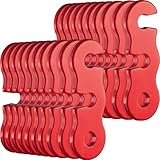
Consider upgrading to durable aluminum guy line tensioners for reliable adjustments in any weather. These small but mighty tools make fine-tuning your tent’s stability a breeze.
8. Check all lines: Walk around your tent and give each guy line a gentle tug.
- Good: All lines are taut and secure, and the tent is stable.
- Mistake: Missing a loose line. That’s the one that will fail first.
9. Add extra guy lines if needed: For windy conditions, consider using all available loops and adding extra lines if your tent allows.
- Good: Using a “storm pitch” or extra lines for added security.
- Mistake: Relying on just the minimum lines in challenging weather.
10. Secure loose ends: Tidy up any excess cordage so it doesn’t become a tripping hazard or snag on things.
- Good: Wrapping excess cord neatly or using a small toggle.
- Mistake: Letting long tails of cord dangle everywhere.
Common mistakes (and what happens if you ignore them)
| Mistake | What it causes | Fix |
|---|---|---|
| Using the wrong knot | Lines slip, tent collapses, gear gets wet or damaged. | Practice the taut-line hitch or other adjustable knots. |
| Not practicing at home | Fumbling in the dark, rain, or wind; frustration; poor pitching. | Set up your tent in your yard before your trip. Get comfortable with the knots. |
| Over-tightening guy lines | Strains tent seams, can bend or break poles, damages fabric. | Tension lines until taut, but don’t force them. Tent fabric should be firm, not stretched to its limit. |
| Under-tightening guy lines | Tent flaps in the wind, rain can pool and leak, less stable in storms. | Ensure all lines are snug. Check for sagging and adjust. |
| Anchoring to weak points | Stakes pull out, lines slip off trees, tent can blow away. | Use sturdy ground stakes in good soil, or secure to thick, healthy trees. |
| Not accounting for wind direction | Tent is vulnerable from the prevailing wind, leading to flapping and stress. | Pitch your tent so the most stable side faces the wind, and orient guy lines to provide maximum support against it. |
| Forgetting to adjust lines | As temperatures drop or rain saturates the fabric, lines can sag. As it heats up, they can become too tight. | Check and adjust guy lines periodically, especially with temperature or weather changes. |
| Not using all available guy-out points | Not getting the full stability your tent is designed for, especially in adverse conditions. | Utilize all loops on your rainfly and tent body when conditions warrant it. |
| Leaving excess cord dangling | Tripping hazard, can snag on branches or wildlife, can get tangled. | Secure excess cord with a simple wrap, a small toggle, or a dedicated cord keeper. |
| Not checking stakes/anchors periodically | Stakes can loosen in soft ground, anchors can shift. | Give stakes and anchors a quick check every so often, especially after strong winds or heavy rain. |
If your tent didn’t come with them, adding a set of high-quality guy line tensioners can significantly improve your tent’s stability and ease of setup. They’re a small investment for a much more secure pitch.
Decision rules (simple if/then)
- If the forecast calls for significant wind, then use every available guy-out point and tension them securely because wind can lift and damage your tent.
- If you’re camping in rocky soil, then consider using rock anchors or sand stakes if ground stakes won’t hold because rock can be unforgiving for standard stakes.
- If you’re unsure about the ground’s stability, then drive stakes deeper and at a steeper angle because this provides more holding power.
- If you notice your tent flapping excessively, then check and tighten your guy lines because flapping means slack, which means weakness.
- If you’re camping near a trail or in a high-traffic area, then tie off excess cordage neatly because you don’t want people (or yourself) tripping.
- If you’re using a tarp shelter, then always use a ridgeline and multiple tie-outs because tarps rely entirely on tension and anchor points.
- If it’s getting cold overnight, then re-check your guy lines before bed because fabric can contract, causing lines to sag.
- If you’re using trees as anchors, then consider using webbing or a cloth wrap to protect the bark because rope can girdle a tree over time.
- If you’re in soft, sandy soil, then use wider, longer stakes or bury your anchors deep because sand offers very little resistance.
- If you’re setting up in the rain, then get the guy lines tensioned quickly because a saggy tent will collect water and leak.
- If you have a double-wall tent, then ensure the rainfly is taut and not touching the inner tent because this is crucial for ventilation and preventing condensation.
FAQ
Q: What’s the best knot for tent guy lines?
A: The taut-line hitch is a favorite because it’s adjustable. You can tighten or loosen it easily without re-tying. A bowline is also good for a secure loop.
Q: How tight should my guy lines be?
A: They should be taut enough that the tent fabric is firm and doesn’t sag, but not so tight that you’re straining the seams or poles. Think firm, not stretched to the breaking point.
Q: What if I don’t have enough stakes?
A: Improvise! You can use heavy rocks, logs, or even bury a stuff sack filled with rocks or sand. Just make sure your anchor is solid.
Q: My tent is flapping like crazy. What’s wrong?
A: Your guy lines are too loose. Go around and tension them all up. Check your anchor points too; they might be pulling out.
Q: Do I really need to use all the guy-out points on my tent?
A: It depends on the weather. For calm conditions, maybe not. But if there’s any chance of wind or rain, use them all. That’s what they’re there for.
Q: Can I just tie my guy lines directly to trees?
A: Yes, but be careful. If the rope is thin or the tree is young, it can damage the bark. Use a wider strap or a piece of cloth between the rope and the tree to protect it.
Q: What happens if my guy lines fail in a storm?
A: Your tent could collapse, get damaged, or even blow away. This can ruin your trip and potentially damage your gear or even the environment.
Q: How do I stop my guy lines from getting tangled in my pack?
A: Coil them neatly. You can use a velcro strap, a small carabiner, or even just wrap them around your hand and then secure them with a loop.
What this page does NOT cover (and where to go next)
- Specific tent pitching techniques for different tent models.
- Detailed advice on storm-proofing your entire campsite setup.
- Advanced knot-tying beyond basic camping needs.
- Choosing the right tent for specific weather conditions.
- Repairing damaged tent fabric or poles in the field.

Camping Bob has spent over 20 years camping across the US — from BLM dispersed sites in the Southwest to KOA campgrounds in the Pacific Northwest. He writes practical, no-nonsense guides to help fellow campers get outdoors with confidence.