
Mastering Tent Guy Lines For Stability And Security
Quick answer
- Guy lines are your tent’s best friend in wind.
- Learn to anchor them tight, at the right angle.
- Use the right stakes for your ground.
- Keep them taut but don’t over-stress seams.
- Practice before you need them.
- Know your tent’s specific attachment points.
What to check first (do this before you drive out)
Before you even think about pitching your tent, a little prep work goes a long way. This isn’t just about comfort; it’s about safety.
- Land manager / legality: Who’s in charge here? Is it National Forest, BLM, a State Park, or private land? Each has its own rules. Always check the official website or call ahead. You don’t want to set up camp only to find out you’re in the wrong spot.
- Access/road conditions: Can your rig actually get to where you’re going? Think about your vehicle’s clearance and drive type. Is the road paved, gravel, or just a suggestion? Mud, snow, or washouts can make even a short trip a real challenge. Check recent reports if you can.
- Fire restrictions + weather + wind: This is crucial. Are campfires allowed? What about stoves? Fire bans are common and serious. Then, check the forecast. Wind is the big one for guy lines, but rain and temperature matter too. Pack accordingly.
- Water plan + waste plan (Leave No Trace): Where will you get water, and how will you treat it? Always carry enough or have a reliable purification method. And remember, pack it in, pack it out. This includes all trash and human waste. LNT principles are non-negotiable out there.
- Safety (wildlife, distance to help, comms): Be aware of local wildlife. Know what to do if you encounter bears, snakes, or other critters. How far are you from the nearest ranger station or town? Do you have cell service? A satellite communicator or personal locator beacon is a smart move for remote areas.
Step-by-step (field workflow)
Alright, you’ve done your homework. Now it’s time to pitch. Guy lines are key to a stable tent, especially when the weather turns.
1. Choose your spot: Find a level area, clear of rocks and debris. Look for natural windbreaks if possible, but don’t pitch under dead trees or branches.
- Good looks like: A flat, clear patch that feels sheltered.
- Common mistake: Pitching on a slope or in a drainage path. This leads to discomfort and potential flooding. Always check the ground first.
2. Lay out the tent: Unpack your tent and spread it flat on your chosen spot. Orient the door(s) away from the prevailing wind if you can.
- Good looks like: The tent body is fully spread and oriented well.
- Common mistake: Rushing and not orienting the tent properly. You’ll be fighting the wind trying to get the doors open later.
3. Insert poles and clip in: Assemble your tent poles and insert them into their sleeves or attach them to the clips. Get them loosely connected.
- Good looks like: Poles are correctly assembled and attached, giving the tent shape.
- Common mistake: Forcing poles or bending them. Be gentle; they’re not indestructible.
4. Stake down the corners: Use your stakes to secure the main corners of the tent first. Angle them away from the tent.
- Good looks like: Corners are firmly anchored, pulling the tent floor taut.
- Common mistake: Staking straight down. This offers minimal holding power, especially in soft ground. Angle is your friend.
5. Attach and tension main guy lines: Find the loops on your tent that correspond to the main poles or structural points. Attach your guy lines.
- Good looks like: Lines are attached to the tent and have a slight, even tension.
- Common mistake: Attaching lines to random points. Use the reinforced loops designed for this.
6. Stake out main guy lines: Stretch each main guy line out from the tent at roughly a 45-degree angle. Stake them firmly into the ground, again angling away from the tent.
- Good looks like: Lines are taut, creating a stable triangle shape.
- Common mistake: Staking too close to the tent. This doesn’t provide enough leverage to stabilize it against wind.
7. Adjust tension: Use the tensioners on your guy lines to get them snug. You want the tent fabric to be smooth, not baggy, but don’t over-tension.
- Good looks like: Tent walls are firm and wrinkle-free, but seams aren’t strained.
- Common mistake: Pulling so hard you warp the tent poles or rip the fabric. Gentle, even tension is key.
To make adjusting tension easier, consider upgrading to high-quality guy line tensioners. These can significantly improve the stability and longevity of your tent setup.
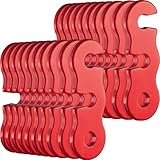
8. Secure loose ends: Wrap any excess guy line cord to keep it tidy and prevent tripping hazards.
- Good looks like: Clean, organized lines with no dangling loops.
- Common mistake: Leaving long, loose cords. They’re a tripping hazard and can snag on things.
9. Check and re-tension: After a bit, and especially if the wind picks up, check your guy lines. They can loosen as the ground settles or fabric stretches.
- Good looks like: Lines remain taut and the tent is holding its shape.
- Common mistake: Forgetting about them. A loose guy line is a useless guy line in a storm.
If your current tensioners are slipping or difficult to adjust, investing in reliable guy line tensioners can make re-tensioning a breeze and keep your tent secure.
10. Add extra guy lines (if applicable): Some tents have additional attachment points for extra stability. Use them if you anticipate rough weather.
- Good looks like: All available guy-out points are utilized for maximum stability.
- Common mistake: Not using all the provided support. Your tent manufacturer put those loops there for a reason.
Common mistakes (and what happens if you ignore them)
| Mistake | What it causes | Fix |
|---|---|---|
| Not using guy lines at all | Tent collapses in wind, leaks rain | Always deploy and tension all guy lines, especially in breezy conditions. |
| Staking guy lines straight down | Poor holding power, lines pull out easily | Angle stakes away from the tent at roughly 45 degrees. |
| Staking guy lines too close to tent | Not enough leverage to stabilize the structure | Extend stakes outward to create a wider, more stable anchor. |
| Over-tensioning guy lines | Strained seams, bent poles, fabric tears | Tension until fabric is smooth, not taut enough to warp structure. |
| Using the wrong stakes for the ground | Stakes pull out, tent blows away | Use appropriate stakes for sand, rock, or hard-packed dirt. |
| Not re-tensioning lines | Tent sags, loses stability, can flap and tear | Periodically check and re-tension lines, especially overnight. |
| Attaching lines to non-reinforced points | Fabric tears, anchor points fail | Always use the designated guy-out loops on the tent. |
| Ignoring wind direction | Tent doors flap open, wind noise is deafening | Orient tent doors away from prevailing wind if possible. |
| Not practicing at home | Fumbling in bad weather, improper setup | Set up your tent and guy lines in your yard before your trip. |
| Leaving excess cord dangling | Tripping hazard, snags on branches | Secure excess cord neatly with a knot or wrap. |
Decision rules (simple if/then)
- If the forecast calls for sustained winds over 15 mph, then deploy all available guy lines because they are essential for stability.
- If you’re camping in sandy soil, then use wider, longer sand stakes for your guy lines because standard stakes will pull out easily.
- If your tent fabric is sagging or flapping loosely, then re-tension the corresponding guy line because it has likely loosened.
- If you have a tent with a double-wall design, then ensure the rainfly is properly tensioned by its guy lines because this is critical for weather protection.
- If you’re setting up on hard, rocky ground, then consider using rocks to help anchor your guy lines if stakes won’t penetrate because they offer a more secure hold.
- If you notice a guy line pulling out of the ground, then immediately re-stake it at a better angle and potentially further out because a collapsing tent is a serious problem.
- If you’re using a brand-new tent, then do a practice setup at home with all the guy lines because you need to understand how they work before you’re in the field.
- If you’re in a very exposed campsite with no natural windbreak, then prioritize guy line tension and placement even more because you are the most vulnerable.
- If you find your guy lines are too long and create a tripping hazard, then tie them off neatly or use a cord organizer because safety is paramount.
- If you’re in a situation where you can’t get stakes into the ground (e.g., solid rock), then look for heavy rocks to tie down your guy lines because improvisation is part of camping.
- If you’re unsure about the correct angle for guy lines, then aim for a 45-degree angle away from the tent because this generally provides the best leverage.
- If you’re experiencing high winds and your tent is still unstable, then consider adding extra tie-down points using cordage and heavy objects if available because extreme conditions demand extra measures.
FAQ
Q: How tight should my tent guy lines be?
A: They should be snug enough to make the tent fabric smooth and taut, but not so tight that you feel like you’re straining the poles or fabric seams. Think firm, not stretched to its limit.
For optimal performance and ease of use, ensure your tent is equipped with durable guy line tensioners. They are essential for achieving the perfect balance of tautness without over-stressing your tent.
Q: What’s the best angle to stake guy lines?
A: A 45-degree angle away from the tent is generally ideal. This gives the stake the most leverage to resist pulling out.
Q: My stakes keep pulling out. What can I do?
A: Make sure you’re angling them correctly. If the ground is soft, try wider or longer stakes designed for those conditions. Sometimes, you can also use a heavier rock to help anchor the line.
Q: Do I really need guy lines if it’s not windy?
A: Even a gentle breeze can cause your tent to flap, which can be annoying and eventually lead to wear and tear. It’s always best practice to deploy and tension them.
Q: What happens if I don’t use my guy lines?
A: In even moderate wind, your tent can become unstable, flap violently, potentially rip, and leak. In a storm, it could collapse entirely.
Q: Can I use rocks to anchor my guy lines?
A: Yes, if stakes won’t hold or penetrate, rocks can be a good alternative. Tie your guy line securely around a heavy rock.
Q: How do I prevent tripping over guy lines?
A: Keep the cords tidy. Wrap excess length neatly, or use small cord keepers. Brightly colored cord can also help visibility.
Q: My tent came with extra guy line cord. What’s that for?
A: That’s for adding extra stability points or extending existing lines if needed, especially in challenging weather.
Q: Should I stake out the rainfly guy lines separately from the tent body?
A: Yes, the rainfly guy lines are crucial for maintaining space between the fly and the inner tent, which is key for ventilation and waterproofing. Tension them independently.
What this page does NOT cover (and where to go next)
- Specific tent pole repair techniques (look into patching kits and spare parts).
- Advanced knot-tying for camping (explore basic utility knots).
- Choosing the absolute best tent for extreme weather (research specific tent categories).
- Detailed Leave No Trace principles (find official LNT resources).
- Identifying specific wildlife risks for your region (consult local park or wildlife agency guides).

Camping Bob has spent over 20 years camping across the US — from BLM dispersed sites in the Southwest to KOA campgrounds in the Pacific Northwest. He writes practical, no-nonsense guides to help fellow campers get outdoors with confidence.