
How Long Do Small Green Propane Tanks Last?
Quick answer
- A standard 1lb green propane tank typically lasts 1-2 hours for a camp stove.
- Burn time depends heavily on the appliance and its setting.
- For longer trips, consider larger refillable tanks.
- Always check for leaks before and after use.
- Store tanks upright in a cool, dry, well-ventilated place.
- Dispose of empty tanks properly at designated recycling centers.
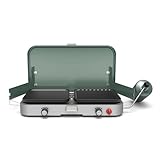
For cooking on the go, a reliable portable camping stove is essential. Pair it with a small green propane tank for quick meals.
What to check first (do this before you drive out)
Before you head out, a little prep goes a long way. Here’s your pre-game checklist.
- Land manager / legality: Who’s in charge of the land where you’re camping? Is it National Forest, BLM, a State Park, or private land? Each has its own rules. Some areas might have fire bans or specific regulations about campfires or stoves. A quick check on their official website or calling the ranger station is smart. It saves you a headache later.
- Access/road conditions: Can your rig actually get there? Is the road paved, gravel, or just a suggestion? Some forest roads can be rough. Think about ground clearance and if you need 4WD. Mud, snow, or washouts can stop you cold. I learned that the hard way once, stuck on a logging road for hours.
- Fire restrictions + weather + wind: This is a big one, especially with propane. Are there any fire bans in effect? Even if stoves are allowed, high winds can make cooking tricky and increase risk. Check the local weather forecast for temperature, precipitation, and wind speed. Don’t be the person who starts a wildfire.
- Water plan + waste plan (Leave No Trace): How will you handle water? Will you pack it all in, or is there a potable water source? And what about waste? Pack it in, pack it out. That includes all your trash, food scraps, and even used propane tanks. Leave your campsite cleaner than you found it. That’s the golden rule.
- Safety (wildlife, distance to help, comms): Know what critters are in the area and how to store your food safely. Also, know how far the nearest town or emergency services are. Cell service is often spotty or non-existent. Tell someone where you’re going and when you expect to be back. A satellite messenger can be a lifesaver if you’re going deep.
Step-by-step (field workflow)
This is how you handle those little green tanks once you’re at camp.
1. Inspect the tank:
- What to do: Look for any dents, rust, or damage to the valve. Make sure the threads are clean.
- What “good” looks like: The tank is intact, no visible damage, and the valve feels secure.
- Common mistake: Using a tank that looks beat up.
- How to avoid it: If it looks questionable, don’t use it. Grab a fresh one.
2. Connect to appliance:
- What to do: Screw the tank into your stove or lantern. Hand-tighten is usually enough.
- What “good” looks like: It screws on smoothly and feels snug.
- Common mistake: Overtightening, which can damage the valve.
- How to avoid it: Just snug it up. If it leaks, you can tighten it a tiny bit more.
Connecting your portable camping stove to a propane tank is a straightforward process. Ensure a snug fit for safety and efficiency.
3. Leak check:
- What to do: Mix a 50/50 solution of dish soap and water. Brush or spray it onto the connection point.
- What “good” looks like: No bubbles appear.
- Common mistake: Skipping this step.
- How to avoid it: Always do the soap test. It’s quick and crucial for safety.
4. Ignite appliance:
- What to do: Turn on the gas slowly and then ignite.
- What “good” looks like: The appliance lights and burns steadily.
- Common mistake: Turning the gas on too high too fast.
- How to avoid it: Start with a low flame and adjust as needed.
5. Monitor burn time:
- What to do: Keep an eye on how long your appliance is running. Note how much fuel is left.
- What “good” looks like: You know roughly how much fuel you’re using for specific tasks.
- Common mistake: Not paying attention to fuel levels.
- How to avoid it: If you’re boiling water for dinner, note the time. It helps you plan for the next meal or trip.
6. Adjust flame as needed:
- What to do: Turn the flame up or down based on your cooking or heating needs.
- What “good” looks like: You have precise control over the heat output.
- Common mistake: Running the stove on high constantly.
- How to avoid it: Use the lowest effective setting to conserve fuel.
7. Turn off appliance:
- What to do: Close the valve on the appliance first, then close the valve on the tank if it has one.
- What “good” looks like: The flame goes out completely.
- Common mistake: Forgetting to turn off the tank valve too.
- How to avoid it: Make it a habit: appliance valve off, then tank valve off.
8. Disconnect tank:
- What to do: Unscrew the tank from the appliance.
- What “good” looks like: It disconnects easily.
- Common mistake: Trying to disconnect while the appliance valve is still open.
- How to avoid it: Ensure all valves are fully closed before disconnecting.
9. Store tank:
- What to do: Cap the valve if it has one. Store upright in a cool, dry, well-ventilated spot.
- What “good” looks like: The tank is secure and safe.
- Common mistake: Storing tanks near heat sources or in a confined vehicle space.
- How to avoid it: Think “cool and breezy.” Never in direct sun or a hot car trunk.
10. Dispose of empty tanks:
- What to do: Take them to a designated recycling center that accepts them. Don’t throw them in regular trash.
- What “good” looks like: The tank is properly recycled.
- Common mistake: Tossing them in the trash or leaving them behind.
- How to avoid it: Research local disposal options before your trip. Many outdoor gear shops or transfer stations handle them.
Common mistakes (and what happens if you ignore them)
| Mistake | What it causes | Fix |
|---|---|---|
| Using a damaged tank | Leaks, fire hazard, potential explosion | Inspect tanks thoroughly before use; discard any with dents, rust, or valve damage. |
| Not doing a leak check | Unnoticed gas leaks, potential fire or explosion, wasted fuel | Always use the soap-and-water test on connections before and during use. |
| Overtightening the connection | Damaged valve threads, leaks, difficulty disconnecting | Hand-tighten only; if a slight leak occurs, tighten <em>very</em> slightly more. |
| Running appliance on full blast constantly | Rapid fuel depletion, wasted propane, potential overheating of appliance | Use the lowest effective setting for the task; conserve fuel by adjusting as needed. |
| Storing tanks improperly | Increased risk of leaks, fire hazard, degradation of tank material | Store upright, in a cool, dry, well-ventilated area, away from heat and open flames. |
| Leaving the tank valve open after use | Unnoticed leaks, potential for gas to escape, safety hazard | Always close the tank valve completely after turning off the appliance. |
| Disposing of tanks in regular trash | Environmental hazard, potential for explosion at landfills, illegal dumping | Take empty tanks to designated recycling centers or hazardous waste drop-off locations. |
| Using tanks in poorly ventilated areas | Carbon monoxide buildup, asphyxiation risk, potential for ignition of fumes | Always use propane appliances in well-ventilated outdoor spaces. Never use them inside a tent or vehicle. |
| Not checking fire restrictions | Fines, environmental damage, wildfire | Always check local fire bans and restrictions before your trip and while at your campsite. |
| Forgetting to pack enough fuel | Inability to cook, heat water, or use essential appliances | Estimate your fuel needs based on appliance usage and trip duration; pack a spare tank if unsure. |
Decision rules (simple if/then)
- If your camping stove has a high BTU output, then expect shorter burn times because it uses more fuel.
- If you are cooking a complex meal requiring sustained heat, then plan to use more propane than just boiling water.
- If the ambient temperature is very cold, then the propane pressure might be lower, potentially affecting appliance performance.
- If you hear hissing from the tank connection, then there is a leak because the seal isn’t tight or is damaged.
- If your appliance flame is weak or flickering, then the tank might be nearly empty or the ambient temperature is too low.
- If you are going on a multi-day trip, then consider bringing more than one tank or a larger refillable propane cylinder.
- If you are using a propane lantern, then expect it to consume fuel faster than a small camp stove burner.
- If you are unsure about the remaining fuel in a tank, then perform a weight test or use a fuel gauge if your appliance has one.
- If you are using a small portable grill, then it will likely consume propane at a similar rate to a single-burner camp stove.
- If you need to conserve fuel, then use a lid on your pot when boiling water to reduce heat loss.
- If you see any signs of rust on the tank valve, then it’s best to err on the side of caution and not use that tank.
FAQ
How long does one 1lb green propane tank last on a camp stove?
Typically, a single 1lb tank will last between 1 to 2 hours of continuous burn time on a standard camp stove, depending on the stove’s output and how high the flame is set.
When using a portable camping stove, knowing its fuel consumption helps you plan. Most stoves will give you 1-2 hours of burn time per tank.
Can I refill those small green propane tanks?
No, the small 1lb green propane tanks are designed for single use and are not meant to be refilled. They should be disposed of properly at designated recycling facilities.
What affects how long a green propane tank lasts?
Several factors affect burn time, including the appliance’s BTU rating, the setting of the flame (low vs. high), ambient temperature, and whether the tank is nearly empty.
Is it safe to use a propane stove inside a tent?
Absolutely not. Propane appliances produce carbon monoxide, which is a deadly, odorless gas. Always use them in well-ventilated outdoor areas.
How can I tell if my propane tank is leaking?
The best way is to use a soapy water solution. Brush or spray it on the connection point and the tank valve. If you see bubbles forming, there’s a leak.
What should I do with an empty propane tank?
Empty tanks should be taken to a facility that recycles them. Many outdoor retailers, transfer stations, or hazardous waste collection sites accept them. Never put them in regular household trash.
Are there alternatives to the small green propane tanks?
Yes, you can use larger, refillable propane cylinders (like the 5lb or 20lb tanks) with appropriate adapters for many camp stoves and lanterns. These are more economical for longer trips.
When should I consider switching to a larger propane tank?
If you’re going on extended trips (more than a weekend), cooking multiple meals a day, or using appliances that consume a lot of fuel, a larger refillable tank is a much more practical and cost-effective option.
What this page does NOT cover (and where to go next)
- Specific BTU ratings for every camping appliance. (Check your appliance manual.)
- Detailed instructions on modifying propane appliances. (Don’t do it; it’s dangerous.)
- Legal regulations for propane use in specific national parks or wilderness areas. (Check the managing agency’s website.)
- Advanced troubleshooting for complex stove issues. (Consult the manufacturer’s support.)
- Propane safety certifications or professional installation guides. (Seek qualified professionals for such needs.)

Camping Bob has spent over 20 years camping across the US — from BLM dispersed sites in the Southwest to KOA campgrounds in the Pacific Northwest. He writes practical, no-nonsense guides to help fellow campers get outdoors with confidence.