
How Long a 16oz Propane Tank Lasts for Camping
Quick answer
- A 16oz propane tank typically lasts 1 to 2 hours of continuous burn time with a stove.
- Runtime varies greatly based on appliance efficiency and heat setting.
- High-output stoves burn through fuel faster.
- For just boiling water, expect longer use per tank.
- Keep a spare tank handy; running out mid-meal is a bummer.
- Check your specific stove’s specs for a better estimate.
For peace of mind, always keep a spare 1 lb propane cylinder handy; running out mid-meal is a bummer.

What to check first (do this before you drive out)
Before you even think about packing the car, get a lay of the land regarding your fuel.
- Land manager / legality: Who’s in charge? Is it National Forest, BLM land, a State Park? They all have different rules, especially for campfires and sometimes even for stoves. Always check the official website for the area you’re headed to. I learned that the hard way once with a campfire ban I totally missed.
- Access/road conditions: Can your rig even get there? Some campsites are paved, others are rough dirt tracks. Know your vehicle’s limits. If it’s a high-clearance 4×4 trail, your sedan ain’t making it. Check recent reports if you can; mud and snow can change everything.
- Fire restrictions + weather + wind: This is a big one. Are fires allowed at all? Even if they are, high winds can make using a propane stove dicey, and you don’t want to be caught in a sudden storm without a backup plan. Check the forecast religiously.
- Water plan + waste plan (Leave No Trace): How are you getting water? Are you packing it all in, or is there a potable source? And what about trash? Pack it in, pack it out. That includes your empty propane tanks. LNT principles are non-negotiable out there.
- Safety (wildlife, distance to help, comms): What critters share the space? Know what to do if you encounter them. How far is the nearest ranger station or hospital? Cell service is often spotty or non-existent. Consider a satellite communicator for remote trips.
Step-by-step (field workflow)
Here’s how to get your stove fired up and running efficiently once you’re at camp.
1. Select your campsite.
- What “good” looks like: A level spot, protected from wind, with a clear area around your stove.
- Common mistake: Setting up on uneven ground. Your pot will slide. Avoid this by scouting for a flat patch.
2. Unpack your stove.
- What “good” looks like: Stove is clean, all parts are present, and it’s ready to go.
- Common mistake: Forgetting a crucial part, like a windscreen or a regulator. Double-check your gear before you leave home.
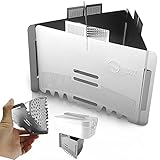
Don’t forget a crucial part like a stove windscreen, which can significantly improve efficiency.
3. Attach the propane tank.
- What “good” looks like: The tank is screwed on securely, but not overtightened. No hissing sounds.
- Common mistake: Not screwing it in all the way. This causes leaks. Listen for a soft click and make sure it’s snug.
4. Open the gas valve slowly.
- What “good” looks like: A gentle hiss of gas.
- Common mistake: Opening it too fast. This can cause a sudden whoosh of flame. Ease into it.
5. Ignite the stove.
- What “good” looks like: A steady, controlled flame.
- Common mistake: Holding the igniter too close to the burner. It might not light. Move the igniter a bit further away to catch the gas stream.
6. Adjust the flame to your needs.
- What “good” looks like: A flame that’s appropriate for cooking or boiling. High for boiling, low for simmering.
- Common mistake: Running the stove on full blast all the time. This wastes fuel and can scorch your food. Use the lowest setting that works.
7. Monitor fuel level and performance.
- What “good” looks like: Consistent flame height and color.
- Common mistake: Not noticing the flame getting weak. This means you’re running low. Have a backup plan ready.
8. Cook or boil your water.
- What “good” looks like: Your food is cooking, or water is boiling efficiently.
- Common mistake: Overcrowding the stove or using a pot that’s too large. This makes cooking inefficient and uses more fuel.
9. Turn off the gas valve.
- What “good” looks like: The flame extinguishes completely.
- Common mistake: Forgetting to turn off the gas valve on the stove itself, relying only on the tank. Always shut off both.
10. Detach the propane tank.
- What “good” looks like: Tank is removed cleanly, no residual gas escaping.
- Common mistake: Leaving the tank attached when not in use. It’s a safety hazard.
11. Store your stove and tank properly.
- What “good” looks like: Stored in a cool, dry place, away from ignition sources.
- Common mistake: Leaving fuel tanks in a hot car. Propane expands with heat, which can be dangerous.
12. Dispose of empty tanks responsibly.
- What “good” looks like: Taking them to a recycling center that accepts them, or returning them if applicable.
- Common mistake: Tossing them in the regular trash. They can still contain residual fuel and pose a risk.
Common mistakes (and what happens if you ignore them)
| Mistake | What it causes | Fix |
|---|---|---|
| Running stove on high constantly | Wasted fuel, scorched food, shorter tank life. | Use the lowest setting that achieves your goal. Simmer when you can. |
| Not checking fire restrictions | Fines, potential wildfire, and a really bad day. | Always check official sources before you go. |
| Using a damaged stove or hose | Leaks, flare-ups, potential fire. | Inspect your gear before every trip. Replace anything that looks suspect. |
| Overfilling pots or pans | Slow cooking, wasted fuel, potential spills. | Cook in batches if needed. Use pots that fit your burner well. |
| Forgetting a windscreen | Flame blows out in wind, cooks slower, uses more fuel. | Pack a dedicated windscreen or improvise with rocks or your pack. |
| Not bringing a spare tank | No cooking or hot drinks when you need them most. | Always pack at least one extra 16oz tank for a weekend trip. |
| Storing tanks in direct sun or heat | Pressure buildup, potential tank rupture or explosion. | Store tanks in a cool, shaded area. Never in a hot car or tent. |
| Not properly disposing of old tanks | Environmental hazard, potential for explosion if punctured. | Take them to a proper recycling facility. Some outdoor stores offer exchange programs. |
| Attempting to refill 16oz disposable tanks | Extremely dangerous, can lead to overfilling and explosion. | <strong>Never do this.</strong> Buy new tanks. |
| Leaving the gas valve open after use | Fuel waste, potential leak if tank isn’t secured properly. | Always close the stove’s gas valve <em>and</em> the tank valve when finished. |
| Using a stove designed for larger tanks | Inefficient burning, potential for the stove to overheat or malfunction. | Match your stove to the fuel source. A small backpacking stove is great for 16oz tanks. |
| Not securing the tank properly | Tank can fall over, causing leaks or damaging the stove. | Ensure the tank is stable and the stove connection is snug. |
To avoid running out of fuel, always pack at least one extra 1 lb propane cylinder for a weekend trip.
Decision rules (simple if/then)
- If you’re boiling water for a group of 4+, then plan for at least two 16oz tanks for a full day of meals and drinks, because boiling takes the most fuel.
- If you’re using a high-output stove, then expect shorter burn times per tank because these stoves are designed for speed, not fuel efficiency.
- If the wind is gusting over 15 mph, then consider using a windscreen or finding a more sheltered spot because strong winds drastically reduce stove efficiency and can be a safety hazard.
- If you’re cooking a complex meal with multiple steps, then budget more fuel than you think you’ll need because simmering and keeping things warm still consume fuel.
- If you’re on a multi-day trip and only have one 16oz tank, then prioritize hot drinks and simple meals because fuel conservation will be key.
- If you’re unsure about your stove’s fuel consumption, then do a test run at home for 30 minutes and measure how much fuel you used because this gives you a baseline.
- If you see a flame that’s yellow or flickering erratically, then the tank might be low or there’s an issue with the burner because a clean, efficient burn is usually blue.
- If you’re camping in cold weather, then expect your fuel to last a bit less time because cold can affect propane pressure.
- If you’re just heating up pre-made food or making instant coffee, then a single 16oz tank can easily last a weekend for one or two people because these tasks are fuel-light.
- If you’re planning to use your stove for more than just boiling water, like frying or simmering, then add an extra 30-60 minutes of burn time to your estimate per tank because these methods are more fuel-intensive.
FAQ
How long does a 16oz propane tank last on a camping stove?
A typical 16oz propane tank will last anywhere from 1 to 2 hours of continuous burn time with most camping stoves. This is a general guideline, and actual runtime can vary significantly.
What affects how long a propane tank lasts?
The main factors are the efficiency of your stove, the heat setting you use, and environmental conditions like wind and temperature. High-output stoves burn fuel faster than smaller backpacking stoves.
Can I refill a 16oz propane tank?
No, you should never attempt to refill disposable 16oz propane tanks. They are designed for single use and attempting to refill them can be extremely dangerous and lead to explosions.
How long does a 16oz propane tank last for boiling water?
Boiling water is one of the more fuel-efficient uses. You can likely boil water for several meals or a day’s worth of drinks on a single tank, depending on the stove and how many times you boil.
What’s the difference in burn time between a high-output stove and a backpacking stove?
High-output stoves, often used for car camping and cooking larger meals, can burn through a 16oz tank in as little as 45 minutes to an hour. Lightweight backpacking stoves are much more fuel-efficient, often lasting 1.5 to 2 hours or more.
How do I know if my propane tank is running low?
You’ll usually notice the flame on your stove getting weaker, changing color (from blue to yellow/orange), or flickering more erratically. Sometimes, you can feel the tank getting lighter, too.
Should I bring more than one propane tank?
For any trip longer than an overnight, it’s wise to bring at least one spare 16oz tank. Running out of fuel mid-meal is a common camping frustration.
For any trip longer than an overnight, it’s wise to bring at least one spare 1 lb propane cylinder.
How should I store my propane tanks?
Always store them upright in a cool, dry, well-ventilated area, away from direct sunlight and heat sources. Never store them inside a vehicle or tent.
Does cold weather affect propane tank life?
Yes, cold temperatures can reduce the pressure within the tank, potentially leading to slightly shorter burn times. It’s a good idea to keep your spare tank in your sleeping bag overnight if it’s very cold.
What this page does NOT cover (and where to go next)
- Specific campsite reservation details or fees. Check the land manager’s official website.
- Detailed repair guides for specific stove models. Consult your stove’s manual or the manufacturer’s support.
- Advanced backcountry cooking techniques that require specialized fuel. Explore dedicated backcountry cooking resources.
- Regulations regarding open fires or charcoal grills. Always verify local fire restrictions.
- Identifying specific types of wildlife or their behavior. Consult local wildlife guides or park rangers.

Camping Bob has spent over 20 years camping across the US — from BLM dispersed sites in the Southwest to KOA campgrounds in the Pacific Northwest. He writes practical, no-nonsense guides to help fellow campers get outdoors with confidence.