
Best Ways To Inflate An Air Mattress While Camping
Quick answer
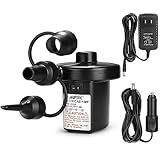
- Pack a portable pump. Battery-powered or rechargeable are easiest.
- Consider a manual foot pump for quiet operation.
- Some mattresses have built-in pumps. Check before you buy.
- Hand pumps work in a pinch but take effort.
- Use a car adapter if you have one.
- Always check your pump’s power source before heading out.
For a quiet and reliable option, consider a foot pump for air mattress, which is perfect for manual inflation without needing electricity.
What to check first (do this before you drive out)
Before you even think about where to pitch your tent, a few key checks will save you headaches.
- Land manager / legality: Who actually owns or manages the land you’re headed to? Is dispersed camping allowed? Are there designated campsites only? Know if you’re on US Forest Service, BLM, National Park Service, or state land. Each has its own set of rules.
- Access/road conditions: Can your rig actually get there? Is it paved, gravel, or a rough dirt track? Think about your vehicle’s clearance and if it’s 2WD or AWD/4WD. Mud, snow, or washouts can make a good road impassable in a hurry.
- Fire restrictions + weather + wind: This is huge. Are campfires allowed at all? What about stoves? Check the local fire restrictions religiously. Then, look at the forecast. High winds can make setting up camp miserable, and rain can turn everything into a mud pit.
- Water plan + waste plan (Leave No Trace): Where will you get potable water? Are there spigots, or do you need to filter/treat natural sources? And for waste, pack it in, pack it out. Know where designated trash receptacles are or plan to haul your garbage home.
- Safety (wildlife, distance to help, comms): What kind of critters are in the area? Know how to store food properly. How far is the nearest ranger station or town? Cell service is often spotty, so let someone know your itinerary.
Step-by-step (field workflow)
Let’s get that mattress inflated and ready for a good night’s sleep.
1. Unpack and inspect the mattress: Lay it out. Check for any obvious damage or holes.
- Good: Mattress is clean, undamaged, and ready to go.
- Mistake: Finding a small puncture after you’ve started inflating. Avoid this by a quick visual check first.
2. Locate the air valve: Find the specific opening for inflation. It might be a simple plug or a more complex valve.
- Good: Valve is easily accessible and looks clean.
- Mistake: Forgetting which valve is for inflation if there are multiple (e.g., one for deflation).
3. Select your inflation method: Choose your pump or method based on what you brought.
- Good: You have the right pump for the valve type.
- Mistake: Bringing a pump with a nozzle that doesn’t fit the mattress valve.
4. Connect the pump securely: Attach the pump to the valve. Make sure it’s a snug fit.
- Good: No air is escaping around the connection point.
- Mistake: A loose connection that lets air hiss out, making inflation take forever.
5. Begin inflation: Start pumping. For electric pumps, turn them on. For manual, start working.
- Good: You can feel air entering the mattress.
- Mistake: Over-inflating too quickly, which can stress seams. Pace yourself.
6. Monitor mattress firmness: As it fills, keep an eye on how firm it’s getting. Don’t just blast it until it’s rock hard.
- Good: The mattress is firm but still has a little give.
- Mistake: Inflating until it’s so stiff it feels like a balloon. This can be uncomfortable and damage the mattress.
7. Stop inflation and disconnect: Once it reaches your desired firmness, stop pumping.
- Good: You can disconnect the pump without losing much air.
- Mistake: Letting the air rush back out as you disconnect. Be quick.
8. Close the valve: Seal the mattress valve tightly.
- Good: The valve is securely closed, and no air is leaking.
- Mistake: Forgetting to close the valve, leading to a deflated mattress by morning.
9. Check for leaks (optional but smart): Listen closely or use a little spit on your finger near the valve.
- Good: You don’t hear or feel any leaks.
- Mistake: Ignoring a slow leak, only to wake up on the ground.
10. Position the mattress: Place it in your tent or shelter.
- Good: Mattress is where you want it, and the tent floor is clear of sharp objects.
- Mistake: Placing it on something sharp that could puncture it later.
Common mistakes (and what happens if you ignore them)
| Mistake | What it causes | Fix |
|---|---|---|
| Forgetting a pump | You’ll be blowing it up with your lungs. Hard pass. | Bring a pump, or know your mattress has a built-in one. |
| Bringing the wrong pump type/nozzle | Can’t inflate your mattress. Back to square one. | Match pump nozzle to mattress valve. Check compatibility beforehand. |
| Over-inflating | Stressed seams, potential tears, uncomfortable sleep. | Inflate gradually, test firmness with your hand. |
| Under-inflating | Saggy mattress, no support, cold ground. | Pump until firm but with a little give. |
| Not checking valve is sealed | Slow leak overnight, waking up on the ground. | Ensure valve is fully closed and locked if applicable. |
| Inflating on rough ground | Punctures, tears, damaged mattress. | Clear the area of rocks, sticks, and debris. Use a ground tarp. |
| Not letting it fully inflate first time | Mattress may sag after a few hours. | Let it inflate fully, then deflate slightly and re-inflate on subsequent uses. |
| Using a car pump without an adapter | Useless if you don’t have the right plug. | Ensure you have the correct adapter for your car’s power outlet. |
| Ignoring pump battery levels | Pump dies mid-inflation. Frustrating. | Charge batteries or pack spares. Test the pump before leaving. |
| Relying solely on lung power | Exhaustion, dizziness, and a poorly inflated mattress. | Use a pump. Your lungs will thank you. |
Decision rules (simple if/then)
- If your air mattress has a built-in pump, then you likely don’t need a separate one because it simplifies your gear.
- If you are car camping in a developed campground with power, then a plug-in electric pump is a solid choice because you have a reliable power source.
- If you are backpacking or dispersed camping, then a lightweight, battery-powered or manual pump is essential because weight and portability are key.
- If you want a quiet inflation option, then a foot pump is a good bet because it’s silent and doesn’t drain batteries.
- If you have a very small, basic mattress, then hand pumping might be feasible because it won’t take forever.
- If you are unsure about pump compatibility, then check the mattress manual or manufacturer’s website before buying a pump.
- If your mattress valve is a standard Boston valve, then most common pumps will fit because it’s a widely used design.
- If you’re camping in cold weather, then a slightly less firm mattress can actually be warmer because trapped air is an insulator.
- If you’re experiencing a slow leak, then try re-sealing the valve first before assuming there’s a puncture.
- If you’re using a rechargeable pump, then make sure it’s fully charged before you leave home because you might not have a way to recharge it in the backcountry.
If you want a quiet inflation option, then a foot pump for air mattress is a good bet because it’s silent and doesn’t drain batteries.
FAQ
How do I inflate an air mattress without a pump?
You can try using your lungs, but it’s exhausting and rarely gets the mattress firm. A foot pump is a good manual alternative. Some people have had success using a vacuum cleaner on the “blow” setting, but be careful not to damage the mattress.
If you find yourself without a pump, a foot pump for air mattress is a great manual alternative that can save you from lung-powered inflation.
What’s the difference between battery-powered and rechargeable pumps?
Battery-powered pumps use disposable batteries (like AA or D cells), while rechargeable pumps have a built-in battery you can charge via USB or AC adapter. Rechargeable is often more convenient and eco-friendly if you can charge it.
Can I use a hair dryer to inflate my air mattress?
Only use the “cool air” setting. Hot air can damage the mattress material. It’s not the most efficient method, but it can work in a pinch if you have a power source.
How do I know when my air mattress is fully inflated?
It should feel firm to the touch but still have a little give when you press on it. If it’s rock hard and squeaky, you’ve probably overdone it.
Will a portable pump work on all air mattresses?
Most will, but always check the valve type on your mattress and the nozzle options on the pump. Some specialty mattresses might require a specific pump.
What if my air mattress feels soft in the morning?
This is common, especially on the first few uses. Air mattresses can stretch. Try topping it off before bed. If it continues to lose air, check for leaks.
Is it okay to use a 12V car pump?
Yes, if you have access to your vehicle and the correct adapter for your car’s power outlet (usually a cigarette lighter socket). It’s a powerful option for car camping.
How long does it take to inflate a queen-size air mattress?
With a decent electric pump, it can take anywhere from 2 to 5 minutes. A manual pump could take 10-20 minutes of steady effort.
What this page does NOT cover (and where to go next)
- Detailed reviews of specific pump brands and models. (Search for “best camping air mattress pumps” for reviews.)
- How to repair a punctured air mattress. (Look for “air mattress repair kit” guides.)
- Choosing the right type of air mattress for your needs. (Explore “types of camping mattresses”.)
- Advanced tent setup techniques. (Consider “tent pitching guides”.)
- Specific campsite regulations for national parks or forests. (Always check the official agency website for your destination.)

Camping Bob has spent over 20 years camping across the US — from BLM dispersed sites in the Southwest to KOA campgrounds in the Pacific Northwest. He writes practical, no-nonsense guides to help fellow campers get outdoors with confidence.