
Safely Start a Fire in Your Metal Fire Pit for Cozy Evenings
Quick answer
- Always check local fire restrictions before you even think about lighting up.
- Choose a safe, level spot away from anything flammable.
- Use dry tinder, kindling, and then larger fuel wood.
- Build a small structure to let air flow.
- Light the tinder from the bottom.
- Never leave a fire unattended.
- Have water and a shovel nearby.
What to check first (do this before you drive out)
Before you pack the car and head out, there are a few crucial checks to make. This isn’t just about convenience; it’s about safety and legality.
- Land manager / legality: Who actually owns or manages the land you’re planning to camp on? Is it a National Forest, BLM land, a State Park, or private property? Each has its own rules. A quick look at the managing agency’s website (like USFS or NPS) will tell you if campfires are even allowed. Sometimes, it’s a blanket ban, other times it depends on the specific campground or dispersed camping area. Don’t assume.
- Access/road conditions: How are you getting to your spot? Is the road paved, gravel, or just a dirt track? Some metal fire pits are great for established campgrounds, others are for backcountry. Know your vehicle’s capability. A low-clearance sedan isn’t making it up a rough forest service road. Mud, snow, or washouts can make a road impassable fast. Check recent reports if you can.
- Fire restrictions + weather + wind: This is a big one. Fire bans can change daily. Check the official website for the area you’re visiting. Even if fires are allowed, high winds are a fire’s best friend. A gust can send embers flying. A little rain is one thing, but extreme dry conditions are a serious red flag. Always have a backup plan for entertainment if you can’t have a fire.
- Water plan + waste plan (Leave No Trace): You need water to put out your fire. Have at least a few gallons ready, and a shovel. For waste, remember LNT principles. Pack out all trash, including food scraps. If you’re not in a designated site, you might need to pack out ash too, depending on the rules. Leave the spot cleaner than you found it.
- Safety (wildlife, distance to help, comms): Be aware of your surroundings. Know what wildlife is common in the area and how to store food properly. How far are you from the nearest ranger station or town? Cell service is often spotty in the backcountry. Let someone know your itinerary and when you expect to be back. A satellite messenger can be a lifesaver.
Step-by-step (field workflow)
Here’s how to get that cozy campfire going, safely.
1. Choose your spot: Find a level, clear area at least 10-15 feet away from tents, trees, bushes, and dry grass. If you’re in a designated campsite, use the provided fire ring. If not, clear a wide circle down to bare dirt.
- Good looks like: A safe zone, free of flammable materials, with your fire pit in the center.
- Common mistake: Picking a spot too close to your tent or under low-hanging branches. Avoid it by always measuring the distance and looking up.
2. Prepare the pit: Ensure your metal fire pit is on a stable, level surface. Check for any cracks or damage that could let coals escape.
- Good looks like: A sturdy, secure pit sitting flat on the ground.
- Common mistake: Placing the pit on uneven ground where it could tip. Avoid it by digging out a little dirt to create a level base if needed.
To enhance safety and prevent embers from escaping, consider using a fire pit spark screen with your metal fire pit. It’s an excellent way to contain sparks and keep your fire enjoyable.
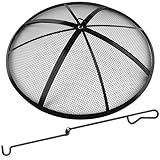
3. Gather your fuel (three types): You need tinder (catches the spark), kindling (catches from tinder), and fuel wood (keeps it going). Dry leaves, pine needles, birch bark, or cotton balls work for tinder. Small twigs, pencil-lead to finger-thick, are kindling. Larger, dry branches are fuel wood.
- Good looks like: A neat pile of each type of wood, ready to go.
- Common mistake: Bringing only big logs, or wet wood. Avoid it by collecting a variety of sizes and testing wood for dryness (if it snaps, it’s usually good).
4. Build a structure: Start with a small bundle of tinder in the center of the pit. Lean kindling around it in a teepee or log cabin shape, leaving gaps for air.
- Good looks like: A small, airy structure that lets you reach the tinder easily.
- Common mistake: Packing the kindling too tightly, choking off airflow. Avoid it by leaving plenty of space between the kindling sticks.
5. Light the tinder: Use a long match or lighter to ignite the tinder at the bottom, where it can catch easily.
- Good looks like: The tinder catching and producing a small flame.
- Common mistake: Trying to light the kindling directly, or not having enough tinder. Avoid it by focusing on the tinder and having a good handful ready.
6. Feed the flame: As the kindling catches, gently add more small pieces. Don’t smother the flames. Once the kindling is burning well, start adding smaller pieces of fuel wood.
- Good looks like: A steady, growing flame that’s consuming the wood.
- Common mistake: Adding too much wood too soon, or adding large logs before the fire is established. Avoid it by gradually increasing the size of the wood you add.
7. Maintain the fire: Once you have a good bed of coals and steady flames, you can add larger pieces of fuel wood. Keep the fire to a manageable size.
- Good looks like: A contained fire that provides warmth and light without being excessive.
- Common mistake: Letting the fire get too big or uncontrolled. Avoid it by only adding wood as needed and keeping an eye on its size.
For added peace of mind while maintaining your fire, a fire pit spark screen can help keep embers contained, especially on breezy evenings.
8. Extinguish completely: When you’re done, pour water on the embers and stir with a shovel. Repeat until everything is cool to the touch. Seriously, cool to the touch.
- Good looks like: No glowing embers, no steam, no heat when you touch the ashes.
- Common mistake: Thinking it’s out because the flames are gone. Avoid it by dousing, stirring, and feeling it.
Common mistakes (and what happens if you ignore them)
| Mistake | What it causes | Fix |
|---|---|---|
| Ignoring fire restrictions | Fines, damage to the land, uncontrolled wildfire | Always check local regulations before you go. |
| Choosing a poor location | Spreading embers, damaging vegetation, fire spreading to tents/vehicles | Pick a level spot, at least 10-15 feet from anything flammable. |
| Using wet or green wood | Smoldering, smoke, little heat, hard to get started | Use dry, dead wood. If it snaps, it’s usually good. |
| Packing fuel too tightly | Lack of airflow, fire goes out, lots of smoke | Build your fire structure (teepee/log cabin) with space for air to circulate. |
| Not having water/shovel nearby | Inability to extinguish a spreading fire quickly | Keep at least a few gallons of water and a shovel right next to the fire pit. |
| Leaving the fire unattended | Embers can escape, unattended fire can spread rapidly | Never leave a fire burning, even for a minute. Someone should always be watching. |
| Not extinguishing completely | Smoldering embers can reignite hours later, starting a wildfire | Douse, stir, and feel the ashes until they are completely cold. |
| Burning trash or plastics | Toxic fumes, attracts animals, leaves residue | Pack out all trash. Only burn natural wood. |
| Building a fire in high winds | Embers travel far, rapid spread of fire | Postpone your fire or find a sheltered spot. If it’s too windy, don’t light it. |
| Using accelerants like gasoline | Explosions, uncontrolled flare-ups, danger to yourself and others | Use tinder and kindling. Natural methods are safest and most effective. |
| Not clearing a wide enough area around pit | Flammable materials near the pit can catch fire from stray embers or heat | Clear a circle of at least 10 feet down to bare soil around your fire pit. |
To mitigate the risk of spreading embers, particularly in windy conditions, a fire pit spark screen is a highly recommended safety accessory for your metal fire pit.
Decision rules (simple if/then)
- If fire restrictions are in place, then do not start a fire because it’s illegal and dangerous.
- If the wind is gusting over 15 mph, then consider not having a fire because embers can travel easily.
- If you’re in a high-risk fire area (dry conditions, lots of dead vegetation), then be extra cautious and consider alternatives to a fire.
- If your metal fire pit is damaged, then do not use it because it could be a safety hazard.
- If you don’t have at least two gallons of water and a shovel, then do not start a fire because you need to be prepared to extinguish it.
- If the ground is not level, then find a new spot or level the ground because an unstable pit can tip.
- If you can’t see your fire pit from your tent, then you’re probably too far away from your campsite or the fire is too big.
- If you are unsure about the land manager’s rules, then check their official website or call before you go.
- If you don’t have dry tinder and kindling, then don’t expect to get a fire going easily.
- If you’re leaving your campsite, even for a short hike, then completely extinguish your fire.
- If you see any sparks or embers escaping the pit, then immediately put them out.
- If you’re in doubt about any aspect of fire safety, err on the side of caution and don’t light it.
FAQ
Q: How big should my fire be?
A: Keep it manageable. A good campfire is one that fits within your fire pit and provides warmth and light without being a huge blaze. Think cozy, not inferno.
Keeping your fire manageable is key, and a fire pit spark screen can help ensure that your cozy blaze stays safely within the pit, preventing sparks from flying.
Q: What if I don’t have a metal fire pit?
A: Many established campgrounds have designated fire rings. If you’re dispersed camping, check the rules. Some areas require you to use a fire pan or build fires directly on bare soil (where permitted), following Leave No Trace principles.
Q: Can I burn logs I find on the ground?
A: Generally, yes, if they are dead, dry, and you are in an area where fires are permitted. Don’t cut live trees or branches. Gather wood that’s already on the ground.
Q: What’s the best way to put out a fire?
A: Douse it with plenty of water, stir the embers and ashes with a shovel, and then douse again. Repeat until everything is cool to the touch. Seriously, feel it with your hand to be sure.
Q: How do I know if the wood is dry enough?
A: Dry wood will be lighter in color, feel lighter, and should snap cleanly when you try to break it. Wet or green wood will be heavier, darker, and might just bend or feel damp.
Q: What if I forget my water for extinguishing?
A: This is a critical mistake. If you don’t have enough water, do not start a fire. You can often use sand or dirt to smother a fire, but water is the most effective and safest method.
Q: Are campfires allowed during a burn ban?
A: Absolutely not. Burn bans are put in place for a reason, usually extreme fire danger. Violating them carries heavy penalties and can cause devastating wildfires.
Q: Can I use lighter fluid to start my fire?
A: It’s generally not recommended. Lighter fluid can cause dangerous flare-ups and leave a chemical taste. Natural tinder and kindling are safer and more effective.
What this page does NOT cover (and where to go next)
- Specific regulations for individual parks or forest service districts. Check the official agency websites for the exact rules in your chosen location.
- Advanced fire-starting techniques for survival situations. This guide focuses on safe recreational campfires.
- Building different types of primitive fire structures. We’re talking metal pits here, folks.
- Identifying poisonous plants or dangerous wildlife in specific regions. Always research your destination.
- Detailed LNT principles for all scenarios. There’s a lot to learn about leaving no trace.

Camping Bob has spent over 20 years camping across the US — from BLM dispersed sites in the Southwest to KOA campgrounds in the Pacific Northwest. He writes practical, no-nonsense guides to help fellow campers get outdoors with confidence.