
Effortlessly Collapsing Your Pop-Up Tent
Quick answer
- Practice at home first. Seriously.
- Clear the area around the tent.
- Fold the tent in half lengthwise.
- Twist the poles inward.
- Secure the collapsed tent.
- Store it in its bag.
- Don’t force it; something’s wrong.
What to check first (do this before you drive out)
Before you even think about packing up, a quick check ensures a smooth departure.
- Land manager / legality: Who’s in charge here? Is it National Forest, BLM, a State Park, or private land? Rules change. Know who to ask if you have questions. This also covers any required permits or fees. Always check the official page for the specific site/agency.
- Access/road conditions: How did you get here? Are those same roads still passable? Heavy rain can turn a dirt track into a mud pit. Check for any recent closures or advisories. If your rig struggled on the way in, it might be worse coming out.
- Fire restrictions + weather + wind: Is it still safe to have a campfire? Restrictions can change daily. Check the forecast. High winds can make collapsing a tent a wrestling match. A sudden storm can turn a simple pack-up into a soggy emergency.
- Water plan + waste plan (Leave No Trace): Where’s your water coming from? Did you bring enough, or is there a potable source nearby? Pack out everything you packed in, including food scraps and trash. Know where designated waste disposal is, or plan to pack it all out.
- Safety (wildlife, distance to help, comms): Did you see any critters? Secure your food properly. How far is the nearest town or ranger station? Cell service is often spotty. Let someone know your general plans and when you expect to be back.
Step-by-step (field workflow)
Here’s how to get that pop-up tent back in its bag without a sweat.
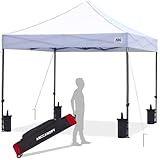
This guide will help you master the art of packing away your pop-up tent, like this popular pop-up tent.
1. Clear the immediate area:
- What to do: Remove everything from inside and around the tent. Gear, sleeping pads, shoes, rocks, stray pinecones.
- What “good” looks like: A completely empty tent floor and a clear zone around the outside. No tripping hazards.
- Common mistake: Leaving gear inside. This makes folding awkward and can damage your stuff or the tent. Just take it all out.
2. Locate the tension poles:
- What to do: Feel around the edges of the tent floor. You’ll find the poles that give it its structure. They’re usually connected by elastic.
- What “good” looks like: You can clearly identify the main frame poles.
- Common mistake: Not understanding how the tent is designed. Some have a central hub, others just have poles that cross. Know your tent.
Understanding your tent’s design, whether it’s a simple cross-pole or an instant pop up tent 2 person model, is crucial for a smooth collapse.

3. Fold the tent in half lengthwise:
- What to do: Grab the tent by two opposite sides of the roof and pull them together. Imagine folding a giant taco.
- What “good” looks like: The tent is now roughly half its original width, with the poles running parallel.
- Common mistake: Trying to fold it widthwise. This usually doesn’t work and just makes a mess. Lengthwise is the key.
4. Locate the “twist” points:
- What to do: You’ll see where the poles are designed to bend and overlap. Often, there are reinforced areas or specific seams.
- What “good” looks like: You can see the natural bending points in the frame.
- Common mistake: Forcing the poles to bend in the wrong place. This can snap them.
5. Twist the poles inward:
- What to do: Grab the two folded edges and twist them towards each other. Think of wringing out a wet towel, but with poles. One hand goes one way, the other hand goes the opposite.
- What “good” looks like: The tent starts to form a compact circle or figure-eight shape.
- Common mistake: Not twisting hard enough or twisting unevenly. It needs a good, firm twist to get the poles to cooperate.
6. Form a compact circle:
- What to do: Once twisted, guide the poles into a neat circle. The tent fabric will bunch up.
- What “good” looks like: A relatively flat, circular bundle of tent poles and fabric.
- Common mistake: Letting the poles spring back. Keep that twist going until it’s in the circle.
7. Secure the collapsed tent:
- What to do: Use the attached straps or any included bungee cords to hold the circular bundle together tightly.
- What “good” looks like: The tent won’t expand or fall apart. It’s a solid, compact unit.
- Common mistake: Not using the straps. The tent will try to unfold itself in your trunk, making a mess.
8. Slide into the storage bag:
- What to do: Gently feed the secured tent bundle into its original bag. Sometimes you have to angle it.
- What “good” looks like: The tent fits snugly, and the bag zips or closes easily.
- Common mistake: Forcing it. If it’s not fitting, it might not be collapsed properly.
9. Pack it away:
- What to do: Store the bag in your vehicle. Make sure it’s not going to get crushed or have stuff piled on top of it.
- What “good” looks like: Your tent is safely stowed and ready for the next adventure.
- Common mistake: Leaving it outside the car or on top of other gear where it can get wet or damaged.
Common mistakes (and what happens if you ignore them)
| Mistake | What it causes | Fix |
|---|---|---|
| Not clearing the area inside | Tent fabric damage, gear gets dirty/wet | Always do a sweep before folding. |
| Forcing bent poles | Broken poles, tent becomes unusable | Understand the tent’s folding mechanism; don’t force it. |
| Not twisting enough | Tent won’t collapse into a circle, pops open | Apply firm, consistent twisting force. |
| Folding widthwise instead of lengthwise | Tangled mess, impossible to collapse | Always fold lengthwise first. |
| Not using securing straps | Tent springs open in transport, creates a mess | Always strap it down tightly before bagging. |
| Trying to shove a poorly folded tent in bag | Ripped bag, damaged tent, frustration | Re-collapse until it fits smoothly. |
| Folding a wet/dirty tent | Mold/mildew, dirt stains, attracts pests | Dry and shake it out as much as possible before packing. |
| Ignoring wind during setup/takedown | Tent flies away, poles snap, injury risk | Wait for calmer conditions or use extra stakes/weights. |
| Over-tightening securing straps | Stressed poles, potential for damage | Tight enough to hold, not so tight it deforms the poles. |
| Not knowing your specific tent model | Confusion, fumbling, potential damage | Read the manual or watch a video of <em>your</em> tent model folding. |
Many of these mistakes can be avoided by understanding the specific design of your pop-up tent.
Decision rules (simple if/then)
- If the tent is wet and you can’t dry it, then pack it loosely and plan to air it out immediately upon return because mildew is a tent’s worst enemy.
- If it’s windy, then wait for a lull or get a helper to stabilize it before twisting because a gust can make it a kite.
- If the poles feel like they’re binding, then stop and check your alignment because forcing it will break something.
- If you can’t get it into a circle, then you likely didn’t fold it in half lengthwise first because that’s the foundational step.
- If the securing straps are missing, then use duct tape or bungee cords as a temporary fix because a collapsed tent needs to stay collapsed.
- If you’re doing this for the first time, then practice at home before your trip because the campsite is not the place to learn.
- If the tent bag is ripped, then reinforce it with tape before packing because you don’t want gear falling out on the road.
- If you hear a “snap” sound, then stop immediately and inspect the poles for damage because you might have just broken something critical.
- If you’re in a hurry, then take a deep breath and slow down because rushing leads to mistakes and potential damage.
- If you’re struggling, then watch a quick YouTube video of your tent model being collapsed because seeing it done makes it click.
FAQ
How do I know if I’m folding it the right way?
It should naturally want to fold in half lengthwise. Then, the poles should bend inwards when you twist. If it feels like you’re fighting it, something’s not right.
What if my tent is damp?
Shake off as much water as possible. Fold it loosely and plan to lay it out to dry fully as soon as you get home. Don’t leave it bagged up wet for long.
My tent bag is a bit tight. What gives?
Make sure the tent is fully collapsed into a compact circle and that the straps are holding it snug. Sometimes a bit of wiggling helps. If it’s way too tight, you might need to re-fold.
Can I leave my tent up overnight?
Sure, that’s usually the point! Just make sure it’s staked down securely, especially if wind is a possibility.
What’s the deal with those spring-loaded tents?
They’re designed to pop open instantly. Collapsing them requires reversing that spring action by twisting the poles. They’re usually pretty straightforward once you get the hang of the twist.
For an instant pop up tent 2 person model, the key is often a firm, controlled twist to reverse the spring action.
My poles are bent. Can I fix them?
Minor bends might be straightened carefully. Major kinks or breaks usually mean you need a replacement pole. Check the manufacturer’s site.
Is there a specific order for collapsing?
Yes. Clear it out, fold lengthwise, twist inward to form a circle, secure with straps, then bag it. Stick to that order.
What if I can’t get it to fold flat?
Ensure all the fabric is tucked in and the poles are aligned as you twist. Sometimes uneven folding causes it to buckle.
What this page does NOT cover (and where to go next)
- Detailed repair instructions for specific tent pole damage.
- Advanced waterproofing and seam-sealing techniques.
- Choosing the right tent for different camping conditions.
- Long-term tent storage best practices.
- Critter-proofing your campsite beyond food storage.

Camping Bob has spent over 20 years camping across the US — from BLM dispersed sites in the Southwest to KOA campgrounds in the Pacific Northwest. He writes practical, no-nonsense guides to help fellow campers get outdoors with confidence.