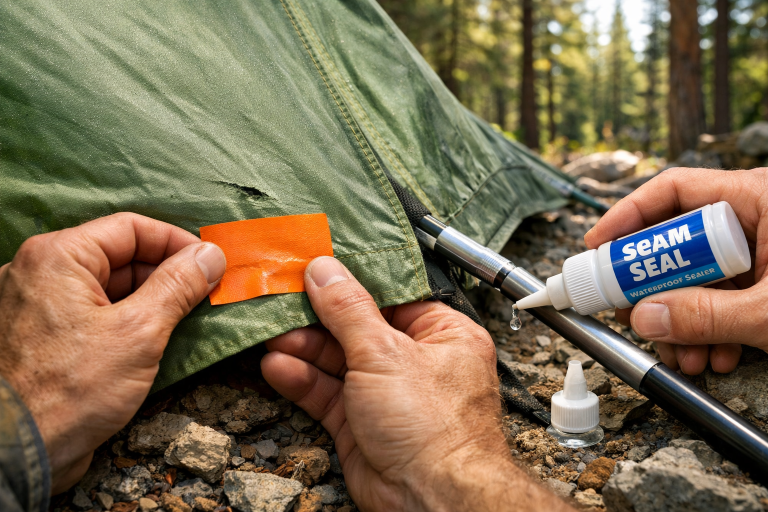
How to Waterproof a Tent: Seam Sealing + DWR Refresh
Most “my tent leaked” stories are one of three things:
- Seams need sealing (or tape is peeling)
- DWR is worn (fabric wets out; water stops beading)
- Floor coating is degraded (sticky/flaking urethane)
This guide is a clean, repeatable workflow that won’t wreck your tent.
In this hub: Tents & Shelter — choose, set up, and keep your tent dry.
Quick answer
- If water beads but you still get drips at seams → seam seal.
- If fabric soaks/darkens (“wets out”) → refresh DWR.
- If the floor is sticky or flakes → strip + recoat.
What you need (buy once)
- Non-detergent cleaner (or a gear wash)
- Seam sealer that matches your fabric (silicone vs PU)
- DWR spray-on or wash-in treatment
- Soft sponge/cloth + isopropyl alcohol (for residue)
- A dry, ventilated space for curing
Practical notes:
- Silnylon needs a silicone sealer.
- PU-coated fabrics need PU-compatible sealer.
- If you’re unsure, check your tent brand’s care page.
Authority references (examples):
- Gear Aid Seam Grip instructions: https://www.gearaid.com/products/seam-grip-sealant-waterproof
- Nikwax Tech Wash / waterproofing guidance: https://www.nikwax.com/en-us/products/cleaning/
Step 1: Clean first (don’t skip)
Waterproofing products bond to fabric—not dirt.
- Pitch the tent or lay it out.
- Rinse with cool water.
- Use a gear wash (avoid household detergents; they can damage coatings).
- Rinse thoroughly.
- Air dry out of direct harsh sun.
Step 2: Inspect the seams and floor
Seam checklist
- Tape peeling?
- Stitch holes visible?
- Drips in a consistent line?
Floor checklist
- Sticky feel?
- White flakes?
- “Wet spot” from ground moisture even with a pad?
If seam tape is peeling, you may need to remove loose tape before sealing.
Step 3: Seam sealing (the correct way)
Choose the right sealer
| Tent material | Use this |
|---|---|
| Silnylon / silicone-coated | Silicone-based sealer |
| PU-coated polyester/nylon | PU-compatible sealer |
Apply
- Work on a clean, dry tent.
- Seal the seams on the side recommended by the manufacturer (often inside on PU tents; depends on construction).
- Apply a thin continuous film over stitching.
- Feather edges; avoid big globs.
Cure
- Let cure at least 12–24 hours in dry airflow.
- Do not pack the tent while tacky.
Step 4: Refresh DWR (stop “wetting out”)
Signs DWR is worn
- Rainfly fabric darkens and stays wet
- Water stops beading and starts spreading
- Interior feels clammy even with ventilation
Apply DWR
- Start with a clean tent.
- Apply spray-on evenly (or wash-in if recommended).
- Wipe excess so you don’t leave sticky patches.
- Dry fully.
- Some products require gentle heat to “set” (follow the label).
Step 5: Floor recoat (when it’s flaking or sticky)
If the floor coating is failing, DWR won’t help.
- Strip loose coating carefully.
- Clean with isopropyl alcohol.
- Apply a thin even layer of a compatible floor sealer.
- Cure 24+ hours.
If the floor is severely degraded, a professional repair or replacement may be more cost-effective.
Garden-hose test (simple, reliable)
- Set up the tent.
- Spray seams, corners, and the fly with a steady shower.
- Check inside for line leaks (seams) vs uniform mist (condensation).
Mistake → consequence → correct fix
| Mistake | Consequence | Correct fix |
|---|---|---|
| Using laundry detergent | Coatings degrade; DWR fails | Use gear wash |
| Wrong sealer type | Poor adhesion, mess | Match silicone vs PU |
| Thick globs of sealer | Peels/cracks | Thin, even film |
| Packing before fully cured | Sticks to itself | 12–24h cure |
| Over-spraying DWR | Sticky, attracts dirt | Light coat + wipe excess |
FAQs
How often should I re-waterproof?
When performance changes: seams drip, or fabric wets out. Many campers do a light DWR refresh yearly if they camp a lot.
Can I just “spray waterproofing” and call it done?
Not if the issue is seams or floor coating. Spray helps DWR, not structural seam leakage.
Should I seam seal a brand-new tent?
Some tents are factory-taped. If you’re going into prolonged rain, seam sealing critical seams can be extra insurance—check the brand’s recommendation.
Related guides
- Tent Ventilation & Condensation: Why It Happens and How to Prevent It
- How to Stop Condensation Inside a Tent (Step-by-Step Fix)
- Tent Repair: Patch a Tear, Fix a Pole, and Seal a Leak
Summary
Waterproofing isn’t one product—it’s clean + seam seal + DWR refresh + (sometimes) floor recoat. Do the right step for the real problem and your tent becomes boring again—in the best way.

Camping Bob has spent over 20 years camping across the US — from BLM dispersed sites in the Southwest to KOA campgrounds in the Pacific Northwest. He writes practical, no-nonsense guides to help fellow campers get outdoors with confidence.