
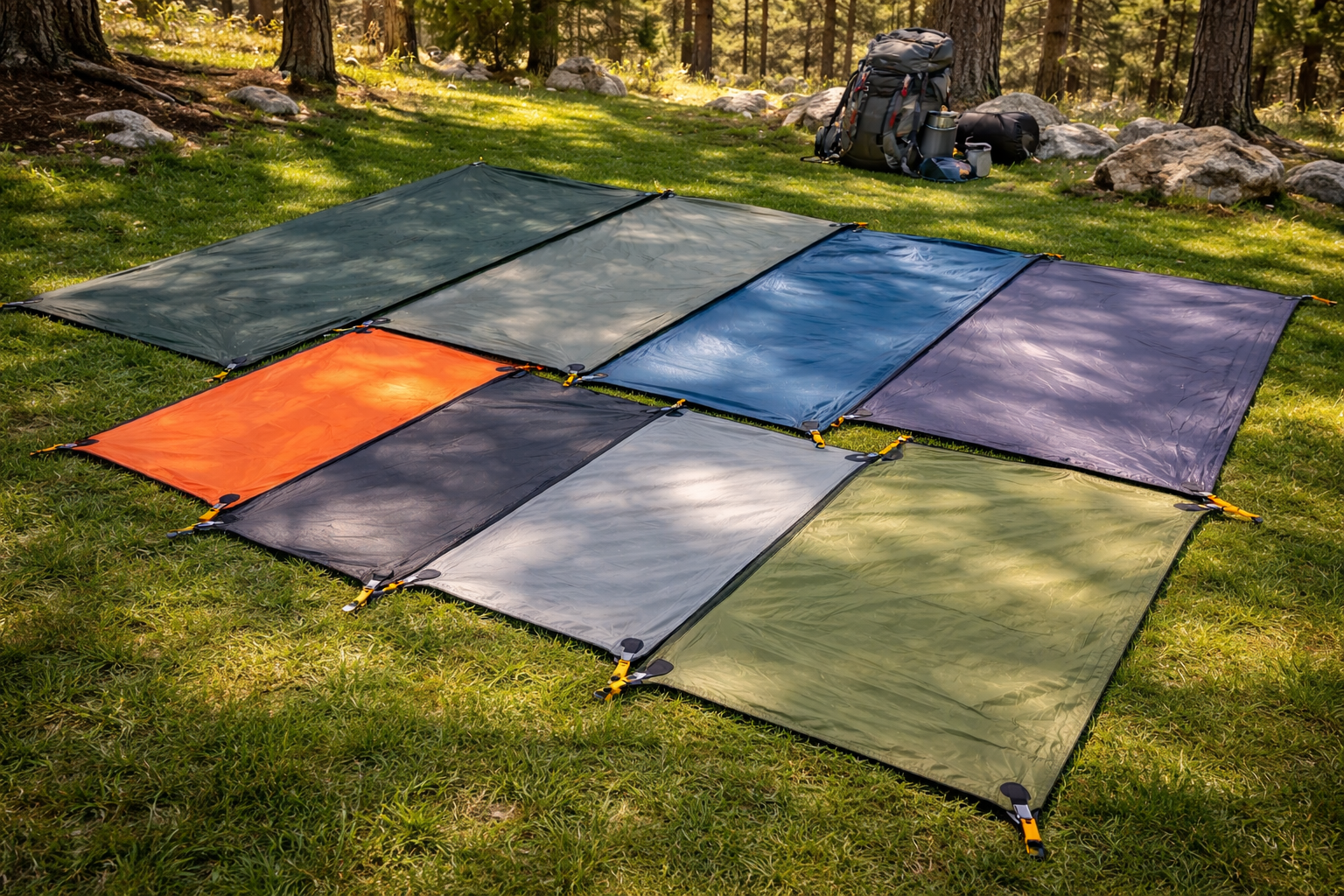
Best Tent Footprint and Tarp Sizes
A correctly sized footprint or tarp keeps your tent floor dry by staying 1–2 inches smaller than the floor on every side—no exposed fabric catches rain and funnels it underneath. For most 2‑ and 3‑person tents, the MSR Universal Footprint (Large) covers the right size range without guesswork, but the best choice depends on your exact tent dimensions, weight budget, and whether you’re backpacking or car camping.
Quick Answer: Top Picks at a Glance
Best Overall (most 2–3 person tents): MSR Universal Footprint (Large) — 96 × 80 inches, durable 68D polyester, built-in corner straps.
Best Budget Footprint: REI Co-op Trailbreak Footprint (2‑person) — PU-coated 70D fabric, accurate fit for many dome tents, typically under $35.
Premium Pick: NEMO Dagger Osmo Footprint (2P) — 7 oz, ultralight nylon/polyester ripstop, perfectly matched to the Dagger Osmo floor.
Best Value Tarp Alternative: REDCAMP Waterproof Camping Tarp — heavy 210D oxford that you cut to fit; dirt cheap and nearly bombproof for car camping.
What to Look For When Sizing a Footprint or Tarp
A badly sized groundsheet turns into a rain trap. These checks stop that before you’re in the rain.
Measure your tent floor and confirm the footprint fit before buying
Don’t rely on memory: pull out your tent and measure the bathtub floor width and length at the ground. Then do the simple math—you want a footprint that’s 1‑2 inches smaller on every side. That means subtract 2‑4 inches from both the width and the length. If the tent floor tapers (narrower at the foot end), measure both ends and make sure the footprint also tapers; a rectangular sheet will leave a wet flap sticking out at the narrow end.
Verification step: once a dedicated footprint is in hand, pitch the tent without the groundsheet on a flat surface and slide the footprint underneath. Walk around the tent on all four sides. No edge of the footprint should be visible beyond the floor edge. If you see any, fold it under or replace it. For a tarp that you’ll trim yourself, trace the tent body (not the fly) on top of the tarp, draw a 2‑inch inset line all around, and cut. This eliminates the most common failure: an edge that catches runoff.
What goes wrong when the size is off: a footprint that’s even an inch larger than the floor will catch rain dripping off the fly. The water rolls down, lands on the exposed fabric, and wicks or flows underneath your tent floor. In steady rain you’ll wake up to a puddle soaking the bottom of your sleeping pad—the groundsheet literally turns into a shallow tray. On the flip side, a footprint that’s too small leaves a strip of unprotected tent floor that can snag on roots or grind against gravel, and it won’t block groundwater seeping in from the sides if the site gets saturated.
Choose fabric by puncture risk, not just weight
A fabric that’s light enough to carry may not survive the rocks under your campsite. Flip the decision: guess the worst ground you’ll actually use, then pick accordingly.
- PU-coated polyester (150D–210D): heavy, inexpensive, very puncture resistant; right for car‑camping gravel pads.
- PU polyester (68D–75D): the middle ground—durable enough for most backpacking and car camping, still fair weight.
- Silicone-coated nylon/polyester (20D–40D): light and packable, trust it only on soft ground; a sharp stick will end it.
- Polycryo (window film): ultralight and cheap but tears easily; plan to replace it mid‑season if you camp on rough substrate.
- Tyvek: light, tough, noisy until you wash it; excellent puncture resistance for the weight.
Owner test before you pack out: lay the groundsheet over a gravel driveway or a bed of pine cones and press down with your palm. If you can feel sharp points through the fabric, it will likely tear under a loaded tent on similar terrain. On rocky ridgelines, bump up to 70D minimum or use Tyvek. For soft forest duff, 20D silnylon or polycryo is enough. Car campers can ignore this test and run a 210D tarp.
Attachment matters most when the site isn’t flat
On flat grass you can skip corner straps. On a slope or in wind, a sliding footprint bunches up and channels water exactly where you don’t want it. Look for footprints with elastic shock‑cord loops that hook to the tent poles, or reinforced stake‑out corners. After you stake the footprint, pull it hand‑tight before placing the tent body. Walk on it briefly—if the sheet slides or ripples, add a stake to the midpoint of each long side. This keeps the footprint exactly under the floor during the night and prevents water from pooling on exposed fabric that sneaks out.
Quick field failure check: after rain starts, run your hand along the floor’s perimeter from inside the tent. If you feel a wet seam or a cold spot spreading from the edge, the footprint has likely shifted and is funneling water. Reposition the stakes and tuck any visible fabric under.
Footprint and Tarp Comparison Table
| Product | Floor Fit | Dimensions (L×W) | Weight | Material | Price (USD) | Best Use |
|---|---|---|---|---|---|---|
| MSR Universal Footprint (Large) | Most 2–3 person dome/tunnel tents up to 96×80 in. | 96×80 in. | 1 lb 2 oz | 68D PU polyester | $45–$55 | All‑around camping & backpacking |
| REI Co-op Trailbreak Footprint (2P) | REI Trailbreak 2 floor exactly; fits many rectangular‑floor 2P domes up to 88×56 in. | 87×54 in. | 10.5 oz | 70D PU polyester | $30–$40 | Budget car camping & shorter backpack trips |
| NEMO Dagger Osmo Footprint (2P) | Dagger Osmo 2P only; fits similar 90×52 in. |
tapered floors | 88×50 in. | 7 oz | 40D nylon/polyester ripstop (Osmo) | $65–$75 | Ultralight backpacking, humid climates |
| Kelty Bestie Blanket/Tarp (79×60 in.) | Universal 2–3 person tents with floor up to 86×62 in. | 79×60 in. | 1 lb 4 oz | 75D PU polyester | $25–$35 | Emergency groundsheet or casual car camping |
| REDCAMP Waterproof Camping Tarp (various sizes) | Cut‑to‑fit; order a size that gives you a 2‑in. inset all around | 55×83 / 71×89 / 95×108 in. | 1 lb–2.1 lb | 210D Oxford + PU | $15–$30 | Heavy‑duty budget alternative |
Prices approximate; verify locally.
Best Overall: MSR Universal Footprint (Large)
The 96×80‑inch rectangle covers the floor of most 2‑ and 3‑person backpacking tents, including MSR’s Hubba Hubba, Elixir, and Zoic series, plus many dome designs from other brands. The 68D PU polyester takes hits from pine needles and small rocks without tearing, and the elastic corner straps grip the tent pole ends so the footprint stays put on uneven ground.
Pros
- Broad fit reduces the guesswork for standard rectangular and near‑rectangular floors
- Corner attachment loops double as stake points in wind
- Stuff sack also serves as a wash bag
- Weight is reasonable for the coverage (1 lb 2 oz)
Cons
- Slippery on wet, hard‑packed dirt; may need extra stake points
- Not a custom fit for tapered or oddly shaped foot‑end floors—requires careful folding to hide excess material
Find this footprint at REI and MSR’s website.
Best Budget Footprint: REI Co-op Trailbreak (2‑person)
The Trailbreak footprint gets the sizing right for a fraction of premium options. It’s cut to the Trailbreak 2’s 87×54‑inch floor, but it slips under any 2‑person dome with similar rectangular dimensions (floor up to 88×56 inches). The 70D PU‑coated fabric shrugs off gravel and sticks, and the grommet‑style stake loops anchor the corners securely.
Pros
- Often priced under $35
- Acceptable weight (10.5 oz) for weekend backpacking trips
- Grommet loops are simple and effective on compacted soil
Cons
- Bulkier to pack than ultralight alternatives
- Won’t work with tapered or irregular floor shapes without exposing edges
- On pooling water it catches rain on top (like any flat groundsheet) if the site drains poorly
Available at REI.
Premium Pick: NEMO Dagger Osmo Footprint (2P)
At 7 ounces, this footprint adds almost nothing to your pack but still provides full under‑floor protection. The Osmo fabric blends nylon and polyester ripstop with a fast‑drying water‑repellent finish that shines in humid conditions. It’s cut precisely to the Dagger Osmo’s tapered floor, so no excess material catches wind or water.
Pros
- Extremely light; easy to stow inside the tent stuff sack
- Precise tapered fit eliminates the risk of exposed edges
- High‑tenacity threads resist tears better than standard 20D nylon
Cons
- Pricey for a rectangle of fabric
- Designed specifically for the Dagger Osmo; fitting other tents often leaves a gap
- Thin material demands a well‑cleared campsite with no sharp stones
Check availability at NEMO and specialty outdoor retailers.
Best Value Tarp Alternative: REDCAMP Waterproof Camping Tarp
When a dedicated footprint doesn’t fit your budget or you need one sheet for multiple tents, a heavy‑duty tarp trimmed to size works. REDCAMP’s 210D Oxford fabric with PU coating is nearly indestructible in a car‑camping context. The available sizes (55×83, 71×89, 95×108 inches) let you cut a 2‑inch inset for any floor and still have extra material for a gear mat. Keep it in the trunk; it’s too heavy for backpacking.
Pros
- Very low cost for the toughness delivered
- Cuts clean with scissors and doesn’t fray badly
- Doubles as a picnic blanket, gear cover, or emergency rain shelter
Cons
- Heaviest option by far; the large size exceeds 2 pounds
- No built‑in attachment loops—you’ll need to add metal grommets or weight the edges with rocks
- Overkill on soft, well‑drained ground; adds unnecessary bulk
Available at outdoor retailers and online marketplaces.
Bottom Line: Match the Footprint to Your Tent and Your Worst‑Case Ground
Start by measuring your tent floor, then choose a footprint or tarp that stays 1‑2 inches smaller on all sides. If you own a typical 2‑person dome, the MSR Universal Footprint (Large) fits most floors and takes the measuring out of the process. Budget‑minded car campers can grab the REI Co‑op Trailbreak footprint for less than half the price and still get a strong, correctly sized groundsheet. Gram‑counters carrying a NEMO Dagger Osmo will save weight with the matching footprint, which is the only one we’d recommend for that tent’s taper.
When going the cut‑to‑fit route with a polycryo sheet or a beast of a tarp like the REDCAMP, always cut smaller than the floor and stake it so it can’t slide out. If you ever see fabric peeking from under the tent edge, tuck it back or you’ll wake up with a damp floor. Keep these rules in your head, and the groundsheet stops being a guess and becomes a reliable tool no matter where you pitch.

Camping Bob has spent over 20 years camping across the US — from BLM dispersed sites in the Southwest to KOA campgrounds in the Pacific Northwest. He writes practical, no-nonsense guides to help fellow campers get outdoors with confidence.