
Understanding the Conversion: Gallons to Pounds
Quick answer
- You can’t directly convert gallons to pounds without knowing the density of the substance.
- Water is the common reference: 1 gallon of water weighs about 8.34 pounds.
- Different liquids have different densities. Gasoline is lighter, honey is heavier.
- Use a density chart or calculator for accurate conversions.
- Density is usually measured in pounds per gallon (lbs/gal) or grams per milliliter (g/mL).
- Always check the specific substance’s density for reliable calculations.
What to check first (do this before you drive out)
Before you start calculating, you need to know what you’re actually working with. This isn’t about packing gear, but about understanding the physics of your liquids.
- Substance Identification: What exactly are you trying to measure? Is it water, fuel, oil, or something else entirely? Each has a unique density.
- Density Data: Once you know the substance, you need its density. This is the key number. You can usually find this online or in a chemical handbook.
- Temperature Considerations: Density can change with temperature. For most casual conversions, this might not be a huge deal, but for precision work, it matters.
- Units of Measurement: Are you working with US gallons or imperial gallons? Pounds or kilograms? Make sure your units are consistent.
Step-by-step (field workflow)
This isn’t a trail to follow, but a method to get your numbers straight. Think of it like prepping your stove fuel.
1. Identify the Substance: Know what liquid you’re dealing with.
- Good looks like: You can confidently name the substance (e.g., “regular unleaded gasoline,” “fresh water,” “motor oil”).
- Common mistake: Assuming all liquids are the same. This leads to wildly inaccurate results. Always double-check.
2. Find the Density: Look up the density of that specific substance.
- Good looks like: You have a number for density, typically in pounds per US gallon (lbs/gal).
- Common mistake: Using a density value for a different substance. You wouldn’t use a rock’s weight to guess how much a gallon of feathers weighs.
3. Determine the Volume: Know how many gallons you have.
- Good looks like: A clear measurement of volume (e.g., “5 gallons,” “0.5 gallons”).
- Common mistake: Guessing the volume. Use a measuring container or a marked tank.
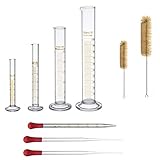
To accurately determine the volume of your liquid, consider using a graduated measuring cylinder.
4. Perform the Calculation: Multiply the volume by the density.
- Good looks like: Volume (gallons) * Density (lbs/gal) = Weight (pounds).
- Common mistake: Flipping the numbers or trying to divide when you should multiply. Remember, you’re scaling up from a known density.
5. Verify Units: Ensure your final answer is in pounds.
- Good looks like: Your final result is clearly labeled in “lbs.”
- Common mistake: Ending up with a number but no unit, or the wrong unit (like kilograms).
Common mistakes (and what happens if you ignore them)
| Mistake | What it causes | Fix |
|---|---|---|
| Assuming all liquids weigh the same | Inaccurate weight estimates, potential equipment overload or underestimation. | Always find the specific density of the substance you are measuring. |
| Using density for the wrong substance | Significant calculation errors. | Double-check the substance name against the density data source. |
| Not accounting for temperature | Minor inaccuracies, especially with fuels or volatile liquids. | For critical applications, check density charts that include temperature variations. |
| Confusing US gallons with Imperial gallons | About a 20% error in your final weight. | Be explicit about whether you’re using US or Imperial gallons and use matching density data. |
| Trying to convert directly (gallons to lbs) | You’ll get a nonsensical answer because it’s not a direct conversion. | Always use the density of the substance as the bridge between volume and weight. |
| Incorrectly multiplying or dividing | The math will be wrong, leading to an incorrect weight. | Re-read the formula: Weight = Volume × Density. Ensure you’re multiplying. |
| Ignoring units in the density measurement | Using a density in kg/L with gallons will mess up your calculation. | Ensure your density units (e.g., lbs/gal) match your volume units (gallons) and desired weight (lbs). |
| Using outdated or unverified density data | Inaccurate results, especially if a substance’s composition has changed. | Use reputable sources like government agencies, scientific databases, or manufacturer specs. |
Decision rules (simple if/then)
- If you need to know the weight of 5 gallons of gasoline, then you need the density of gasoline because gasoline is less dense than water.
- If you are calculating the weight of water, then you can use the common approximation of 8.34 lbs per gallon because water’s density is well-established.
- If you are unsure about the density of a specific oil, then look up the Safety Data Sheet (SDS) for that oil because SDSs often contain density information.
- If you are converting a recipe from volume to weight for baking, then use the density of the specific ingredient (like flour or sugar) because they have different densities.
- If your calculation results in a weight that seems wildly off (e.g., a gallon of lead weighing less than a gallon of water), then re-check your density value because something is likely wrong.
- If you are working with a very small volume, then slight inaccuracies in density might have less impact, but for large volumes, precision matters.
- If you are transporting a liquid and need to know the total weight for load limits, then accurate density is crucial because overestimating or underestimating can be dangerous.
- If you are using a calculator online, then ensure it specifies which units (US vs. Imperial gallons, lbs vs. kg) it is using because a mismatch will lead to errors.
- If you are converting between different measurement systems (e.g., metric to imperial), then you need to convert both volume and density units carefully.
- If you find density listed in grams per milliliter (g/mL), then remember that 1 g/mL is equivalent to approximately 8.34 lbs/gallon for water, and use that as a reference for other substances.
FAQ
Q: Can I just say a gallon is X pounds?
A: Not really. A gallon is a measure of volume, and a pound is a measure of weight. You need something in between, which is density.
Q: What’s the most common substance people convert gallons to pounds for?
A: Water is usually the go-to example because it’s familiar and its density is often used as a baseline.
Q: How much does a gallon of gasoline weigh?
A: It varies a bit, but typically around 6 pounds per US gallon. It’s lighter than water.
Q: Does temperature affect how much a gallon weighs?
A: Yes, it does. Most liquids expand when heated and contract when cooled, changing their density slightly. For most casual uses, this difference is small.
Q: Where can I find density information?
A: Reputable online sources, chemical handbooks, manufacturer websites, or Safety Data Sheets (SDS) for specific products are good places to look.
Q: What if I have a mixture, like salad dressing?
A: That’s trickier. You’d need to find the density of the specific mixture, which might be listed by the manufacturer or require a more complex calculation if you know the components.
Q: Is there a universal conversion factor?
A: No, because density changes from one substance to another. Think of it like trying to convert apples to oranges – you need to know what kind of fruit you’re dealing with.
What this page does NOT cover (and where to go next)
- Specific density values for every single chemical compound.
- Advanced fluid dynamics or thermodynamics related to density changes.
- The process of measuring volume accurately in the field.
- Calculating the weight of solids or gases.
Next, you might want to look into:
- How to use a hydrometer to measure liquid density.
- Common density charts for everyday liquids.
- Best practices for storing and transporting liquids safely.