
The Perfect S’mores Recipe
Quick answer
- Grab graham crackers, chocolate bars, and marshmallows.
- Toast marshmallows to golden brown, not burnt.
- Assemble quickly: cracker, chocolate, marshmallow, cracker.
- Use a low, steady flame for toasting.
- Don’t overcook your marshmallow.
- Practice makes perfect for that gooey center.
What to check first (do this before you drive out)
Before you even think about melting chocolate, a few things need to be squared away. This isn’t just about s’mores; it’s about being smart and safe out there.
- Land manager / legality: Who’s in charge of the land where you’re planning to toast? Is it a National Forest, BLM land, a State Park, or private property? Each has its own set of rules. You need to know if campfires are even allowed, and if there are any specific permit requirements. Ignorance isn’t a good excuse when you’re packing up your gear.
- Access/road conditions: Can your rig actually get there? A paved road is one thing, but a rutted dirt track is another. Know your vehicle’s capabilities. Is it 2WD or 4WD? What’s the ground clearance? A little mud or snow can turn a fun trip into a tow truck call. I learned that the hard way once, stuck on a logging road in a downpour. Never again.
- Fire restrictions + weather + wind: This is crucial. Fire restrictions change like the wind, and for good reason. Check the official website for the ranger district or park you’re visiting. Also, check the forecast. High winds are a recipe for disaster with open flames. A sudden storm can ruin your marshmallow toast, too.
- Water plan + waste plan (Leave No Trace): You need water for campfires, period. Have plenty on hand to douse your fire completely. And what about trash? Pack it in, pack it out. That includes all your s’mores wrappers and any other debris. Leave your campsite cleaner than you found it.
- Safety (wildlife, distance to help, comms): Are there bears or other critters in the area? Know how to store your food properly. How far are you from the nearest town or ranger station? Do you have cell service? Consider a satellite communicator if you’re going remote. It’s better to have it and not need it.
Step-by-step (field workflow)
Alright, you’ve checked the boxes. Now, let’s get down to business. Making a s’more is simple, but doing it right takes a little finesse.
1. Gather your ingredients: Get your graham crackers, chocolate bars (the standard Hershey’s works fine, or go fancy), and marshmallows.
- Good looks like: Everything organized and ready to go, not digging through your pack mid-toast.
- Common mistake: Forgetting one key ingredient. Double-check your cooler and snack bag.
If you’re looking for convenience, a s’mores kit can be a great way to ensure you have all the essentials ready to go for your next outdoor adventure.

2. Set up your fire: Build a safe campfire or get your portable fire pit going. You want a good bed of coals, not roaring flames.
- Good looks like: A stable fire with manageable heat, no uncontrolled flames licking at the sky.
- Common mistake: Trying to toast over huge, leaping flames. This just burns your marshmallow instantly.
3. Prepare your cracker base: Break a graham cracker in half. Place a piece of chocolate on one half.
- Good looks like: A clean, solid base ready for the main event.
- Common mistake: Breaking crackers unevenly, making assembly awkward later.
4. Skewer your marshmallow: Find a good roasting stick. Slide a marshmallow onto the end. Don’t pack them too tight; one good marshmallow per stick is usually best.
- Good looks like: A marshmallow securely on the stick, with enough stick to hold it safely away from the fire.
- Common mistake: Pushing the marshmallow all the way to the end of the stick, making it easy to drop into the fire.
For the best toasting experience, consider investing in a good set of marshmallow roasting sticks. They make all the difference in achieving that perfect golden-brown marshmallow.
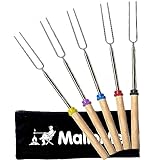
5. Toast the marshmallow: Hold the marshmallow near the coals, rotating slowly. You’re looking for a slow, even browning.
- Good looks like: A uniformly golden-brown, slightly puffed marshmallow. It should be soft and gooey inside.
- Common mistake: Holding it too close and getting a charred, black exterior with a cold, hard center. Patience, friend.
6. Achieve the perfect goo: Once it’s golden, carefully pull it back from the heat. Let it sit for just a second if it looks too molten.
- Good looks like: A marshmallow that’s visibly soft and starting to ooze.
- Common mistake: Waiting too long, letting it catch fire or drip off the stick.
7. Assemble the s’more: Quickly place the toasted marshmallow on top of the chocolate.
- Good looks like: The marshmallow making good contact with the chocolate.
- Common mistake: Fumbling the marshmallow and dropping it. Happens to the best of us.
8. Top and squish: Place the other graham cracker half on top of the marshmallow. Gently press down until the marshmallow oozes out the sides.
- Good looks like: A perfectly formed s’more, with gooey chocolate and marshmallow peeking out.
- Common mistake: Pressing too hard, squishing everything out and making a mess.
9. Enjoy (carefully): Eat your creation immediately. It’s going to be hot.
- Good looks like: A satisfied smile and maybe a little chocolate on your nose.
- Common mistake: Burning your mouth because you couldn’t wait. Let it cool for a split second.
10. Clean up: Make sure your fire is completely out. Pack out all trash.
- Good looks like: A cold fire pit and a clean campsite.
- Common mistake: Leaving embers smoldering or trash behind. This is how wildfires start and sites get closed.
Common mistakes (and what happens if you ignore them)
| Mistake | What it causes | Fix |
|---|---|---|
| Not checking fire restrictions | Fines, fire bans, or starting a wildfire | Always check official agency websites before you go. |
| Overestimating vehicle capability | Getting stuck, needing a tow, damaging your vehicle | Know your rig and the road conditions; use a map or ask locals. |
| Using a roaring fire for toasting | Burnt marshmallow exterior, raw interior | Toast over glowing coals, not open flames. |
| Not bringing enough water for fire | Inability to extinguish fire properly | Carry more water than you think you’ll need for dousing. |
| Leaving food unsecured | Attracting wildlife, potential encounters | Store food in bear-resistant containers or your vehicle. |
| Not packing out all trash | Littered campsites, negative impact on wildlife | Everything you bring in, you take out. |
| Rushing the toasting process | Dropping marshmallows, burnt outsides | Be patient; slow, steady rotation is key. |
| Assuming cell service will be available | Inability to call for help in an emergency | Carry a satellite communicator for remote areas. |
| Not knowing the land manager | Unknowingly breaking rules, potential citations | Identify the agency (USFS, BLM, NPS, State Park) managing the area. |
| Ignoring weather forecasts | Unpleasant conditions, potential danger | Check the weather before and during your trip. |
Decision rules (simple if/then)
- If the fire danger level is “High” or “Extreme,” then do not have an open fire because it’s a serious wildfire risk.
- If the road is marked “4WD High Clearance Required,” then do not attempt it with a 2WD sedan because you will get stuck.
- If you see signs of bear activity (scat, tracks), then store all food and scented items securely because bears are attracted to human food.
- If the wind is gusting over 20 mph, then consider skipping the campfire because it’s dangerous and hard to control.
- If you’re more than an hour from a ranger station, then carry a satellite communication device because cell service is unreliable.
- If you plan to camp on BLM land, then check for dispersed camping regulations because rules can vary widely.
- If your marshmallow catches fire, then don’t panic; blow it out quickly and trim off the burnt part because it’s usually salvageable.
- If you’re unsure about water availability for fire suppression, then bring extra jugs of water because you can never have too much.
- If you’re making s’mores in a high-use area, then be mindful of other campers and keep noise down because courtesy matters.
- If you plan to make s’mores, then bring extra graham crackers because they are the most likely to break or get crushed.
- If you are unsure about local wildlife, then research common animals in the area and learn safe practices because preparedness reduces risk.
- If you are leaving your campsite unattended, then ensure your fire is completely out and cold to the touch because embers can reignite.
FAQ
Q: What’s the absolute best chocolate for s’mores?
A: While classic Hershey’s bars are traditional, many prefer milk chocolate with a higher cacao content, or even dark chocolate for a richer flavor. Experiment to find your favorite!
Q: Can I use a gas stove or portable grill for s’mores?
A: Yes, you can. While not a traditional campfire, you can achieve a similar result by carefully toasting a marshmallow over a low gas flame or on a grill. Just be mindful of the heat.
Q: My marshmallows keep catching fire. What am I doing wrong?
A: You’re likely holding them too close to the flames. Try holding your marshmallow further away, over the hot coals, and rotate it slowly. Patience is key to a golden-brown exterior and gooey interior.
Q: Is it okay to eat s’mores that have a little char on them?
A: A little char is fine if you like it that way, but a fully blackened marshmallow is often burnt and bitter. The goal is a toasted, slightly melted interior.
Q: How do I keep my s’mores from falling apart when I eat them?
A: The trick is to get the marshmallow gooey but not liquid. Press the top cracker down gently to encourage the marshmallow to ooze without completely collapsing. And eat it over a napkin!
Q: Are there healthier alternatives to graham crackers and chocolate?
A: Some people use cookies like shortbread or even pretzels. For chocolate, you can use higher-cacao content bars or even chocolate chips. It’s all about personal preference.
Q: What’s the best way to clean sticky marshmallow off my roasting stick?
A: Soaking the stick in hot, soapy water usually does the trick. For stubborn bits, a little scraping with a knife or a stiff brush can help.
Q: Can I make s’mores indoors?
A: Absolutely! You can use a kitchen torch, your oven broiler (watch it closely!), or even a microwave for a quick fix, though the campfire experience is hard to beat.
What this page does NOT cover (and where to go next)
- Detailed campsite reviews: This guide focuses on the “how-to” of s’mores, not specific locations. For campsite details, check official park websites or reputable camping forums.
- Advanced campfire techniques: We covered the basics for s’mores, but building different types of fires for cooking or warmth is a whole other skill set.
- Campfire safety regulations in detail: While we touched on it, specific laws and regulations vary greatly. Always consult the land manager’s official site for your exact location.
- Backcountry cooking beyond s’mores: This is all about a classic treat. For full backcountry meal planning, look for guides on outdoor cooking and food storage.
- Leave No Trace principles in depth: We mentioned the basics. For a comprehensive understanding of LNT, seek out dedicated resources on minimizing your impact in the outdoors.