
Setting Up Your Campsite for Success
Quick answer
- Scout your spot before you commit. Look for flat, dry ground.
- Check the weather and fire restrictions. Seriously, don’t skip this.
- Set up your tent first. It’s your home base.
- Organize your cooking and sleeping areas. Keep ’em separate.
- Secure your food. Critters are always hungry.
- Know your escape route. Just in case.
- Pack it in, pack it out. Leave it better than you found it.
What to check first (do this before you drive out)
Before you even think about packing the cooler, there are a few critical checks. Get these dialed in, and your trip will be way smoother.
- Land manager / legality: Who’s in charge here? Is it the US Forest Service (USFS), Bureau of Land Management (BLM), National Park Service (NPS), or a state park? Each has its own set of rules. A quick look at their official website will tell you if dispersed camping is allowed, if you need a permit, or if it’s designated site camping only. Don’t assume anything. I learned that the hard way out in Utah once.
- Access/road conditions: Is that dirt road a gentle path or a mud-bogging challenge? Check recent reports if you can. If you’ve got a low-clearance car, a 4WD is a must, or maybe you just need to park and hike in. Don’t get your rig stuck miles from anywhere.
- Fire restrictions + weather + wind: This is non-negotiable. Fire bans are serious business, and a wildfire can ruin more than just your weekend. Check the local fire danger level and any active burn bans. Then, look at the forecast. High winds can make cooking impossible and tent-pitching a nightmare. Heavy rain? You’ll want a good spot that won’t turn into a puddle.
- Water plan + waste plan (Leave No Trace): Where will you get water, and how will you treat it? If you’re packing it all in, make sure you have enough. For waste, remember the LNT principles. Pack out everything, including food scraps and toilet paper. Know where designated toilets are or how to dig a cathole properly if you’re in the backcountry.
- Safety (wildlife, distance to help, comms): What kind of wildlife are you sharing the space with? Bears? Coyotes? Know how to store your food and what to do if you encounter them. How far is the nearest ranger station or town? Do you have cell service? A satellite messenger is a good idea for remote areas.
Step-by-step (field workflow)
Alright, you’ve done your homework. Now you’re at the site. Here’s how to set up shop.
1. Arrive and Assess:
- What to do: Drive in, but don’t just plop down. Take a slow cruise around your potential area.
- What “good” looks like: You see a level, well-drained spot, ideally with some natural windbreak. It’s not in a dry creek bed or directly under dead trees.
- Common mistake: Rushing in and setting up the first flat spot you see, only to discover it floods when it rains or is a highway for critters.
2. Choose Your Tent Site:
- What to do: Pick the specific spot for your tent.
- What “good” looks like: It’s flat, free of rocks and roots that will poke you all night, and has good drainage. Consider morning sun for warmth, or shade if it’s going to be hot.
- Common mistake: Pitching on a slope. You’ll wake up at the bottom of your sleeping bag.
3. Clear the Tent Area:
- What to do: Remove any sharp objects – rocks, sticks, pinecones.
- What “good” looks like: A smooth, clean surface where your tent floor will sit.
- Common mistake: Leaving small, sharp rocks. They’ll eventually wear holes in your tent floor.
4. Pitch the Tent:
- What to do: Lay out your tent, stake down the corners, and get the poles in place.
- What “good” looks like: A taut, stable tent structure. The rainfly is on correctly, and the guy lines are secured.
- Common mistake: Not staking it down properly. A strong gust of wind can turn your tent into a kite.
5. Set Up Sleeping Area:
- What to do: Unroll your sleeping pad and sleeping bag inside the tent.
- What “good” looks like: Your sleeping setup is ready to go for when you’re tired.
- Common mistake: Waiting until you’re exhausted and fumbling around in the dark to set up your sleeping bag.
6. Designate Cooking/Eating Area:
- What to do: Choose a spot for your stove, cooler, and food prep.
- What “good” looks like: It’s a safe distance from your tent (at least 100 feet for bear country) and away from flammable materials.
- Common mistake: Cooking right next to your tent. That smell of bacon will attract unwanted guests.
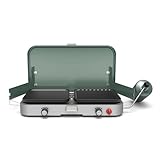
When designating your cooking area, consider a reliable camping stove to make meal prep easy and safe. A good camping stove ensures you can cook delicious meals without the need for an open fire.
7. Organize Camp Kitchen:
- What to do: Set up your stove, unpack food, and get your cooking utensils accessible.
- What “good” looks like: Everything you need for cooking is within easy reach.
- Common mistake: Leaving food wrappers and crumbs scattered around. Bears have a great sense of smell.
To organize your camp kitchen efficiently, make sure your camping stove is easily accessible. Having a dedicated spot for your stove streamlines the cooking process.
8. Secure Food and Trash:
- What to do: Store all food, toiletries, and scented items properly.
- What “good” looks like: Your food is in a bear canister, hung in a bear bag, or secured in a bear-resistant vehicle, well away from your sleeping area. Trash is also secured.
- Common mistake: Leaving food in your tent or in an easily accessible cooler. This is a fast track to a raided camp.
9. Set Up Camp Chairs/Table:
- What to do: Place your chairs and any camp table in a comfortable spot.
- What “good” looks like: A place to relax and enjoy the scenery.
- Common mistake: Not thinking about where you’ll sit. You end up standing around or sitting on logs, which can get old fast.
10. Water and Waste Management:
- What to do: Set up your water filter or purification system if needed. Locate your designated waste area or pack out all trash.
- What “good” looks like: You have a plan for clean water and know how to properly dispose of all waste.
- Common mistake: Not having a plan for water or waste, leading to uncomfortable situations or environmental damage.
Common mistakes (and what happens if you ignore them)
| Mistake | What it causes | Fix |
|---|---|---|
| Pitching tent on a slope | Rolling to the low side all night | Scout for the flattest spot. |
| Ignoring fire restrictions | Fines, wildfire, or smoky air | Always check current fire danger and bans. |
| Cooking next to your tent | Attracting wildlife to your sleeping area | Set up cooking at least 100 feet away. |
| Leaving food unsecured | Critter raids, bear encounters | Use bear canisters/bags or secure in a bear-resistant vehicle. |
| Not staking tent properly | Tent blowing away in wind | Use all the stake loops and guy lines. |
| Camping in a dry creek bed | Flash flood if it rains | Look for higher ground. |
| Not checking road conditions | Getting your vehicle stuck or damaged | Check conditions, know your vehicle’s limits. |
| Leaving trash behind | Attracting wildlife, damaging the environment | Pack it in, pack it out. Leave No Trace. |
| Not having a water plan | Dehydration or drinking untreated water | Bring enough water or have a reliable filtration/purification method. |
| Setting up under dead trees | Falling branches (widowmakers) during wind or rain | Choose a clear area. |
| Not bringing a first-aid kit | Minor injuries becoming major problems | Always pack a well-stocked first-aid kit. |
| Ignoring weather forecasts | Getting caught in storms unprepared | Check the forecast and pack appropriate gear. |
Decision rules (simple if/then)
- If the forecast shows high winds, then secure all tent guy lines extra well because wind can destroy a tent.
- If you are in bear country, then store all food and scented items at least 100 feet from your tent because bears are attracted to smells.
- If the ground looks damp, then check for better drainage before pitching your tent because you don’t want to wake up in a puddle.
- If you see signs of recent animal activity (tracks, scat), then be extra vigilant about food storage because they might be regulars.
- If the road looks rough, then assess your vehicle’s clearance and 4WD capability before proceeding because getting stuck is no fun.
- If you plan to have a campfire, then confirm that campfires are currently permitted because fire bans are serious.
- If you are in a designated campground, then follow the specific site rules because they are there for a reason.
- If you are dispersed camping, then ensure you are on public land where it’s allowed because trespassing is not an option.
- If you are unsure about water sources, then err on the side of caution and filter or treat all water because untreated water can make you sick.
- If you are setting up late, then prioritize tent and food security because you need a safe place to sleep and eat.
- If you are near a water source, then camp at least 200 feet away to protect the riparian area and water quality because LNT matters.
- If you are leaving your campsite for an extended period, then secure your food and valuables because you don’t want any surprises upon return.
FAQ
Q: How far from a water source should I camp?
A: For Leave No Trace principles, aim for at least 200 feet (about 70 adult steps) from lakes, rivers, and streams. This protects the water quality and the fragile vegetation along the banks.
Q: What’s the best way to secure food from animals?
A: In bear country, use a bear-resistant canister, hang a bear bag properly, or store food in a bear-resistant vehicle. For smaller critters, a sturdy cooler and securing it well usually does the trick.
Q: Do I really need to stake down my tent in good weather?
A: Yes. Even on a calm day, a sudden gust of wind can surprise you. Proper staking keeps your tent stable and prevents damage.
Q: How do I know if a spot is good for drainage?
A: Look for areas that aren’t in depressions or near obvious water flow paths. Gently pour a little water on the ground; if it pools up, find another spot.
Q: What if I can’t find a flat spot for my tent?
A: If you must camp on a slight slope, try to position your body so your head is uphill. Use your gear to create a barrier to stop you from sliding down.
Q: Is it okay to clear brush around my tent?
A: Generally, yes, but do it minimally. Remove only what’s necessary for your tent and immediate area. Avoid disturbing large plants or sensitive vegetation.
Q: What’s the difference between USFS and BLM land?
A: Both are federal public lands, but they often have different management focuses. USFS typically manages forests, while BLM manages vast tracts of public lands, often more arid or grassland. Rules can vary, so always check the specific agency’s website.
Q: How important is it to have a separate cooking area?
A: It’s crucial for safety and comfort. Keeping food smells away from your sleeping area significantly reduces the risk of attracting wildlife to your tent.
What this page does NOT cover (and where to go next)
- Detailed backcountry navigation techniques.
- Specific gear reviews for tents, sleeping bags, or stoves.
- Advanced fire-starting methods or campfire cooking recipes.
- Wildlife identification and specific encounter protocols for every animal.
- Permit requirements for specific national parks or wilderness areas.
- Detailed first-aid procedures for various injuries.