
Safely Starting a Fire in Your Fire Pit
Quick answer
- Know your fire pit’s limits and the area’s rules.
- Gather your tinder, kindling, and fuel wood before you light.
- Build a solid base and let air flow.
- Light from the bottom, then add fuel gradually.
- Never leave a fire unattended.
- Have water and a shovel ready, always.
What to check first (do this before you drive out)
Before you even think about striking a match, get your ducks in a row. This ain’t the time to wing it.
- Land manager / legality: Who’s in charge here? Is it the National Forest, BLM, a state park, or private land? Each has its own rules. Some places might have year-round fire bans, others only during dry spells. A quick check of the managing agency’s website or a call to their local office is crucial. Don’t assume. I learned that the hard way camping near a new wilderness area once.
- Access/road conditions: Is the road to your fire pit actually passable? Some spots look good on paper but turn into mud pits or require serious 4×4. Check recent conditions if possible. A regular sedan might be fine for some established campgrounds, but dispersed sites? You might need higher clearance or AWD. Don’t get stuck miles from anywhere.
- Fire restrictions + weather + wind: This is non-negotiable. Check the current fire danger level for the area. Red Flag Warnings mean no fires, period. Even if it’s allowed, pay attention to the forecast. High winds can turn a cozy campfire into a wildfire in minutes. I’ve had to douse fires prematurely because the wind picked up unexpectedly. It’s better to be safe than sorry.
- Water plan + waste plan (Leave No Trace): Got water? Seriously, have a bucket or several gallons ready. And a shovel. You need to be able to drown your fire completely. For waste, pack it in, pack it out. That includes ash when it’s completely cold. Leave your site cleaner than you found it.
You’ll need a reliable shovel to manage your fire and ensure it’s fully extinguished. Consider a durable folding camp shovel for easy transport and effective fire management.

- Safety (wildlife, distance to help, comms): Keep a safe distance from tents and flammable gear. Be aware of any local wildlife that might be attracted to the fire or food smells. Know how far the nearest ranger station or emergency services are. Cell service is often spotty out there, so have a plan if something goes wrong.
Step-by-step (field workflow)
Alright, you’ve done your homework. Now let’s get this fire going, right.
1. Clear the area:
- What to do: Remove all leaves, dry grass, pine needles, and overhanging branches from a 10-foot radius around your fire pit.
- What “good” looks like: A bare patch of dirt or gravel around the pit, with no flammable material within reach.
- Common mistake: Not clearing a wide enough radius. A stray ember can catch dry grass just outside the pit.
2. Prepare your tinder:
- What to do: Gather dry, fluffy material that ignites easily. Think birch bark shavings, cotton balls soaked in petroleum jelly, dry pine needles, or commercial fire starters.
- What “good” looks like: A fist-sized bundle of tinder, dry and ready to catch a spark or flame.
- Common mistake: Using damp or packed-down tinder. It won’t catch easily and will just smolder.
3. Gather your kindling:
- What to do: Collect small, dry twigs and branches, ranging from pencil-lead to pencil thickness. You’ll need a good pile.
- What “good” looks like: A substantial pile of dry, brittle twigs. They should snap cleanly when bent.
- Common mistake: Using green wood or wet kindling. It smokes a lot and is hard to light.
4. Collect fuel wood:
- What to do: Find dry, seasoned wood that’s wrist-thick or larger. You’ll need enough to keep the fire going once it’s established.
- What “good” looks like: A stack of dry, seasoned logs ready to add to the fire.
- Common mistake: Bringing or collecting green wood. It burns poorly and creates a lot of smoke.
5. Build your base:
- What to do: Place a few larger pieces of fuel wood in the pit, creating a stable base. Leave gaps for air to circulate.
- What “good” looks like: A sturdy platform of wood that won’t collapse.
- Common mistake: Piling wood too tightly. Fire needs oxygen, just like us.
6. Add tinder and kindling:
- What to do: Place your tinder bundle in the center of the base, then lean your smallest kindling against it, forming a small teepee or crisscross structure.
- What “good” looks like: A structure where the tinder is exposed and the kindling has air to breathe around it.
- Common mistake: Burying the tinder under too much kindling. You need to be able to reach it to light it.
7. Light the tinder:
- What to do: Use a long match or lighter to ignite the tinder at the bottom. Shield it from wind.
- What “good” looks like: The tinder ignites and the flame begins to lick the kindling.
- Common mistake: Trying to light the kindling directly. Start with the fluff.
8. Feed the flame:
- What to do: As the kindling catches, gently add more small twigs, then gradually larger pieces of kindling and finally your fuel wood. Blow gently if needed to encourage the flames.
- What “good” looks like: A steadily growing fire with flames reaching up.
- Common mistake: Adding too much wood too soon. You’ll smother the young flames.
9. Maintain the fire:
- What to do: Add fuel wood as needed to keep the fire at a manageable size. Keep the area around the pit clear.
- What “good” looks like: A controlled, consistent fire that’s not getting out of hand.
- Common mistake: Letting the fire grow too large or become unmanageable.
When maintaining the fire, it’s wise to protect your hands. A good pair of heat resistant gloves can make adjusting logs safer and more comfortable.

10. Extinguish completely:
- What to do: When you’re done, pour water over the entire fire, stirring the embers with a shovel. Continue adding water and stirring until there are no hot spots and no hissing sounds.
- What “good” looks like: The ashes are cool to the touch. You should be able to run your hand through them (carefully!).
- Common mistake: Not drowning the fire thoroughly. Hot embers can reignite hours later.
Common mistakes (and what happens if you ignore them)
| Mistake | What it causes | Fix |
|---|---|---|
| Not checking fire restrictions | Fines, legal trouble, and starting a wildfire. | Always check official sources (USFS, BLM, park websites) before you go. |
| Using damp or green wood | Excessive smoke, poor burning, hard to start/maintain. | Collect only dry, dead wood. If unsure, bring your own seasoned firewood. |
| Not clearing a wide radius around pit | Sparks igniting surrounding vegetation, leading to a wildfire. | Clear a minimum 10-foot radius down to bare dirt. |
| Building a fire too large | Uncontrollable flames, difficulty extinguishing, wasted wood. | Keep fires to a manageable size for your pit and needs. |
| Leaving the fire unattended | Risk of embers spreading, potential for wildfire. | Never leave a fire burning, even for a minute. Always have someone watching it. |
| Not having water and shovel ready | Inability to extinguish a runaway fire quickly. | Keep a full bucket of water and a shovel within arm’s reach at all times. |
| Adding too much wood at once | Smothering young flames, creating smoke, not getting a good burn. | Add fuel gradually, allowing flames to grow and consume the wood. |
| Not stirring/drowning ashes completely | Hot embers reigniting later, starting a wildfire. | Drown with water, stir thoroughly with a shovel, and ensure all embers are cold to the touch. |
| Building a fire in high winds | Sparks blowing easily, rapid fire spread, potential wildfire. | Postpone or cancel your fire if winds are strong or a Red Flag Warning is in effect. |
| Relying solely on matches | Running out of matches, matches getting wet, difficulty lighting in wind. | Carry multiple ignition sources: lighters, ferro rods, waterproof matches. |
Decision rules (simple if/then)
- If fire restrictions are in place, then do not start a fire because it’s illegal and dangerous.
- If the wind is gusting over 15 mph, then reconsider starting a fire because embers can travel far.
- If you don’t have a reliable water source and shovel nearby, then do not start a fire because you can’t guarantee extinguishment.
- If the ground is covered in dry grass or leaves, then ensure a 10-foot radius is cleared to bare dirt because these materials ignite easily.
- If you are using a portable fire pit, then place it on a level, non-flammable surface because stability is key.
- If your tinder is damp, then dry it in the sun or use a backup because damp tinder won’t light.
- If the flames are struggling to catch the larger wood, then gently blow on the base of the fire because you’re providing more oxygen.
- If you can’t get a fire going after several attempts, then stop and reassess your materials and technique because forcing it can lead to mistakes.
- If you are camping in a designated campground with established fire rings, then use them because they are designed for safety.
- If you are in a dispersed camping area, then check land manager regulations for fire pit requirements because not all areas allow fires.
- If you are unsure about the safety of your fire pit area, then err on the side of caution and don’t build a fire because wildfire prevention is paramount.
FAQ
Q: What’s the best way to start a fire if it’s windy?
A: It’s tough. Try to shield your tinder with your body or a windbreak. Use a ferro rod for a sustained spark. And if it’s really blowing, it might be best to skip the fire.
Q: How much wood do I really need?
A: Enough to keep it going for the duration you want, plus a little extra. It’s better to have too much than to run out and have to gather more in the dark.
Q: Can I burn trash in my fire pit?
A: Generally, no. Most trash doesn’t burn cleanly and can release toxic fumes. Pack out your trash.
Q: What if I see sparks flying out of the pit?
A: Immediately put them out with water or dirt. If they land outside the pit, stomp them out and douse them.
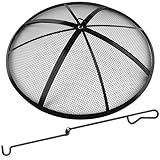
If you’re concerned about sparks flying, especially in windy conditions, a fire pit spark screen can significantly reduce the risk. It’s an essential safety accessory for many fire pits.
Q: How do I know when the fire is completely out?
A: It should be cold. Feel the ashes. If you feel any warmth or hear hissing, it’s still hot. Keep adding water and stirring.
Q: Is it okay to use accelerants like lighter fluid?
A: Most campers avoid it. It can cause flare-ups and isn’t necessary with good tinder and technique. Plus, it’s a fire hazard to store.
Q: What if my fire pit is made of metal?
A: Metal pits can get very hot. Be extra careful with your clearance and never place them directly on dry ground or vegetation.
Q: How do I deal with a smoky fire?
A: A smoky fire usually means it’s not getting enough air or you’re burning damp wood. Try rearranging the logs for better airflow or adding drier kindling.
What this page does NOT cover (and where to go next)
- Specific regulations for a particular national forest or park.
- Advanced fire-starting techniques for survival situations.
- Building a campfire from scratch in a primitive area without a designated pit.
- Types of firewood and their burning properties.
- Legal ramifications of wildfire damage.