
Maintaining a Fire Without Traditional Wood Fuel
Quick answer
- Plan ahead: know your fuel options before you go.
- Use a portable camp stove for cooking. It’s often simpler and more reliable.
- Consider propane, butane, or solid fuel tablets for heat and cooking.
- Pack a reliable fire starter, even if you’re not using wood.
- Know the fire restrictions for your area. Safety first, always.
- Practice LNT principles: pack it in, pack it out.
What to check first (do this before you drive out)
Before you even think about a fire, or how to keep one going without wood, you gotta do some homework. It’s not just about comfort; it’s about legality and safety.
- Land manager / legality: Who’s in charge of the land you’re heading to? Is it US Forest Service, BLM, National Park Service, or a state park? Each has its own rules, especially about fires. Some areas might be completely closed to fires, or only allow them in designated fire rings. Ignorance isn’t a defense here, so check the official website or call the ranger station.
- Access/road conditions: How are you getting there? Are the roads paved, gravel, or just dirt tracks? A standard sedan might be fine for some spots, but others demand an AWD or 4WD with decent clearance. Mud, snow, or washouts can turn a quick trip into a major headache. Check recent reports if you can.
- Fire restrictions + weather + wind: This is crucial. Fire bans are common, especially in dry seasons. Check the current fire danger level and any burn bans before you leave home. Also, look at the forecast. High winds are a fire’s best friend, and your worst enemy. Don’t be the reason for a wildfire.
- Water plan + waste plan (Leave No Trace): Even without wood, you might still have a fire. Have a plan to extinguish it completely. That means water, a shovel, or sand readily available. For any fuel you do bring, like propane, make sure you can pack out the empty canisters. Leave No Trace is the rule, no matter what you’re burning.
- Safety (wildlife, distance to help, comms): Know what critters are in the area. Bears, snakes, you name it. Keep your camp clean. Also, figure out how far you are from the nearest help. Cell service is a lottery in the backcountry. Bring a satellite communicator or a PLB if you’re going deep.
Step-by-step (field workflow)
Let’s say you’re committed to a fireless-wood setup. Here’s how to make it work.
1. Confirm your fuel source: You brought propane canisters, butane, or maybe those little solid fuel tabs. Good.
- What “good” looks like: You’ve got a full canister or a good stack of tabs, and they’re compatible with your stove or burner.
- Common mistake: Bringing the wrong type of fuel or a nearly empty canister.
- Avoid it: Double-check the connection type and the fuel level before you pack.
For a reliable and compact option, consider a butane camping stove. They’re excellent for quick meals and easy to pack.
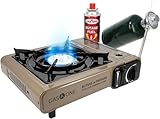
2. Set up your stove/burner: Find a flat, stable spot away from anything flammable.
- What “good” looks like: The stove is sitting level, not wobbling, and there’s a clear radius around it.
- Common mistake: Setting up on uneven ground or too close to your tent or dry grass.
- Avoid it: Take a moment to scout the perfect spot. It’s worth it.
3. Connect your fuel: Attach the canister or fuel source to your stove.
- What “good” looks like: A secure connection with no hissing sounds indicating leaks.
- Common mistake: Overtightening or not tightening enough, leading to leaks.
- Avoid it: Follow the manufacturer’s instructions. Most connections are hand-tight.
4. Ignite the burner: Use your igniter or matches.
- What “good” looks like: A controlled flame, not a fireball.
- Common mistake: Holding the igniter too close or too far from the burner, or trying to light it with too much fuel already flowing.
- Avoid it: Turn on a small amount of fuel first, then ignite.
5. Adjust the flame: Dial in the heat you need for cooking or warmth.
- What “good” looks like: A steady, consistent flame that’s appropriate for the task.
- Common mistake: Running the flame too high unnecessarily, wasting fuel.
- Avoid it: Start low and increase as needed.
6. Cook or heat: Use your stove for its intended purpose.
- What “good” looks like: Your food is cooking, or you’re getting the warmth you need.
- Common mistake: Leaving cooking unattended.
- Avoid it: Stick around. Accidents happen fast.
7. Extinguish the burner: Turn off the fuel supply.
- What “good” looks like: The flame goes out completely.
- Common mistake: Not fully shutting off the fuel valve.
- Avoid it: Make sure the valve is in the “off” position.
8. Allow to cool: Let the stove and fuel canister cool down before packing.
- What “good” looks like: Everything is cool to the touch.
- Common mistake: Packing hot equipment, which can be a fire hazard.
- Avoid it: Be patient. It only takes a few minutes.
9. Pack out all fuel components: This includes empty canisters.
- What “good” looks like: Your campsite is as clean as you found it, with no trash left behind.
- Common mistake: Leaving empty fuel canisters behind, thinking they’re “trash” that can be left.
- Avoid it: Pack it out. It’s part of LNT.
Common mistakes (and what happens if you ignore them)
| Mistake | What it causes | Fix |
|---|---|---|
| Not checking fire restrictions | Fines, personal liability for wildfire damage, environmental destruction | Always check official sources before you go. |
| Relying on found fuel (deadwood) | Can be illegal, may be wet/unburnable, contributes to resource depletion | Bring your own fuel source (stove, approved fuel). |
| Using inappropriate fuel for your stove | Stove malfunction, leaks, fire hazard, wasted fuel | Verify fuel type and compatibility with your equipment. |
| Setting up stove on unstable ground | Spills, burns, uncontrolled flames, damaged equipment | Always use a flat, stable surface. |
| Not having adequate water/extinguisher | Inability to control a flare-up or accidental ignition | Carry water or a fire extinguisher, even for small stoves. |
| Leaving fuel canisters out in the sun | Pressure buildup, potential explosion or rupture | Store fuel canisters in a cool, shaded place. |
| Not packing out empty fuel canisters | Littering, environmental impact, can be mistaken for hazardous waste | Pack out all used fuel containers. |
| Over-reliance on a single fuel source | Running out of fuel, inability to cook or stay warm | Carry a backup fuel source or a non-fuel alternative (e.g., pre-made meals, extra layers). |
| Not having a reliable ignition source | Inability to start your stove/burner, frustration | Carry multiple ignition sources (lighter, waterproof matches, ferro rod). |
| Using fuel indoors or in poorly ventilated areas | Carbon monoxide poisoning, fire hazard | Always use stoves outdoors and in well-ventilated spaces. |
| Ignoring wind conditions | Uncontrolled flames, embers blowing, potential wildfire | Assess wind before igniting and cooking; move to a sheltered spot if necessary. |
| Not cleaning stove components regularly | Clogs, inefficient burning, potential leaks | Clean your stove according to the manufacturer’s recommendations. |
Decision rules (simple if/then)
- If fire restrictions are in place, then do not attempt to make any kind of fire, because it’s illegal and dangerous.
- If you’re planning a short trip and the weather is mild, then a portable camp stove with propane is likely your best bet, because it’s efficient and easy to manage.
- If you’re going into a remote area with no services, then bring extra fuel for your stove, because you won’t be able to resupply.
- If the wind is picking up significantly, then consider packing up your stove and eating cold food, because a flame can quickly become uncontrollable.
- If you are unsure about the legality of any fuel source, then err on the side of caution and go without, because you don’t want to risk a fine or worse.
- If you are cooking a complex meal, then ensure your stove has enough power and stability to handle it, because a wobbly stove is a recipe for disaster.
- If you are using solid fuel tablets, then make sure you have a designated holder or are using a stove designed for them, because they can leave residue.
- If you are near a water source, then still plan to pack out all fuel canisters, because leaving anything behind is not Leave No Trace.
- If you have a medical condition affected by smoke or fumes, then definitely stick to woodless fire alternatives, because they produce fewer harmful byproducts.
- If you are camping in an area with very dry vegetation, then even a small stove flame needs to be treated with extreme respect, because a spark can start a wildfire.
- If your stove seems to be malfunctioning, then shut it off immediately and investigate, because a faulty stove is a safety hazard.
- If you are traveling with others, then ensure everyone understands the safe operation of the stove, because shared responsibility is key.
FAQ
Can I use my portable stove inside my tent?
No. Never operate a stove inside a tent or any enclosed space. This is a serious fire hazard and can lead to deadly carbon monoxide poisoning. Always use stoves outdoors and in well-ventilated areas.
What are the best fuel alternatives to wood for camping?
Propane and butane canisters are popular for their convenience and ease of use with portable stoves. Solid fuel tablets are lightweight and good for emergency situations or very simple cooking.
When choosing fuel alternatives, a butane camping stove offers great convenience and portability for your cooking needs.
How do I dispose of empty fuel canisters?
Empty fuel canisters should be packed out with your trash. Some recycling centers accept them if they are completely empty and depressurized, but always check local regulations first. Never leave them behind in the wilderness.
Is it safe to use a camp stove in windy conditions?
It can be risky. While some stoves are designed to perform better in wind, a strong gust can blow out the flame or spread embers. Find a sheltered spot or consider waiting for the wind to die down.
What if I run out of fuel for my stove?
This is why it’s important to plan. Bring more fuel than you think you’ll need. If you do run out, you may have to rely on no-cook meals or reschedule your trip if conditions permit.
Are there any eco-friendly fuel options for camping?
Some companies offer bio-ethanol fuels or stoves designed to run on reclaimed cooking oil, but these are less common for backpackers. For most campers, efficient use of standard propane or butane is the most practical eco-conscious approach.
How do I ensure my stove is working properly?
Before your trip, test it at home. Check for leaks by applying soapy water to connections when the fuel is on (but not ignited). Ensure the burner ignites cleanly and the flame is stable.
What this page does NOT cover (and where to go next)
- Detailed reviews of specific camp stove models. (Search for “best backpacking stoves” or “car camping stove reviews.”)
- Advanced backcountry cooking techniques. (Look for “camp cooking recipes” or “gourmet camping meals.”)
- In-depth information on specific fuel types, like the chemistry of butane vs. propane. (Research “camping fuel types explained.”)
- How to build and maintain a traditional wood fire. (This is a whole other skill set!)
- Emergency survival fire-starting methods without any modern gear. (Search for “primitive fire starting techniques.”)