
How To Use Bear Spray Effectively: A Visual Guide
Quick answer
- Get the right spray: bear-specific, not pepper spray.
- Know your spray: read instructions before you need it.
- Practice the motion: draw and aim without the safety on.
- Understand wind: spray downwind, not upwind.
- Aim for the face: head-on or slightly angled is best.
- Deploy in bursts: short, controlled sprays are more effective.
- Know your range: don’t wait until the bear is too close.
- Carry it accessible: hip holster or chest holster, not in your pack.
What to check first (do this before you drive out)
Before you even think about hitting the trail, you need to get your head right about bear spray. This isn’t just another piece of gear; it’s your first line of defense.
Before you even think about hitting the trail, you need to get your head right about bear spray. This isn’t just another piece of gear; it’s your first line of defense. Make sure you have a reliable bear spray canister, like the Frontiersman Bear Spray, readily available.
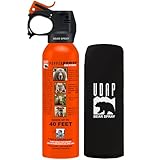
- Land manager / legality: Who’s in charge here? Is bear spray allowed? Most national parks and forests permit it, but rules can vary. Always check the specific park or forest service website. Some wilderness areas might have local restrictions. It’s rare, but good to know.
- Access/road conditions: Can you even get to where you’re going? Check local reports for road closures, especially if you’re heading into backcountry areas. Mud season or early snow can make roads impassable for anything less than a serious 4×4. Don’t get stuck miles from anywhere with a bear problem.
- Fire restrictions + weather + wind: This is huge. Are campfires banned? More importantly for bear spray, what’s the wind doing? Spraying against the wind is a recipe for disaster – you’ll get it right back in your face. Check the forecast for wind direction and speed. Heavy rain can also affect visibility and your ability to hear an approaching bear.
- Water plan + waste plan (Leave No Trace): While not directly bear spray related, these are fundamental. Know where you’ll get water and how you’ll purify it. Pack out all trash, especially food scraps. Bears are attracted to smells. Keeping your camp clean is your best bear deterrent.
- Safety (wildlife, distance to help, comms): What kind of bears are in the area? Black bears, grizzlies? Your spray is effective for both, but knowing your adversary is good. How far are you from the nearest ranger station or town? Do you have cell service? Probably not. A satellite messenger or personal locator beacon (PLB) is a smart backup for remote trips.
Step-by-step (field workflow)
This is what you do when things get dicey. It’s fast, but you need to be deliberate.
1. Hear or see a bear: This is the trigger. Don’t freeze, but don’t panic.
- Good: You notice the bear at a distance and can assess the situation.
- Mistake: You only react when the bear is right on top of you. By then, it’s too late.
2. Assess the bear’s behavior: Is it curious, defensive, or aggressive? Is it aware of you?
- Good: You see the bear is grazing and hasn’t noticed you yet. You can try to back away slowly.
- Mistake: You assume all bears are aggressive and immediately deploy spray. This can escalate a non-threatening encounter.
3. Remove the safety clip: This is crucial. The clip prevents accidental discharge.
- Good: The safety clip comes off smoothly and quickly.
- Mistake: You fumble with the clip, wasting precious seconds. Keep your fingers near the trigger mechanism even before you remove the safety.
Remove the safety clip: This is crucial. The clip prevents accidental discharge. Practice this motion at home with your bear spray, such as the UDAP Bear Spray, so it becomes second nature.
4. Draw the canister: Get it out of its holster.
- Good: The canister is in your hand, ready to go.
- Mistake: The canister is still stuck in your pack or belt. Always keep it accessible.
5. Aim the nozzle: Point it directly at the bear’s face.
- Good: The nozzle is aimed at the bear’s head, slightly down if it’s standing.
- Mistake: You aim at the bear’s body or legs. This won’t stop an aggressive charge.
6. Consider the wind: Is the wind blowing towards you or away from you?
- Good: The wind is at your back or blowing sideways, carrying the spray away from you and towards the bear.
- Mistake: You spray directly into the wind. You’ll get a face full of irritant and the bear might not get much.
7. Deploy in short bursts: Don’t empty the can at once.
- Good: You spray for 1–2 seconds, then pause to see the effect.
- Mistake: You hold the trigger down continuously. This wastes spray and might not be as effective as multiple, targeted bursts.
8. Continue backing away: Even after deploying spray, keep moving.
- Good: You’re slowly retreating while keeping the bear in sight.
- Mistake: You stand your ground or try to run. Running can trigger a chase response.
9. If the bear charges: Deploy a continuous cloud of spray.
- Good: You create a barrier between yourself and the charging bear.
- Mistake: You hesitate or aim poorly during a charge.
10. After the encounter: Get to safety and report it.
- Good: You reach a safe location, check yourself for spray exposure, and contact park rangers or authorities.
- Mistake: You just walk away, assuming the bear is gone. The bear might still be disoriented.
Common mistakes (and what happens if you ignore them)
| Mistake | What it causes | Fix |
|---|---|---|
| Using pepper spray, not bear spray | Inadequate stopping power, may not deter a bear | Always buy bear-specific spray, check the label. |
| Not practicing the draw | Fumbling under pressure, delayed deployment | Practice drawing the canister from its holster until it’s second nature. |
| Keeping spray in your pack | Inability to access it quickly when needed | Carry spray in a hip or chest holster, easily reachable with either hand. |
| Spraying against the wind | Irritant blows back on you, bear is unaffected | Always check wind direction and spray downwind. If wind is too strong, reconsider your approach. |
| Aiming at the bear’s body | Ineffective deterrent, bear may not even notice | Aim for the bear’s face and eyes. |
| Spraying too early or too late | Wasting spray on a non-threat, or not having enough when the bear is close | Wait until the bear is within effective range (check canister, usually 25-30 feet). |
| Not understanding effective range | Spray dissipates before reaching the bear, or you’re too close for safe deployment | Know your spray’s effective range and keep that distance. |
| Not carrying enough spray | Canister runs out before the bear is deterred | Carry a 7.9 oz or larger canister; they have more propellant and a longer spray duration. |
| Not knowing how to use the safety clip | Can’t deploy the spray when needed, or accidental discharge | Read the instructions and practice removing the safety clip until it’s automatic. |
| Not having a backup plan | Relying solely on spray without considering other options | Know how to make noise, back away slowly, and carry bear bells or a whistle as a deterrent. |
| Not knowing local regulations | Potential fines or confiscation of spray | Always check land manager websites for specific rules on bear spray carriage and use. |
| Not reporting an incident | Prevents authorities from tracking bear behavior and warning others | Report any bear encounters or spray deployments to the relevant land management agency. |
Decision rules (simple if/then)
- If you see a bear and it hasn’t noticed you, then slowly back away because you want to avoid an encounter altogether.
- If the bear notices you and seems curious, then make noise and try to appear large while slowly backing away because you want to signal you’re human and not prey.
- If the bear is defensive (huffing, swatting ground, ears back), then stop moving and speak calmly, but be ready to deploy spray because defensive bears are stressed and unpredictable.
- If the bear charges head-on, then deploy a continuous cloud of spray because you need to create an immediate barrier.
- If the bear is bluff charging (stopping short), then stand your ground and be ready to deploy spray because they are testing you.
- If the wind is blowing towards you, then do not spray unless absolutely necessary because you will get the spray in your own face.
- If the bear is far away and unaware, then try to detour around it without it seeing you because avoidance is the best strategy.
- If you are in grizzly country and a bear makes contact, then play dead until the bear leaves because this can sometimes de-escalate a predatory attack. (Note: Black bear advice can differ; check local guidance).
- If you have deployed spray and the bear retreats, then continue to back away and leave the area because the bear may still be disoriented or agitated.
- If you are unsure of the bear’s intentions, then be prepared to use your spray because it’s better to be ready than caught off guard.
- If you are hiking alone, then carry bear spray and know how to use it because you don’t have a partner to help manage the situation.
- If you are hiking in a group, then ensure everyone has bear spray accessible and knows the protocol because group dynamics can sometimes confuse a bear.
FAQ
Q: Is bear spray the same as pepper spray?
A: No. Bear spray is specifically formulated with a higher concentration of capsaicinoids and a wider dispersal pattern to deter large mammals like bears. Regular pepper spray is for self-defense against humans and is much less effective on bears.
No. Bear spray is specifically formulated with a higher concentration of capsaicinoids and a wider dispersal pattern to deter large mammals like bears. Regular pepper spray is for self-defense against humans and is much less effective on bears. Always opt for a dedicated bear spray like Counter Assault Bear Spray for maximum effectiveness.
Q: How close do I need to be to use bear spray?
A: Most bear sprays are effective up to 25-30 feet, but check your canister’s label. You want to deploy it when the bear is within this range but before it’s too close to safely retreat.
Q: What if I accidentally spray myself or someone else?
A: Get fresh air immediately. Flush eyes with water or saline solution if available. Symptoms are temporary and should subside within 30-60 minutes. Avoid touching your eyes or face after contact.
Q: How long does bear spray last?
A: Most bear spray canisters have an expiration date, usually 3-4 years from the manufacture date. Check the date on your canister. Even if not expired, pressure can decrease over time.
Q: Can I bring bear spray on an airplane?
A: No. Bear spray is considered a hazardous material and cannot be carried in checked or carry-on baggage. You must purchase it at your destination.
Q: What should I do if the bear doesn’t run away after I spray it?
A: Continue to back away slowly. The spray can disorient a bear, but it might not immediately flee. Give it space and leave the area.
Q: Do I need bear spray in black bear country?
A: Yes. While black bears are generally less aggressive than grizzlies, they can still be dangerous and pose a threat. Bear spray is effective for both species.
Yes. While black bears are generally less aggressive than grizzlies, they can still be dangerous and pose a threat. Bear spray, such as the Sabre Frontiersman Bear Spray, is effective for both species and provides a crucial layer of protection.
Q: How do I store bear spray when I’m not camping?
A: Store it in a cool, dry place away from direct sunlight and heat. Do not store it in your car, especially in warm weather, as extreme heat can degrade the product.
Q: What if my bear spray canister is damaged?
A: Do not use a damaged canister. If the nozzle is clogged or the canister is dented, it may not function properly or could be dangerous. Replace it.
What this page does NOT cover (and where to go next)
- Detailed identification of different bear species and their specific behaviors.
- Advanced backcountry survival techniques.
- Specific campsite rules or regulations for individual parks or forests.
- Recommendations for firearms or other defensive tools.
Next, consider researching bear safety in the specific region you plan to visit. Look into local park or forest service websites for their bear advisories. You might also want to explore courses on wilderness first aid or survival.

Camping Bob has spent over 20 years camping across the US — from BLM dispersed sites in the Southwest to KOA campgrounds in the Pacific Northwest. He writes practical, no-nonsense guides to help fellow campers get outdoors with confidence.