
How to Safely Light and Enjoy Your Fire Pit
Quick answer
- Always check fire restrictions before you even think about lighting a fire.
- Know who manages the land you’re on – that dictates the rules.
- Clear a wide radius around your fire pit. No dry grass or overhanging branches.
- Have water and a shovel ready. Seriously, have them right there.
- Use dry, seasoned wood. Wet wood smokes like crazy and is a pain.
- Keep fires small and contained. No bonfires unless permitted.
- Never leave a fire unattended. Not even for a minute.
- Douse it completely until it’s cold to the touch before you leave.
What to check first (do this before you drive out)
Before you even load the truck, get this stuff sorted. It’s the foundation of a good time.
- Land manager / legality: Who’s in charge? Is it the US Forest Service (USFS), Bureau of Land Management (BLM), a National Park Service (NPS) site, or a state park? Each has its own rules, especially regarding fires. You can usually find this info on their official websites. Don’t guess.
- Access/road conditions: Can your rig even get there? Some fire pits are at trailheads accessible by any car. Others are deep in the backcountry, requiring 4WD and good clearance. Check recent reports if possible, especially if you’re heading out after rain or snow. Mud can be a real buzzkill.
- Fire restrictions + weather + wind: This is non-negotiable. Check the current fire danger level and any burn bans. Websites for your local USFS or state forestry department are your best bet. Also, check the weather forecast. High winds are a no-go for fires. A gentle breeze is nice; a gale is dangerous.
- Water plan + waste plan (Leave No Trace): You need a reliable water source at the campsite for fire suppression. A few gallons in a container is usually fine for established pits. For dispersed camping, you might need more. Pack out everything you pack in, including food scraps and trash. Don’t burn trash; it pollutes and attracts critters.
- Safety (wildlife, distance to help, comms): Be aware of local wildlife. Keep food secured. Know how far you are from the nearest ranger station or town. Cell service is often spotty or non-existent. Bring a satellite communicator or let someone know your itinerary if you’re going remote.
Step-by-step (field workflow)
Alright, you’ve done your homework. Now you’re at the site. Here’s how to get that fire going safely.
1. Choose your spot.
- What to do: Use an established fire ring or pit if available. If not, find a bare, flat area away from trees, shrubs, and overhanging branches. Aim for at least 10-15 feet clearance in all directions.
- What “good” looks like: A designated pit, or a clear, safe space with no flammable material nearby.
- Common mistake: Using a spot that’s too close to dry grass or under low-hanging branches.
- Avoid it: Scan the area thoroughly from the ground up. Seriously, look up.
2. Prepare the fire pit.
- What to do: If using an existing ring, clear out any old ash or debris. If creating a temporary pit (only if permitted and necessary), dig down to mineral soil and surround it with rocks if available.
- What “good” looks like: A clean, contained space ready for fuel.
- Common mistake: Leaving flammable debris inside the fire ring.
- Avoid it: Take an extra minute to scoop out all loose material.
3. Gather your fuel.
- What to do: Collect dry, dead wood. Look for fallen branches that snap easily. You’ll need tinder (small, fluffy stuff like dry leaves or bark), kindling (pencil-thick twigs), and larger fuel wood.
- What “good” looks like: A neat pile of dry wood of varying sizes.
- Common mistake: Trying to burn wet or green wood.
- Avoid it: If it bends instead of snaps, it’s too wet. Stick to dead and down.
4. Arrange your tinder and kindling.
- What to do: Place a good handful of tinder in the center of the pit. Build a small teepee or log cabin structure of kindling over and around the tinder, leaving space for air.
- What “good” looks like: A structure that will catch a spark and ignite the kindling.
- Common mistake: Packing the kindling too tightly.
- Avoid it: Leave gaps for air to circulate. Fire needs oxygen.
5. Light the tinder.
- What to do: Use matches or a lighter to ignite the tinder from the bottom. Shield it from wind if necessary.
- What “good” looks like: The tinder catches and the flames start to lick the kindling.
- Common mistake: Not having enough tinder or not protecting the initial flame.
- Avoid it: Use a generous amount of tinder and be patient.
6. Feed the flames.
- What to do: As the kindling catches, slowly add more kindling. Once you have a steady flame, gradually add small pieces of your larger fuel wood.
- What “good” looks like: A growing fire that consumes the wood steadily.
- Common mistake: Smothering the flames by adding too much wood too soon.
- Avoid it: Add wood slowly, piece by piece, allowing each to catch before adding more.
7. Maintain the fire.
- What to do: Keep the fire to a manageable size. Add larger logs as needed to keep it going. Stir the logs occasionally to ensure good airflow.
- What “good” looks like: A controlled, contained fire that provides warmth and light without getting out of hand.
- Common mistake: Letting the fire grow too large or too wild.
- Avoid it: Be mindful of the size. It’s a campfire, not a forest fire.
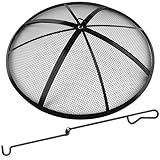
To add an extra layer of safety and prevent embers from escaping, consider using a fire pit spark screen. This can help contain sparks while you enjoy your fire.
8. Never leave unattended.
- What to do: This is crucial. Always have someone watching the fire. If you need to step away, even for a moment, have another person take over or put the fire out.
- What “good” looks like: Eyes on the fire at all times when it’s lit.
- Common mistake: Stepping away to grab something from the car or go for a short walk.
- Avoid it: If you can’t see it, you can’t control it. Someone should always be on fire duty.
9. Extinguish completely.
- What to do: Start this process well before you plan to leave or sleep. Pour water on all embers, not just the visible flames. Stir the ashes and embers with a shovel. Add more water and stir again.
- What “good” looks like: No glowing embers, no steam, and the ashes are cool to the touch.
- Common mistake: Thinking it’s out when it’s just stopped flaming.
- Avoid it: Douse, stir, douse again. Feel the ashes with the back of your hand. If it’s too hot to touch, it’s too hot to leave.
Common mistakes (and what happens if you ignore them)
| Mistake | What it causes | Fix |
|---|---|---|
| Ignoring fire restrictions | Fines, citations, and potentially starting a wildfire with devastating consequences. | Always check local fire bans and regulations before you go. |
| Using wet or green wood | Excessive smoke, difficulty starting, and poor heat output. | Gather only dry, dead, and downed wood. It should snap, not bend. |
| Building a fire too close to combustibles | Uncontrolled spread, potential for wildfire. | Clear a minimum 10-15 foot radius around the fire pit, and check for overhanging branches. |
| Leaving a fire unattended | Accidental spread, embers blowing into dry grass, potential wildfire. | Designate a fire watcher. If you must leave, ensure someone else is watching or extinguish the fire. |
| Not having water/shovel readily available | Inability to control a small flare-up or extinguish the fire properly. | Keep a full water container and a shovel <em>right next to</em> the fire pit. |
| Burning trash or plastics | Air pollution, attracting wildlife, leaving residue that doesn’t decompose. | Pack out all trash. Only burn natural, untreated wood. |
| Not fully extinguishing the fire | Embers reigniting later, starting a wildfire. | Douse, stir, douse again until cold to the touch. This is the most critical step. |
| Building fires outside designated areas | Habitat damage, increased wildfire risk, potential for citations. | Use established fire rings whenever possible. If dispersed camping, follow specific guidelines. |
| Smothering a new fire with too much wood | It won’t catch properly, creating smoke instead of flame. | Start small with tinder and kindling, gradually adding larger pieces as the fire grows. |
Decision rules (simple if/then)
- If the fire danger level is high or extreme, then do not build a fire because the risk of wildfire is too great.
- If there is any wind blowing, then reconsider lighting a fire because embers can travel far and fast.
- If you are unsure who manages the land, then check the official agency website because rules vary widely.
- If you can’t find a designated fire ring, then do not build a fire unless you are in an area specifically allowing dispersed fires and know how to do it safely.
- If you don’t have at least two gallons of water and a shovel nearby, then do not light the fire because you won’t be able to control it.
- If you see any green or living vegetation within 15 feet of your pit, then move your fire pit because it’s too close to flammable material.
- If you plan to leave your campsite for more than 30 minutes, then extinguish the fire because it should never be left unattended.
- If you hear crackling and popping sounds from your fire, then add a bit more wood because it means it’s burning well.
- If the smoke from your fire is thick and acrid, then check your wood because it’s likely wet or green.
- If you are in a National Park or Wilderness Area, then expect stricter fire rules, often banning fires entirely or only allowing them in specific locations.
- If you can’t get your fire to stay lit, then check your kindling and airflow because it needs a good base and oxygen to grow.
- If you feel any heat on your face when standing 10 feet away, then your fire is too big because it should be a manageable size.
FAQ
Q: How do I know if it’s safe to have a campfire?
A: The best way is to check the current fire restrictions for the specific area you’ll be in. Local USFS, BLM, or state park websites are your go-to sources.
Q: What’s the difference between tinder, kindling, and fuel wood?
A: Tinder is material that catches a spark easily (like dry leaves). Kindling is small twigs that catch fire from the tinder. Fuel wood is larger pieces that sustain the fire.
Q: Can I burn trash in my campfire?
A: Generally, no. Burning trash pollutes the air, can leave harmful residue, and attracts animals. Pack out everything you pack in.
Q: How much water do I really need for a campfire?
A: Enough to drown all embers until they are cold. For established pits, a few gallons usually suffices. For dispersed camping, bring more and have a plan.
Q: What if I see a campfire that looks abandoned?
A: Do not assume it’s out. Douse it with water, stir, and douse again until it’s completely cold. It’s better to be safe than sorry.
Q: Are there special rules for campfires in different types of public lands?
A: Yes. National Parks often have the strictest rules, sometimes banning fires altogether. USFS and BLM lands might have more flexibility, but always check local regulations.
Q: My fire is smoking a lot. What am I doing wrong?
A: This usually means you’re burning wet or green wood. Try to find drier, dead wood. Also, ensure you have good airflow to the fire.
Q: How long does it take to completely put out a campfire?
A: It can take longer than you think, especially with larger fires. Plan to spend at least 15-20 minutes on the extinguishing process, stirring and dousing multiple times.
What this page does NOT cover (and where to go next)
- Specific regulations for individual campgrounds or backcountry zones. (Check the official page for the specific site/agency.)
- Detailed techniques for building different types of fires (e.g., survival fires). (Look for resources on wilderness survival skills.)
- Information on using portable camp stoves or propane fire pits. (These often have different rules.)
- Advanced fire safety for extreme weather conditions or large-scale burns. (Consult professional land managers for this.)
- Identifying edible or medicinal plants in the wild. (This requires specialized knowledge and is unrelated to fire safety.)