
How to Properly Weigh Down a Canopy
Quick answer
- Always use proper weights, not just anything.
- Secure the canopy to the ground or a solid anchor.
- Distribute weight evenly around all legs.
- Check wind forecasts before setting up.
- Re-check stakes and weights periodically.
- Know your canopy’s weight limits.
What to check first (do this before you drive out)
Before you even think about setting up your canopy, there are a few crucial things to get sorted. Skipping these can turn a chill day into a real headache.
- Land manager / legality: Who actually owns the land you’re setting up on? Is it a state park, national forest, BLM land, or private property? Each has its own rules. Some places might not allow canopies at all, or they might have specific placement requirements. Always check the official website for the specific area or land management agency. It’s way easier than dealing with a ranger telling you to pack it up.
- Access/road conditions: Can you even get your vehicle and gear to your chosen spot? Are the roads paved, gravel, or just a suggestion? Do you need 4WD or high clearance? A quick look at maps or recent reviews can save you from getting stuck. I learned that lesson the hard way with a little sedan and a whole lot of mud.
- Fire restrictions + weather + wind: This is a big one. Check current fire restrictions – a spark can cause serious trouble. Look at the weather forecast, not just for rain, but for wind. Wind is the enemy of canopies. A calm day can turn gusty fast, and a light breeze can become a gale. Know the forecast and have a plan for high winds.
- Water plan + waste plan (Leave No Trace): How will you manage your water needs? Are you bringing enough, or is there a potable water source? Equally important: where does your waste go? Pack it in, pack it out. This means all trash, food scraps, and anything else you brought. Leave the spot cleaner than you found it. That’s just good camping karma.
- Safety (wildlife, distance to help, comms): Be aware of your surroundings. Know what wildlife is common in the area and how to store food properly. How far is the nearest ranger station or town? Do you have cell service? Consider a satellite communicator for remote areas. Always tell someone where you’re going and when you expect to be back.
Step-by-step (field workflow)
Setting up a canopy properly is about more than just popping it open. It’s about making sure it stays put, no matter what nature throws at it.
1. Choose your spot:
- What to do: Find a flat, clear area, away from potential hazards like dead trees or water runoff paths.
- What “good” looks like: The ground is level, and there’s no immediate danger overhead or underfoot.
- Common mistake: Setting up on a slope or under a tree with dead branches.
- How to avoid it: Scout the area thoroughly. If it’s not perfectly flat, use shims under the legs. Look up.
2. Unpack and inspect:
- What to do: Lay out all the parts and check for any damage or missing pieces.
- What “good” looks like: Everything is accounted for and in good condition.
- Common mistake: Discovering a bent pole or missing part once the canopy is halfway up.
- How to avoid it: Do a quick inventory before you start the main assembly.
3. Assemble the frame:
- What to do: Follow the manufacturer’s instructions to connect the frame poles.
- What “good” looks like: The frame stands on its own, sturdy and ready for the fabric.
- Common mistake: Forcing poles together or not fully locking them.
- How to avoid it: Be gentle. If it feels like it’s not going in, check for obstructions or alignment issues.
4. Attach the canopy top:
- What to do: Drape the fabric over the frame and secure it to the corners.
- What “good” looks like: The fabric is taut and evenly distributed across the frame.
- Common mistake: Not pulling the fabric tight enough, leading to pooling water.
- How to avoid it: Ensure the fabric is centered and pull the corners snug before fully extending the legs.
5. Extend the legs:
- What to do: Slowly extend the legs to the desired height, locking them into place.
- What “good” looks like: All legs are at the same height, and the canopy is level.
- Common mistake: Extending one leg too high, causing the canopy to lean.
- How to avoid it: Extend legs incrementally, checking for levelness as you go.
6. Install stakes:
- What to do: Drive the provided stakes through the holes in the canopy legs or into the ground.
- What “good” looks like: Stakes are driven deep into the ground at an angle away from the canopy.
- Common mistake: Shallow stakes that pull out easily.
- How to avoid it: For soft ground, use longer, wider stakes. Angle them for maximum holding power.
7. Add weights:
- What to do: Place weights onto the canopy legs, ensuring they are secure.
- What “good” looks like: Weights are evenly distributed and heavy enough to counteract wind.
- Common mistake: Using light objects like water bottles or not enough weight.
- How to avoid it: Use purpose-built canopy weights, sandbags, or concrete blocks. Aim for at least 50 lbs per leg.
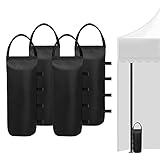
For reliable stability, consider using sandbag canopy anchors. They are an excellent choice for securing your canopy effectively.
8. Tie down with guy lines (if applicable):
- What to do: Use guy lines attached to the canopy frame and staked securely to the ground.
- What “good” looks like: Guy lines are taut and provide extra stability.
- Common mistake: Not using guy lines when they are provided or needed.
- How to avoid it: Always use guy lines in windy conditions or if the manufacturer recommends them.
9. Final inspection:
- What to do: Walk around the canopy, checking that all connections are secure and weights are stable.
- What “good” looks like: Everything is tight, level, and looks ready to withstand some weather.
- Common mistake: Rushing this step and missing a loose connection.
- How to avoid it: Take a moment to give it a good once-over.
10. Monitor and adjust:
- What to do: Periodically check the canopy throughout your stay, especially if the weather changes.
- What “good” looks like: The canopy remains stable and secure.
- Common mistake: Forgetting about the canopy once it’s up.
- How to avoid it: Make it a habit to glance at it, especially before bed or when leaving the campsite.
Common mistakes (and what happens if you ignore them)
| Mistake | What it causes | Fix |
|---|---|---|
| Using inadequate weights | Canopy can lift off, causing damage or injury. | Use purpose-built canopy weights (sandbags, water barrels, concrete blocks) totaling at least 200 lbs for a standard 10×10. |
| Not staking into the ground | Even heavy weights can’t prevent tipping in strong gusts. | Always stake legs directly into the ground, angling stakes away from the canopy for maximum hold. Use longer, stronger stakes for soft or sandy ground. |
| Setting up in a low-lying area | Rainwater can pool under the canopy, making it soggy and potentially unsafe. | Choose a slightly elevated spot or a place with good drainage. If setting up on pavement, ensure water can run off. |
| Ignoring wind forecasts | Canopy can become a sail and be destroyed or cause damage. | Check the forecast before you go and monitor it. Be prepared to take down the canopy if winds are expected to exceed its limits (usually around 15-20 mph). |
| Uneven leg extension | Canopy will lean, putting stress on joints and making it unstable. | Extend legs incrementally, ensuring they are all at the same height. Use a level if you’re unsure. |
| Not using guy lines when provided | Reduced stability, especially in wind. | Always attach and stake guy lines if your canopy comes with them, particularly in windy conditions or if the ground is soft. |
| Placing canopy too close to a fire | Fire hazard, melting fabric, or damage. | Maintain a safe distance from campfires, grills, or any open flames. Check local fire restrictions; some areas prohibit canopies near fires. |
| Not checking for overhead hazards | Falling branches or debris can damage the canopy or cause injury. | Scout the area for dead trees or limbs. Avoid setting up directly under large, old trees if possible. |
| Over-tightening fabric when wet | Fabric can tear or seams can split as it dries and shrinks. | Drape the fabric loosely when first attaching it, then tighten as the canopy is fully extended and settled. Allow for some give. |
| Not re-checking stakes and weights | Stakes can loosen, or weights can shift over time, especially with wind. | Periodically walk around and ensure everything is still secure, especially after significant weather changes or a full day of use. |
Decision rules (simple if/then)
- If wind speeds are forecast to exceed 20 mph, then consider not setting up the canopy or taking it down immediately because it’s a significant safety risk.
- If the ground is very soft or sandy, then use longer, wider stakes and angle them deeply because standard stakes will pull out easily.
- If you are setting up on pavement or hard-packed dirt, then rely heavily on substantial weights (50+ lbs per leg) because stakes won’t work.
- If you are in an area with frequent or strong gusts, then use guy lines in addition to weights and stakes because they add crucial lateral stability.
- If rain is expected, then ensure the canopy fabric is pulled taut and has a slight sag in the middle to allow water to run off, preventing pooling and collapse.
- If you are in a high-traffic area or a busy campground, then position your canopy so it doesn’t obstruct pathways or block other campers’ views because it’s just good etiquette.
- If you are unsure about the legality of setting up a canopy in a specific area, then check the land manager’s website or contact them directly before you go because you don’t want to be told to pack up.
- If you notice any damage to the canopy frame or fabric before setup, then do not use it until it’s repaired because damaged equipment is a safety hazard.
- If you are setting up near a body of water, then be aware of potential wind shifts and moisture, and ensure your canopy is well-anchored because lakeside conditions can change rapidly.
- If you are using a canopy for extended periods, then plan to check and re-secure your stakes and weights daily because they can loosen over time.
- If your canopy is particularly large (e.g., 10×20 or larger), then assume you need more weight and more robust anchoring methods because the forces acting on it are greater.
FAQ
Q: What’s the best way to weigh down a canopy on a hard surface like a patio?
A: On hard surfaces, stakes won’t work. You’ll need to use heavy weights like sandbags, water barrels, or concrete blocks. Aim for at least 50 pounds per leg, but more is always better.
When stakes aren’t an option on hard surfaces, sandbag canopy anchors provide the necessary weight to keep your canopy firmly in place.
Q: How much weight do I actually need per leg?
A: A good rule of thumb is 50 pounds per leg for a standard 10×10 canopy in mild conditions. For larger canopies or windier areas, increase this significantly, perhaps to 75-100 pounds per leg.
Q: Can I just use buckets of water as weights?
A: Buckets of water can work in a pinch for very light breezes, but they are not ideal. They can tip over, and their weight can shift. Purpose-built weights are much more stable and reliable.
Q: What happens if my canopy blows away?
A: A runaway canopy can cause property damage, injure people or animals, and even become a projectile. It can also be destroyed itself. Proper anchoring is critical for safety.
Q: Should I take my canopy down if it starts to rain?
A: Not necessarily, but you should check that the fabric is taut and water is running off. If water pools, it can exceed the canopy’s weight capacity and cause collapse.
Q: Are there special stakes for different types of ground?
A: Yes. For soft ground or sand, look for wider, longer stakes. For hard ground, you might need rebar-style stakes or even a hammer drill in some extreme cases.
Q: How do I know if my canopy is rated for wind?
A: Check the manufacturer’s specifications. Most canopies have a wind rating, often around 15-20 mph. Exceeding this rating is dangerous.
Q: What if I lose some of the original stakes?
A: Don’t try to get by with fewer. Replace them with comparable or better stakes. You can find replacements at outdoor gear stores or hardware stores.
What this page does NOT cover (and where to go next)
- Specific canopy brands and models. (Check manufacturer websites for detailed specs.)
- Advanced anchoring techniques for extreme weather. (Research specialized gear and methods.)
- Permits or regulations for commercial canopy use. (Contact local authorities or event organizers.)
- Long-term canopy storage and maintenance. (Refer to your canopy’s manual for care instructions.)
- Detailed weather forecasting and interpretation. (Consult reputable weather services.)

Camping Bob has spent over 20 years camping across the US — from BLM dispersed sites in the Southwest to KOA campgrounds in the Pacific Northwest. He writes practical, no-nonsense guides to help fellow campers get outdoors with confidence.